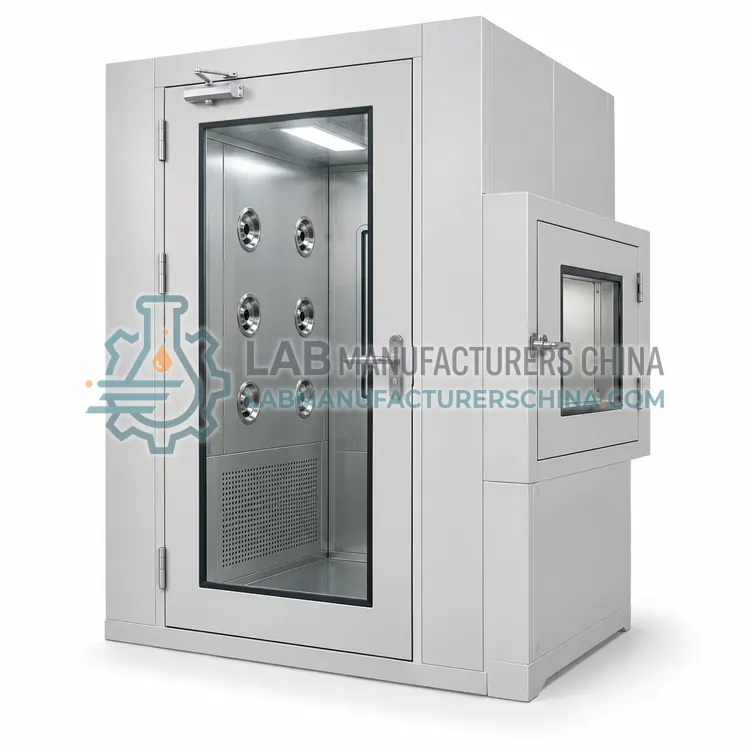
How do Air Showers work?
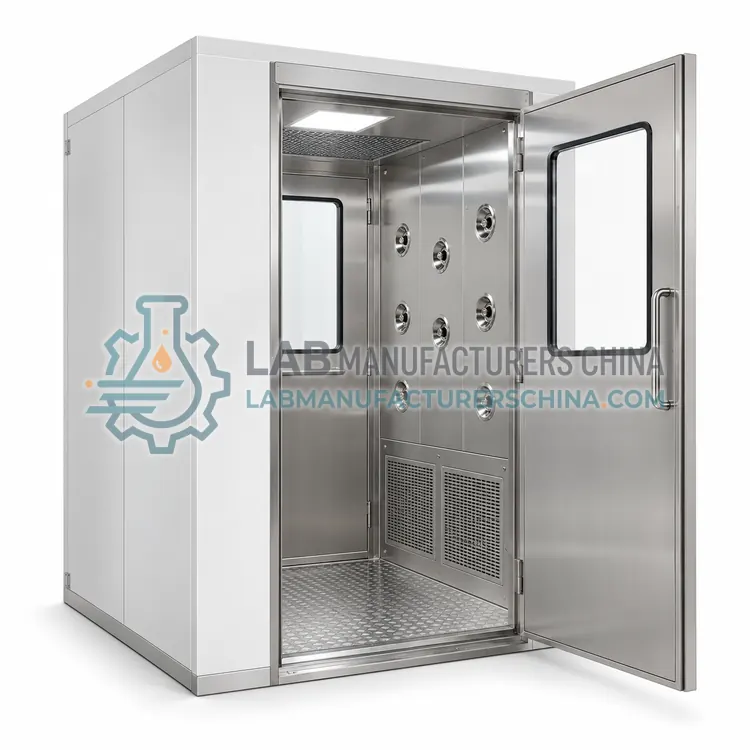
An air shower draws room air through a prefilter and a HEPA or ULPA filter, then accelerates it through adjustable nozzles at 20–25 m/s so the jets strip loose particles and fibres from garments and skin. The contaminated air is captured by return grilles at floor or side level, passes the prefilter and recirculates, so the chamber itself stays clean. A centrifugal blower, a cycle timer typically set to 15–99 seconds, and interlocked doors complete the system: one door cannot open until the other is closed and the cycle finishes. Stainless steel or powder-coated steel panels provide smooth, cleanable surfaces. Sensors detect entry and start the shower automatically, and fluorescent lighting and an emergency release provide safe operation. Material showers use the same principle in a conveyor or pass-through format.
Which Air Showers variants are available?
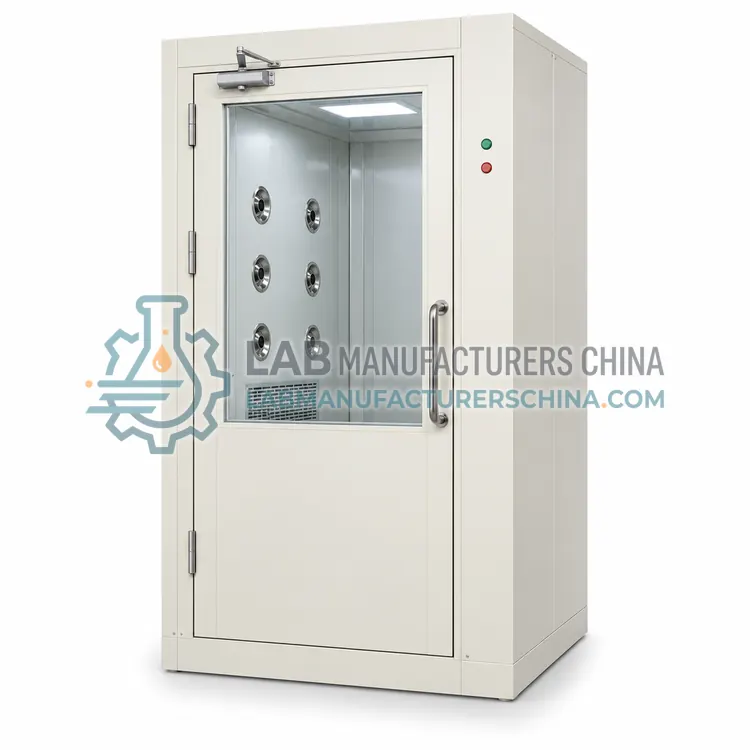
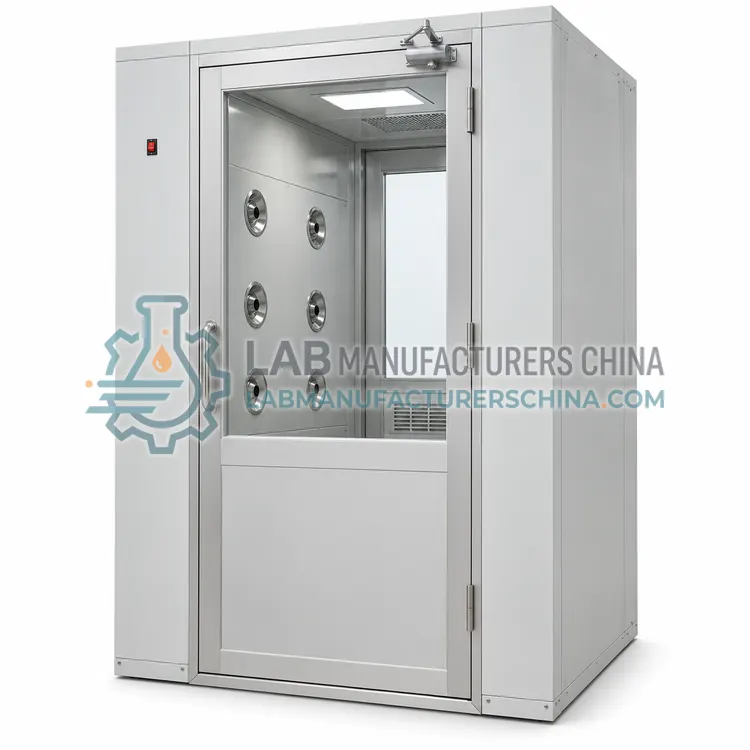
- Single-Person Air Shower — A single-person air shower is a compact interlocked chamber that cleans one operator per cycle with jets from the side, and sometimes the ceiling.
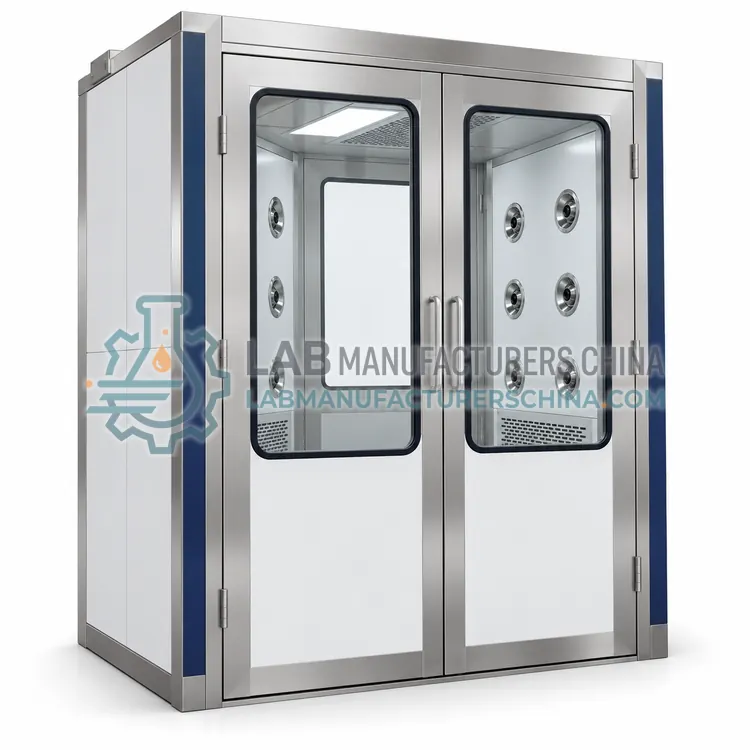
- Double-Person Air Shower — A double-person air shower is an interlocked chamber wide enough for two operators to be showered at the same time.
- Tunnel Air Shower — A tunnel air shower chains several shower sections so operators walk through a continuous corridor of air jets in one pass.
- Cargo Air Shower — A cargo air shower is a large interlocked chamber or pass-through that blows HEPA-filtered air over carts, pallets and packaged goods before they enter a cleanroom.
- Air Shower with Interlocked Pass-Through Door — This variant combines a personnel air shower with a second door arrangement that allows small items to be passed through a side hatch.
How do I choose the right variant?
Choose by who or what passes through, the room classification and the available space. Personnel showers are specified by the number of people per cycle, with single-person units the most common and two- or multi-person tunnels for higher flow. Cargo showers need a chamber sized for trolleys and loads, often with conveyor rollers. Check nozzle velocity, which should reach at least 20 m/s at the outlet, and the filter grade, HEPA H13 or H14 for ISO 5–8 areas. Consider panel material, stainless steel for pharma and powder-coated steel for electronics, plus interlock logic, cycle time and door type. Confirm fan noise, electrical supply and footprint. A bypass or manual override route must be planned for emergencies and equipment movement.
Where are Air Showers used?
Air Showers are specified in electronics manufacturing, pharmaceutical production, medical-device assembly, biotechnology facilities and semiconductor cleanrooms.
Which standards and certifications apply?
Work with Air Showers is commonly governed by ISO 14644-1 (cleanroom classification), ISO 14644-4 (cleanroom design and construction), GB 50073 (cleanroom design code), JG/T 382 (air shower), EN 1822 (HEPA and ULPA filters) and IEC 61010-1. Instrument certifications such as CE marking are confirmed per configuration and never assumed.
What are the key considerations before purchase?
Place the air shower between the gowning room and the classified area, with flat, level floors and an electrical supply of 220–380 V. Interlocks and emergency releases must be tested at commissioning, and a fire-rated door strategy confirmed with the building designer. Replace prefilters every 3–6 months and test the HEPA filter by DOP or PAO scan annually, measuring nozzle velocity with an anemometer. Clean stainless surfaces with compatible disinfectants and keep nozzles free of debris. Air showers do not replace gowning procedures, so define entry SOPs, and avoid using them in rooms where an air-lock with pressure cascade is already required by regulation.