Lab Manufacturers China

Ultrapure Water Systems

超纯水系统

UWS · Laboratory Water Purification · 6 models

By Lab Manufacturers China Technical TeamLast reviewed Standards: ISO 3696, CLSI GP40, USP <643>

Standards referenced

  • ISO 3696
  • CLSI GP40
  • USP <643>
  • USP <645>
  • IEC 61010-1
  • ISO 9001

What are Ultrapure Water Systems?

Ultrapure water systems produce Type I water with resistivity near 18.2 megohm-centimeters and total organic carbon below a few parts per billion. They are used for trace analysis, molecular biology and cell culture where ions and organics would spoil results.

6 models of Ultrapure Water Systems

The 6 models below are current configurations; specifications are confirmed on quotation.

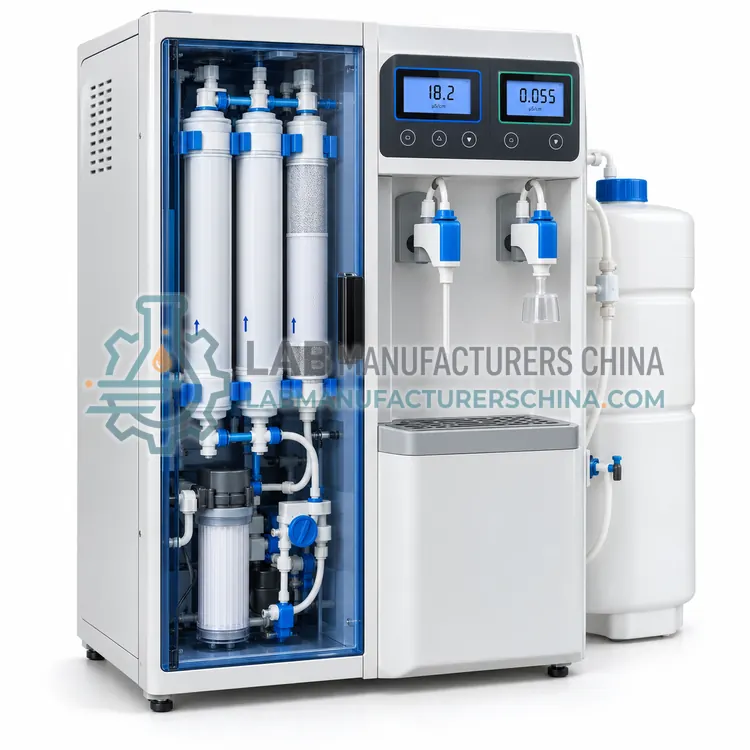
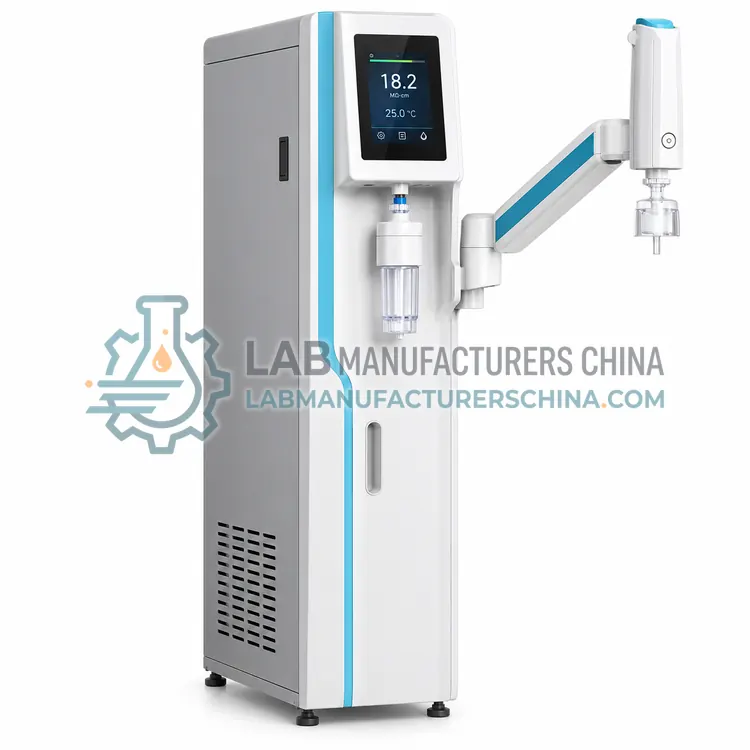
Benchtop Ultrapure Water System

台式超纯水系统

  • UWS-0001
  • Ultrapure Water Systems
  • CE (to be confirmed)
  • RoHS (to be confirmed)
  • ISO 9001 manufacturing (to be confirmed)
Resistivity:
18.2 MΩ·cm at 25 °C
Total organic carbon:
< 5–10 ppb
Flow rate:
0.5–2 L/min
Feed quality:
RO or distilled, < 10 µS/cm
UV lamps:
185 nm and 254 nm
Final filter:
0.22 µm or ultrafiltration

A benchtop ultrapure water system produces Type I water at the point of use from pretreated feed. It is the standard unit for trace analysis, molecular biology, PCR and small-volume laboratory work.

Request a quote
View details

Combined Type I and Type II Water System

I 级和 II 级水组合系统

  • UWS-0002
  • Ultrapure Water Systems
  • CE (to be confirmed)
  • RoHS (to be confirmed)
  • ISO 9001 manufacturing (to be confirmed)
Type II resistivity:
1–15 MΩ·cm
Type I resistivity:
18.2 MΩ·cm
Type II output:
5–30 L/h
Type I flow:
0.5–2 L/min
Storage reservoir:
10–100 L
Total organic carbon:
< 10 ppb for Type I

A combined Type I and Type II water system delivers both ultrapure and general-grade water from one unit. It suits laboratories that need high purity for analysis and larger volumes for general work.

Request a quote
View details

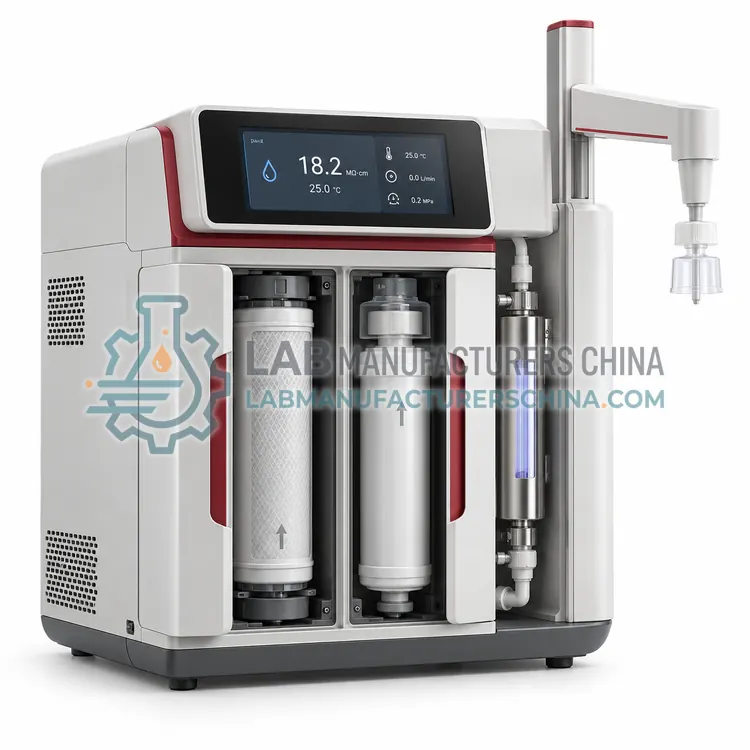
Ultrapure Water System with UV and Ultrafiltration

带紫外和超滤的超纯水系统

  • UWS-0003
  • Ultrapure Water Systems
  • CE (to be confirmed)
  • RoHS (to be confirmed)
  • ISO 9001 manufacturing (to be confirmed)
Resistivity:
18.2 MΩ·cm at 25 °C
Total organic carbon:
< 2–5 ppb
Endotoxin:
< 0.001 EU/mL typical
Ultrafiltration cut-off:
5,000–13,000 Da
Flow rate:
0.5–2 L/min
UV lamps:
185 nm and 254 nm

An ultrapure water system with UV and ultrafiltration targets maximum organic and microbial control. It is used for LC-MS, cell culture and molecular biology where organic carbon and endotoxin must be minimal.

Request a quote
View details

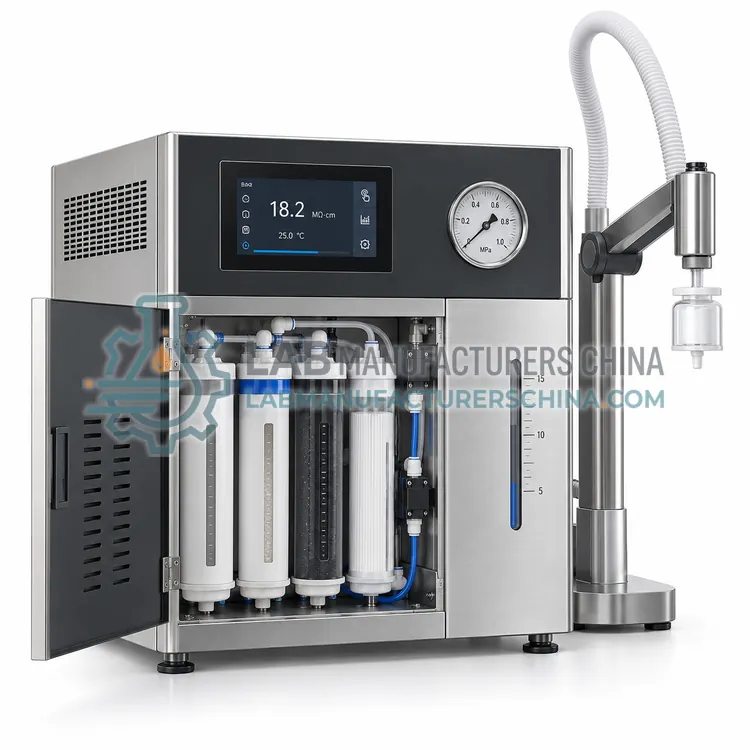
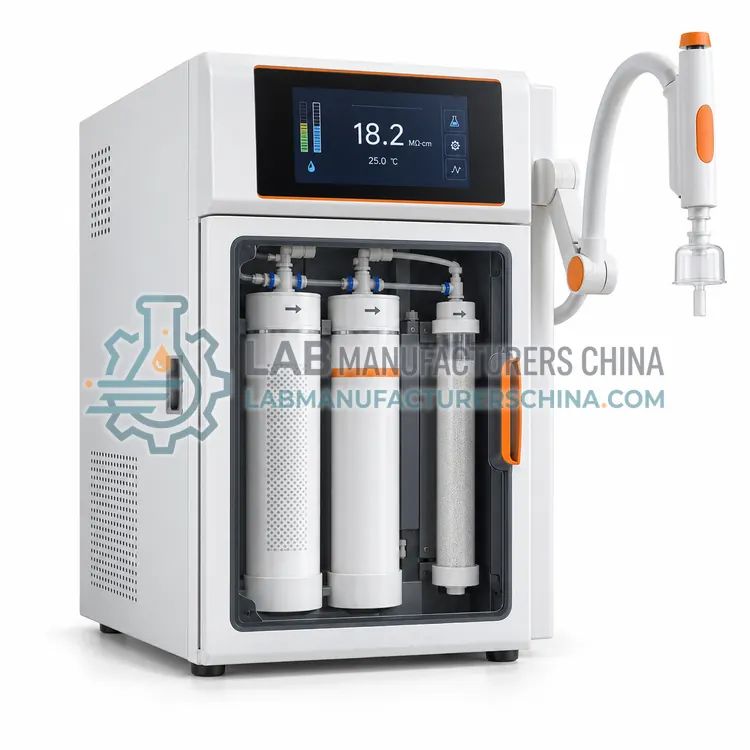
Compact Ultrapure Water System

紧凑型超纯水系统

  • UWS-0004
  • Ultrapure Water Systems
  • CE (to be confirmed)
  • RoHS (to be confirmed)
  • ISO 9001 manufacturing (to be confirmed)
Resistivity:
18.2 MΩ·cm at 25 °C
Flow rate:
0.5–1.5 L/min
Footprint:
About 30 × 40 cm
UV lamp:
185 nm or 254 nm
Final filter:
0.22 µm
Feed quality:
RO or distilled

A compact ultrapure water system fits limited bench space while delivering Type I water for small laboratories. It combines all the essential purification steps in a single unit with a small footprint and simple service access.

Request a quote
View details

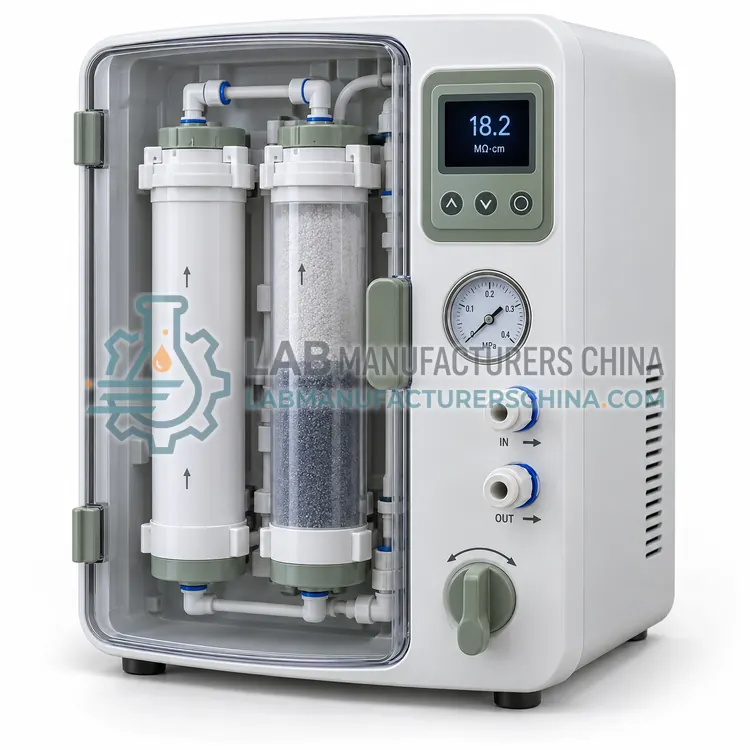
Ultrapure Water Polishing Unit

超纯水精处理单元

  • UWS-0005
  • Ultrapure Water Systems
  • CE (to be confirmed)
  • RoHS (to be confirmed)
  • ISO 9001 manufacturing (to be confirmed)
Resistivity:
18.2 MΩ·cm at 25 °C
Flow rate:
0.5–2 L/min
Feed requirement:
Type II, < 5 µS/cm
Ion exchange:
Mixed bed cartridge
Organic stage:
Carbon or 185 nm UV
Final filter:
0.22 µm or ultrafiltration

An ultrapure water polishing unit is added after an existing purification system to raise quality to Type I. It removes residual ions, dissolved organics and fine particles at the point of use.

Request a quote
View details

Point-of-Use Ultrapure Water Dispenser

使用点超纯水取水器

  • UWS-0006
  • Ultrapure Water Systems
  • CE (to be confirmed)
  • RoHS (to be confirmed)
  • ISO 9001 manufacturing (to be confirmed)
Resistivity:
18.2 MΩ·cm at 25 °C
Flow rate:
0.5–2 L/min
Feed requirement:
Type II or central loop
Dispenser:
Gun, valve or volumetric
UV lamp:
185 nm or 254 nm option
Final filter:
0.22 µm

A point-of-use ultrapure water dispenser is a compact unit installed at the bench that polishes and delivers Type I water on demand. It minimizes the path between purification and the point of use.

Request a quote
View details

Compare Ultrapure Water Systems models

ModelResistivityTotal organic carbonFlow rateFeed qualityUV lamps
Benchtop Ultrapure Water SystemUWS-000118.2 MΩ·cm at 25 °C< 5–10 ppb0.5–2 L/minRO or distilled, < 10 µS/cm185 nm and 254 nm
Combined Type I and Type II Water SystemUWS-0002—< 10 ppb for Type I——185 nm and 254 nm
Ultrapure Water System with UV and UltrafiltrationUWS-000318.2 MΩ·cm at 25 °C< 2–5 ppb0.5–2 L/minRO or distilled185 nm and 254 nm
Compact Ultrapure Water SystemUWS-000418.2 MΩ·cm at 25 °C—0.5–1.5 L/minRO or distilled—
Ultrapure Water Polishing UnitUWS-000518.2 MΩ·cm at 25 °C—0.5–2 L/min——
Point-of-Use Ultrapure Water DispenserUWS-000618.2 MΩ·cm at 25 °C—0.5–2 L/min——

Indicative values for this product class. Final specifications are confirmed on the quotation and in the calibration documents supplied with the instrument.

How do Ultrapure Water Systems work?

An ultrapure water system chains several purification steps to reach Type I quality. Feed, usually reverse osmosis or distilled water, passes through activated carbon to remove organics and chlorine, ion exchange resin to remove ions, a 185 nanometer ultraviolet lamp to oxidize residual organics, a 254 nanometer lamp to inactivate microorganisms, and ultrafiltration or microfiltration to remove particles, bacteria and endotoxins. A final 0.22 micron filter or ultrafiltration membrane polishes the water at the point of use. Resistivity and total organic carbon are monitored continuously, and recirculation keeps the loop fresh. The combination of steps is essential because no single technique removes all contaminant classes, and care in materials, dead volume and loop design prevents the purified water from being re-contaminated before it is dispensed.

Which Ultrapure Water Systems variants are available?

  • Benchtop Ultrapure Water System — A benchtop ultrapure water system produces Type I water at the point of use from pretreated feed.
  • Combined Type I and Type II Water System — A combined Type I and Type II water system delivers both ultrapure and general-grade water from one unit.
  • Ultrapure Water System with UV and Ultrafiltration — An ultrapure water system with UV and ultrafiltration targets maximum organic and microbial control.
  • Compact Ultrapure Water System — A compact ultrapure water system fits limited bench space while delivering Type I water for small laboratories.
  • Ultrapure Water Polishing Unit — An ultrapure water polishing unit is added after an existing purification system to raise quality to Type I.
  • Point-of-Use Ultrapure Water Dispenser — A point-of-use ultrapure water dispenser is a compact unit installed at the bench that polishes and delivers Type I water on demand.

How do I choose the right variant?

Start from the analytical method, because it determines the required resistivity, total organic carbon, bacterial and endotoxin limits. Trace metals and ion chromatography need low ionic content, LC-MS needs low organic carbon, and cell culture needs low endotoxin and bacteria. Choose a system with the purification steps that meet those requirements, and confirm that resistivity and total organic carbon are monitored, ideally with a calibration option. Size the unit by daily volume and instantaneous flow, and decide whether it should produce Type I only or both Type I and Type II. Consider the feed source, since reverse osmosis feed extends cartridge life compared with tap water. Check the point-of-use dispenser, dead volume, recirculation, sanitization procedure and consumable cost per liter before selecting.

Where are Ultrapure Water Systems used?

Ultrapure Water Systems are specified in trace metal and ion analysis, HPLC, LC-MS and UHPLC mobile phases, molecular biology and PCR, cell culture and media preparation, clinical analyzer and immunoassay feed and semiconductor and electronics rinsing.

Which standards and certifications apply?

Work with Ultrapure Water Systems is commonly governed by ISO 3696, CLSI GP40, USP <643>, USP <645>, IEC 61010-1 and ISO 9001. Instrument certifications such as CE marking are confirmed per configuration and never assumed.

What are the key considerations before purchase?

Maintain the system on the manufacturer's schedule: replace pretreatment and polishing cartridges, and the UV lamps, before performance declines. Keep the recirculation loop short and flowing, because stagnant water allows biofilm to form on wetted surfaces and raises total organic carbon. Sanitize on a defined interval and after any contamination event, and verify with resistivity and microbial testing. Handle the point-of-use filter carefully to avoid contamination, and touch only the connector. Draw water just before use and do not store Type I water for long, since its purity degrades in containers. Follow IEC 61010-1 for electrical safety, and document resistivity, total organic carbon and service dates for traceability.

Frequently asked questions about Ultrapure Water Systems

Type I water has resistivity near 18.2 megohm-centimeters at 25 degrees Celsius, total organic carbon below about 10 parts per billion, very low bacteria and, where specified, low endotoxin. These limits follow CLSI GP40 and ISO 3696.

Need help specifying Ultrapure Water Systems?

Request a quote