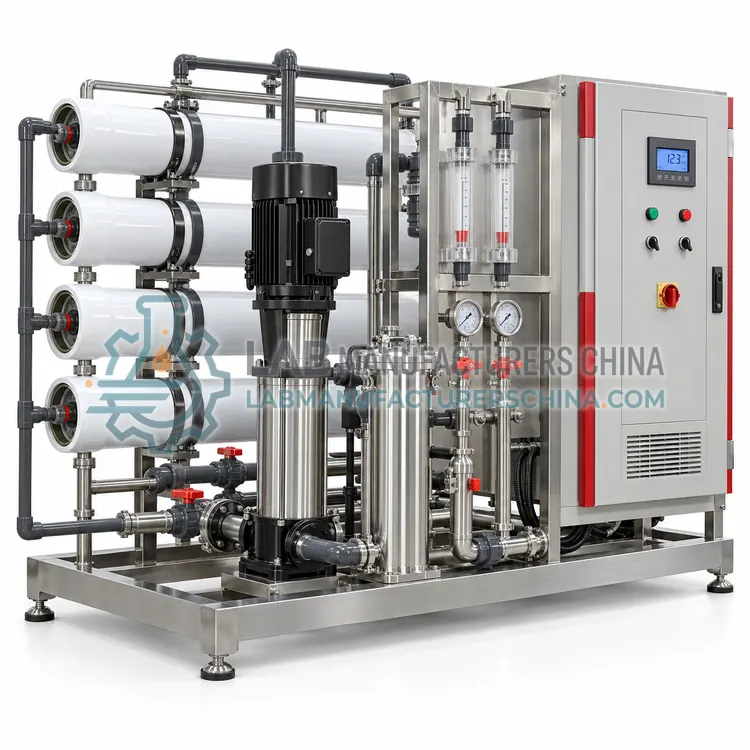
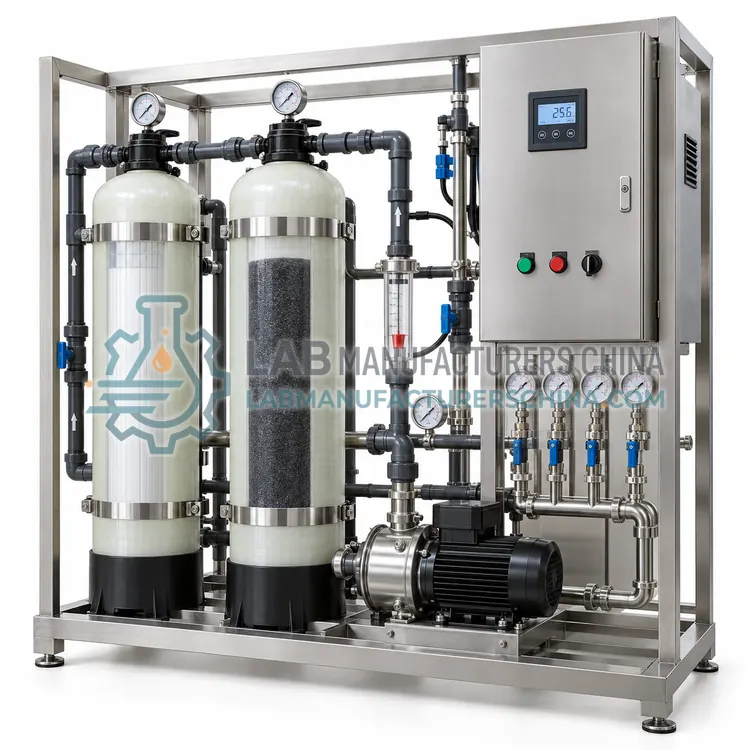
How do RO Systems work?
Reverse osmosis applies pressure greater than the osmotic pressure of the feed water to force water through a semipermeable membrane. The membrane rejects most dissolved ions, large organic molecules, colloids, bacteria and particles, while water passes through. Feed is split into permeate, which is the purified product, and concentrate, which carries the rejected contaminants to drain. Recovery, the ratio of permeate to feed, typically ranges from 15 to 50 percent for laboratory units and higher for staged industrial designs. Prefilters remove sediment and chlorine because chlorine attacks polyamide membranes, and a pump supplies the required pressure of 4 to 15 bar depending on feed salinity and membrane type. Monitoring includes pressure, flow, conductivity of permeate and feed, and sometimes temperature correction, because permeate quality falls as temperature drops.
Which RO Systems variants are available?
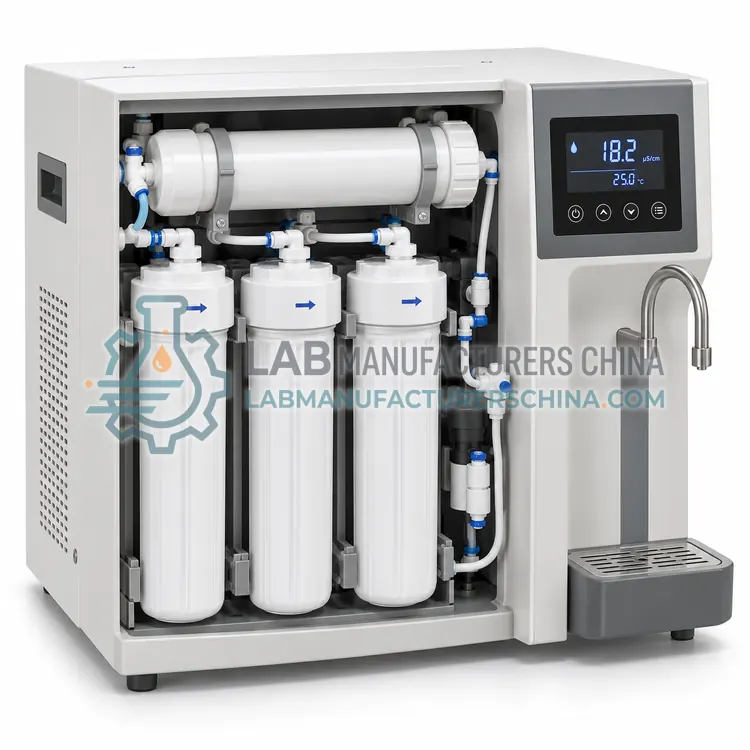
- Benchtop Reverse Osmosis System — A benchtop reverse osmosis system is a compact unit that produces a few liters per hour of Type III water from tap feed.
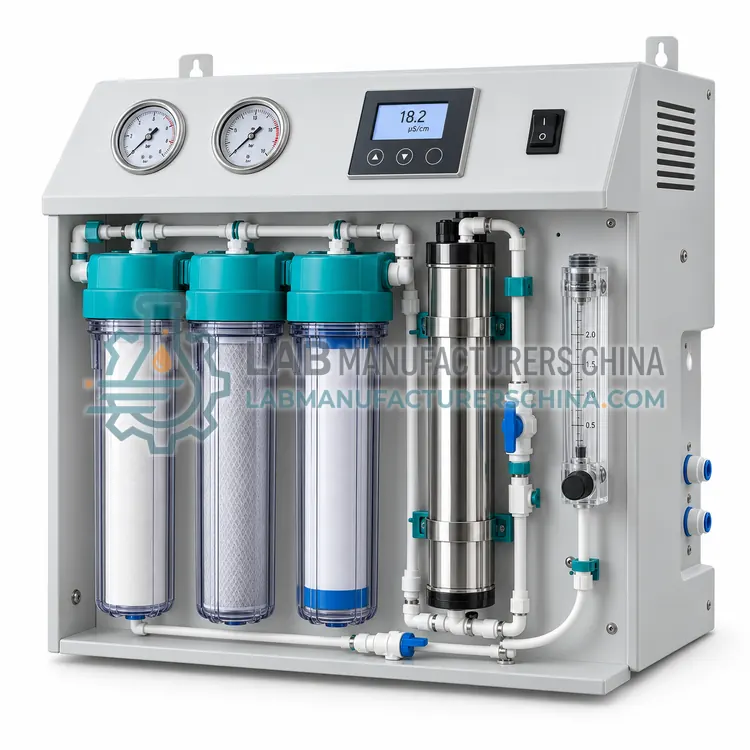
- Wall-Mounted Reverse Osmosis System — A wall-mounted reverse osmosis system saves bench space and supplies a laboratory or small department continuously.
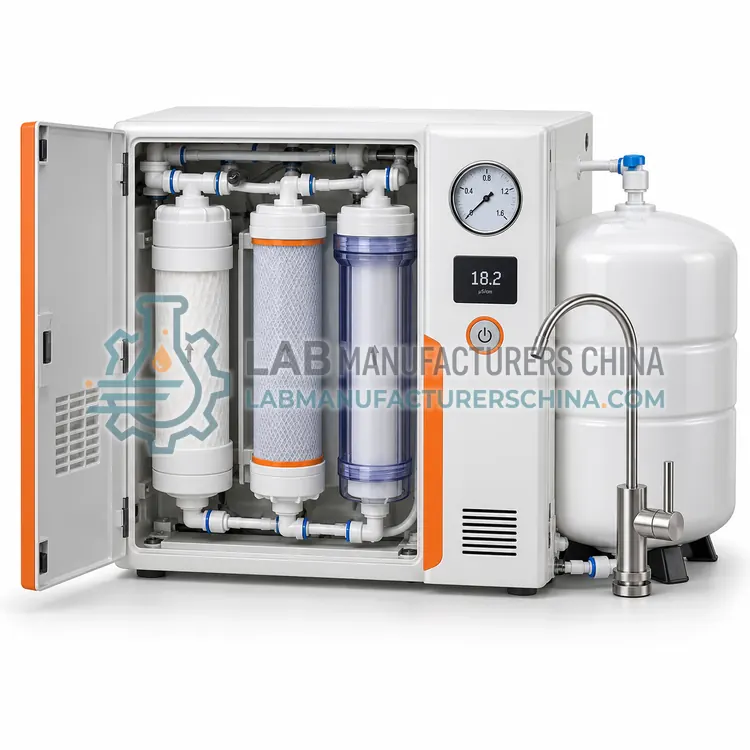
- Reverse Osmosis System with Storage Tank — A reverse osmosis system with a storage tank buffers demand and provides water on tap from a larger reservoir.
- Two-Stage Reverse Osmosis System — A two-stage reverse osmosis system passes permeate through a second membrane to raise purity and improve recovery.
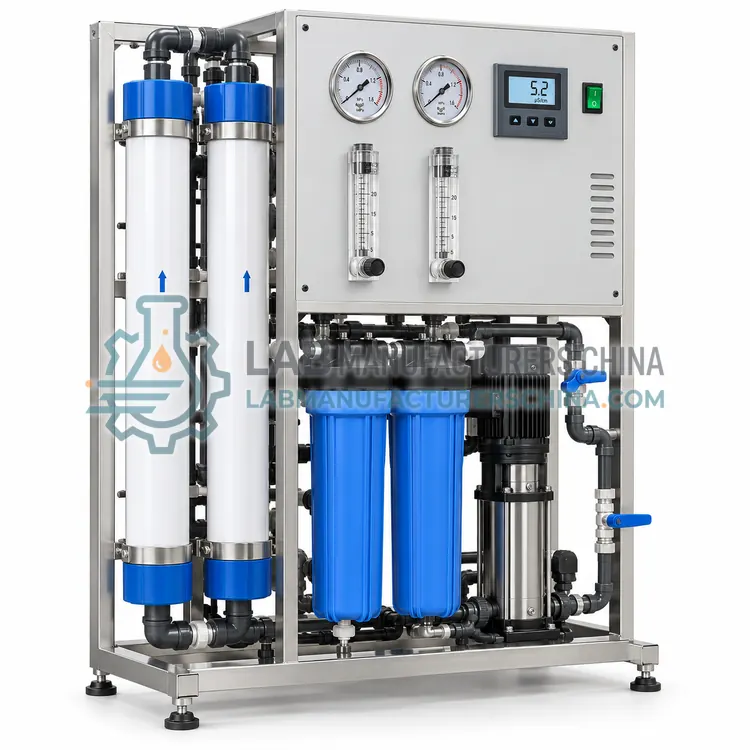
- Large-Capacity Reverse Osmosis System — A large-capacity reverse osmosis system produces hundreds to thousands of liters per hour for a whole laboratory or pilot plant.
- Reverse Osmosis Pretreatment System — A reverse osmosis pretreatment system conditions feed water before the membranes, removing chlorine, hardness, particles and organics.
How do I choose the right variant?
Begin with the feed water analysis: hardness, chlorine, iron, silica, turbidity and conductivity determine the pretreatment and the membrane type. Then size the system by daily and peak permeate volume, remembering that temperature and feed quality affect output. Choose a benchtop or wall-mounted unit for a few liters per hour, and a larger or staged system for higher demand. Check whether you need a storage tank and a distribution pump, and whether the permeate will feed a deionizer or ultrapure unit. Confirm the recovery rate and concentrate handling, since water use and drain capacity matter. Look for conductivity monitoring and automatic flushing, and ask about membrane life, filter change intervals and consumable cost per liter, which usually dominates the total cost.
Where are RO Systems used?
RO Systems are specified in type III water for glassware rinsing, feed water for deionizers and ultrapure systems, reagent and buffer preparation, general analytical laboratory use, autoclave and humidifier feed and preliminary sample preparation.
Which standards and certifications apply?
Work with RO Systems is commonly governed by ISO 3696, CLSI GP40, IEC 61010-1, IEC 61326-1 and ISO 9001. Instrument certifications such as CE marking are confirmed per configuration and never assumed.
What are the key considerations before purchase?
Protect the membrane by removing chlorine with carbon and softening hard feed to prevent scaling. Run the system regularly rather than leaving it idle, since stagnant water encourages biofilm, and use automatic flush cycles. Sanitize on the schedule recommended for your application, and replace prefilters before pressure drop becomes excessive. Measure permeate conductivity and flow to detect membrane fouling or degradation early. Keep feed water within the specified temperature range, because cold water reduces output and very warm water shortens membrane life. Follow IEC 61010-1 and local plumbing rules, and ensure the drain can carry the concentrate. Record conductivity, recovery and service dates so performance trends are visible.