Wall-Mounted Reverse Osmosis System
壁挂式反渗透系统
- SKU RSY-0002
- RO Systems
- CE (to be confirmed)
- RoHS (to be confirmed)
- ISO 9001 manufacturing (to be confirmed)
Price on request — FOB / CIF quoted per order
Prices depend on configuration, quantity and destination port.
Key specifications
| Permeate flow | 20–100 L/h |
|---|---|
| Ion rejection | 95–99 % |
| Operating pressure | 6–15 bar |
| Membrane elements | 1–2 |
| Recovery | 20–40 % |
| Pretreatment | Sediment, carbon, optional softener |
Request a quote Download brochure · to be provided
By Lab Manufacturers China Technical TeamLast reviewed Standards: ISO 3696, CLSI GP40, IEC 61010-1
What is the Wall-Mounted Reverse Osmosis System?
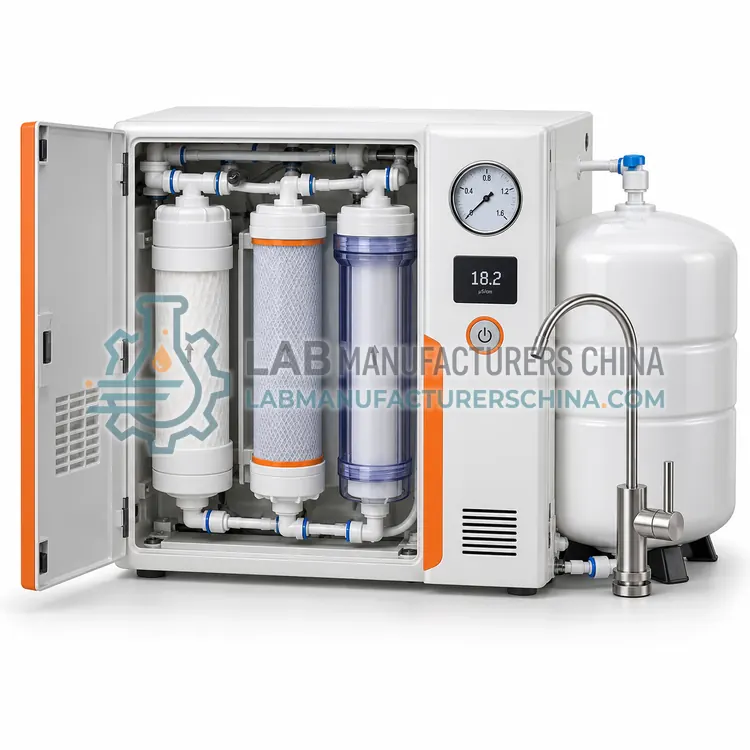
A wall-mounted reverse osmosis system saves bench space and supplies a laboratory or small department continuously. It delivers 20 to 100 liters per hour of Type III water in a fixed installation.
What is the Wall-Mounted Reverse Osmosis System?
A wall-mounted reverse osmosis system saves bench space and supplies a laboratory or small department continuously. It delivers 20 to 100 liters per hour of Type III water in a fixed installation.
Overview
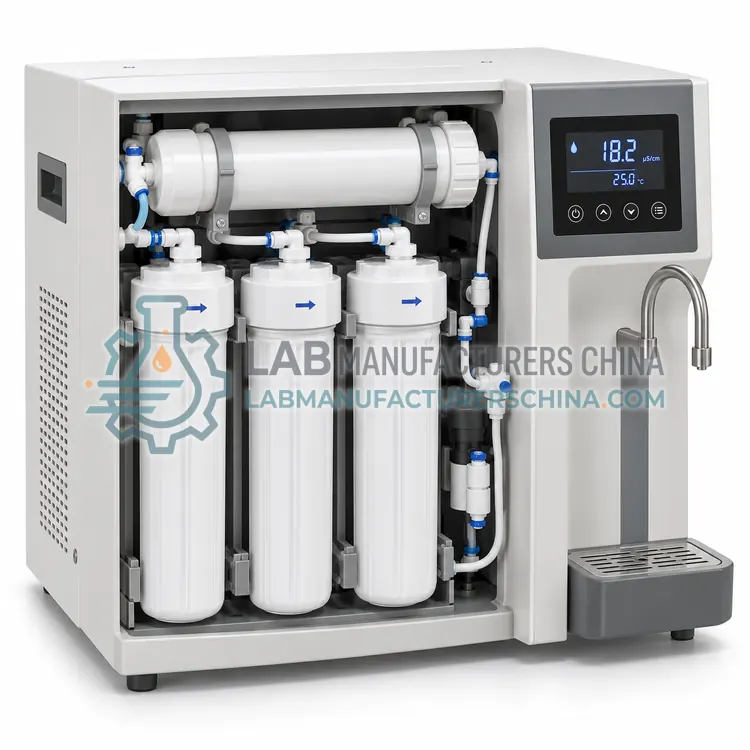
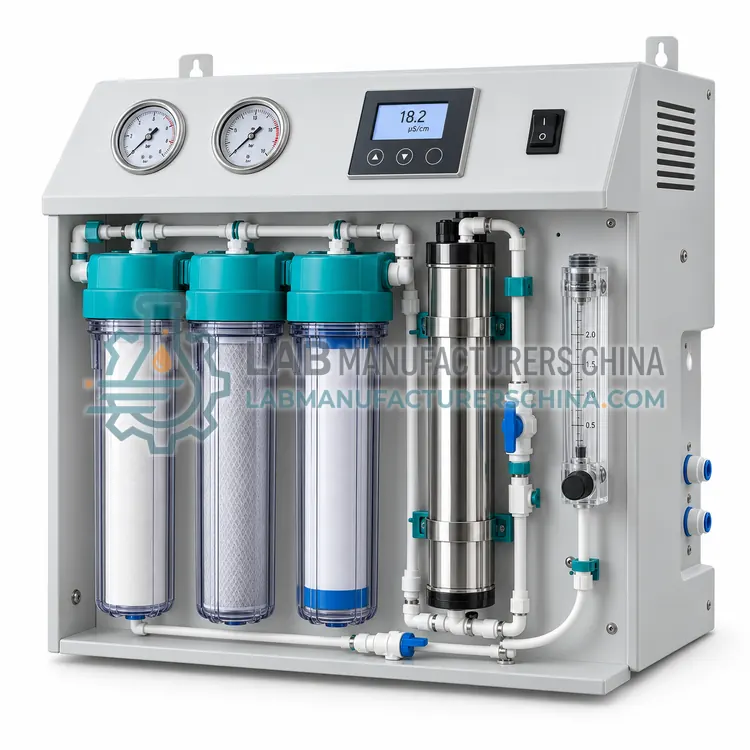
The wall-mounted reverse osmosis system is designed for permanent installation above or beside a sink, with feed, drain and product lines plumbed in. It uses one or two membrane elements and a pump to produce 20 to 100 liters per hour, with recovery of 20 to 40 percent. Pretreatment includes sediment and carbon filtration and, where feed is hard, a softener or antiscalant dosing. Product flows to a distribution loop, a point-of-use tap or a storage tank, and permeate conductivity is monitored with an alarm. Automatic flush and, on some models, sanitization cycles maintain membrane health. Wall mounting keeps the bench clear and reduces the risk of accidental disconnection, and the unit is often combined with a downstream deionizer to deliver higher purity for analytical work.
How does it work?
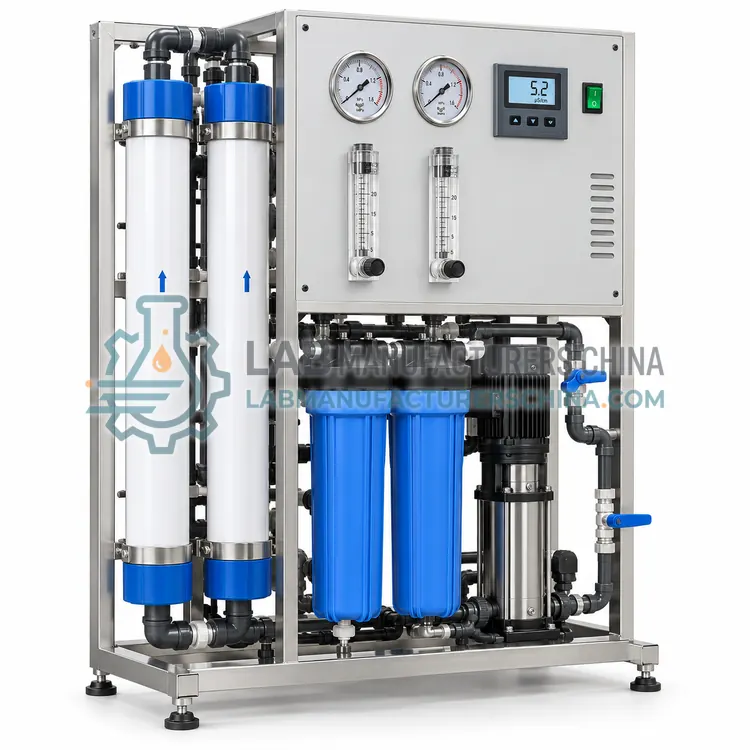
Reverse osmosis applies pressure greater than the osmotic pressure of the feed water to force water through a semipermeable membrane. The membrane rejects most dissolved ions, large organic molecules, colloids, bacteria and particles, while water passes through. Feed is split into permeate, which is the purified product, and concentrate, which carries the rejected contaminants to drain. Recovery, the ratio of permeate to feed, typically ranges from 15 to 50 percent for laboratory units and higher for staged industrial designs. Prefilters remove sediment and chlorine because chlorine attacks polyamide membranes, and a pump supplies the required pressure of 4 to 15 bar depending on feed salinity and membrane type. Monitoring includes pressure, flow, conductivity of permeate and feed, and sometimes temperature correction, because permeate quality falls as temperature drops.
What are the key features?
- Permanent wall installation with plumbed lines
- Output of 20–100 L/h with 20–40 % recovery
- One or two membrane elements
- Sediment, carbon and optional softener pretreatment
- Monitored permeate conductivity with alarm
- Automatic flush and optional sanitization
What are the technical specifications?
A typical wall-mounted reverse osmosis system configuration offers permeate flow of 20–100 L/h, ion rejection of 95–99 %, operating pressure of 6–15 bar, membrane elements of 1–2, recovery of 20–40 % and pretreatment of Sediment, carbon, optional softener. Values are indicative of the product class; the exact figures for each configuration are confirmed on the quotation and the calibration documents supplied with the instrument.
Which applications is it used for?
The Wall-Mounted Reverse Osmosis System is used in continuous laboratory water supply, feed to deionizers and ultrapure systems, glassware washing machines, media and buffer preparation and department point-of-use supply. Across the wider RO Systems class, laboratories also deploy it for type III water for glassware rinsing, feed water for deionizers and ultrapure systems and reagent and buffer preparation.
Which standards and certifications apply?
Relevant standards and methods include ISO 3696, CLSI GP40, IEC 61010-1, IEC 61326-1 and ISO 9001. Certification candidates for this model are CE, RoHS and ISO 9001 manufacturing; each is to be confirmed for the specific configuration before shipment, and certificates are supplied only where they have been issued.
Protect the membrane by removing chlorine with carbon and softening hard feed to prevent scaling. Run the system regularly rather than leaving it idle, since stagnant water encourages biofilm, and use automatic flush cycles. Sanitize on the schedule recommended for your application, and replace prefilters before pressure drop becomes excessive. Measure permeate conductivity and flow to detect membrane fouling or degradation early. Keep feed water within the specified temperature range, because cold water reduces output and very warm water shortens membrane life. Follow IEC 61010-1 and local plumbing rules, and ensure the drain can carry the concentrate. Record conductivity, recovery and service dates so performance trends are visible.
How do I select the right Wall-Mounted Reverse Osmosis System?
Choose a wall-mounted system for a fixed installation and steady demand, and pair it with a deionizer or ultrapure unit for higher grades. For portable or small needs, a benchtop model is easier. In the RFQ, state output, feed analysis, purity and installation constraints.
How does it compare with other RO Systems variants?
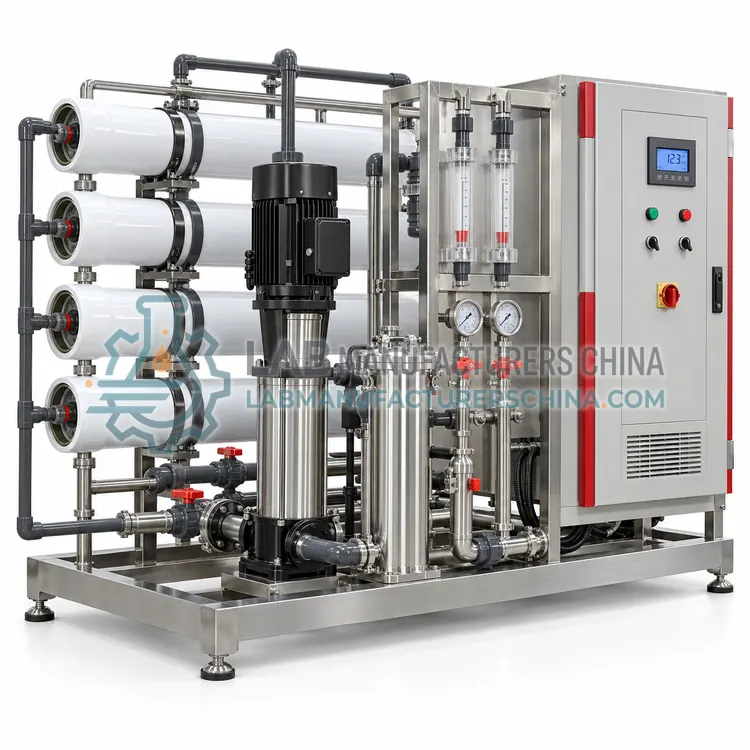
Begin with the feed water analysis: hardness, chlorine, iron, silica, turbidity and conductivity determine the pretreatment and the membrane type. Then size the system by daily and peak permeate volume, remembering that temperature and feed quality affect output. Choose a benchtop or wall-mounted unit for a few liters per hour, and a larger or staged system for higher demand. Check whether you need a storage tank and a distribution pump, and whether the permeate will feed a deionizer or ultrapure unit. Confirm the recovery rate and concentrate handling, since water use and drain capacity matter. Look for conductivity monitoring and automatic flushing, and ask about membrane life, filter change intervals and consumable cost per liter, which usually dominates the total cost.
Full specifications
| Permeate flow | 20–100 L/h |
|---|---|
| Ion rejection | 95–99 % |
| Operating pressure | 6–15 bar |
| Membrane elements | 1–2 |
| Recovery | 20–40 % |
| Pretreatment | Sediment, carbon, optional softener |
| Distribution | Loop, tap or storage tank |
| Monitoring | Conductivity with alarm |
| Pump power | 0.3–1.1 kW |
| Power supply | 220–240 V, 50/60 Hz |
Indicative values for this product class. Final specifications are confirmed on the quotation and in the calibration documents supplied with the instrument.
Applications
- Continuous laboratory water supply
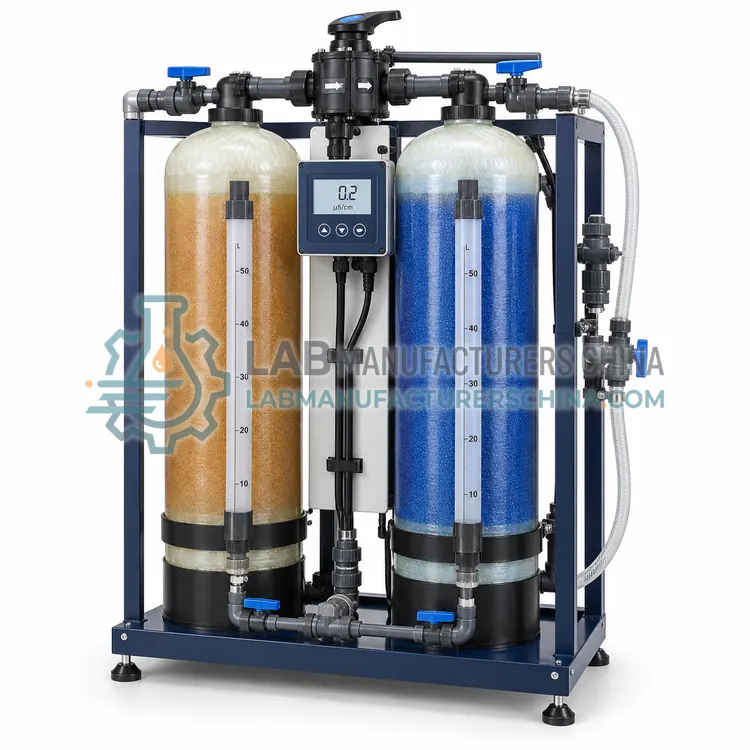
- Feed to deionizers and ultrapure systems
- Glassware washing machines
- Media and buffer preparation
- Department point-of-use supply
Key features
- Permanent wall installation with plumbed lines
- Output of 20–100 L/h with 20–40 % recovery
- One or two membrane elements
- Sediment, carbon and optional softener pretreatment
- Monitored permeate conductivity with alarm
- Automatic flush and optional sanitization
Frequently asked questions about Wall-Mounted Reverse Osmosis System
It frees bench space and keeps the installation tidy, with less chance of tubing being disturbed. Service access should still be planned, since prefilters and the membrane need periodic replacement.
Yes, with a distribution loop and a storage tank. Size the pump and piping for the total simultaneous demand and keep the loop short to avoid stagnation and biofilm growth.
By carbon removal of chlorine, antiscalant or softening for hard feed, automatic flushing when idle and periodic sanitization. Monitor conductivity and pressure drop to schedule cleaning.
Typically 90 to 99 percent rejection of dissolved ions, giving a permeate of about 1 to 15 microsiemens per centimeter from potable feed. This meets Type III water and is suitable as feed for deionization or ultrapure polishing.
It buffers peak demand, lets the system run efficiently at its design rate and provides water if the feed is interrupted. A tank should be vented, protected from light and periodically sanitized to prevent biofilm.
Typically every two to three years, or sooner with poor feed quality or high demand. Replace when permeate conductivity rises, flow falls or pressure drop increases despite cleaning.
Related models