Regenerable Deionizer
可再生去离子器
- SKU DEI-0003
- Deionizers
- CE (to be confirmed)
- ISO 9001 manufacturing (to be confirmed)
- Material conformity (to be confirmed)
Price on request — FOB / CIF quoted per order
Prices depend on configuration, quantity and destination port.
Key specifications
| Resistivity | 10–18 MΩ·cm |
|---|---|
| Flow rate | 2–50 L/min |
| Capacity per cycle | 1,000–50,000 L |
| Regenerant | Hydrochloric acid and sodium hydroxide |
| Resin | Separate or mixed bed |
| Monitor | Conductivity with alarm |
Request a quote Download brochure · to be provided
By Lab Manufacturers China Technical TeamLast reviewed Standards: ISO 3696, CLSI GP40, USP <643>
What is the Regenerable Deionizer?
A regenerable deionizer uses ion exchange resin that is restored with acid and caustic instead of being thrown away as disposable cartridges. It is used where water volumes are large and consumable cost matters.
What is the Regenerable Deionizer?
A regenerable deionizer uses ion exchange resin that is restored with acid and caustic instead of being thrown away as disposable cartridges. It is used where water volumes are large and consumable cost matters.
Overview
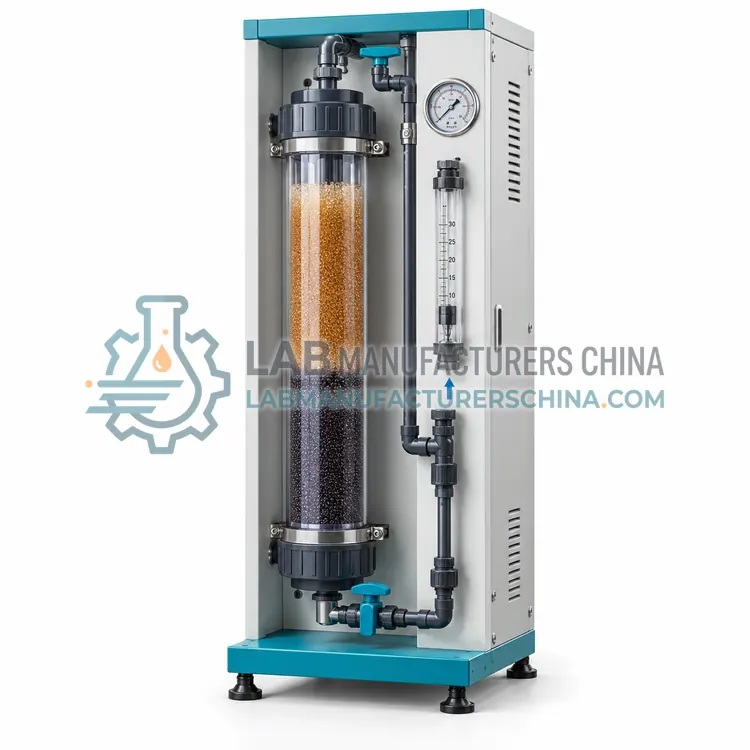
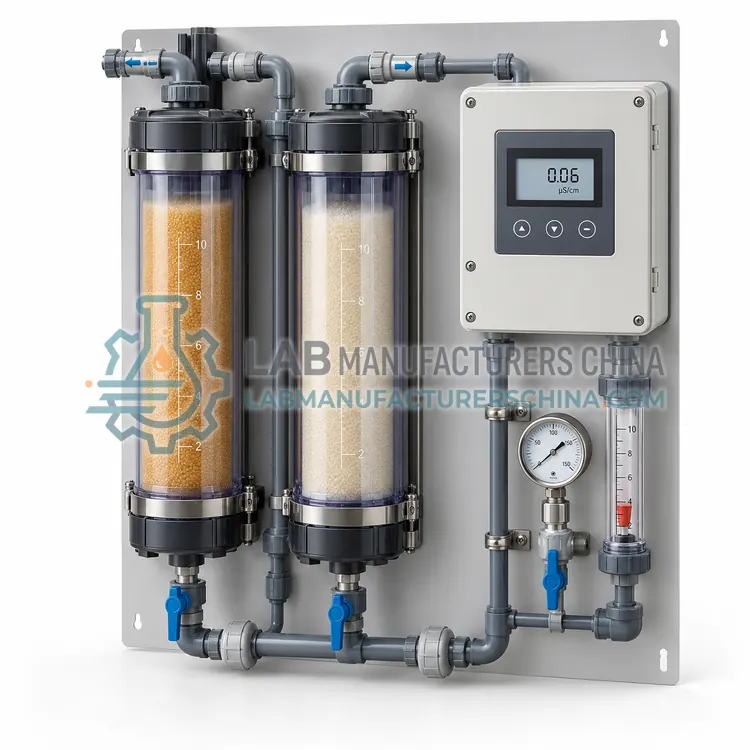
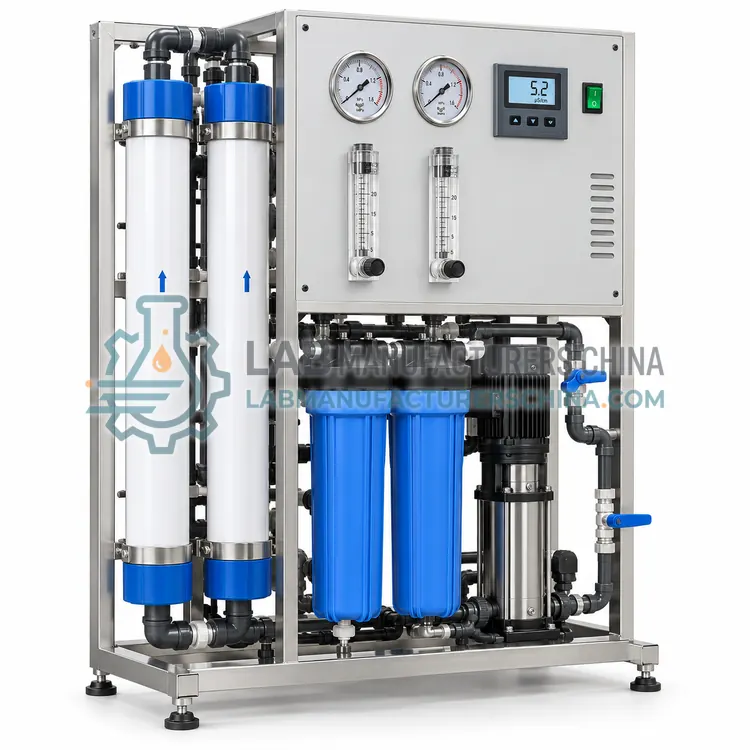
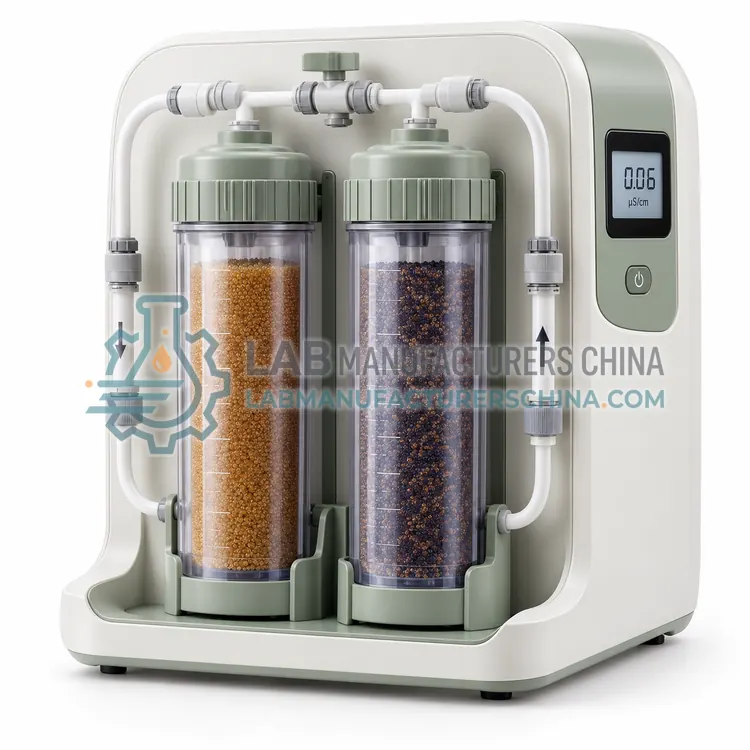
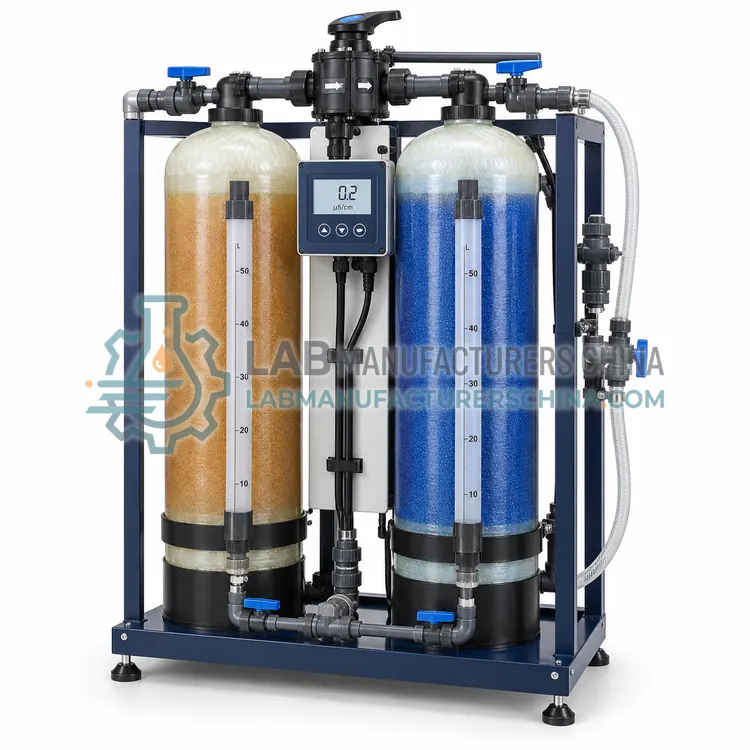
The regenerable deionizer is designed so that exhausted resin can be treated in place or in a service vessel. Acid regenerates the cation resin and caustic regenerates the anion resin, restoring the sites that exchange ions. Depending on design, the resins may be in separate beds for straightforward regeneration or in a mixed bed that requires separation first. Systems include valves, a conductivity monitor, a rinse cycle and, in larger units, chemical dosing pumps and a neutralization tank for waste. Capacity is generally larger than cartridge units, and running cost per liter is lower, offset by chemical handling and waste disposal. Service contracts are common, where an external provider regenerates exchange vessels on site or off site, which avoids chemical handling in the laboratory.
How does it work?
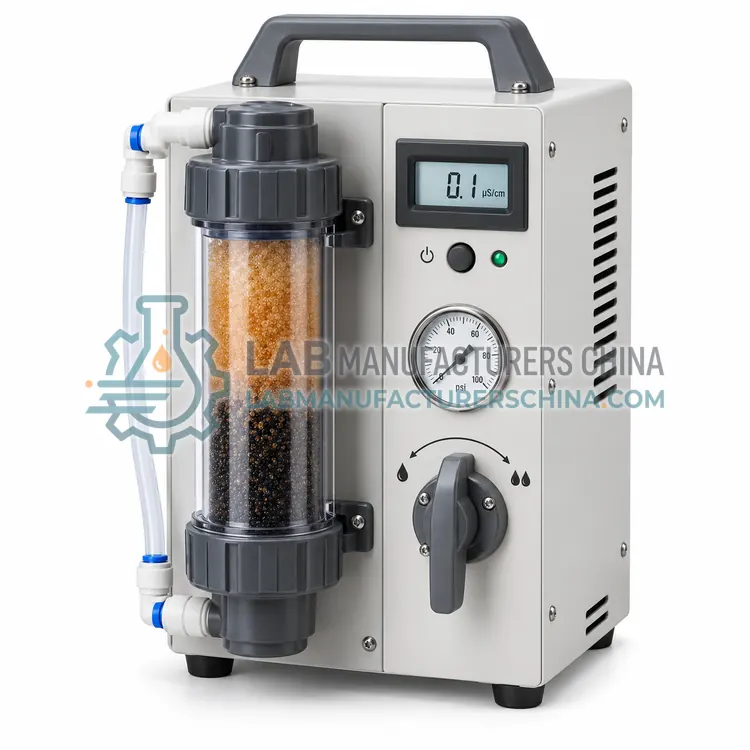
A deionizer passes water through beds of ion exchange resin. Cation resin exchanges positively charged ions such as calcium, magnesium and sodium for hydrogen ions, and anion resin exchanges negatively charged ions such as chloride, sulfate and bicarbonate for hydroxide ions. The hydrogen and hydroxide combine to form water, so dissolved salts are removed without adding anything to the water. Mixed-bed resin places both types together and gives the highest resistivity, while two-bed systems use separate columns and are easier to regenerate. Resin capacity is finite: as sites become exhausted, the treated water conductivity rises. Exhaustion is detected by a conductivity or resistivity monitor, and the resin is then replaced or regenerated with acid and caustic. Prefilters and carbon protect the resin from particles, chlorine and organics.
What are the key features?
- Resin restored with acid and caustic
- Separate beds or mixed bed with separation step
- Valves, rinse cycle and conductivity monitor
- Chemical dosing and neutralization on larger units
- Lower running cost per liter than cartridges
- Exchange-vessel service contracts available
What are the technical specifications?
A typical regenerable deionizer configuration offers resistivity of 10–18 MΩ·cm, flow rate of 2–50 L/min, capacity per cycle of 1,000–50,000 L, regenerant of Hydrochloric acid and sodium hydroxide, resin of Separate or mixed bed and monitor of Conductivity with alarm. Values are indicative of the product class; the exact figures for each configuration are confirmed on the quotation and the calibration documents supplied with the instrument.
Which applications is it used for?
The Regenerable Deionizer is used in large-volume Type II water production, central laboratory water supply, boiler and process feed treatment, feed to ultrapure polishing and industrial rinsing water. Across the wider Deionizers class, laboratories also deploy it for type II water for general analysis, reagent and buffer preparation and polishing after reverse osmosis.
Which standards and certifications apply?
Relevant standards and methods include ISO 3696, CLSI GP40, USP <643>, IEC 61010-1 and ISO 9001. Certification candidates for this model are CE, ISO 9001 manufacturing and Material conformity; each is to be confirmed for the specific configuration before shipment, and certificates are supplied only where they have been issued.
Feed the deionizer with water that is free of chlorine and particles, because chlorine oxidizes resin and particles block flow. Do not let the resin bed run dry, and keep it wet during storage to avoid shrinkage and channeling. Monitor resistivity on a temperature-compensated basis, and plan replacement or regeneration before exhaustion so quality never falls below specification. When regenerating with acid and caustic, use proper personal protection, neutralize the waste and dispose of it according to local rules. Keep the distribution loop short and recirculating to prevent biofilm, and sanitize where microbiology matters. Follow IEC 61010-1 for electrical safety and record resistivity, volumes and service dates so that resin life can be predicted.
How do I select the right Regenerable Deionizer?
Choose a regenerable system when volume is large and per-liter cost matters, and you can manage chemicals or contract the service. For small volumes, disposable cartridges are simpler. In the RFQ, state flow, capacity, feed quality and regeneration preference.
How does it compare with other Deionizers variants?
Decide what feed water the deionizer will treat, because resin life depends strongly on the incoming ionic load. If the feed is tap water, a reverse osmosis stage ahead of the deionizer greatly extends resin life; if the feed is already purified, a polishing cartridge may be all that is needed. Choose mixed-bed resin for the highest resistivity and two-bed or regenerable designs where operating cost and regeneration matter. Match flow rate and cartridge capacity to your daily volume, and check whether the system shuts down at resin exhaustion or continues to deliver lower-quality water. Consider whether you need a resistivity monitor with temperature compensation, a recirculation pump to keep the loop fresh, and UV or ultrafiltration for organic and microbial control. Compare consumable cost, regeneration frequency and disposal requirements before choosing.
Full specifications
| Resistivity | 10–18 MΩ·cm |
|---|---|
| Flow rate | 2–50 L/min |
| Capacity per cycle | 1,000–50,000 L |
| Regenerant | Hydrochloric acid and sodium hydroxide |
| Resin | Separate or mixed bed |
| Monitor | Conductivity with alarm |
| Waste handling | Neutralization required |
| Vessel material | FRP or stainless steel |
| Power supply | 220–240 V, 50/60 Hz |
Indicative values for this product class. Final specifications are confirmed on the quotation and in the calibration documents supplied with the instrument.
Applications
- Large-volume Type II water production
- Central laboratory water supply
- Boiler and process feed treatment
- Feed to ultrapure polishing
- Industrial rinsing water
Key features
- Resin restored with acid and caustic
- Separate beds or mixed bed with separation step
- Valves, rinse cycle and conductivity monitor
- Chemical dosing and neutralization on larger units
- Lower running cost per liter than cartridges
- Exchange-vessel service contracts available
Frequently asked questions about Regenerable Deionizer
For large volumes, yes, because acid and caustic cost less than new resin. It requires safe chemical handling, neutralization of waste and a trained operator, so many laboratories use a service contract instead.
Regeneration waste contains excess acid and caustic plus the removed ions, so it must be neutralized and disposed of according to local rules. Some systems include an automatic neutralization tank.
The supplier delivers a freshly regenerated resin vessel and takes the exhausted one away, so the laboratory never handles acid or caustic. It is convenient but usually costs more per liter.
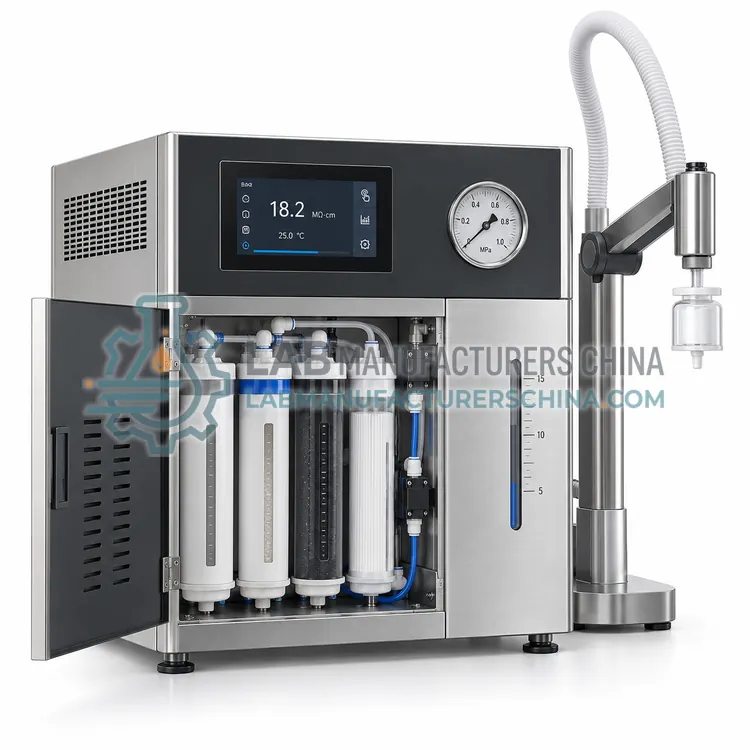
A mixed-bed deionizer fed with low-ionic water can reach about 18.2 megohm-centimeters at 25 degrees Celsius, the practical limit for pure water. Feed quality and organic load determine actual performance.
A temperature-compensated resistivity or conductivity monitor shows the rise. Set an alarm at a threshold just below your specification, and replace or regenerate before quality falls out of range.
Small cartridge units are usually replaced, while larger systems with separate beds are regenerated with acid and caustic. Regeneration costs less per liter but needs chemicals, safety measures and waste handling.
Related models