How do Water Purification Plants work?
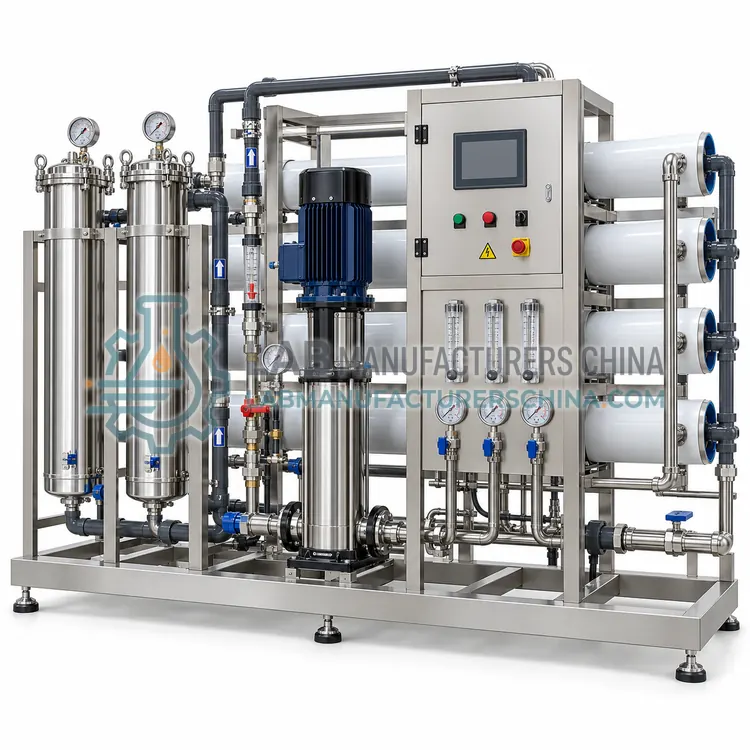
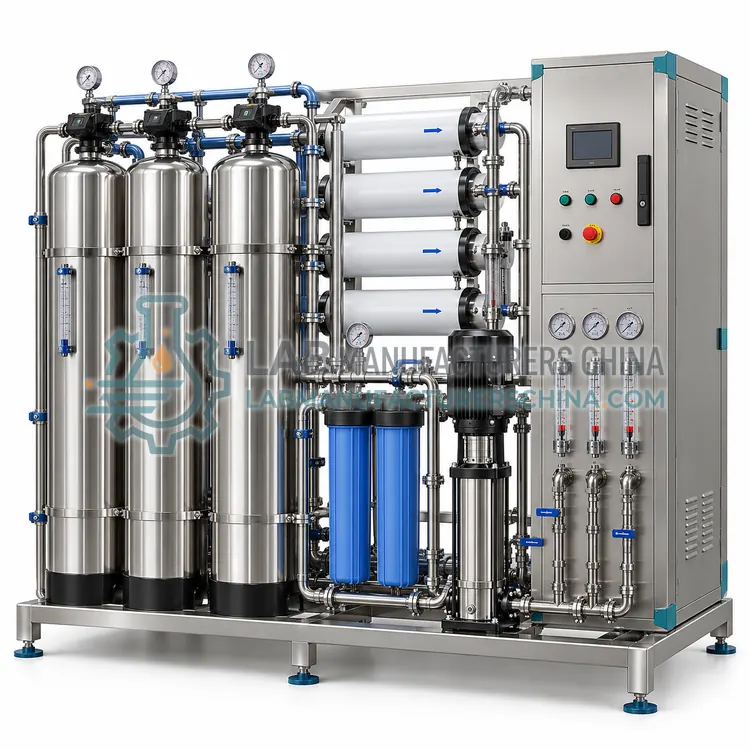
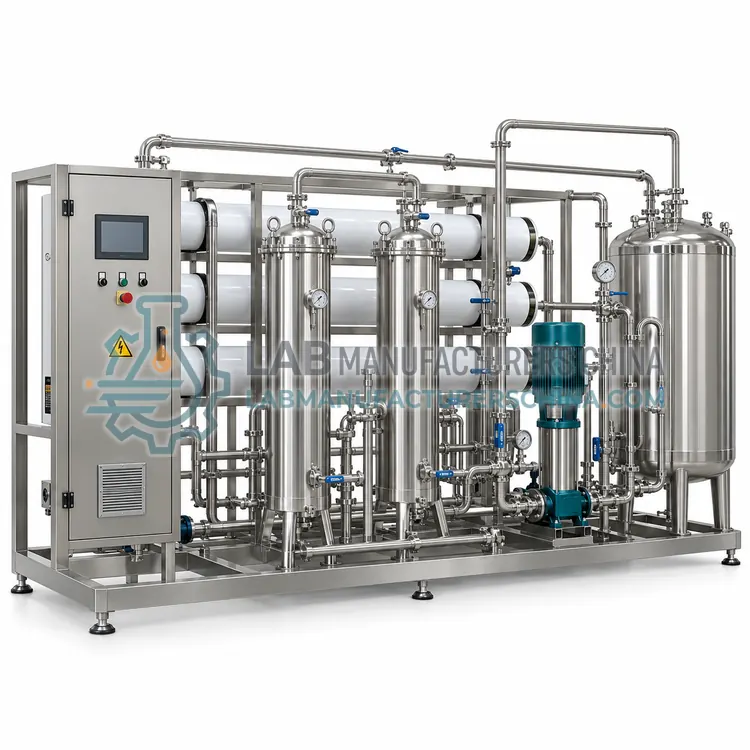
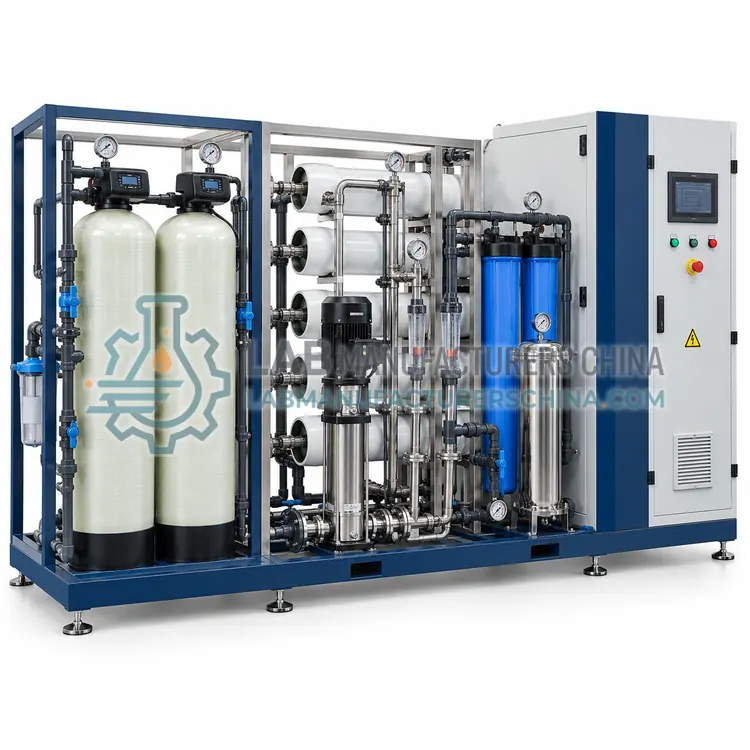
A water purification plant links several treatment stages in series, with storage and a distribution network. Pretreatment removes particles, chlorine and hardness; reverse osmosis or distillation reduces dissolved solids; ion exchange polishes the water to the required resistivity; and ultraviolet light or ultrafiltration controls microorganisms and organics. A storage tank buffers production from demand, and a ring loop with a circulation pump keeps water moving so it does not stagnate and grow biofilm. Valves at points of use allow sampling, and instrumentation monitors conductivity, flow, pressure, temperature and sometimes total organic carbon, with alarms and a programmable controller sequencing the plant. Sanitization by heat or chemical means is built into the design, and concentrate or waste streams are managed according to local rules. Capacity, recovery and quality targets drive the configuration.
Which Water Purification Plants variants are available?
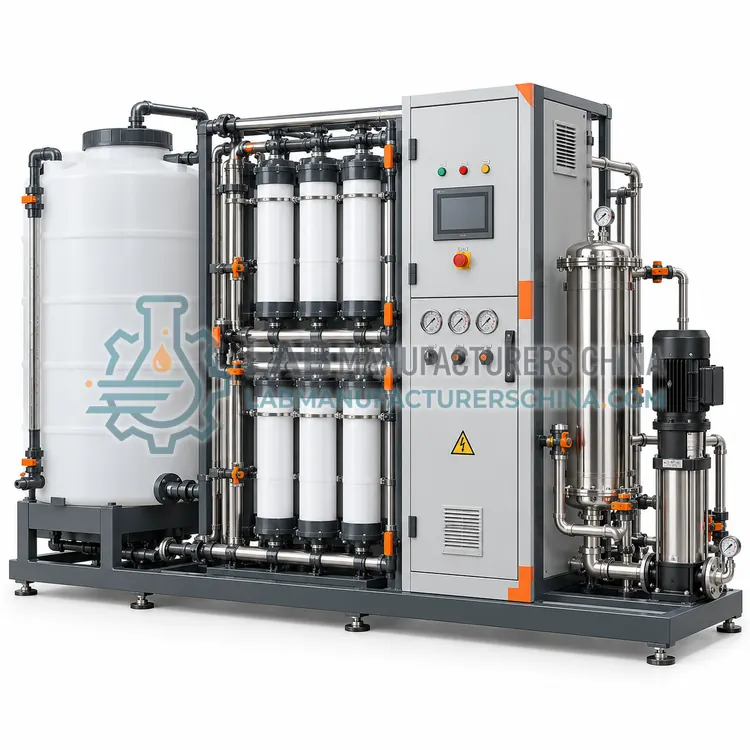
- Skid-Mounted Reverse Osmosis Water Treatment Plant — A skid-mounted reverse osmosis water treatment plant is assembled on a frame for fast installation and includes pretreatment, membrane stages, pumps and controls.
- Multi-Stage Purification Plant — A multi-stage purification plant chains reverse osmosis, ion exchange, UV and ultrafiltration to deliver consistently high-grade water to an entire facility.
- Water Purification Plant with Ring Loop Distribution — A water purification plant with ring loop distribution circulates purified water continuously to every point of use.
- Modular Water Treatment Plant — A modular water treatment plant is built from interchangeable treatment modules that can be added or replaced as demand changes.
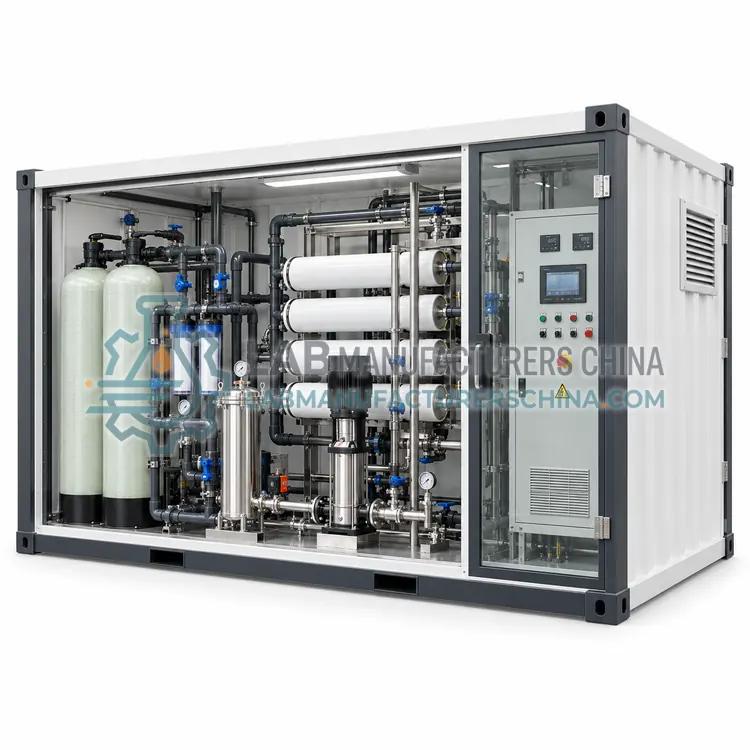
- Containerized Water Treatment Plant — A containerized water treatment plant is built inside a standard shipping container for rapid deployment, reliable operation and protection.
- Central Water Purification Plant — A central water purification plant serves an entire building or campus from one treatment and distribution system.
How do I choose the right variant?
Define the required grade, daily and peak volume, and the acceptable recovery, then design pretreatment around the feed water analysis, because hardness, chlorine, iron and silica set membrane and resin life. Decide between reverse osmosis, distillation and ion exchange according to quality and cost, and whether a mixed-bed polish is needed. Plan storage and a ring loop sized so water turns over frequently, since short residence time keeps microbial counts low. Choose materials for wetted surfaces, and confirm the sanitization method, whether hot water or chemical. Include instrumentation for conductivity, flow and pressure, and specify interlocks, alarms and data logging. Finally, check utility requirements, footprint, noise, drainage and the local rules for concentrate discharge before finalizing the configuration.
Where are Water Purification Plants used?
Water Purification Plants are specified in building-wide laboratory water supply, pharmaceutical production water, clinical department and dialysis feed, food and beverage process water, central sterilization and washing feed and pilot and production process water.
Which standards and certifications apply?
Work with Water Purification Plants is commonly governed by ISO 3696, CLSI GP40, USP <643>, USP <645>, IEC 61010-1 and ISO 9001. Instrument certifications such as CE marking are confirmed per configuration and never assumed.
What are the key considerations before purchase?
Commission the plant by recording conductivity, flow, pressure, recovery and microbial results at each stage, then verify the distribution loop at the farthest point of use. Maintain pretreatment filters, membranes and resin on schedule, because a failure upstream usually means expensive replacement downstream. Keep the ring loop circulating, avoid dead legs and sample at defined points to monitor quality. Sanitize on a documented interval and after any excursion, and record the results. Train operators on the sequencing, alarms and safe handling of chemicals used for regeneration and sanitization. Follow IEC 61010-1, local pressure rules and plumbing codes, and manage concentrate discharge legally. Keep spares and a maintenance log so downtime stays short.