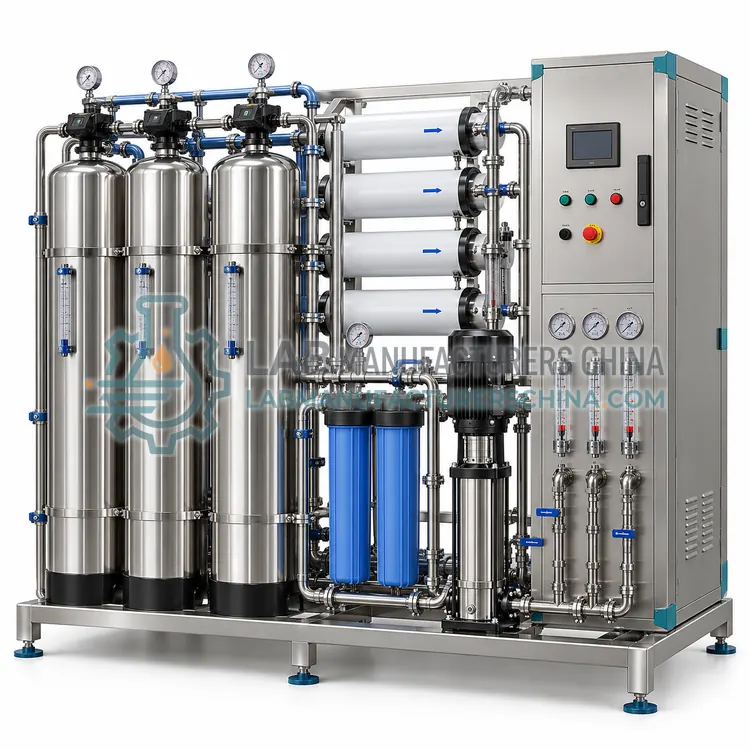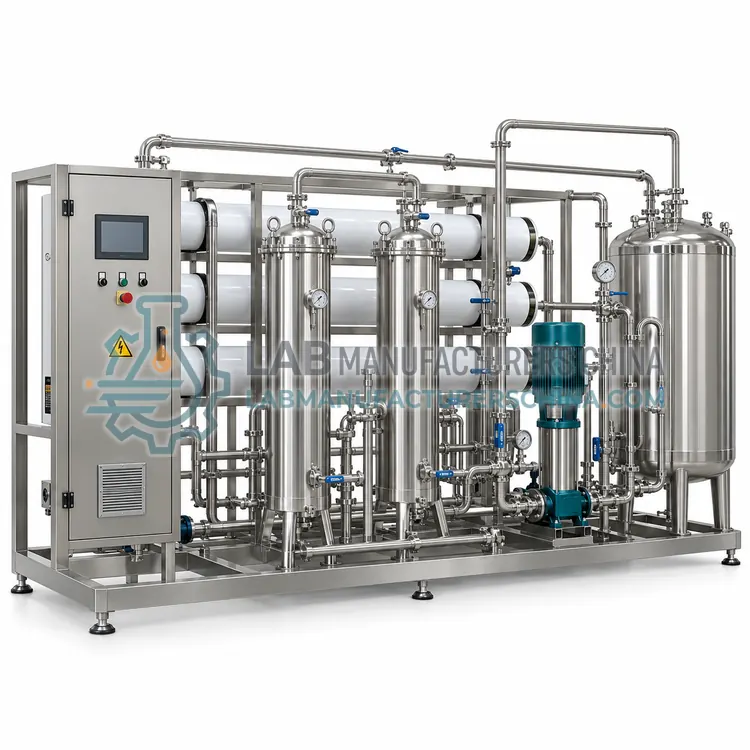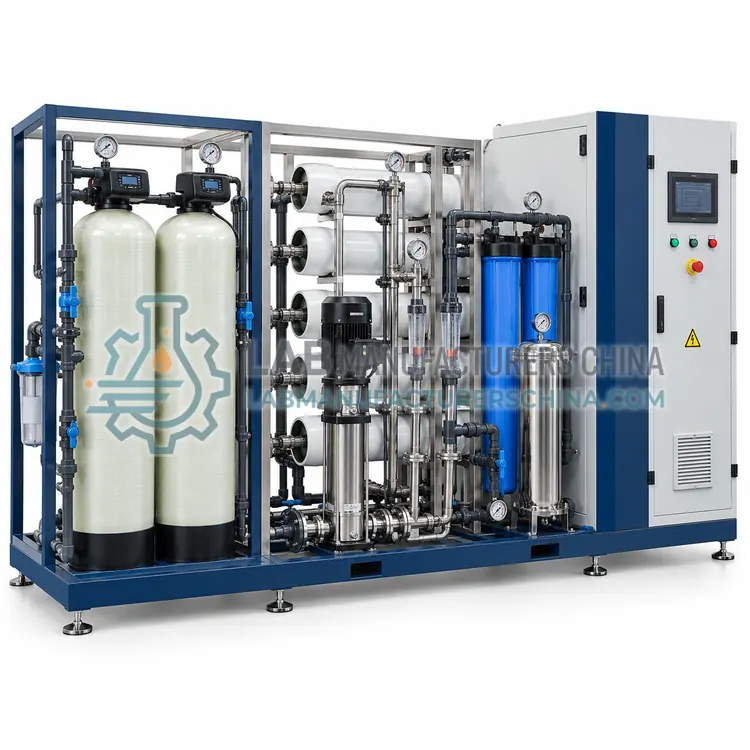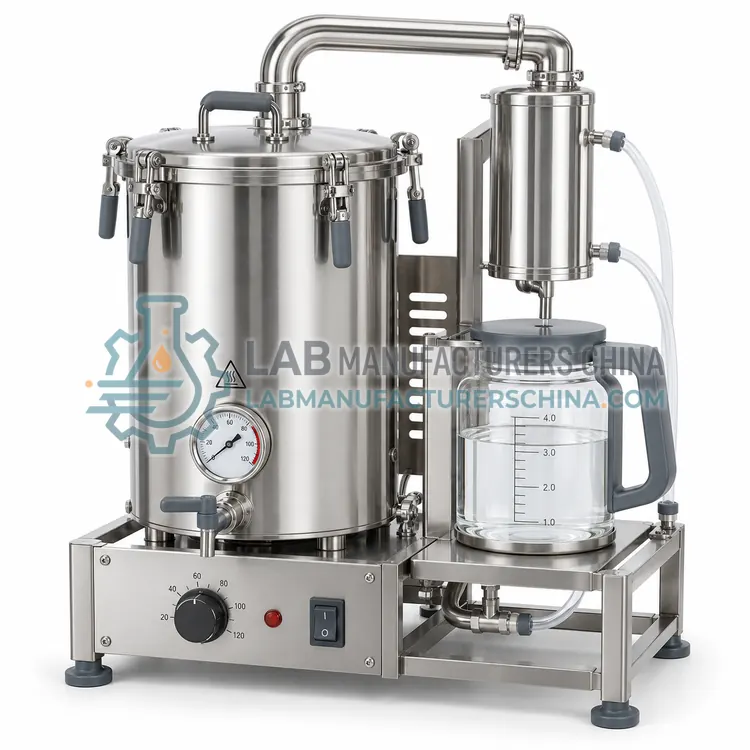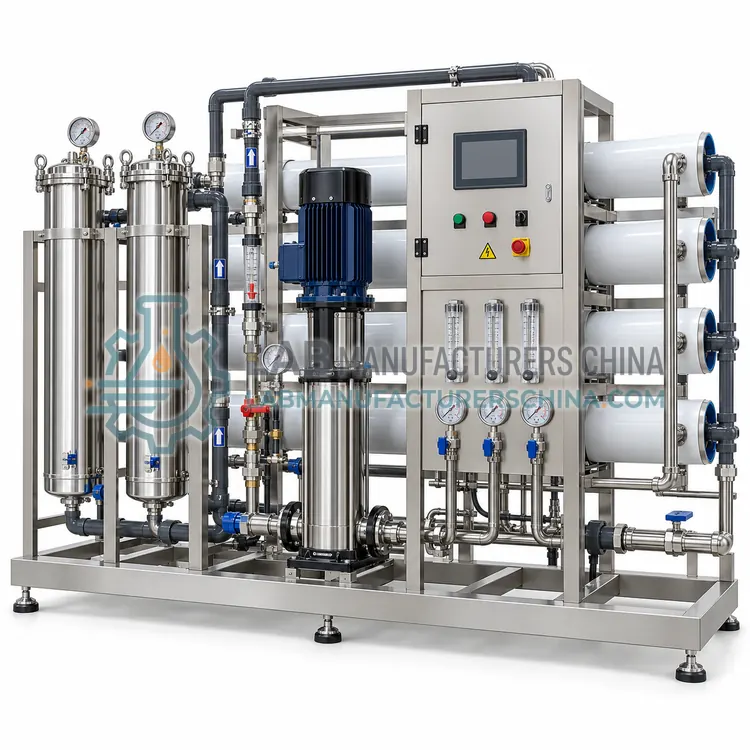
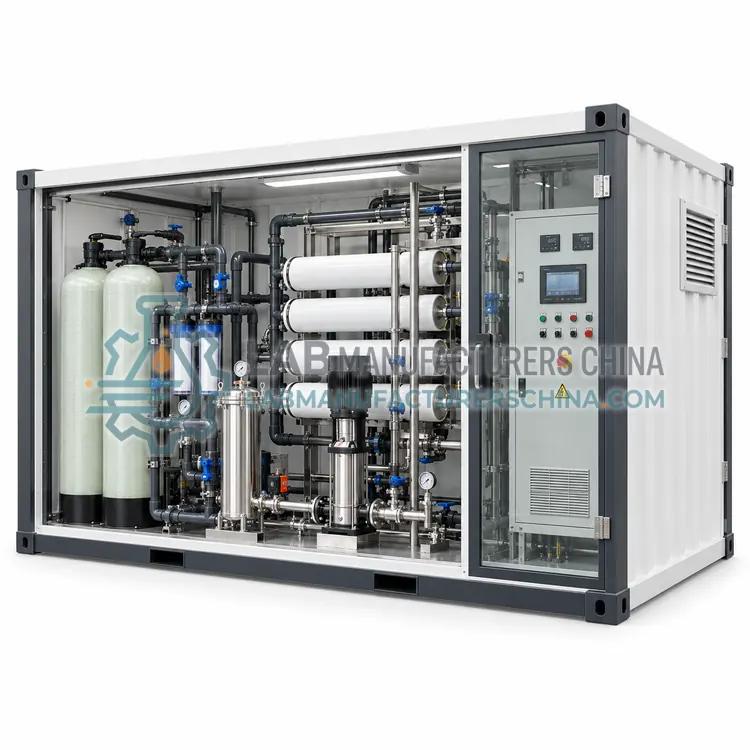
Containerized Water Treatment Plant
集装箱式水处理装置
- SKU WPP-0005
- Water Purification Plants
- CE (to be confirmed)
- ISO 9001 manufacturing (to be confirmed)
- Container certification (to be confirmed)
Price on request — FOB / CIF quoted per order
Prices depend on configuration, quantity and destination port.
Key specifications
| Output | 500–20,000 L/h |
|---|---|
| Container size | 10 or 20 ft standard |
| Treatment stages | Filtration, RO, IX, UV optional |
| Climate control | Heating and cooling |
| Storage tank | Integrated where space allows |
| Control | PLC with remote monitoring |
Request a quote Download brochure · to be provided
By Lab Manufacturers China Technical TeamLast reviewed Standards: ISO 3696, CLSI GP40, USP <643>
What is the Containerized Water Treatment Plant?
A containerized water treatment plant is built inside a standard shipping container for rapid deployment, reliable operation and protection. It is used for remote sites, temporary facilities, disaster response and fast-track infrastructure projects.
What is the Containerized Water Treatment Plant?
A containerized water treatment plant is built inside a standard shipping container for rapid deployment, reliable operation and protection. It is used for remote sites, temporary facilities, disaster response and fast-track infrastructure projects.
Overview
The containerized plant places the entire treatment train, storage, pumps, controls and often a small laboratory bench inside a steel container. Insulation, heating or cooling and lighting make it operable in harsh climates, and the container protects equipment during transport and on site. Output ranges from 500 to 20,000 liters per hour depending on size and configuration, and connections are made to feed, drain, power and product lines through standardized interfaces. Because it arrives pre-assembled and tested, commissioning is faster than for a site-built plant, and it can be relocated if needs change. Maintenance is done from inside the container, which is a benefit in cold or wet conditions, and remote monitoring is common. These plants serve remote communities, mining and construction camps, disaster response and temporary production.
How does it work?
A water purification plant links several treatment stages in series, with storage and a distribution network. Pretreatment removes particles, chlorine and hardness; reverse osmosis or distillation reduces dissolved solids; ion exchange polishes the water to the required resistivity; and ultraviolet light or ultrafiltration controls microorganisms and organics. A storage tank buffers production from demand, and a ring loop with a circulation pump keeps water moving so it does not stagnate and grow biofilm. Valves at points of use allow sampling, and instrumentation monitors conductivity, flow, pressure, temperature and sometimes total organic carbon, with alarms and a programmable controller sequencing the plant. Sanitization by heat or chemical means is built into the design, and concentrate or waste streams are managed according to local rules. Capacity, recovery and quality targets drive the configuration.
What are the key features?
- Complete treatment train inside a steel container
- Insulation, climate control and lighting for harsh sites
- Output of 500–20,000 L/h by configuration
- Standardized feed, drain, power and product connections
- Pre-assembled and tested for fast commissioning
- Relocatable and often remotely monitored
What are the technical specifications?
A typical containerized water treatment plant configuration offers output of 500–20,000 L/h, container size of 10 or 20 ft standard, treatment stages of Filtration, RO, IX, UV optional, climate control of Heating and cooling, storage tank of Integrated where space allows and control of PLC with remote monitoring. Values are indicative of the product class; the exact figures for each configuration are confirmed on the quotation and the calibration documents supplied with the instrument.
Which applications is it used for?
The Containerized Water Treatment Plant is used in remote and off-grid sites, mining and construction camps, disaster response and emergency water, temporary production facilities and fast-track infrastructure projects. Across the wider Water Purification Plants class, laboratories also deploy it for building-wide laboratory water supply, pharmaceutical production water and clinical department and dialysis feed.
Which standards and certifications apply?
Relevant standards and methods include ISO 3696, CLSI GP40, USP <643>, USP <645>, IEC 61010-1 and ISO 9001. Certification candidates for this model are CE, ISO 9001 manufacturing and Container certification; each is to be confirmed for the specific configuration before shipment, and certificates are supplied only where they have been issued.
Commission the plant by recording conductivity, flow, pressure, recovery and microbial results at each stage, then verify the distribution loop at the farthest point of use. Maintain pretreatment filters, membranes and resin on schedule, because a failure upstream usually means expensive replacement downstream. Keep the ring loop circulating, avoid dead legs and sample at defined points to monitor quality. Sanitize on a documented interval and after any excursion, and record the results. Train operators on the sequencing, alarms and safe handling of chemicals used for regeneration and sanitization. Follow IEC 61010-1, local pressure rules and plumbing codes, and manage concentrate discharge legally. Keep spares and a maintenance log so downtime stays short.
How do I select the right Containerized Water Treatment Plant?
Choose a containerized plant for remote, temporary or fast-track projects where site construction is impractical. For a permanent building with space, a conventional plant may cost less. In the RFQ, state output, site conditions, utilities and container size.
How does it compare with other Water Purification Plants variants?
Define the required grade, daily and peak volume, and the acceptable recovery, then design pretreatment around the feed water analysis, because hardness, chlorine, iron and silica set membrane and resin life. Decide between reverse osmosis, distillation and ion exchange according to quality and cost, and whether a mixed-bed polish is needed. Plan storage and a ring loop sized so water turns over frequently, since short residence time keeps microbial counts low. Choose materials for wetted surfaces, and confirm the sanitization method, whether hot water or chemical. Include instrumentation for conductivity, flow and pressure, and specify interlocks, alarms and data logging. Finally, check utility requirements, footprint, noise, drainage and the local rules for concentrate discharge before finalizing the configuration.
Full specifications
| Output | 500–20,000 L/h |
|---|---|
| Container size | 10 or 20 ft standard |
| Treatment stages | Filtration, RO, IX, UV optional |
| Climate control | Heating and cooling |
| Storage tank | Integrated where space allows |
| Control | PLC with remote monitoring |
| Connections | Standardized flanged interfaces |
| Installation | Level pad and utility hookup |
| Power supply | 380 V three-phase |
Indicative values for this product class. Final specifications are confirmed on the quotation and in the calibration documents supplied with the instrument.
Applications
- Remote and off-grid sites
- Mining and construction camps
- Disaster response and emergency water
- Temporary production facilities
- Fast-track infrastructure projects
Key features
- Complete treatment train inside a steel container
- Insulation, climate control and lighting for harsh sites
- Output of 500–20,000 L/h by configuration
- Standardized feed, drain, power and product connections
- Pre-assembled and tested for fast commissioning
- Relocatable and often remotely monitored
Frequently asked questions about Containerized Water Treatment Plant
With insulation, heating and cooling as required, and weatherproof container walls. Confirm the design temperature range and ventilation before deploying to very hot or very cold sites.
Yes, because the plant is assembled and tested at the factory, so only utility connections and on-site functional tests are needed. This shortens the path to first water.
Yes, containers can be moved by truck or ship and reconnected at a new site, which suits temporary projects. Confirm the pad, utility and transport requirements in advance.
Depending on configuration, a plant can supply Type III, Type II or Type I water, or pharmaceutical Purified Water and Water for Injection. The grade is set by the treatment stages and verified by conductivity, total organic carbon and microbial testing.
Continuous circulation keeps water moving, so it does not stagnate and grow biofilm, and it delivers fresh water to every point of use. It also allows monitoring and sanitization to cover the whole network.
By online conductivity and flow monitoring at each stage, periodic sampling at defined points, and microbial and endotoxin testing for pharmaceutical grades. Records from commissioning and routine monitoring show whether the plant stays in control.