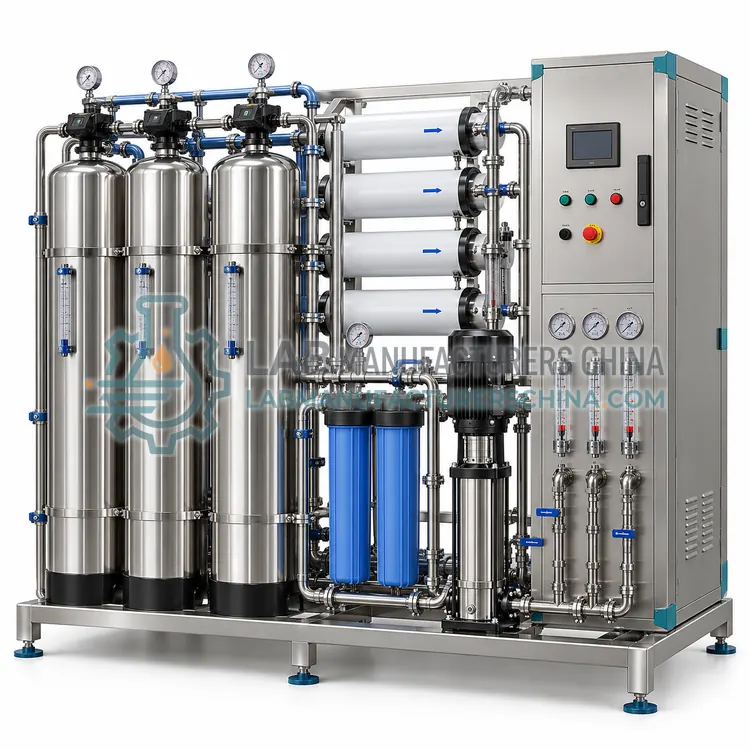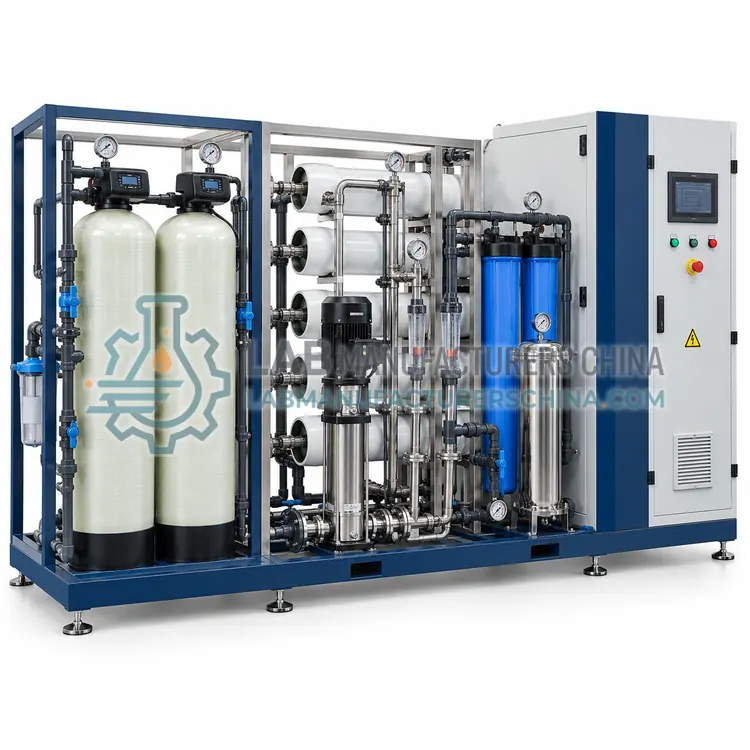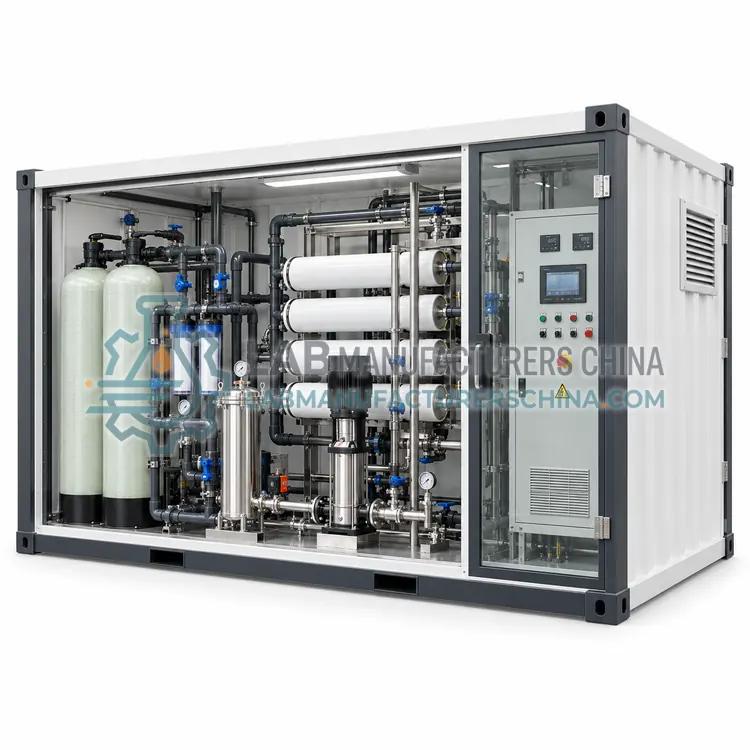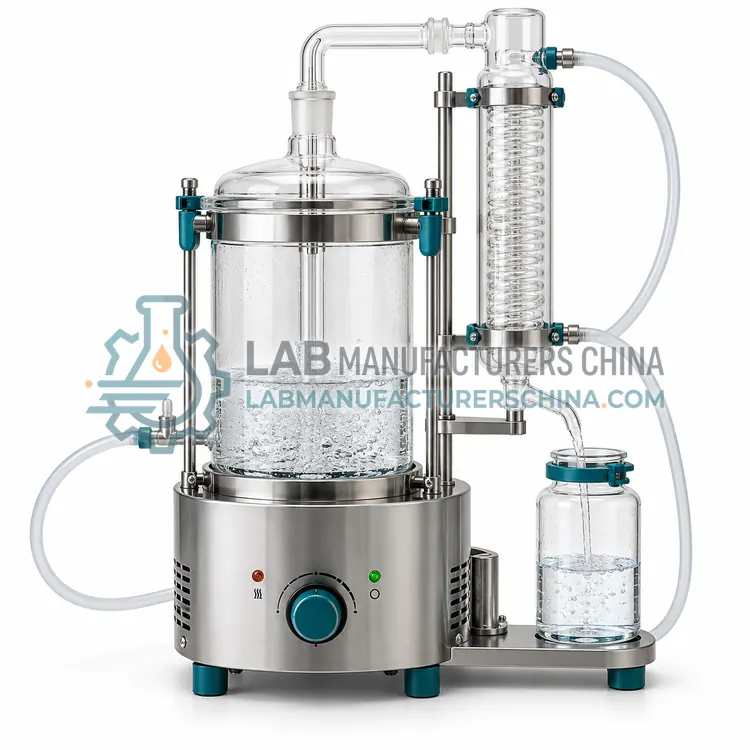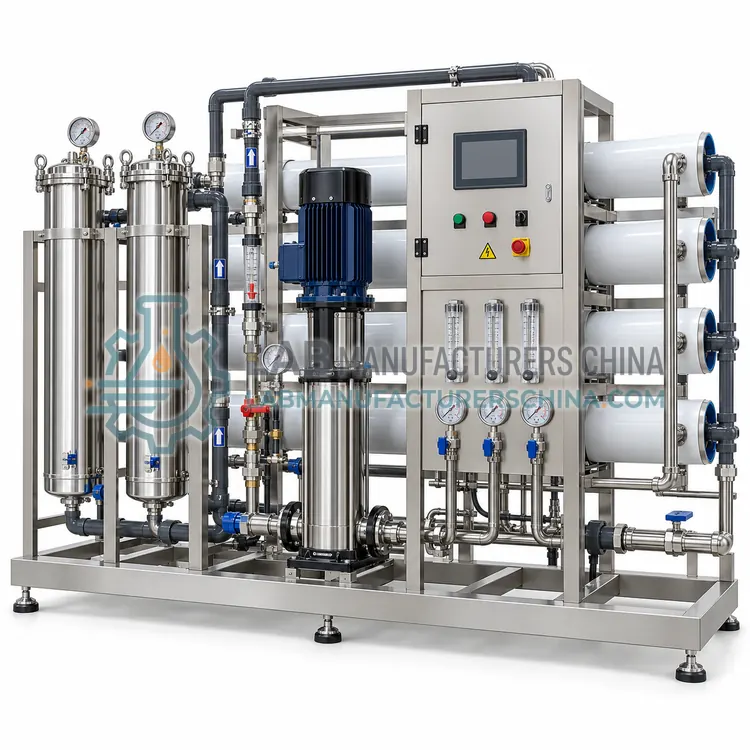
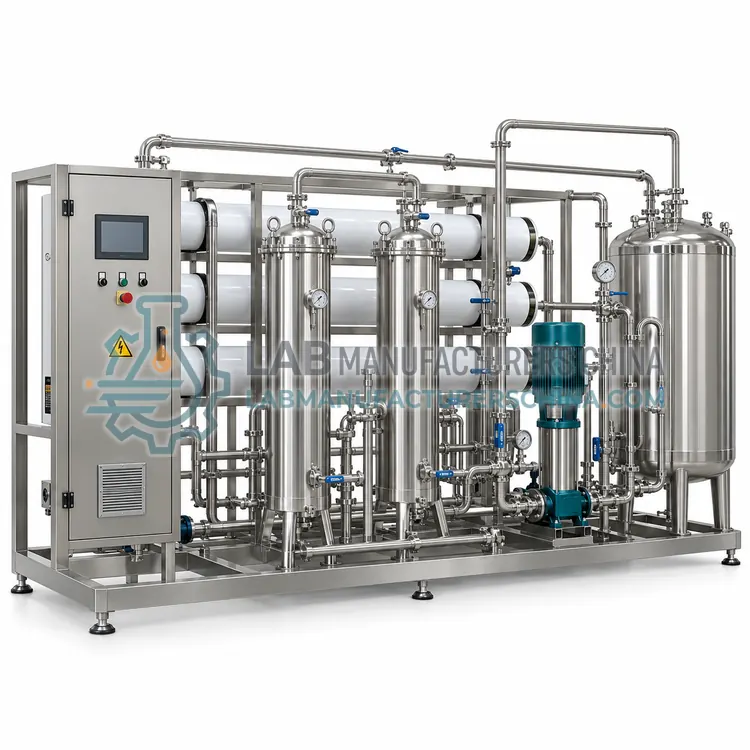
Water Purification Plant with Ring Loop Distribution
带环形管路分配的纯水装置
- SKU WPP-0003
- Water Purification Plants
- CE (to be confirmed)
- ISO 9001 manufacturing (to be confirmed)
- GMP-compliant design (to be confirmed)
Price on request — FOB / CIF quoted per order
Prices depend on configuration, quantity and destination port.
Key specifications
| Loop flow rate | 500–5,000 L/h |
|---|---|
| Loop velocity | 1–2 m/s |
| Points of use | 4–100 |
| Loop material | Stainless steel 316L or PVDF |
| Monitoring | Conductivity, TOC in return |
| Sanitization | Hot water or chemical |
Request a quote Download brochure · to be provided
By Lab Manufacturers China Technical TeamLast reviewed Standards: ISO 3696, CLSI GP40, USP <643>
What is the Water Purification Plant with Ring Loop Distribution?
A water purification plant with ring loop distribution circulates purified water continuously to every point of use. It is used in multi-laboratory buildings and production areas to avoid stagnation and maintain quality.
What is the Water Purification Plant with Ring Loop Distribution?
A water purification plant with ring loop distribution circulates purified water continuously to every point of use. It is used in multi-laboratory buildings and production areas to avoid stagnation and maintain quality.
Overview
This plant centers on a ring loop: purified water leaves the treatment train or storage tank, travels around a closed circuit past every point of use and returns to the tank. A circulation pump maintains flow and a slight pressure, and take-off valves are arranged so that drawing water does not create dead ends. Conductivity and sometimes total organic carbon are monitored in the return line, and sanitization by hot water or chemical means can be applied to the whole loop. The design keeps residence time short, which limits microbial growth, and the loop is often constructed from stainless steel or PVDF with orbital welding and minimal fittings. Plants range from small loops serving a few benches to building-scale networks, and the loop is usually the most carefully engineered part of the system because quality at the tap depends on it.
How does it work?
A water purification plant links several treatment stages in series, with storage and a distribution network. Pretreatment removes particles, chlorine and hardness; reverse osmosis or distillation reduces dissolved solids; ion exchange polishes the water to the required resistivity; and ultraviolet light or ultrafiltration controls microorganisms and organics. A storage tank buffers production from demand, and a ring loop with a circulation pump keeps water moving so it does not stagnate and grow biofilm. Valves at points of use allow sampling, and instrumentation monitors conductivity, flow, pressure, temperature and sometimes total organic carbon, with alarms and a programmable controller sequencing the plant. Sanitization by heat or chemical means is built into the design, and concentrate or waste streams are managed according to local rules. Capacity, recovery and quality targets drive the configuration.
What are the key features?
- Closed ring loop circulating to all points of use
- Circulation pump maintains flow and pressure
- Return-line conductivity and TOC monitoring
- Whole-loop hot water or chemical sanitization
- Short residence time limits microbial growth
- Stainless steel or PVDF with orbital welding
What are the technical specifications?
A typical water purification plant with ring loop distribution configuration offers loop flow rate of 500–5,000 L/h, loop velocity of 1–2 m/s, points of use of 4–100, loop material of Stainless steel 316L or PVDF, monitoring of Conductivity, TOC in return and sanitization of Hot water or chemical. Values are indicative of the product class; the exact figures for each configuration are confirmed on the quotation and the calibration documents supplied with the instrument.
Which applications is it used for?
The Water Purification Plant with Ring Loop Distribution is used in multi-laboratory building supply, pharmaceutical clean area distribution, clinical and dialysis networks, food and beverage plant water and large research facility supply. Across the wider Water Purification Plants class, laboratories also deploy it for building-wide laboratory water supply, pharmaceutical production water and clinical department and dialysis feed.
Which standards and certifications apply?
Relevant standards and methods include ISO 3696, CLSI GP40, USP <643>, USP <645>, IEC 61010-1 and ISO 9001. Certification candidates for this model are CE, ISO 9001 manufacturing and GMP-compliant design; each is to be confirmed for the specific configuration before shipment, and certificates are supplied only where they have been issued.
Commission the plant by recording conductivity, flow, pressure, recovery and microbial results at each stage, then verify the distribution loop at the farthest point of use. Maintain pretreatment filters, membranes and resin on schedule, because a failure upstream usually means expensive replacement downstream. Keep the ring loop circulating, avoid dead legs and sample at defined points to monitor quality. Sanitize on a documented interval and after any excursion, and record the results. Train operators on the sequencing, alarms and safe handling of chemicals used for regeneration and sanitization. Follow IEC 61010-1, local pressure rules and plumbing codes, and manage concentrate discharge legally. Keep spares and a maintenance log so downtime stays short.
How do I select the right Water Purification Plant with Ring Loop Distribution?
Choose ring loop distribution when several points of use must receive consistent quality and stagnation is a risk. For one or two points, a direct feed is simpler. In the RFQ, state point count, loop length, flow velocity and sanitization method.
How does it compare with other Water Purification Plants variants?
Define the required grade, daily and peak volume, and the acceptable recovery, then design pretreatment around the feed water analysis, because hardness, chlorine, iron and silica set membrane and resin life. Decide between reverse osmosis, distillation and ion exchange according to quality and cost, and whether a mixed-bed polish is needed. Plan storage and a ring loop sized so water turns over frequently, since short residence time keeps microbial counts low. Choose materials for wetted surfaces, and confirm the sanitization method, whether hot water or chemical. Include instrumentation for conductivity, flow and pressure, and specify interlocks, alarms and data logging. Finally, check utility requirements, footprint, noise, drainage and the local rules for concentrate discharge before finalizing the configuration.
Full specifications
| Loop flow rate | 500–5,000 L/h |
|---|---|
| Loop velocity | 1–2 m/s |
| Points of use | 4–100 |
| Loop material | Stainless steel 316L or PVDF |
| Monitoring | Conductivity, TOC in return |
| Sanitization | Hot water or chemical |
| Storage tank | 100–2,000 L |
| Pressure | 2–6 bar at the tap |
| Control | PLC with logging |
| Power supply | 380 V three-phase |
Indicative values for this product class. Final specifications are confirmed on the quotation and in the calibration documents supplied with the instrument.
Applications
- Multi-laboratory building supply
- Pharmaceutical clean area distribution
- Clinical and dialysis networks
- Food and beverage plant water
- Large research facility supply
Key features
- Closed ring loop circulating to all points of use
- Circulation pump maintains flow and pressure
- Return-line conductivity and TOC monitoring
- Whole-loop hot water or chemical sanitization
- Short residence time limits microbial growth
- Stainless steel or PVDF with orbital welding
Frequently asked questions about Water Purification Plant with Ring Loop Distribution
Continuous flow keeps residence time short so biofilm cannot establish, and ensures fresh water at every tap. It also allows monitoring and sanitization to reach the whole network.
About 1 to 2 meters per second in the return line, which is high enough to limit biofilm attachment without causing excessive pressure drop or erosion. Confirm the value with the designer.
By taking branches directly from the loop with short, equal-length spurs and valves close to the main. Dead legs longer than a few pipe diameters encourage stagnation and are avoided in design.
Depending on configuration, a plant can supply Type III, Type II or Type I water, or pharmaceutical Purified Water and Water for Injection. The grade is set by the treatment stages and verified by conductivity, total organic carbon and microbial testing.
Continuous circulation keeps water moving, so it does not stagnate and grow biofilm, and it delivers fresh water to every point of use. It also allows monitoring and sanitization to cover the whole network.
By online conductivity and flow monitoring at each stage, periodic sampling at defined points, and microbial and endotoxin testing for pharmaceutical grades. Records from commissioning and routine monitoring show whether the plant stays in control.
Related models