How do Circulation Pumps work?
A circulation pump uses a centrifugal or gear impeller to push fluid through a closed loop at a controlled flow rate. The fluid passes through a heated or refrigerated reservoir, then to the application's jacket or heat exchanger, and returns to the reservoir. A temperature sensor measures the bath or the return line, and a PID controller adjusts the heater or refrigeration compressor to hold the setpoint. Pump pressure must be enough to overcome the resistance of the loop, tubing and the application, and flow determines how quickly heat is transferred. Key components are the reservoir, heater, compressor or thermoelectric module, circulation pump, temperature sensor and controller. Cooling capacity and temperature range define the envelope; pump pressure and flow define the loop performance. Some units also offer external temperature control with a probe at the application.
Which Circulation Pumps variants are available?
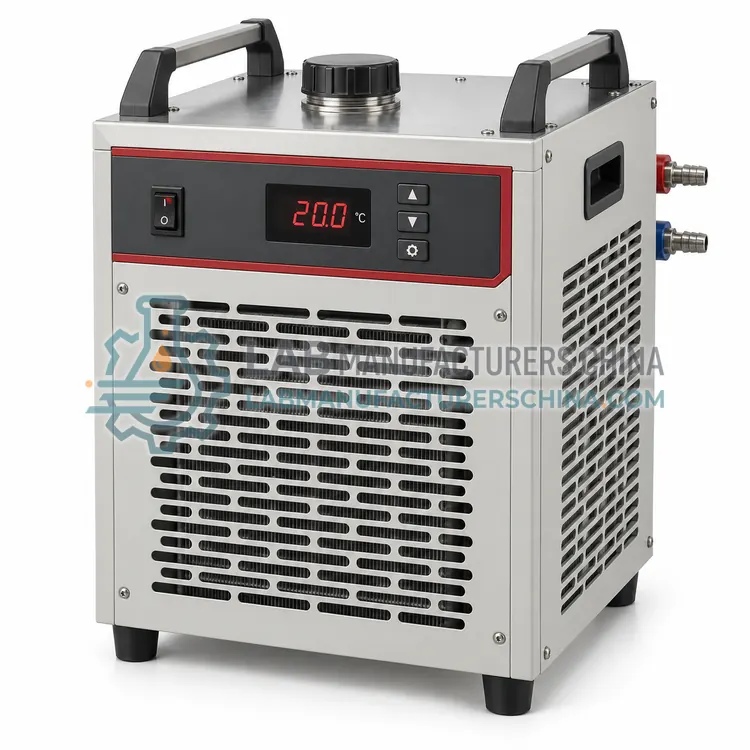
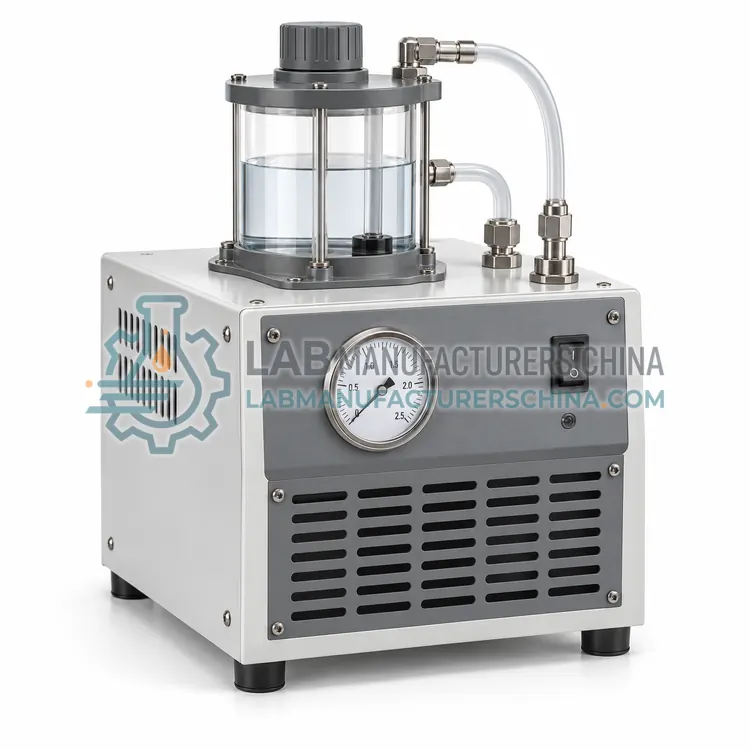
- Recirculating Chiller — A recirculating chiller removes heat from instruments and reactors by circulating cooled fluid through a closed loop.
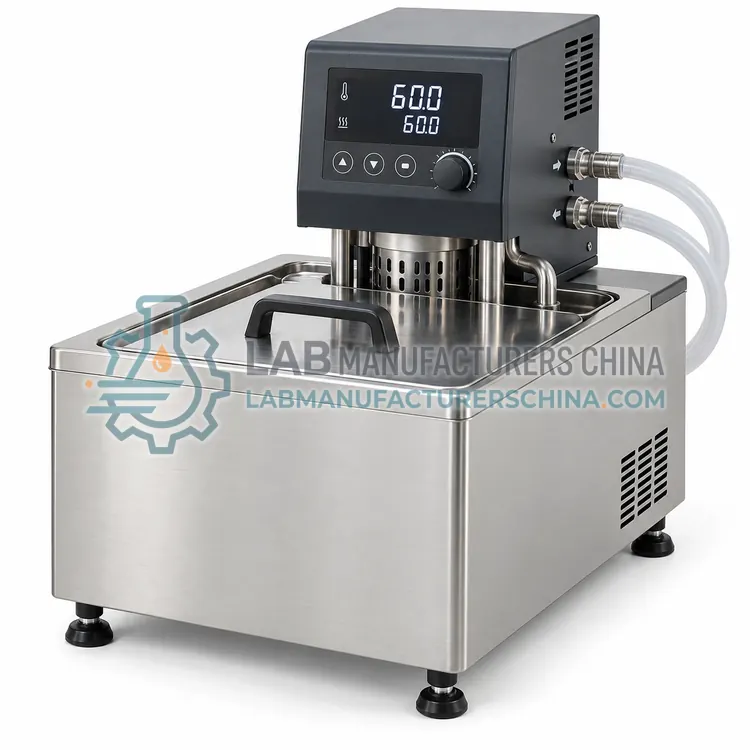
- Heating Circulating Bath — A heating circulating bath warms fluid and circulates it through an external loop to hold reactors, columns and instruments at a stable elevated temperature.
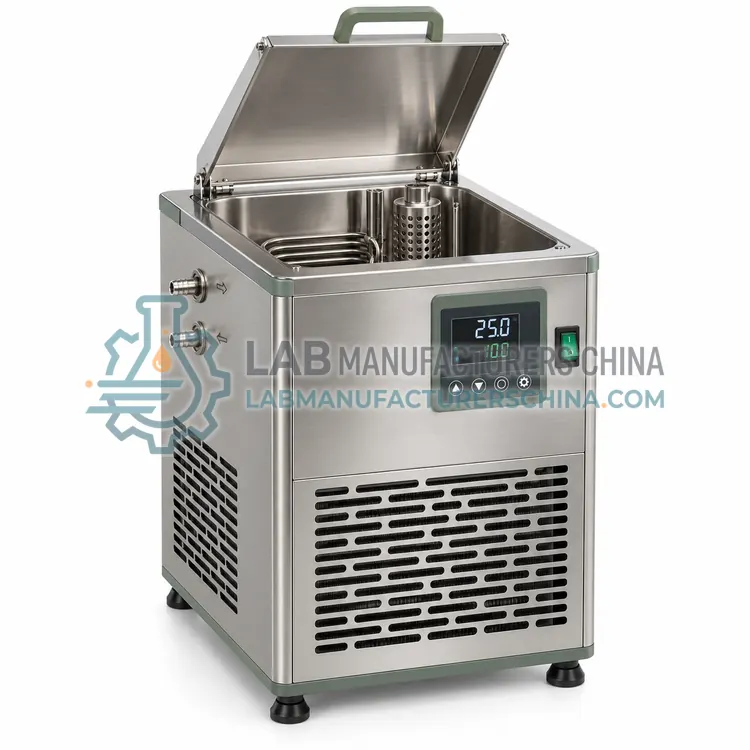
- Refrigerated and Heating Circulating Bath — A refrigerated and heating circulating bath covers a wide range from about minus 20 to 150 degrees Celsius for reactor jackets, chromatography and material testing.
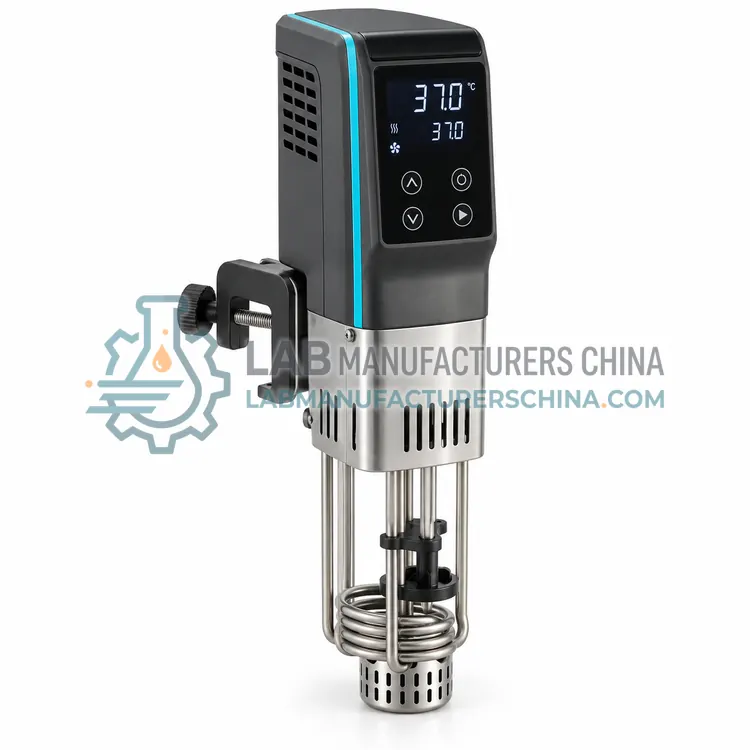
- Immersion Circulator — An immersion circulator is a compact heating and pumping unit that clamps onto any suitable bath or vessel to control temperature.
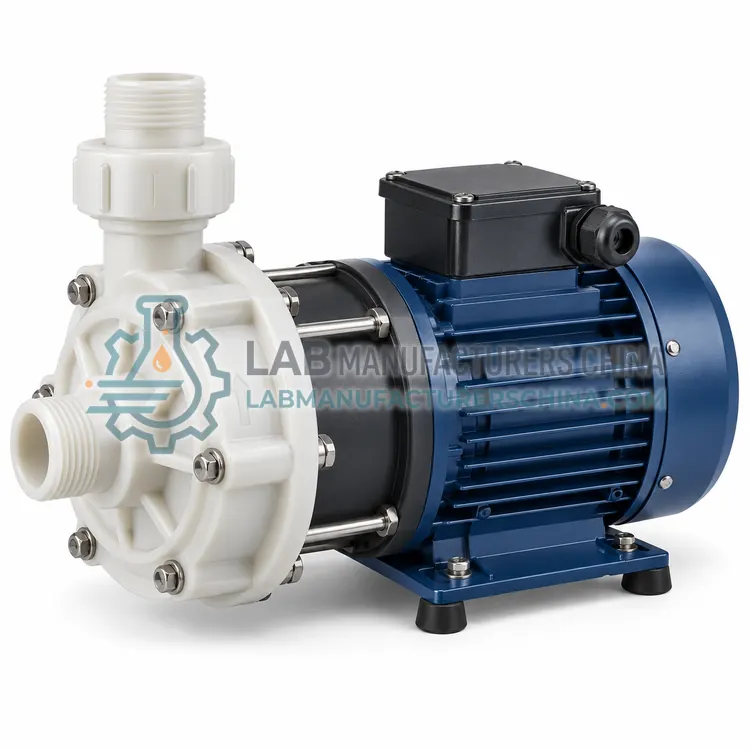
- Magnetic-Drive Centrifugal Circulation Pump — A magnetic-drive centrifugal circulation pump moves fluid with a magnetically coupled impeller and no shaft seal, avoiding leaks.
- Closed-Loop Laboratory Circulation Pump — A closed-loop laboratory circulation pump maintains flow through a sealed circuit for sampling, dilution and online analysis.
How do I choose the right variant?
Begin with the temperature range and the cooling or heating capacity required at your working temperature, not at the lowest rating. Then check pump flow and pressure, because a high-capacity bath with a weak pump may not circulate adequately through a restrictive jacket or long tubing run. Choose the reservoir volume for the thermal mass and stability you need, and decide between internal control at the bath and external control at the application. Match wetted materials to the fluid; water is standard, but glycol mixtures extend the low-temperature range, and some applications need silicone oil. Consider noise, footprint, drain and fill access, and whether a pressure or flow indicator is included. For unattended operation, look for low-level protection, over-temperature cutout and remote alarm contacts.
Where are Circulation Pumps used?
Circulation Pumps are specified in reactor jacket temperature control, spectrometer and detector cooling, laser and optics thermal management, rotary evaporator condenser cooling, sample incubation and stability testing and instrument and pump seal cooling.
Which standards and certifications apply?
Work with Circulation Pumps is commonly governed by IEC 61010-1, IEC 61010-2-010, IEC 61326-1, ISO 9001 and GB 4793.1. Instrument certifications such as CE marking are confirmed per configuration and never assumed.
What are the key considerations before purchase?
Use only the recommended fluid and change it periodically, because algae, scale and contaminants reduce heat transfer and can block the loop. Keep the reservoir above the minimum level to avoid pump cavitation and heater damage. Insulate external lines to reduce condensation and heat loss, and use the shortest practical tubing with few restrictions. Vent the loop to release trapped air before setting the controller, because air pockets cause temperature oscillation. Place the unit where ambient heat and dust are low, and clean the condenser or air filter on schedule. Follow IEC 61010-1 for electrical safety and check the pressure rating of the application loop before running at high pump pressure. Record setpoint, fluid and calibration data for traceability.