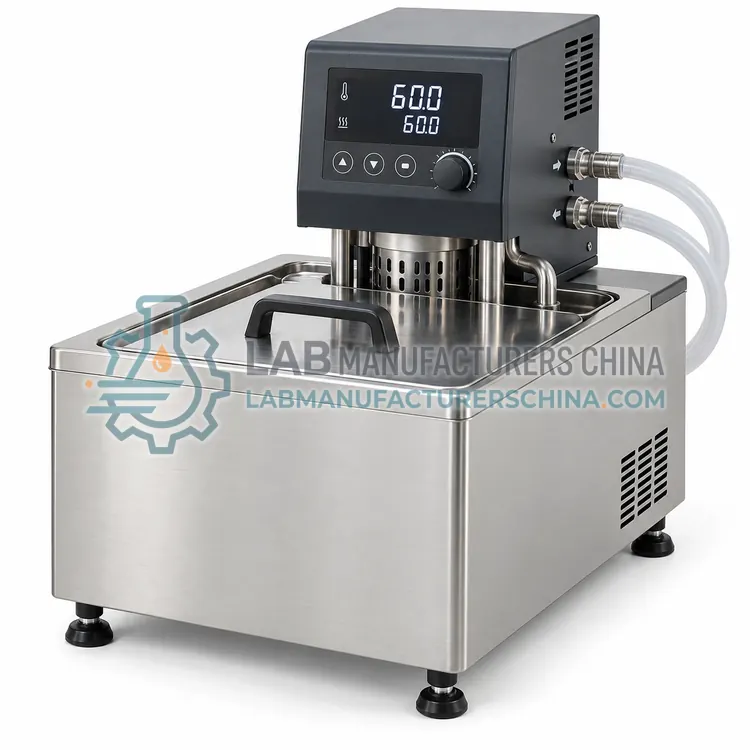
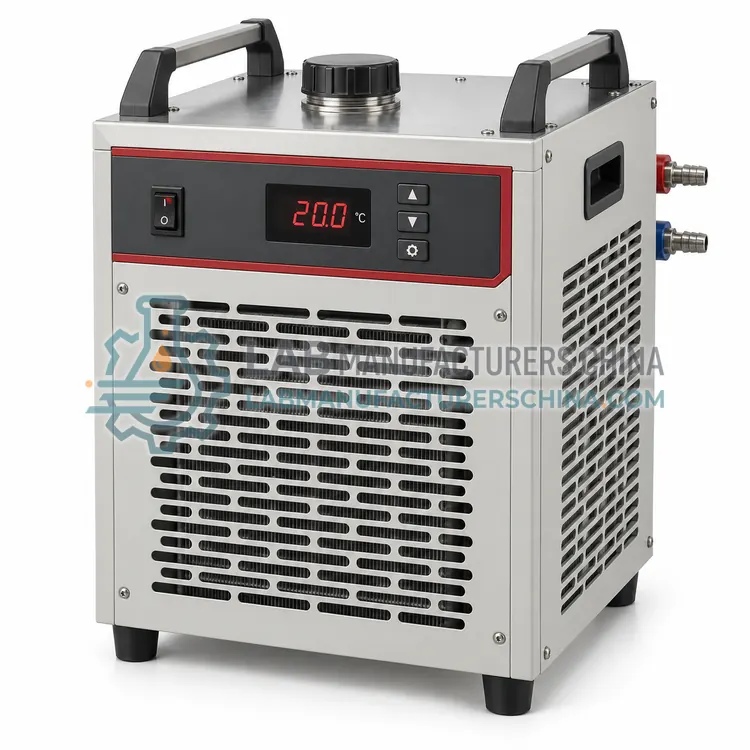
Recirculating Chiller
循环冷却器
- SKU CIP-0001
- Circulation Pumps
- CE (to be confirmed)
- RoHS (to be confirmed)
- ISO 9001 manufacturing (to be confirmed)
Price on request — FOB / CIF quoted per order
Prices depend on configuration, quantity and destination port.
Key specifications
| Cooling capacity | 300 W–5 kW at 20 °C |
|---|---|
| Temperature range | Ambient to −10 °C |
| Temperature stability | ± 0.5 °C |
| Flow rate | 10–40 L/min |
| Pump pressure | Up to 3 bar |
| Reservoir volume | 2–15 L |
Request a quote Download brochure · to be provided
By Lab Manufacturers China Technical TeamLast reviewed Standards: IEC 61010-1, IEC 61010-2-010, IEC 61326-1
What is the Recirculating Chiller?
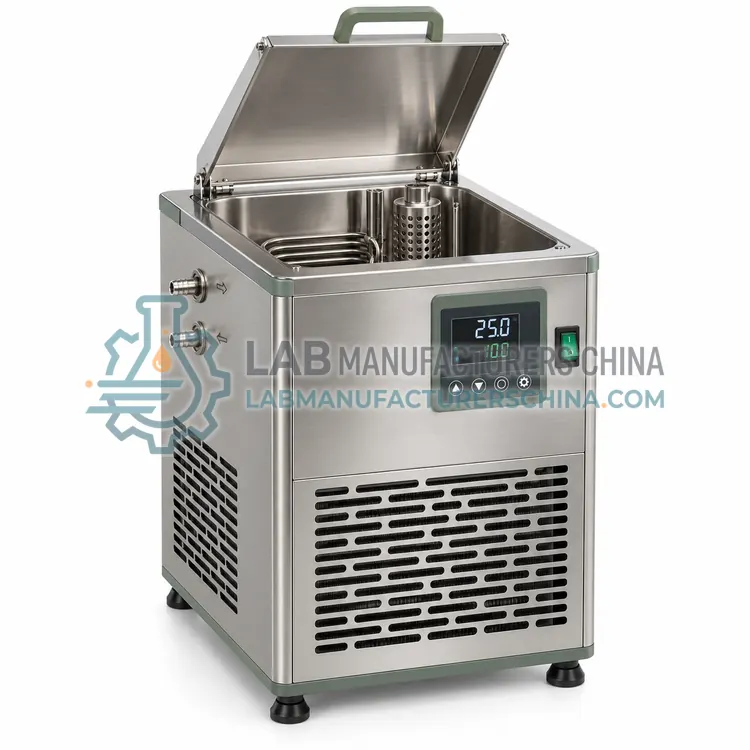
A recirculating chiller removes heat from instruments and reactors by circulating cooled fluid through a closed loop. It provides stable cooling from ambient down to about minus 10 degrees Celsius without using tap water.
What is the Recirculating Chiller?
A recirculating chiller removes heat from instruments and reactors by circulating cooled fluid through a closed loop. It provides stable cooling from ambient down to about minus 10 degrees Celsius without using tap water.
Overview
The recirculating chiller uses a vapor-compression refrigeration circuit and a circulation pump to deliver cooled fluid to the application. Cooling capacities range from about 300 W to over 5 kW, and temperature can be held from ambient down to about minus 10 degrees Celsius with a typical stability of plus or minus 0.5 degrees. The reservoir holds 2 to 15 liters, and the pump provides 10 to 40 liters per minute at pressures up to about 3 bar. Controls include a digital setpoint, low-level and over-temperature protection, and often an alarm contact. Users choose a chiller over tap-water cooling because it saves water, avoids scale and gives a stable temperature. Applications include rotary evaporator condensers, lasers, spectrometers, vacuum pumps and reactor jackets.
How does it work?
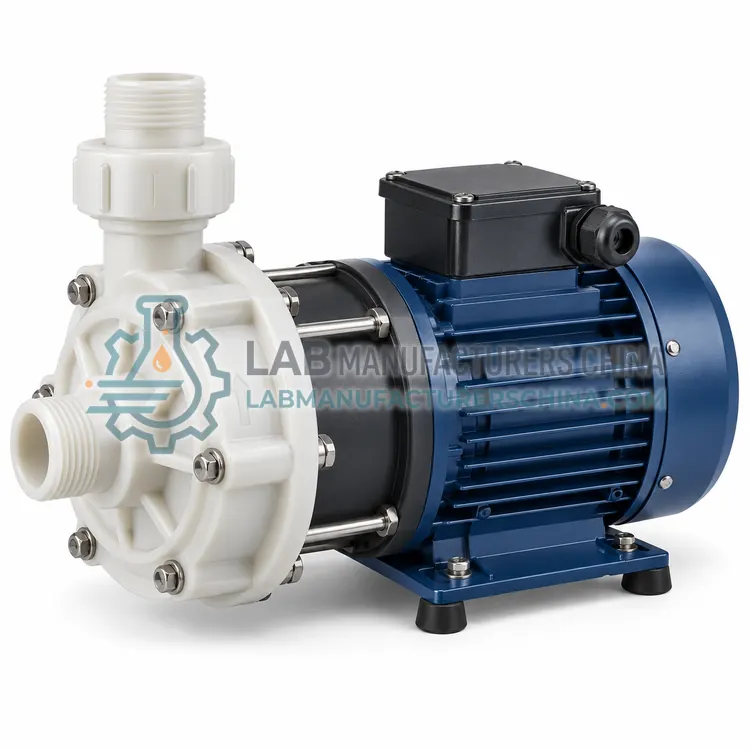
A circulation pump uses a centrifugal or gear impeller to push fluid through a closed loop at a controlled flow rate. The fluid passes through a heated or refrigerated reservoir, then to the application's jacket or heat exchanger, and returns to the reservoir. A temperature sensor measures the bath or the return line, and a PID controller adjusts the heater or refrigeration compressor to hold the setpoint. Pump pressure must be enough to overcome the resistance of the loop, tubing and the application, and flow determines how quickly heat is transferred. Key components are the reservoir, heater, compressor or thermoelectric module, circulation pump, temperature sensor and controller. Cooling capacity and temperature range define the envelope; pump pressure and flow define the loop performance. Some units also offer external temperature control with a probe at the application.
What are the key features?
- Cooling capacity of about 300 W–5 kW
- Temperature from ambient down to about −10 °C
- Stability typically within ± 0.5 °C
- Flow of 10–40 L/min at up to 3 bar
- Digital control with low-level and over-temperature protection
- Avoids water waste and scale compared with tap cooling
What are the technical specifications?
A typical recirculating chiller configuration offers cooling capacity of 300 W–5 kW at 20 °C, temperature range of Ambient to −10 °C, temperature stability of ± 0.5 °C, flow rate of 10–40 L/min, pump pressure of Up to 3 bar and reservoir volume of 2–15 L. Values are indicative of the product class; the exact figures for each configuration are confirmed on the quotation and the calibration documents supplied with the instrument.
Which applications is it used for?
The Recirculating Chiller is used in rotary evaporator condenser cooling, laser and optics cooling, spectrometer and detector cooling, reactor jacket cooling and vacuum pump cooling. Across the wider Circulation Pumps class, laboratories also deploy it for reactor jacket temperature control, spectrometer and detector cooling and laser and optics thermal management.
Which standards and certifications apply?
Relevant standards and methods include IEC 61010-1, IEC 61010-2-010, IEC 61326-1, ISO 9001 and GB 4793.1. Certification candidates for this model are CE, RoHS and ISO 9001 manufacturing; each is to be confirmed for the specific configuration before shipment, and certificates are supplied only where they have been issued.
Use only the recommended fluid and change it periodically, because algae, scale and contaminants reduce heat transfer and can block the loop. Keep the reservoir above the minimum level to avoid pump cavitation and heater damage. Insulate external lines to reduce condensation and heat loss, and use the shortest practical tubing with few restrictions. Vent the loop to release trapped air before setting the controller, because air pockets cause temperature oscillation. Place the unit where ambient heat and dust are low, and clean the condenser or air filter on schedule. Follow IEC 61010-1 for electrical safety and check the pressure rating of the application loop before running at high pump pressure. Record setpoint, fluid and calibration data for traceability.
How do I select the right Recirculating Chiller?
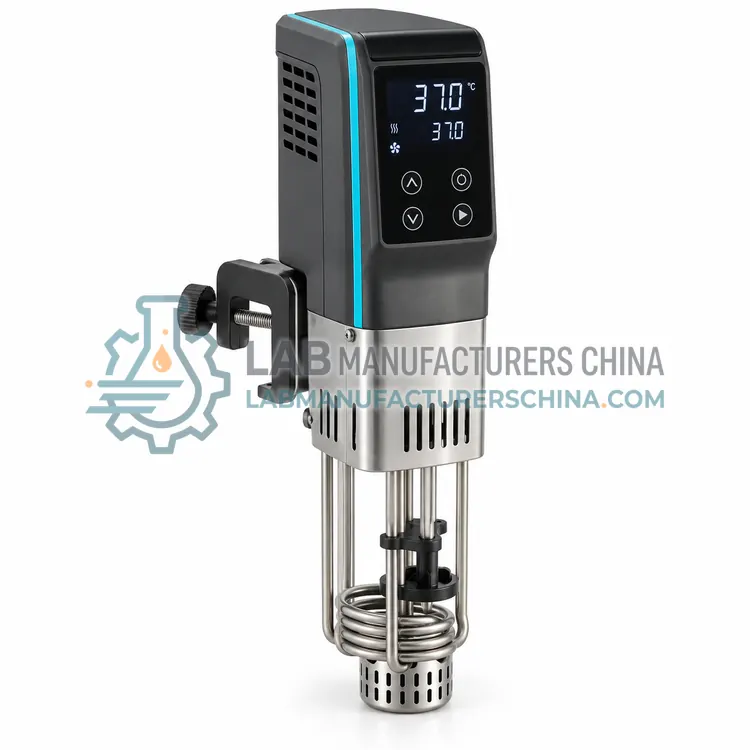
Choose a chiller when you need reliable cooling below ambient and want to avoid tap water. For temperature above ambient, a heating bath is appropriate. In the RFQ, state cooling capacity at your working temperature, flow, pressure, reservoir size, fluid and ambient conditions.
How does it compare with other Circulation Pumps variants?
Begin with the temperature range and the cooling or heating capacity required at your working temperature, not at the lowest rating. Then check pump flow and pressure, because a high-capacity bath with a weak pump may not circulate adequately through a restrictive jacket or long tubing run. Choose the reservoir volume for the thermal mass and stability you need, and decide between internal control at the bath and external control at the application. Match wetted materials to the fluid; water is standard, but glycol mixtures extend the low-temperature range, and some applications need silicone oil. Consider noise, footprint, drain and fill access, and whether a pressure or flow indicator is included. For unattended operation, look for low-level protection, over-temperature cutout and remote alarm contacts.
Full specifications
| Cooling capacity | 300 W–5 kW at 20 °C |
|---|---|
| Temperature range | Ambient to −10 °C |
| Temperature stability | ± 0.5 °C |
| Flow rate | 10–40 L/min |
| Pump pressure | Up to 3 bar |
| Reservoir volume | 2–15 L |
| Refrigerant | R134a or R513A |
| Safety | Low-level and over-temperature cutout |
| Noise level | 55–65 dB(A) |
| Power supply | 220–240 V, 50/60 Hz |
Indicative values for this product class. Final specifications are confirmed on the quotation and in the calibration documents supplied with the instrument.
Applications
- Rotary evaporator condenser cooling
- Laser and optics cooling
- Spectrometer and detector cooling
- Reactor jacket cooling
- Vacuum pump cooling
Key features
- Cooling capacity of about 300 W–5 kW
- Temperature from ambient down to about −10 °C
- Stability typically within ± 0.5 °C
- Flow of 10–40 L/min at up to 3 bar
- Digital control with low-level and over-temperature protection
- Avoids water waste and scale compared with tap cooling
Frequently asked questions about Recirculating Chiller
Capacity is quoted at a specific fluid temperature, often 20 degrees Celsius, and falls as the setpoint decreases. Base your selection on the capacity at your working temperature plus the application load.
Water is standard for temperatures above about 5 degrees Celsius. Use a glycol mixture for lower temperatures or when freezing is a risk, and check the concentration against the target setpoint.
In a well-ventilated position with at least 20 centimeters clearance around the vents, away from heat sources and direct sunlight. Poor airflow reduces capacity and shortens compressor life.
Use the capacity quoted at your working temperature, not at the lowest temperature, and add margin for line losses and the application heat load. Capacity falls as temperature decreases, so ambient conditions matter.
The pump must overcome resistance from the application jacket, tubing and fittings. A pump with high flow but low pressure may circulate poorly through restrictive paths, so check both the flow and pressure curves.
Yes, a glycol and water mixture extends the working range below zero and reduces freezing risk. It lowers heat transfer slightly and needs periodic replacement, so confirm the concentration for your target temperature.
Related models