Lab Manufacturers China

Peristaltic Pumps

蠕动泵

PEP · Laboratory Pumps · 6 models

By Lab Manufacturers China Technical TeamLast reviewed Standards: IEC 61010-1, IEC 61326-1, ISO 9001

Standards referenced

  • IEC 61010-1
  • IEC 61326-1
  • ISO 9001
  • USP <87>
  • USP <88>
  • GB 4793.1

What are Peristaltic Pumps?

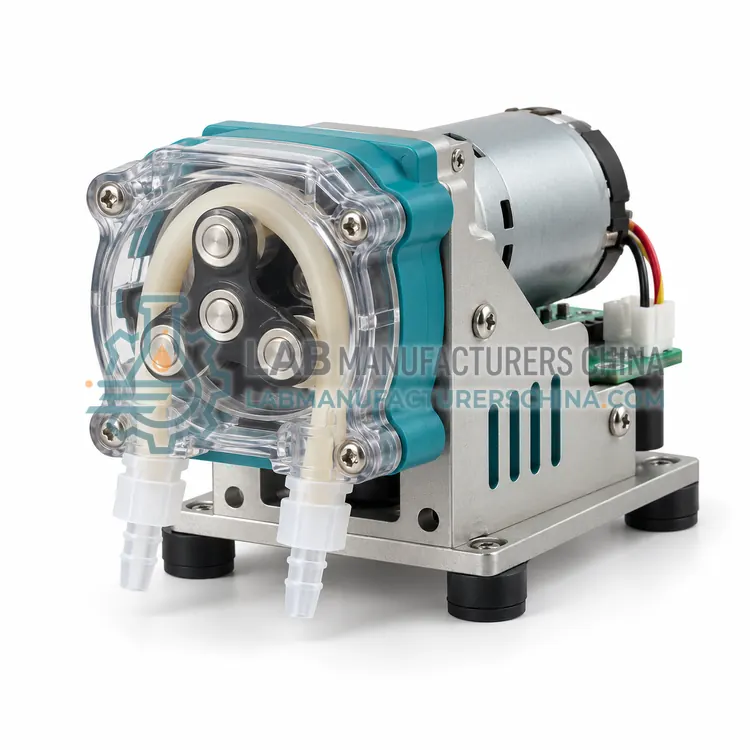
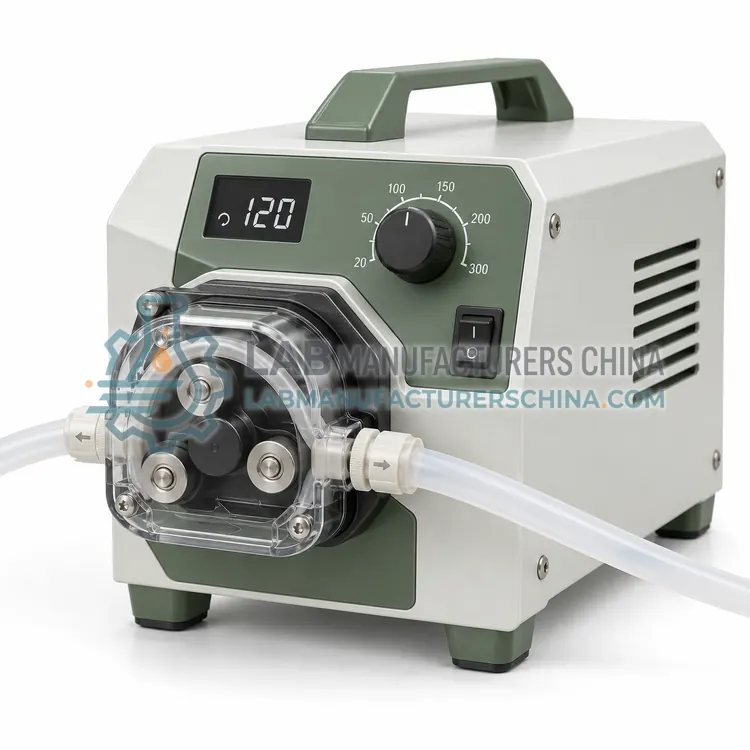
Peristaltic pumps move liquids by rollers that compress flexible tubing, so only the tubing contacts the fluid. They are used in laboratories for sterile, corrosive or particle-laden liquid transfer, dosing, chromatography and continuous flow with easy cleaning and low contamination risk.

6 models of Peristaltic Pumps

The 6 models below are current configurations; specifications are confirmed on quotation.

Variable-Speed Peristaltic Pump

调速蠕动泵

  • PEP-0001
  • Peristaltic Pumps
  • CE (to be confirmed)
  • RoHS (to be confirmed)
  • ISO 9001 manufacturing (to be confirmed)
Speed range:
1–600 rpm
Flow range:
0.001–3,000 mL/min
Number of channels:
1
Tubing sizes:
1.6–9.5 mm inner diameter
Speed accuracy:
± 0.5 %
Flow accuracy after calibration:
± 1–3 %

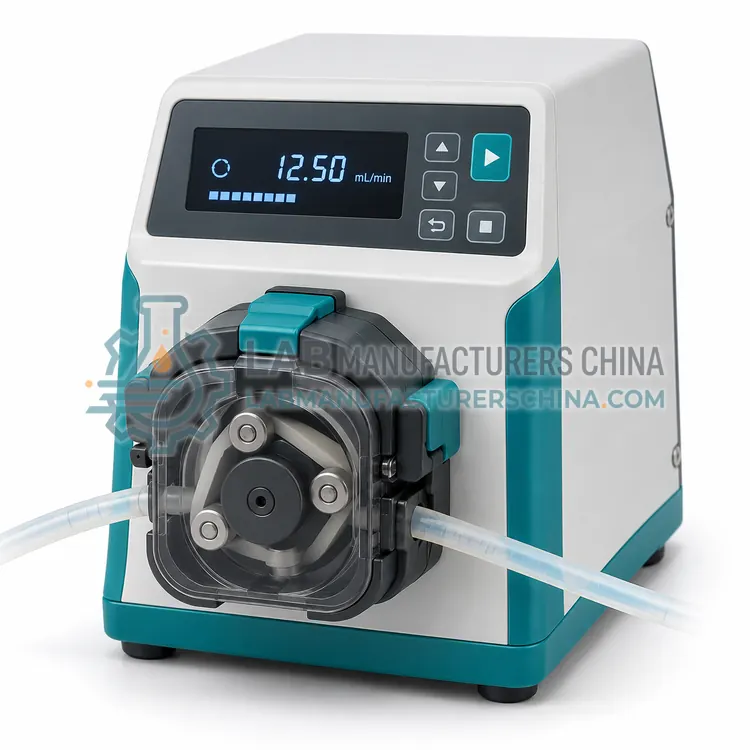
A variable-speed peristaltic pump is a single-channel drive with adjustable rotation speed for continuous liquid transfer and general dosing. It is the standard laboratory pump for media, buffers and reagents from microliters to liters per minute.

Request a quote
View details

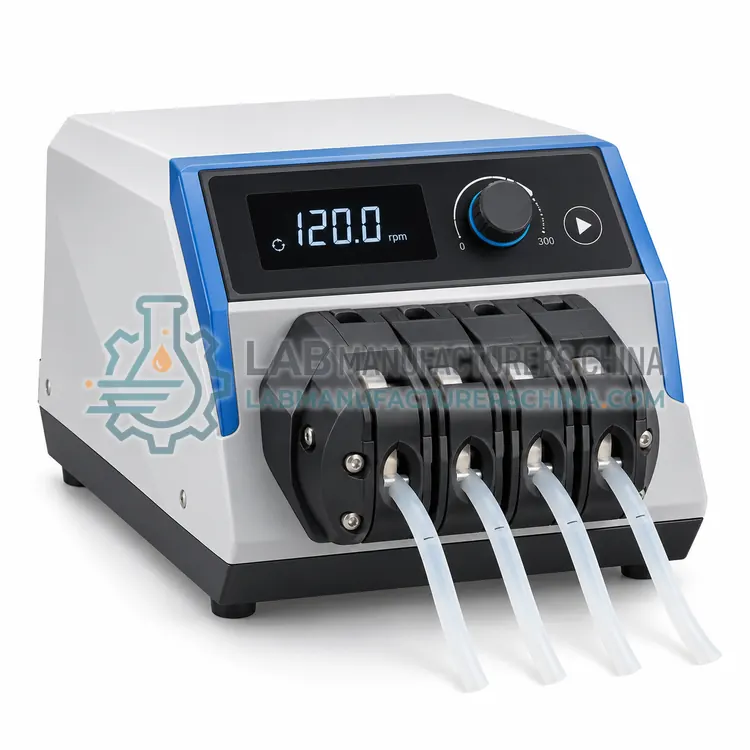
Multi-Channel Peristaltic Pump

多通道蠕动泵

  • PEP-0002
  • Peristaltic Pumps
  • CE (to be confirmed)
  • RoHS (to be confirmed)
  • ISO 9001 manufacturing (to be confirmed)
Number of channels:
2–12 or more
Speed range:
1–300 rpm
Flow per channel:
0.001–200 mL/min
Channel consistency:
± 2–5 %
Tubing sizes:
0.5–8 mm inner diameter
Head type:
Cassette or stacked

A multi-channel peristaltic pump drives several tubes in parallel from one rotor, delivering the same flow to multiple vessels. It is used for parallel reactors, media distribution, chromatography and sampling where identical conditions are needed.

Request a quote
View details

Dispensing Peristaltic Pump

分配型蠕动泵

  • PEP-0003
  • Peristaltic Pumps
  • CE (to be confirmed)
  • RoHS (to be confirmed)
  • ISO 9001 manufacturing (to be confirmed)
Dispensing volume:
10 µL–10 L
Flow range:
0.001–3,000 mL/min
Volume accuracy:
± 1–2 % after calibration
Repeatability:
± 0.5 %
Speed range:
1–600 rpm
Stored methods:
Up to 10 or more

A dispensing peristaltic pump measures and delivers set volumes automatically, often with footswitch, repeat mode and programmable profiles. It is used for filling tubes, bottles and plates with repeatable volumes from microliters to liters.

Request a quote
View details

Industrial Peristaltic Pump

工业蠕动泵

  • PEP-0004
  • Peristaltic Pumps
  • CE (to be confirmed)
  • ISO 9001 manufacturing (to be confirmed)
  • FDA-compliant hose material (to be confirmed)
Flow rate:
Up to several thousand L/h
Hose inner diameter:
15–50 mm
Max pressure:
Up to about 8 bar
Motor power:
0.5–7.5 kW
Suction lift:
Up to about 8 m water
Hose material:
EPDM, natural rubber or food grade

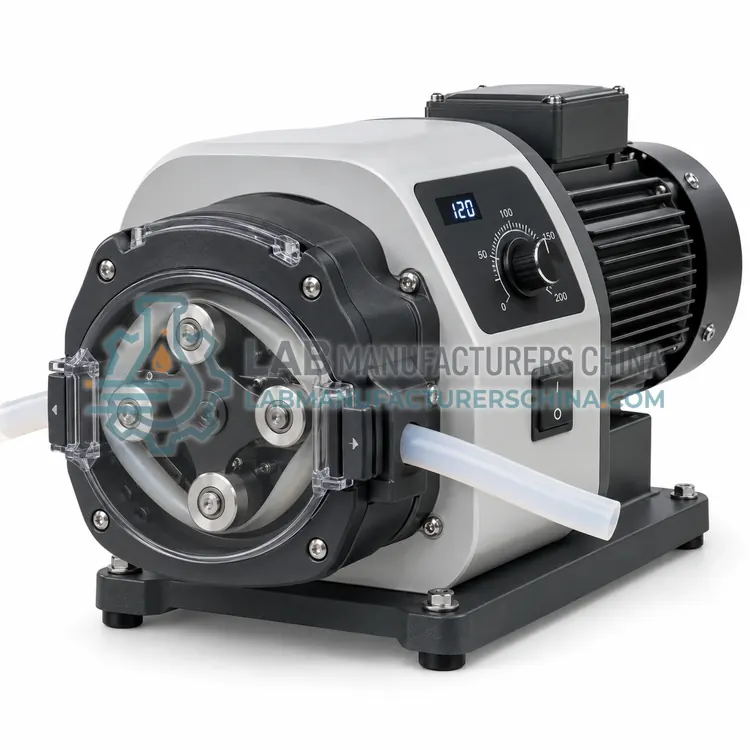
An industrial peristaltic pump handles high flows and continuous duty for process, pilot and production work. It transfers slurries, viscous liquids and shear-sensitive fluids with a large-bore hose and a heavy-duty geared drive.

Request a quote
View details

Portable Battery-Powered Peristaltic Pump

便携电池蠕动泵

  • PEP-0005
  • Peristaltic Pumps
  • CE (to be confirmed)
  • RoHS (to be confirmed)
  • ISO 9001 manufacturing (to be confirmed)
Flow range:
0.001–2,000 mL/min
Tubing sizes:
3–8 mm inner diameter
Suction lift:
Up to about 8 m water
Battery type:
Rechargeable lithium-ion or NiMH
Runtime per charge:
3–8 h typical
Charge time:
3–6 h

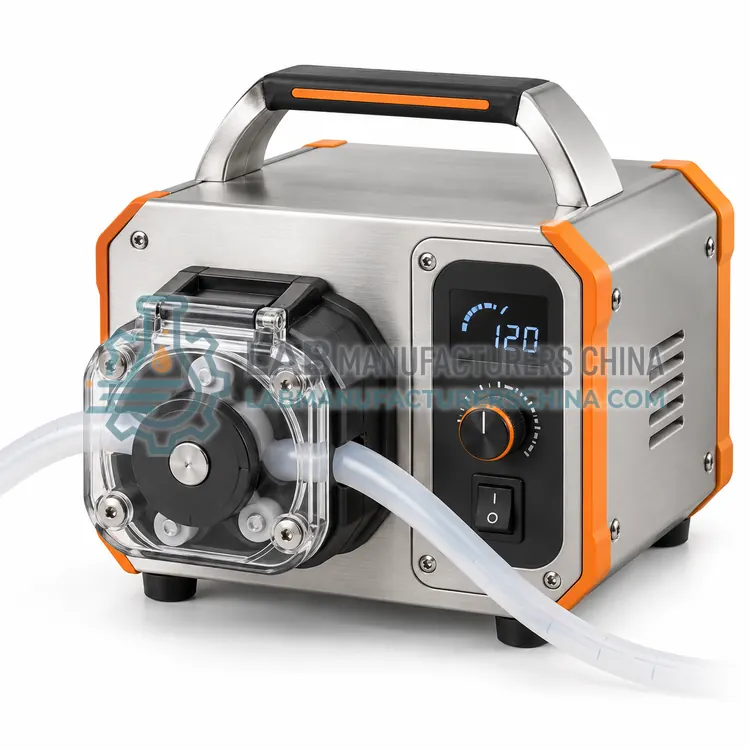
A portable battery-powered peristaltic pump runs on rechargeable batteries for field sampling, in-cabinet work and locations without mains power. It provides the same tubing-based fluid handling in a compact, self-contained portable package.

Request a quote
View details

Micro Peristaltic Pump for Microfluidics

微流控微型蠕动泵

  • PEP-0006
  • Peristaltic Pumps
  • CE (to be confirmed)
  • RoHS (to be confirmed)
  • ISO 9001 manufacturing (to be confirmed)
Flow range:
0.01–1,000 µL/min
Tubing bore:
0.5–3 mm
Number of channels:
1–8
Flow stability:
± 1–2 %
Dead volume:
Below 100 µL typical
Direction:
Bidirectional

A micro peristaltic pump delivers microliter to milliliter flows for microfluidics, organ-on-chip and low-volume dosing. It uses fine tubing or an integrated chip-compatible cartridge to move fluid with minimal dead volume and low hold-up.

Request a quote
View details

Compare Peristaltic Pumps models

ModelSpeed rangeFlow rangeNumber of channelsTubing sizesMotor type
Variable-Speed Peristaltic PumpPEP-00011–600 rpm0.001–3,000 mL/min11.6–9.5 mm inner diameterStepper or brushless DC
Multi-Channel Peristaltic PumpPEP-00021–300 rpm—2–12 or more0.5–8 mm inner diameter—
Dispensing Peristaltic PumpPEP-00031–600 rpm0.001–3,000 mL/min———
Industrial Peristaltic PumpPEP-0004—————
Portable Battery-Powered Peristaltic PumpPEP-0005—0.001–2,000 mL/min—3–8 mm inner diameter—
Micro Peristaltic Pump for MicrofluidicsPEP-0006—0.01–1,000 µL/min1–8—Stepper with microstepping

Indicative values for this product class. Final specifications are confirmed on the quotation and in the calibration documents supplied with the instrument.

How do Peristaltic Pumps work?

A peristaltic pump has a rotor carrying two or more rollers that press the tubing against a curved raceway. As the rotor turns, the rollers occlude the tube and push a trapped volume of liquid forward, while the tube behind the roller recovers and draws in more fluid. The displaced volume per revolution depends on the tube bore and wall, so flow is set by tube size and rotation speed. Because the fluid stays inside the tubing, the pump head never touches the sample, giving excellent chemical compatibility and making sterilization simple: replace the tubing or use pre-sterilized sets. Flow is nearly pulseless at higher speeds but slightly pulsed at low speeds and with few rollers. Typical components are the drive motor, pump head, tubing, and a control interface for speed, direction and sometimes calibration.

Which Peristaltic Pumps variants are available?

  • Variable-Speed Peristaltic Pump — A variable-speed peristaltic pump is a single-channel drive with adjustable rotation speed for continuous liquid transfer and general dosing.
  • Multi-Channel Peristaltic Pump — A multi-channel peristaltic pump drives several tubes in parallel from one rotor, delivering the same flow to multiple vessels.
  • Dispensing Peristaltic Pump — A dispensing peristaltic pump measures and delivers set volumes automatically, often with footswitch, repeat mode and programmable profiles.
  • Industrial Peristaltic Pump — An industrial peristaltic pump handles high flows and continuous duty for process, pilot and production work.
  • Portable Battery-Powered Peristaltic Pump — A portable battery-powered peristaltic pump runs on rechargeable batteries for field sampling, in-cabinet work and locations without mains power.
  • Micro Peristaltic Pump for Microfluidics — A micro peristaltic pump delivers microliter to milliliter flows for microfluidics, organ-on-chip and low-volume dosing.

How do I choose the right variant?

Start with flow range and tubing size. Small-bore tubing gives microliter flows for microfluidics and dosing, while large-bore tubing moves liters per minute for media transfer and process work. Confirm the tubing material for chemical compatibility and temperature: silicone is flexible and autoclavable, while PharMed or Viton resist solvents and high temperatures. Decide whether you need a single channel or several channels running in parallel, and whether channel-to-channel accuracy matters. Choose the drive for speed range, torque and control features such as dispensing, ramp profiles, remote control and data output. For sterile work, look for autoclavable or disposable tubing sets and quick-release heads. Consider pulsation where smooth flow is important, since more rollers and higher speeds reduce it. Add calibration to convert speed into a reliable volume.

Where are Peristaltic Pumps used?

Peristaltic Pumps are specified in sterile media and buffer transfer, reagent dosing and metering, continuous flow chemistry, chromatography mobile phase delivery, cell harvesting and perfusion and automated sample and waste handling.

Which standards and certifications apply?

Work with Peristaltic Pumps is commonly governed by IEC 61010-1, IEC 61326-1, ISO 9001, USP <87>, USP <88> and GB 4793.1. Instrument certifications such as CE marking are confirmed per configuration and never assumed.

What are the key considerations before purchase?

Tubing is the main consumable and also the calibration reference, so keep the same part number and replace it on a schedule or when flow drifts. Recalibrate after changing tubing, since wall thickness and elasticity affect volume per revolution. Avoid over-tightening the pump head, which shortens tube life, and do not run dry for long periods unless the tubing is rated for it. Keep the raceway and rollers clean, and check for wear that causes uneven flow. For sterile or hazardous liquids, work inside a biosafety cabinet and use closed tubing sets. Follow IEC 61010-1 for electrical safety. In flow chemistry and metering applications, verify against a balance or flow meter, and record tubing lot and calibration data so results remain traceable.

Frequently asked questions about Peristaltic Pumps

Only the tubing contacts the fluid, so the pump head never needs sterilization. Tubing can be supplied sterile and replaced between batches, which removes cleaning steps and cross-contamination risk in cell culture and pharmaceutical work.

Need help specifying Peristaltic Pumps?

Request a quote