Multi-Channel Peristaltic Pump
多通道蠕动泵
- SKU PEP-0002
- Peristaltic Pumps
- CE (to be confirmed)
- RoHS (to be confirmed)
- ISO 9001 manufacturing (to be confirmed)
Price on request — FOB / CIF quoted per order
Prices depend on configuration, quantity and destination port.
Key specifications
| Number of channels | 2–12 or more |
|---|---|
| Speed range | 1–300 rpm |
| Flow per channel | 0.001–200 mL/min |
| Channel consistency | ± 2–5 % |
| Tubing sizes | 0.5–8 mm inner diameter |
| Head type | Cassette or stacked |
Request a quote Download brochure · to be provided
By Lab Manufacturers China Technical TeamLast reviewed Standards: IEC 61010-1, IEC 61326-1, ISO 9001
What is the Multi-Channel Peristaltic Pump?
A multi-channel peristaltic pump drives several tubes in parallel from one rotor, delivering the same flow to multiple vessels. It is used for parallel reactors, media distribution, chromatography and sampling where identical conditions are needed.
What is the Multi-Channel Peristaltic Pump?
A multi-channel peristaltic pump drives several tubes in parallel from one rotor, delivering the same flow to multiple vessels. It is used for parallel reactors, media distribution, chromatography and sampling where identical conditions are needed.
Overview
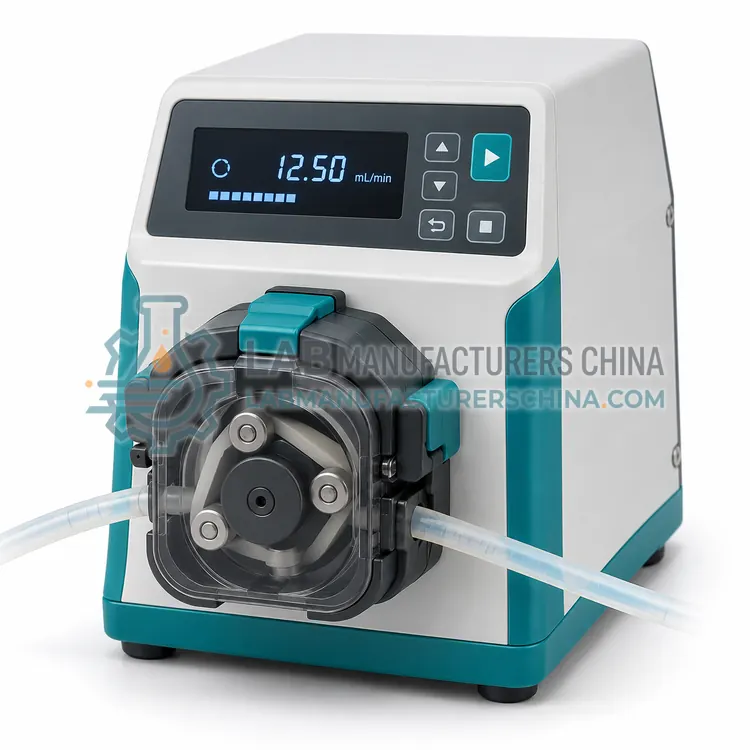
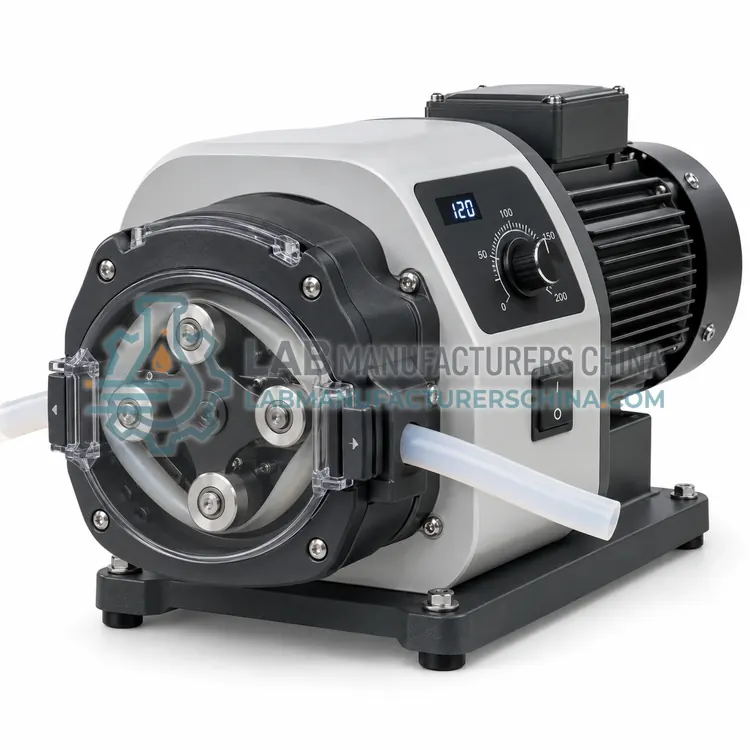
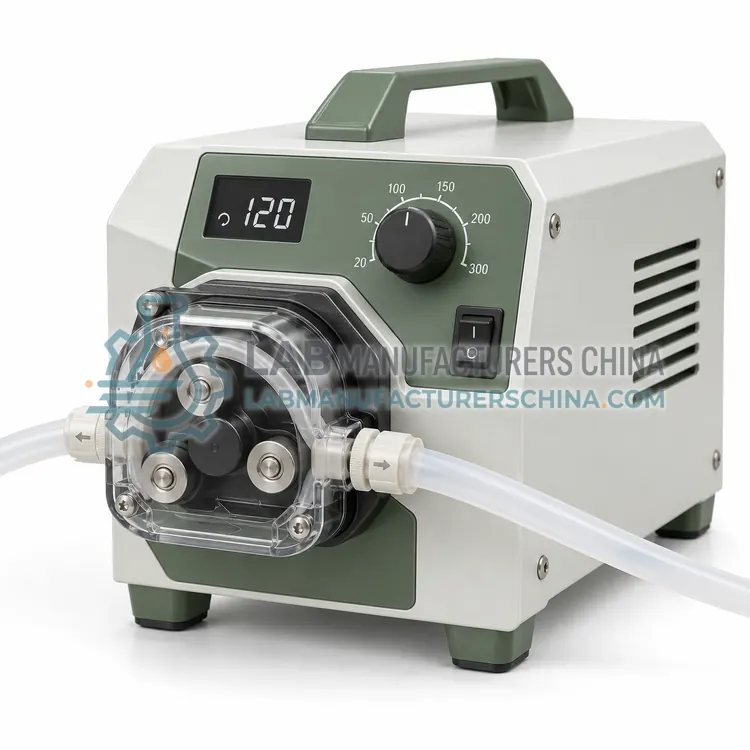
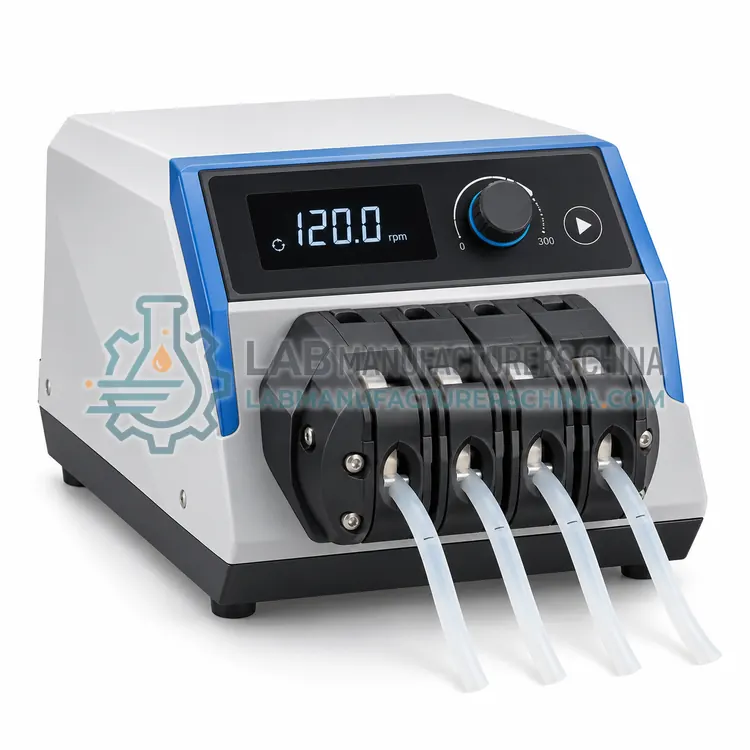
The multi-channel pump places two to twelve or more tubes around a common rotor, or uses stacked heads on one drive. All channels share the same rollers, so speed is identical, but flow per channel depends on each tube's bore and on how tightly it is retained. Cassette-style heads with individual clamps improve channel-to-channel consistency to about 2 to 5 percent. Channels can be as small as micro-bore tubing for low flows or larger for tens of milliliters per minute. Independent cartridges allow individual tubes to be replaced or blocked without stopping others, which matters in cell culture and parallel synthesis. Some drives support grouping, where channels are switched in sets, and remote control for integration with reactors or automated systems. The format is ideal where several streams must be treated identically during a run.
How does it work?
A peristaltic pump has a rotor carrying two or more rollers that press the tubing against a curved raceway. As the rotor turns, the rollers occlude the tube and push a trapped volume of liquid forward, while the tube behind the roller recovers and draws in more fluid. The displaced volume per revolution depends on the tube bore and wall, so flow is set by tube size and rotation speed. Because the fluid stays inside the tubing, the pump head never touches the sample, giving excellent chemical compatibility and making sterilization simple: replace the tubing or use pre-sterilized sets. Flow is nearly pulseless at higher speeds but slightly pulsed at low speeds and with few rollers. Typical components are the drive motor, pump head, tubing, and a control interface for speed, direction and sometimes calibration.
What are the key features?
- Two to twelve or more parallel channels from one drive
- Shared rollers give identical rotation speed
- Cassette heads for channel-to-channel consistency
- Individual tube replacement or blocking without stopping others
- Channel grouping and remote control options
- Micro-bore to standard tubing for flexible flow range
What are the technical specifications?
A typical multi-channel peristaltic pump configuration offers number of channels of 2–12 or more, speed range of 1–300 rpm, flow per channel of 0.001–200 mL/min, channel consistency of ± 2–5 %, tubing sizes of 0.5–8 mm inner diameter and head type of Cassette or stacked. Values are indicative of the product class; the exact figures for each configuration are confirmed on the quotation and the calibration documents supplied with the instrument.
Which applications is it used for?
The Multi-Channel Peristaltic Pump is used in parallel reactor feeding, media and buffer distribution, multi-column chromatography, parallel sampling and fraction collection and microbial and cell culture perfusion. Across the wider Peristaltic Pumps class, laboratories also deploy it for sterile media and buffer transfer, reagent dosing and metering and continuous flow chemistry.
Which standards and certifications apply?
Relevant standards and methods include IEC 61010-1, IEC 61326-1, ISO 9001, USP <87>, USP <88> and GB 4793.1. Certification candidates for this model are CE, RoHS and ISO 9001 manufacturing; each is to be confirmed for the specific configuration before shipment, and certificates are supplied only where they have been issued.
Tubing is the main consumable and also the calibration reference, so keep the same part number and replace it on a schedule or when flow drifts. Recalibrate after changing tubing, since wall thickness and elasticity affect volume per revolution. Avoid over-tightening the pump head, which shortens tube life, and do not run dry for long periods unless the tubing is rated for it. Keep the raceway and rollers clean, and check for wear that causes uneven flow. For sterile or hazardous liquids, work inside a biosafety cabinet and use closed tubing sets. Follow IEC 61010-1 for electrical safety. In flow chemistry and metering applications, verify against a balance or flow meter, and record tubing lot and calibration data so results remain traceable.
How do I select the right Multi-Channel Peristaltic Pump?
Choose a multi-channel pump when several vessels or columns must receive identical flows. Confirm the number of channels, per-channel flow, consistency and whether individual tubes can be isolated. In the RFQ, state channel count, tubing size, grouping needs and remote-control interface.
How does it compare with other Peristaltic Pumps variants?
Start with flow range and tubing size. Small-bore tubing gives microliter flows for microfluidics and dosing, while large-bore tubing moves liters per minute for media transfer and process work. Confirm the tubing material for chemical compatibility and temperature: silicone is flexible and autoclavable, while PharMed or Viton resist solvents and high temperatures. Decide whether you need a single channel or several channels running in parallel, and whether channel-to-channel accuracy matters. Choose the drive for speed range, torque and control features such as dispensing, ramp profiles, remote control and data output. For sterile work, look for autoclavable or disposable tubing sets and quick-release heads. Consider pulsation where smooth flow is important, since more rollers and higher speeds reduce it. Add calibration to convert speed into a reliable volume.
Full specifications
| Number of channels | 2–12 or more |
|---|---|
| Speed range | 1–300 rpm |
| Flow per channel | 0.001–200 mL/min |
| Channel consistency | ± 2–5 % |
| Tubing sizes | 0.5–8 mm inner diameter |
| Head type | Cassette or stacked |
| Direction | Reversible |
| Control | Keypad with grouping, remote option |
| Power supply | 100–240 V, 50/60 Hz |
Indicative values for this product class. Final specifications are confirmed on the quotation and in the calibration documents supplied with the instrument.
Applications
- Parallel reactor feeding
- Media and buffer distribution
- Multi-column chromatography
- Parallel sampling and fraction collection
- Microbial and cell culture perfusion
Key features
- Two to twelve or more parallel channels from one drive
- Shared rollers give identical rotation speed
- Cassette heads for channel-to-channel consistency
- Individual tube replacement or blocking without stopping others
- Channel grouping and remote control options
- Micro-bore to standard tubing for flexible flow range
Frequently asked questions about Multi-Channel Peristaltic Pump
With cassette heads and matched tubing, channel-to-channel variation is typically 2 to 5 percent. Using tubes from the same lot and recalibrating together improves consistency further.
Yes, most multi-channel heads use individual cartridges or clamps so a single tube can be removed or blocked. This allows one vessel to be changed or sampled during a run.
Common configurations run 2 to 12 channels, and some systems stack heads for more. Torque and speed decrease as channels increase, so confirm the flow you need per channel.
Only the tubing contacts the fluid, so the pump head never needs sterilization. Tubing can be supplied sterile and replaced between batches, which removes cleaning steps and cross-contamination risk in cell culture and pharmaceutical work.
Match the material to the fluid and temperature. Silicone is flexible and autoclavable for aqueous and biological liquids, while PharMed and Viton suit solvents and higher temperatures. Tubing bore sets the flow per revolution.
Tubing fatigue. Wall thickness and elasticity decrease with use, so the volume delivered per revolution falls even at constant speed. Recalibrate after replacement and track performance to set a replacement interval.
Related models