Lab Manufacturers China

Agricultural Sample Preparation

农业样品前处理设备

ASP · Agricultural Testing Equipment · 5 models

By Lab Manufacturers China Technical TeamLast reviewed Standards: ISO 6498 (feed sample preparation), ISO 11464 (soil pretreatment), ISO 24333 (cereals sampling)

Standards referenced

  • ISO 6498 (feed sample preparation)
  • ISO 11464 (soil pretreatment)
  • ISO 24333 (cereals sampling)
  • ISO 6644 (cereals automatic sampling)
  • EN 14780 (solid biofuels)

What are Agricultural Sample Preparation?

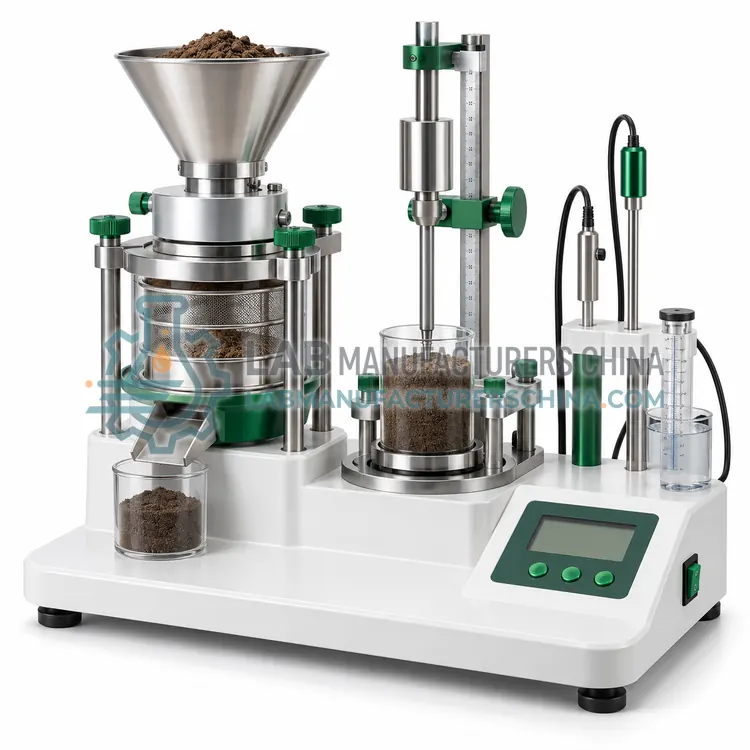
Agricultural sample preparation equipment reduces, grinds, homogenises and divides plant, forage, feed and soil samples so that a small analytical portion represents the whole lot. It is used by agricultural laboratories, breeding programmes and quality control units to prepare samples for nutrient, residue and composition analysis.

5 models of Agricultural Sample Preparation

The 5 models below are current configurations; specifications are confirmed on quotation.

Plant Tissue Grinder

植物组织研磨仪

  • ASP-0001
  • Agricultural Sample Preparation
  • CE (to be confirmed)
  • RoHS (to be confirmed)
  • ISO 9001 manufacturing (to be confirmed)
Grinding principle:
Bead beating, blade or impact
Batch capacity:
1–96 tubes (model dependent)
Tube volume:
0.5–50 mL
Speed range:
100–3000 rpm, or 3–10 m/s
Grinding time:
10 s to 5 min
Grinding media:
Zirconia, agate, steel or plastic beads

A mill that reduces fresh or dried plant tissue to a fine, uniform powder for nutrient, residue and molecular analysis. It is the right choice for plant laboratories that must prepare many small tissue samples reproducibly.

Request a quote
View details

Forage and Feed Hammer Mill

饲草饲料锤式粉碎机

  • ASP-0002
  • Agricultural Sample Preparation
  • CE (to be confirmed)
  • RoHS (to be confirmed)
  • ISO 9001 manufacturing (to be confirmed)
Grinding principle:
Swinging hammer mill
Screen apertures:
0.5–6 mm, interchangeable
Throughput:
5–50 kg/h (laboratory)
Sample mass:
20 g–5 kg
Final particle size:
≤ 1 mm (1 mm screen)
Motor power:
0.5–3 kW

A mill that grinds hay, silage, grain and compound feed to a defined particle size using swinging hammers and a screen. It is the right choice for feed laboratories preparing samples for fibre, protein and NIR analysis.

Request a quote
View details

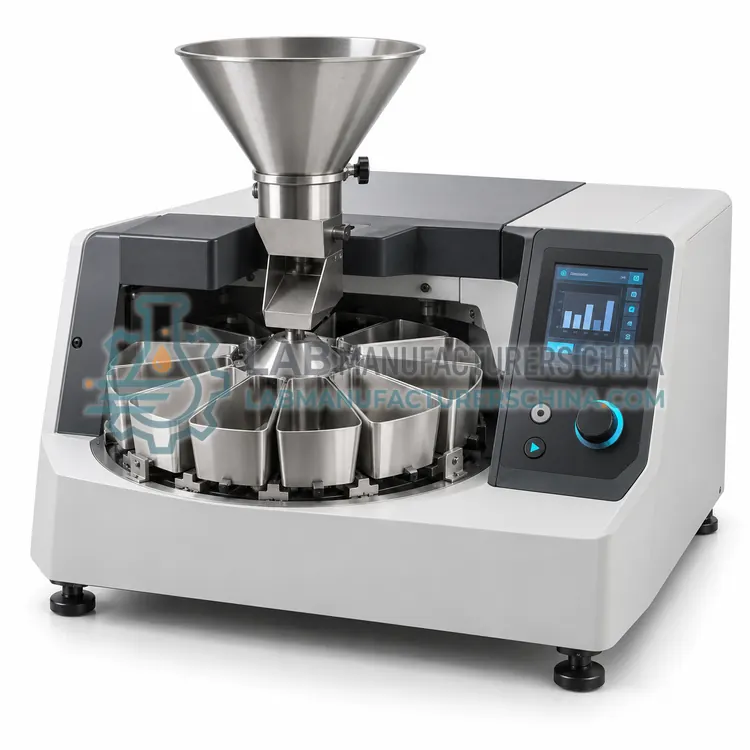
Rotary Sample Divider

旋转分样器

  • ASP-0003
  • Agricultural Sample Preparation
  • CE (to be confirmed)
  • RoHS (to be confirmed)
  • ISO 9001 manufacturing (to be confirmed)
Dividing principle:
Rotary funnel or riffle chutes
Feed size:
Up to 20 mm
Sample volume:
0.5–50 L per batch
Number of outlets:
4–16 containers
Splitting ratio:
Equal portions, container dependent
Feed rate:
Adjustable vibration

A device that splits flowing or falling material into statistically identical subsamples. It is the right choice for reducing bulk grain, feed, seed and fertilizer samples without segregation bias before laboratory analysis.

Request a quote
View details

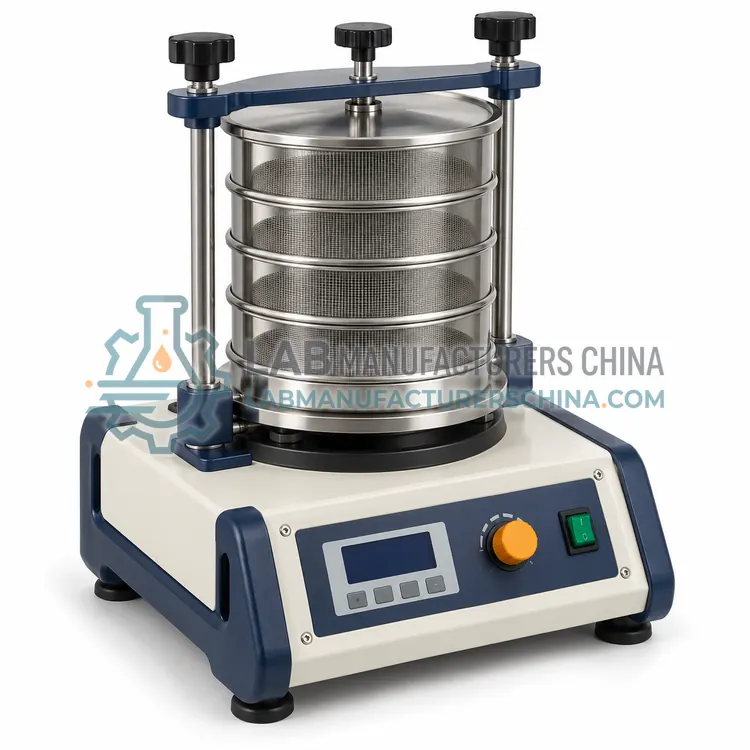
Vibratory Sieve Shaker

振动筛分仪

  • ASP-0004
  • Agricultural Sample Preparation
  • CE (to be confirmed)
  • ISO 9001 manufacturing (to be confirmed)
Sieve diameter:
100–300 mm (standard)
Sieve apertures:
0.02–20 mm range
Motion type:
Three-dimensional vibration
Amplitude:
0–3 mm, adjustable
Sieving time:
1–60 min, programmable
Sieve stack:
Up to 8 sieves plus pan

A device that sieves ground agricultural samples into defined size fractions by vibration. It is the right choice for verifying grind quality, preparing defined size classes and assessing the particle size distribution.

Request a quote
View details

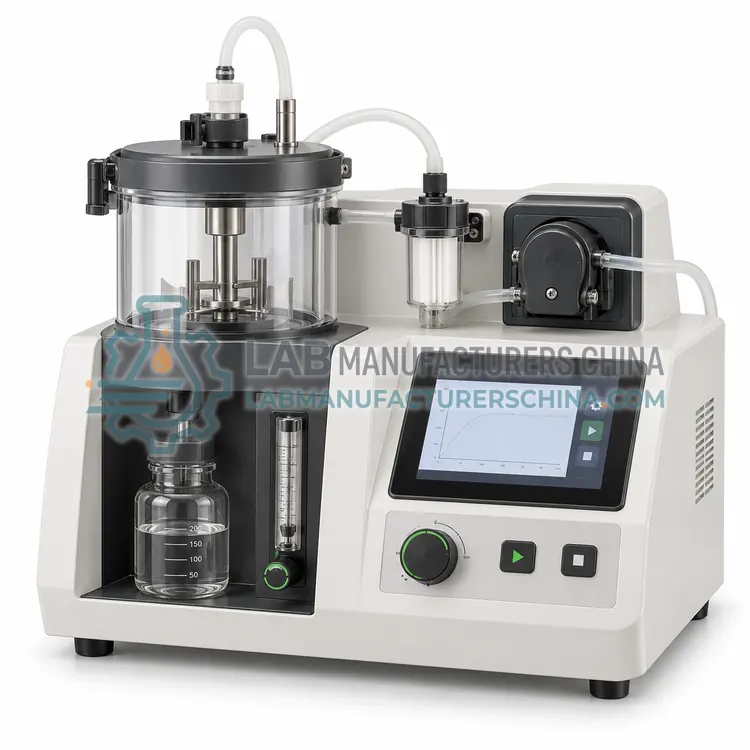
Laboratory Sample Homogenizer

实验室样品均质器

  • ASP-0005
  • Agricultural Sample Preparation
  • CE (to be confirmed)
  • RoHS (to be confirmed)
  • ISO 9001 manufacturing (to be confirmed)
Homogenising principle:
Rotor-stator probe or blade blender
Speed range:
1,000–30,000 rpm
Sample volume:
0.5 mL – 2 L
Probe diameter:
5–20 mm
Processing time:
10 s to 5 min
Temperature control:
Cooling jacket or intermittent use

A blender or rotor-stator device that mixes and disintegrates fresh agricultural samples into a uniform slurry. It is the right choice for residue, enzyme and slurry analysis where a consistent, homogeneous subsample is essential.

Request a quote
View details

Compare Agricultural Sample Preparation models

ModelGrinding principleSpeed rangeFinal particle sizePower supplyOperating temperature
Plant Tissue GrinderASP-0001Bead beating, blade or impact100–3000 rpm, or 3–10 m/s≤ 0.5 mm (dried material)220 VAC, 50 Hz5–40 °C
Forage and Feed Hammer MillASP-0002Swinging hammer mill—≤ 1 mm (1 mm screen)220 or 380 VAC, 50 Hz5–40 °C
Rotary Sample DividerASP-0003———220 VAC, 50 Hz5–40 °C
Vibratory Sieve ShakerASP-0004———220 VAC, 50 Hz5–40 °C
Laboratory Sample HomogenizerASP-0005—1,000–30,000 rpm—220 VAC, 50 Hz5–40 °C

Indicative values for this product class. Final specifications are confirmed on the quotation and in the calibration documents supplied with the instrument.

How do Agricultural Sample Preparation work?

Agricultural samples must be reduced to a uniform, representative state before analysis. Grinding uses cutting blades, hammer mills, rotating knives or bead beating with a cryogenic or ambient medium, breaking cell walls and reducing particle size so that extraction is complete and reproducible. For fibrous forage and feed, a hammer mill with a screen controls the final particle size. Rotary and riffle dividers split a flowing or falling stream of material into equal portions, so a subsample reflects the bulk composition even when particles differ in size or density. Sieve shakers classify particles by size with vibratory, tapping or air-jet action, and the retained fractions can be weighed to check grind quality. Blenders and homogenisers mix and disintegrate fresh tissue or slurries for residue and enzyme work. Moisture loss, heat generation and contamination are the main risks to control.

Which Agricultural Sample Preparation variants are available?

  • Plant Tissue Grinder — A mill that reduces fresh or dried plant tissue to a fine, uniform powder for nutrient, residue and molecular analysis.
  • Forage and Feed Hammer Mill — A mill that grinds hay, silage, grain and compound feed to a defined particle size using swinging hammers and a screen.
  • Rotary Sample Divider — A device that splits flowing or falling material into statistically identical subsamples.
  • Vibratory Sieve Shaker — A device that sieves ground agricultural samples into defined size fractions by vibration.
  • Laboratory Sample Homogenizer — A blender or rotor-stator device that mixes and disintegrates fresh agricultural samples into a uniform slurry.

How do I choose the right variant?

Begin with the analytical method, because it fixes the required particle size, sample mass and freedom from contamination. For trace element work, choose grinding surfaces that do not release the elements of interest, such as agate, zirconia or PTFE, and avoid stainless steel when chromium or nickel is measured. For fresh plant tissue and residue analysis, a cryogenic or high-speed homogeniser preserves labile compounds. For fibrous forage and feed, select a hammer mill with the screen size specified by the reference method, and add a divider so that the ground material can be reduced without segregation. Use a sieve shaker to verify grind quality and to prepare defined size fractions. Consider throughput, cleaning between samples, dust control and the risk of moisture change, and confirm that the equipment can meet the standard sample preparation procedure for the analysis planned.

Where are Agricultural Sample Preparation used?

Agricultural Sample Preparation are specified in plant tissue nutrient analysis, feed and forage composition testing, pesticide residue sample preparation and soil and fertilizer laboratory preparation.

Which standards and certifications apply?

Work with Agricultural Sample Preparation is commonly governed by ISO 6498 (feed sample preparation), ISO 11464 (soil pretreatment), ISO 24333 (cereals sampling), ISO 6644 (cereals automatic sampling) and EN 14780 (solid biofuels). Instrument certifications such as CE marking are confirmed per configuration and never assumed.

What are the key considerations before purchase?

Clean equipment thoroughly between samples with brushes and, where needed, solvent or dilute acid, and run blank grinds to detect carry-over of previous samples. Keep grinding brief or cooled to avoid heat that degrades proteins, sugars and volatile compounds, and weigh samples quickly to limit moisture change. For trace analysis, control contamination from blades, sieves and containers, and use appropriate reference materials. Verify grind quality by sieving a subsample and checking that the specified fraction meets the method requirement, and retain a portion of the prepared sample for repeat analysis. Log sample identity, preparation method, particle size and operator, and store prepared samples in sealed containers at the temperature the method requires.

Frequently asked questions about Agricultural Sample Preparation

Extraction efficiency depends on surface area, so coarse or variable particle size gives incomplete and biased results. Reference methods specify a sieve or screen size, and grinding to that size makes nutrient, residue and fibre results reproducible between laboratories.

Need help specifying Agricultural Sample Preparation?

Request a quote