Plant Tissue Grinder
植物组织研磨仪
- SKU ASP-0001
- Agricultural Sample Preparation
- CE (to be confirmed)
- RoHS (to be confirmed)
- ISO 9001 manufacturing (to be confirmed)
Price on request — FOB / CIF quoted per order
Prices depend on configuration, quantity and destination port.
Key specifications
| Grinding principle | Bead beating, blade or impact |
|---|---|
| Batch capacity | 1–96 tubes (model dependent) |
| Tube volume | 0.5–50 mL |
| Speed range | 100–3000 rpm, or 3–10 m/s |
| Grinding time | 10 s to 5 min |
| Grinding media | Zirconia, agate, steel or plastic beads |
Request a quote Download brochure · to be provided
By Lab Manufacturers China Technical TeamLast reviewed Standards: ISO 6498 (feed sample preparation), ISO 11464 (soil pretreatment), ISO 24333 (cereals sampling)
What is the Plant Tissue Grinder?
A mill that reduces fresh or dried plant tissue to a fine, uniform powder for nutrient, residue and molecular analysis. It is the right choice for plant laboratories that must prepare many small tissue samples reproducibly.
What is the Plant Tissue Grinder?
A mill that reduces fresh or dried plant tissue to a fine, uniform powder for nutrient, residue and molecular analysis. It is the right choice for plant laboratories that must prepare many small tissue samples reproducibly.
Overview
The plant tissue grinder breaks cell walls and reduces leaves, stems, roots or seeds to a powder using rotating blades, impact beaters or bead beating in sealed tubes. High-speed batch models process dozens of tubes at once with grinding balls, which suits molecular and residue work where cross-contamination must be avoided. Cryogenic versions cool the sample with liquid nitrogen so that fresh tissue becomes brittle and grinds without warming, preserving labile compounds. For dried material, a cyclone mill or knife mill gives a defined particle size with minimal heat. Sample chambers and grinding media are chosen by analysis: agate or zirconia for trace elements, plastic beads and tubes for molecular work. Grinding time is set short to avoid heat and moisture loss, and a sieve check confirms the target particle size. Cleaning between samples prevents carry-over.
How does it work?
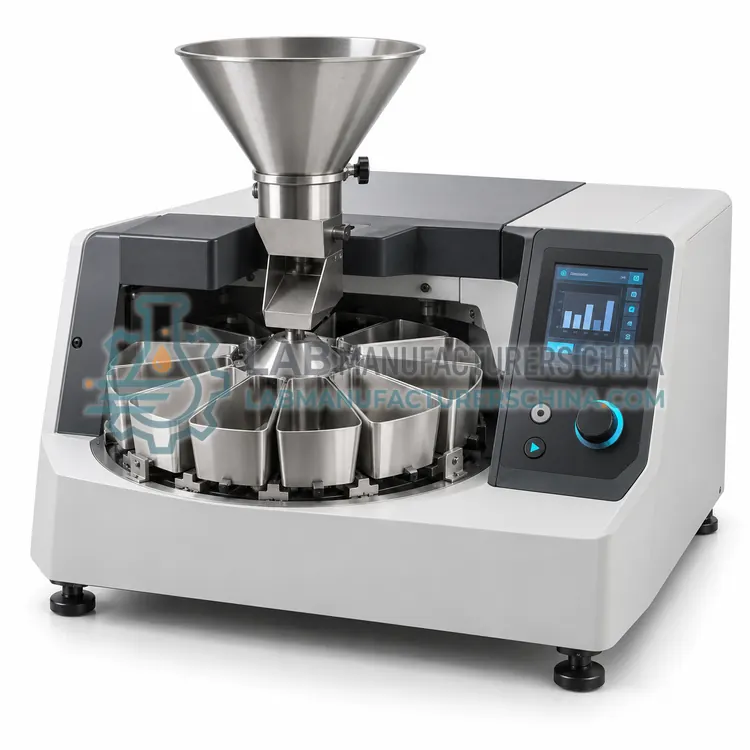
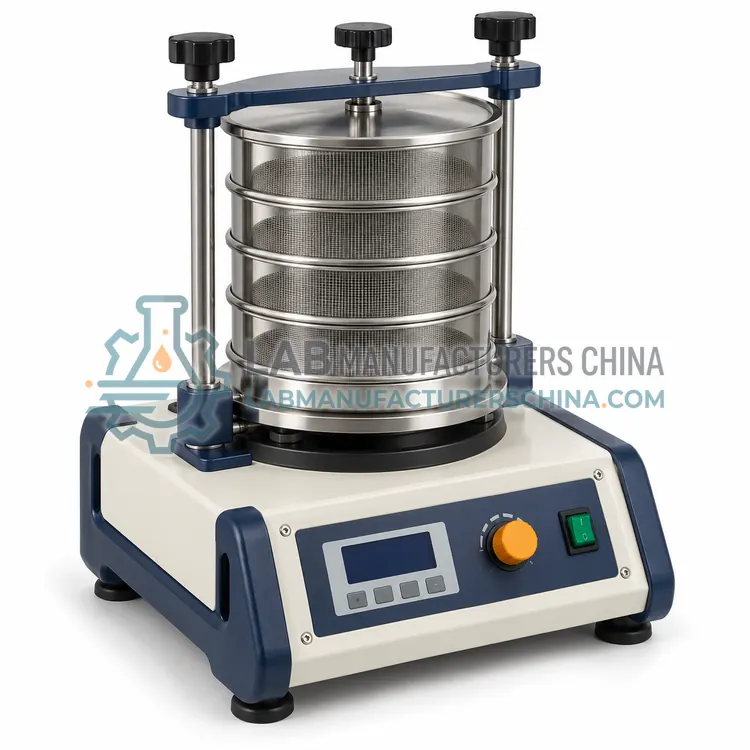
Agricultural samples must be reduced to a uniform, representative state before analysis. Grinding uses cutting blades, hammer mills, rotating knives or bead beating with a cryogenic or ambient medium, breaking cell walls and reducing particle size so that extraction is complete and reproducible. For fibrous forage and feed, a hammer mill with a screen controls the final particle size. Rotary and riffle dividers split a flowing or falling stream of material into equal portions, so a subsample reflects the bulk composition even when particles differ in size or density. Sieve shakers classify particles by size with vibratory, tapping or air-jet action, and the retained fractions can be weighed to check grind quality. Blenders and homogenisers mix and disintegrate fresh tissue or slurries for residue and enzyme work. Moisture loss, heat generation and contamination are the main risks to control.
What are the key features?
- Batch bead milling processes many tubes at once.
- Cryogenic option preserves fresh tissue and labile compounds.
- Interchangeable chambers and media suit trace element or molecular work.
- Short grinding cycles limit heat and moisture loss.
- Sealed tubes reduce cross-contamination between samples.
- Adjustable speed and time match different tissue types.
What are the technical specifications?
A typical plant tissue grinder configuration offers grinding principle of Bead beating, blade or impact, batch capacity of 1–96 tubes (model dependent), tube volume of 0.5–50 mL, speed range of 100–3000 rpm, or 3–10 m/s, grinding time of 10 s to 5 min and grinding media of Zirconia, agate, steel or plastic beads. Values are indicative of the product class; the exact figures for each configuration are confirmed on the quotation and the calibration documents supplied with the instrument.
Which applications is it used for?
The Plant Tissue Grinder is used in plant nutrient and mineral analysis, pesticide and metabolite residue testing, DNA and RNA extraction preparation and plant breeding quality screening. Across the wider Agricultural Sample Preparation class, laboratories also deploy it for plant tissue nutrient analysis, feed and forage composition testing and pesticide residue sample preparation.
Which standards and certifications apply?
Relevant standards and methods include ISO 6498 (feed sample preparation), ISO 11464 (soil pretreatment), ISO 24333 (cereals sampling), ISO 6644 (cereals automatic sampling) and EN 14780 (solid biofuels). Certification candidates for this model are CE, RoHS and ISO 9001 manufacturing; each is to be confirmed for the specific configuration before shipment, and certificates are supplied only where they have been issued.
Clean equipment thoroughly between samples with brushes and, where needed, solvent or dilute acid, and run blank grinds to detect carry-over of previous samples. Keep grinding brief or cooled to avoid heat that degrades proteins, sugars and volatile compounds, and weigh samples quickly to limit moisture change. For trace analysis, control contamination from blades, sieves and containers, and use appropriate reference materials. Verify grind quality by sieving a subsample and checking that the specified fraction meets the method requirement, and retain a portion of the prepared sample for repeat analysis. Log sample identity, preparation method, particle size and operator, and store prepared samples in sealed containers at the temperature the method requires.
How do I select the right Plant Tissue Grinder?
Select this grinder when many small plant samples must be prepared with low contamination and short, cool cycles. For large volumes of dried fibre-rich material, a hammer mill is more efficient. In an RFQ, specify sample type and mass, batch size, grinding material and whether cryogenic grinding is required.
How does it compare with other Agricultural Sample Preparation variants?
Begin with the analytical method, because it fixes the required particle size, sample mass and freedom from contamination. For trace element work, choose grinding surfaces that do not release the elements of interest, such as agate, zirconia or PTFE, and avoid stainless steel when chromium or nickel is measured. For fresh plant tissue and residue analysis, a cryogenic or high-speed homogeniser preserves labile compounds. For fibrous forage and feed, select a hammer mill with the screen size specified by the reference method, and add a divider so that the ground material can be reduced without segregation. Use a sieve shaker to verify grind quality and to prepare defined size fractions. Consider throughput, cleaning between samples, dust control and the risk of moisture change, and confirm that the equipment can meet the standard sample preparation procedure for the analysis planned.
Full specifications
| Grinding principle | Bead beating, blade or impact |
|---|---|
| Batch capacity | 1–96 tubes (model dependent) |
| Tube volume | 0.5–50 mL |
| Speed range | 100–3000 rpm, or 3–10 m/s |
| Grinding time | 10 s to 5 min |
| Grinding media | Zirconia, agate, steel or plastic beads |
| Cryogenic option | Liquid nitrogen compatible chamber |
| Final particle size | ≤ 0.5 mm (dried material) |
| Data logging | Programs stored and recalled |
| Power supply | 220 VAC, 50 Hz |
| Operating temperature | 5–40 °C |
Indicative values for this product class. Final specifications are confirmed on the quotation and in the calibration documents supplied with the instrument.
Applications
- Plant nutrient and mineral analysis
- Pesticide and metabolite residue testing
- DNA and RNA extraction preparation
- Plant breeding quality screening
Key features
- Batch bead milling processes many tubes at once.
- Cryogenic option preserves fresh tissue and labile compounds.
- Interchangeable chambers and media suit trace element or molecular work.
- Short grinding cycles limit heat and moisture loss.
- Sealed tubes reduce cross-contamination between samples.
- Adjustable speed and time match different tissue types.
Frequently asked questions about Plant Tissue Grinder
Use agate or zirconia when measuring trace metals, because steel beads release iron, chromium and nickel. For molecular work, disposable plastic tubes and beads avoid cross-contamination. For routine dried tissue, hardened steel is durable and inexpensive.
Fresh tissue is soft and elastic, so it smears rather than powders. Liquid nitrogen makes it brittle, enabling fine grinding without frictional heating that would degrade enzymes, sugars and volatile compounds.
Use sealed tubes or chambers, clean between batches with a blank grind of inert material, and dedicate equipment to trace element work. Disposable tubes and beads are preferred where the analysis is very sensitive.
Extraction efficiency depends on surface area, so coarse or variable particle size gives incomplete and biased results. Reference methods specify a sieve or screen size, and grinding to that size makes nutrient, residue and fibre results reproducible between laboratories.
Match the grinding material to the analysis: agate, zirconia or PTFE for trace elements and stainless steel or carbide for routine work. Pre-clean with a blank sample, avoid painted or plated surfaces and store ground material in inert containers.
Grinding can segregate particles by size and density, and a scoop taken without dividing may not represent the lot. Rotary or riffle dividers pass the material through moving channels so each fraction is statistically identical to the bulk.
Related models