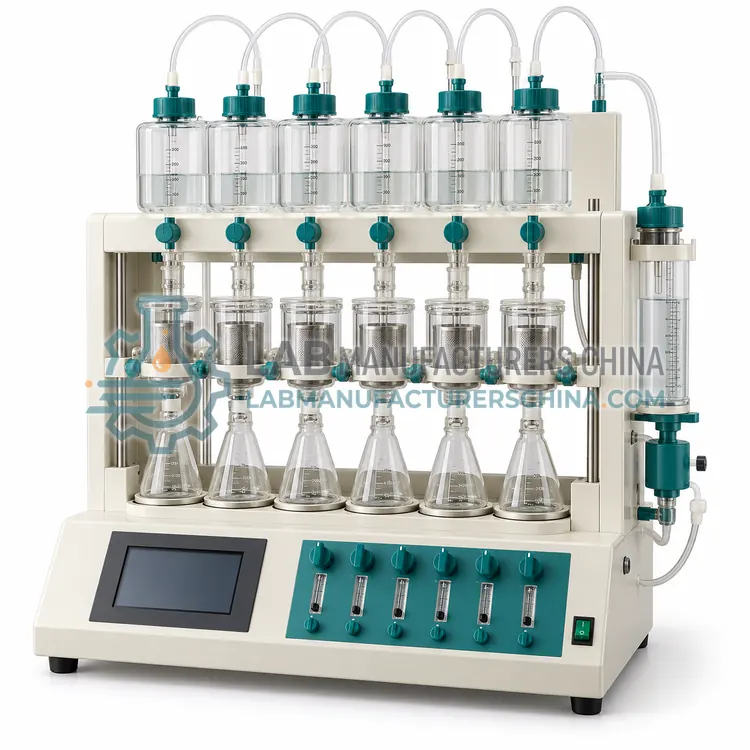
How do Fertilizer Analysis work?
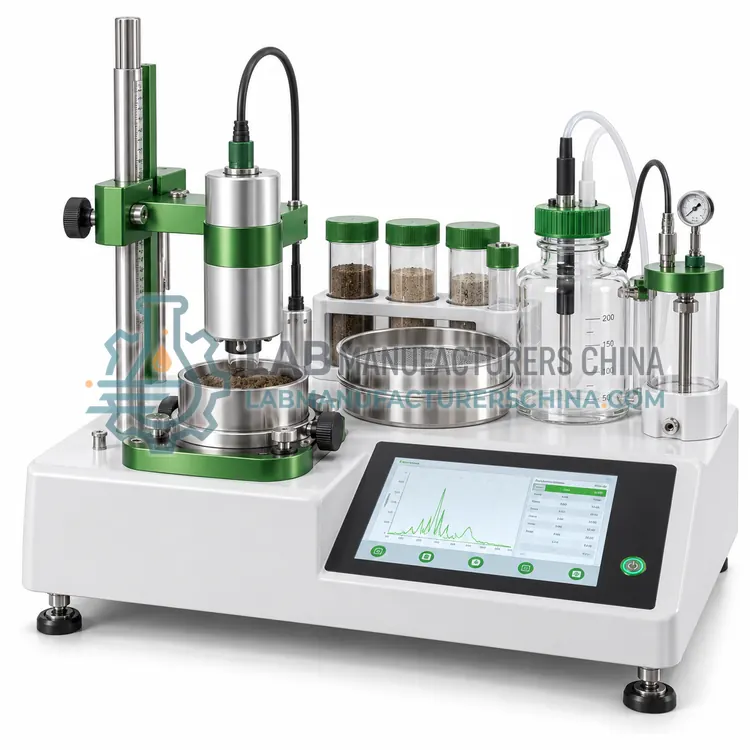
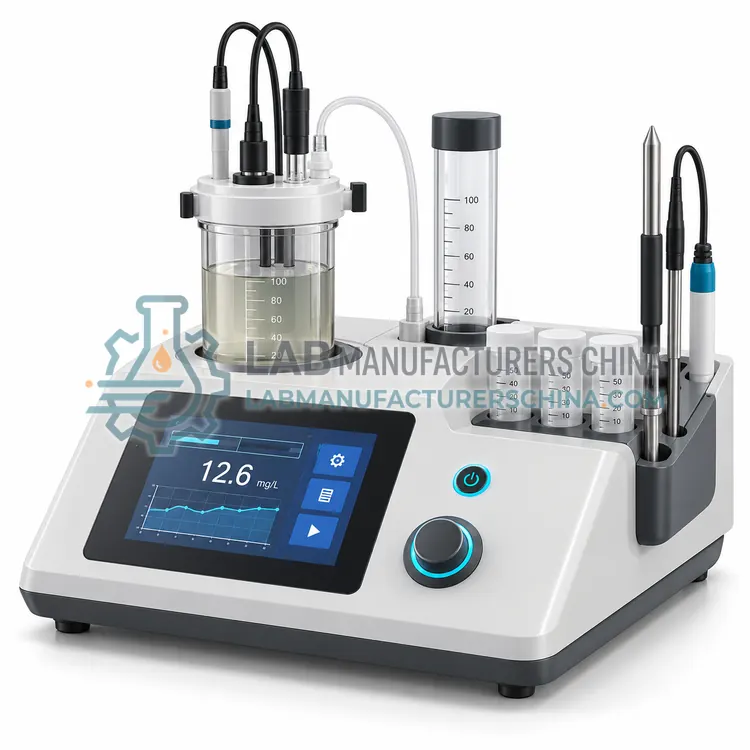
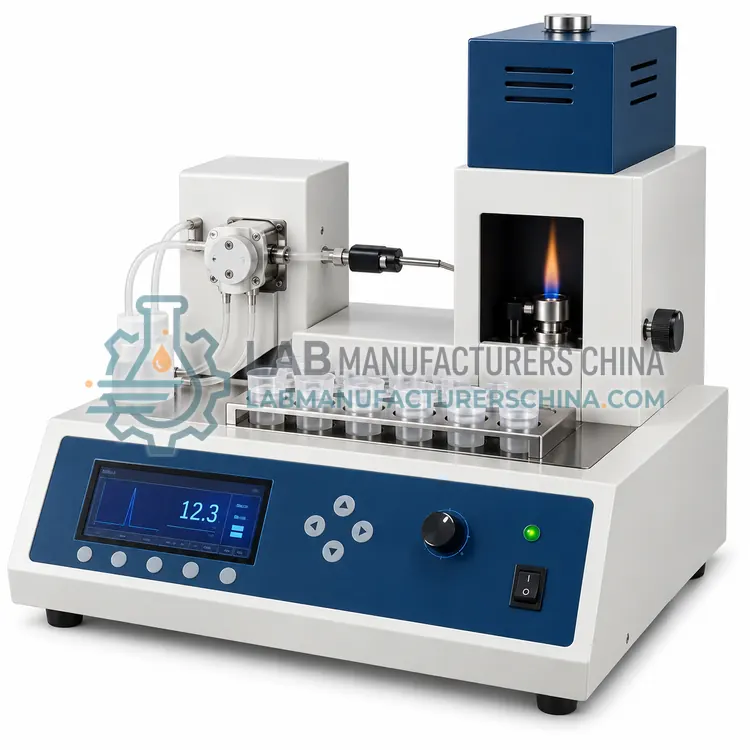
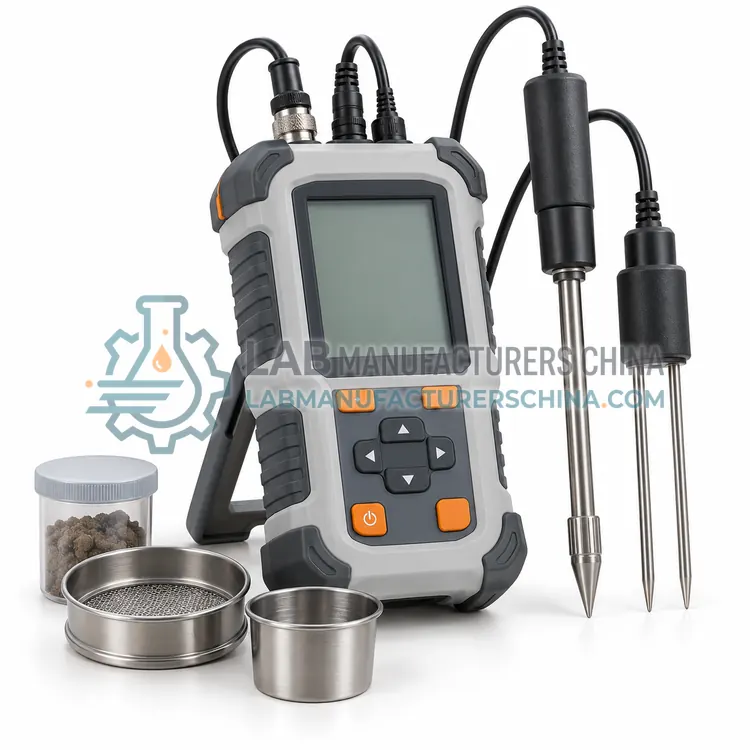
Fertilizer analysis uses classical chemistry and instrumental methods. Total nitrogen is determined by Kjeldahl digestion with sulfuric acid and a catalyst, distillation of ammonia into boric acid and titration, or by combustion in an elemental analyzer that measures the released nitrogen. Phosphorus is extracted and measured gravimetrically as quinoline phosphomolybdate, spectrophotometrically as the molybdenum blue complex or by inductively coupled plasma emission. Potassium is determined by flame emission or atomic absorption after extraction, since potassium atoms emit at characteristic wavelengths when excited in a flame. Near-infrared instruments predict nitrogen, phosphorus, potassium, moisture and organic matter from reflectance spectra using calibrations. Granule strength is measured by compressing single granules between platens and recording the breaking force, while moisture is found by loss on drying or by capacitance.
Which Fertilizer Analysis variants are available?
- NIR Fertilizer Nutrient Analyzer — A near-infrared instrument that predicts nitrogen, phosphorus, potassium, moisture and organic matter in fertilizer samples.
- Fertilizer Nitrogen Analyzer — A laboratory system that determines total nitrogen in fertilizers by Kjeldahl digestion or combustion.
- Flame Photometer for Fertilizer Potassium — An instrument that measures potassium in fertilizer extracts by flame emission in a few seconds.
- Fertilizer Granule Crushing Strength Tester — An instrument that measures the force required to crush a single fertilizer granule.
- Fertilizer Moisture Analyzer — An instrument that determines moisture in fertilizers by rapid loss on drying or capacitance.
How do I choose the right variant?
Choose methods according to the parameter, the required accuracy and the throughput. For official label verification and disputes, use reference chemistry: Kjeldahl or combustion for nitrogen, gravimetric or spectrophotometric methods for phosphorus and flame emission for potassium. For routine production control at high throughput, near-infrared analyzers give rapid multi-nutrient estimates once calibrated to the product lines and checked against reference chemistry. For physical quality, select a granule strength tester and a moisture analyzer suited to the product form, since granules, prills and powders behave differently. Consider sample preparation, including grinding and extraction, the reagent and waste handling for wet chemistry, and whether results must be reported on a dry basis. Confirm the standard methods required by the applicable national regulation or contract.
Where are Fertilizer Analysis used?
Fertilizer Analysis are specified in fertilizer production quality control, blending plant formulation checks, import and export inspection and agronomy and soil fertility laboratories.
Which standards and certifications apply?
Work with Fertilizer Analysis is commonly governed by ISO 5315 (total nitrogen), ISO 5317 (potassium), ISO 6598 (phosphorus), EN 13266, AOAC 955.04 and GB/T 8572 (total nitrogen). Instrument certifications such as CE marking are confirmed per configuration and never assumed.
What are the key considerations before purchase?
Grind and homogenise samples properly, because nutrient distribution in blended fertilizers is uneven and a small scoop can mislead. Follow the extraction and digestion conditions exactly for reference methods, including acid strength, temperature and time, and run reagent blanks and certified reference materials with each batch. For flame emission, control flame conditions and calibrate with matrix-matched standards to limit interference from sodium, calcium and other elements. Keep near-infrared calibrations current by adding local products and verifying with reference analyses. Handle concentrated acids and reagents with appropriate ventilation and personal protection, and neutralise or dispose of waste according to local rules. Maintain balances and ovens on a calibration schedule and record all method parameters for traceability.