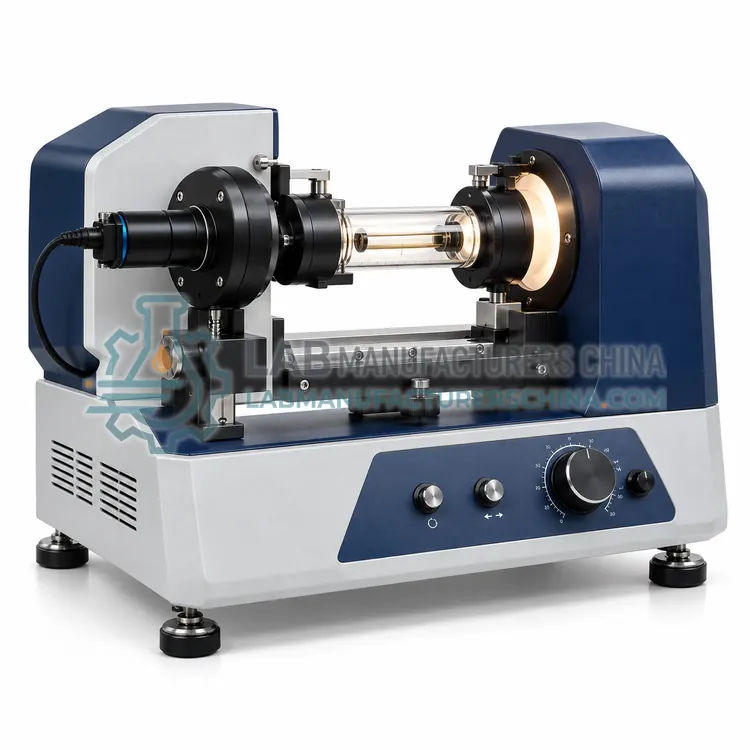
How do Surface Tension Meters work?
Surface tension arises from the cohesive energy imbalance of molecules at a liquid surface. Force tensiometers measure the force needed to detach a platinum ring (du Noüy) from the surface, or the pull exerted on a fully wetted platinum plate (Wilhelmy), and convert it to tension using a correction factor or geometry. Pendant drop analyzers photograph a hanging drop and fit its shape with the Young–Laplace equation, where gravity elongates the drop in proportion to tension. Bubble pressure tensiometers measure the maximum pressure required to form a bubble at a capillary tip, which gives dynamic surface tension at controlled surface age from milliseconds to seconds. Spinning drop tensiometers measure ultra-low interfacial tension from the elongation of a drop in a rotating capillary.
Which Surface Tension Meters variants are available?
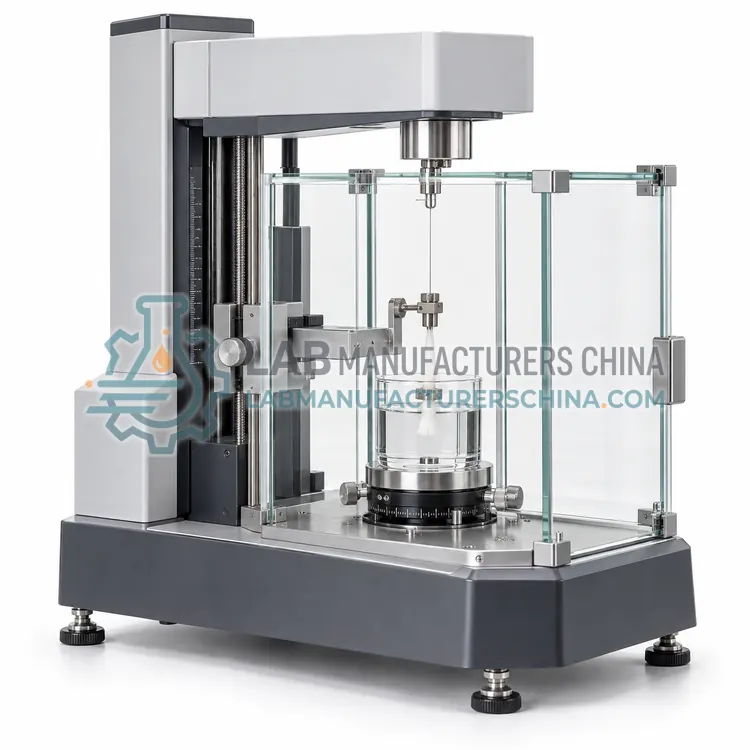
- Automatic Du Noüy Ring Tensiometer — A force tensiometer that lifts a platinum–iridium ring through the liquid surface and records the maximum pull to give surface or interfacial tension.
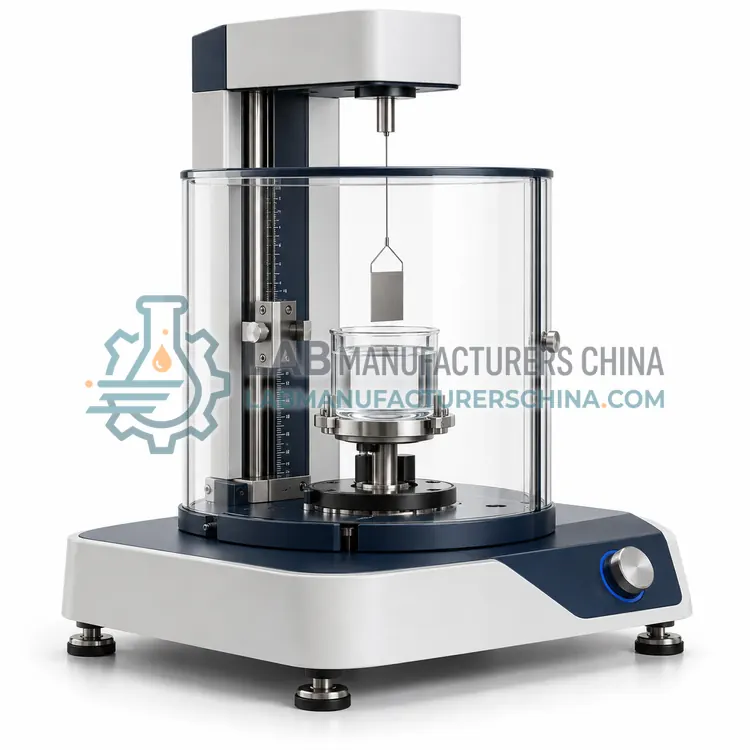
- Wilhelmy Plate Tensiometer for Equilibrium and Interfacial Tension — A force tensiometer that holds a roughened platinum plate at the liquid surface and records the wetting force continuously, so no geometric correction is needed.
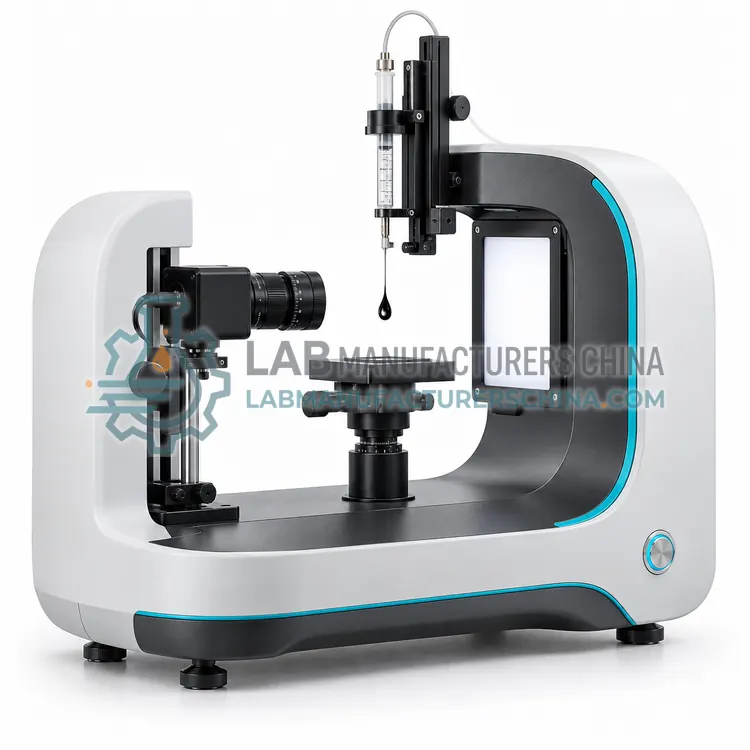
- Pendant Drop Optical Tensiometer — An optical instrument that images a drop hanging from a needle and fits its profile with the Young–Laplace equation to compute surface or interfacial tension.
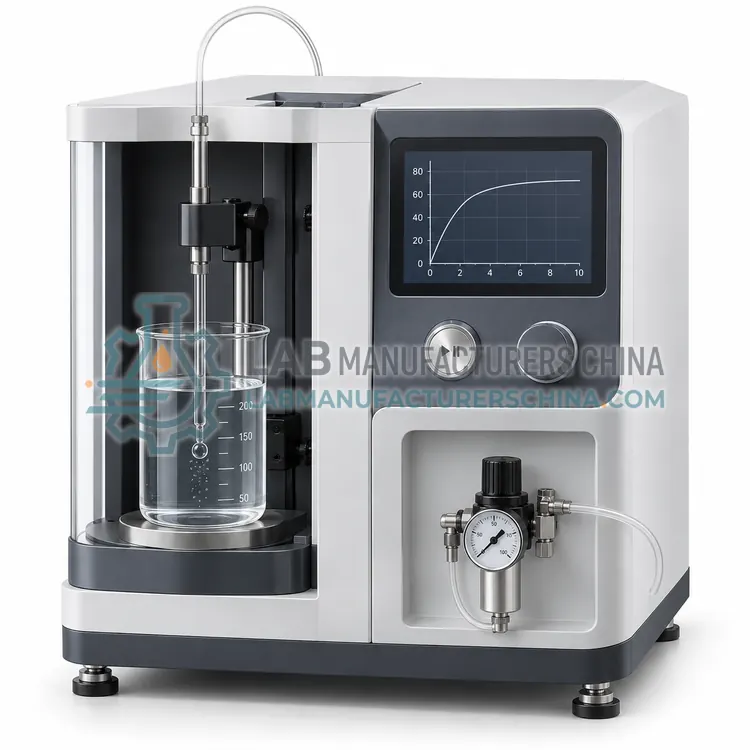
- Maximum Bubble Pressure Tensiometer for Dynamic Surface Tension — An instrument that blows gas bubbles at a capillary tip and records the maximum pressure at varying bubble frequencies to give dynamic surface tension at surface ages from about 5 ms to 100 s.
- Spinning Drop Tensiometer for Ultra-Low Interfacial Tension — An instrument that rotates a horizontal capillary containing a drop of lighter liquid in a denser phase and measures the drop elongation to determine interfacial tension from about 10⁻⁶ to 100 mN/m.
How do I choose the right variant?
Choose by what must be measured and the sample. Equilibrium surface and interfacial tension of pure liquids, solvents and most formulations suit a plate or ring tensiometer, with the plate preferred for time-dependent or interfacial work because it needs no correction. Small volumes, high temperature, high pressure or opaque liquids suit pendant drop. Fast surfactant adsorption and inks, where new surfaces form in milliseconds, need a bubble pressure instrument. Interfacial tension below 0.1 mN/m, common in enhanced oil recovery and microemulsions, needs a spinning drop instrument. Check the measuring range, resolution, temperature control, automation, and standards such as ISO 304, ASTM D1331, ASTM D971 or ASTM D1590 for the procedure you must follow.
Where are Surface Tension Meters used?
Surface Tension Meters are specified in surfactant CMC determination, ink and coating formulation, petroleum interfacial tension, detergent and cleaning product development and water quality and oil spill testing.
Which standards and certifications apply?
Work with Surface Tension Meters is commonly governed by ISO 304, ASTM D1331, ASTM D971, ASTM D1590 and OECD 115. Instrument certifications such as CE marking are confirmed per configuration and never assumed.
What are the key considerations before purchase?
Cleanliness dominates accuracy: clean platinum rings and plates by flaming to red heat after solvent rinsing, use borosilicate vessels cleaned with chromic acid alternatives, and avoid touching surfaces with fingers. Control temperature within ±0.1 °C, because surface tension changes by roughly 0.1 to 0.2 mN/m per degree for many liquids. Level the instrument and protect it from drafts and vibration. Calibrate the balance with weights and check the system with ultrapure water, which should read about 72.0 mN/m at 25 °C. For surfactant solutions, allow equilibration time or use dynamic methods and report measurement time.