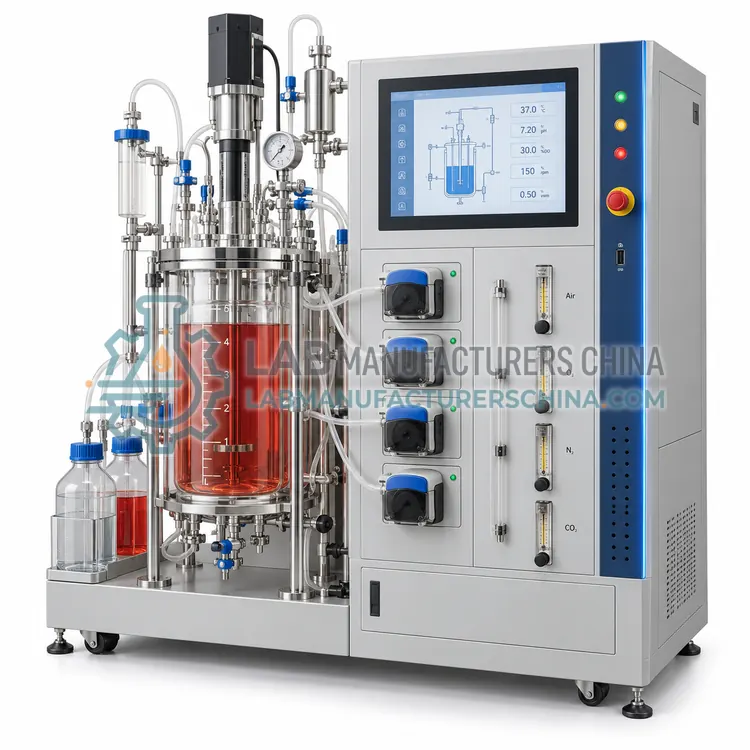
How do Bioprocess Systems work?
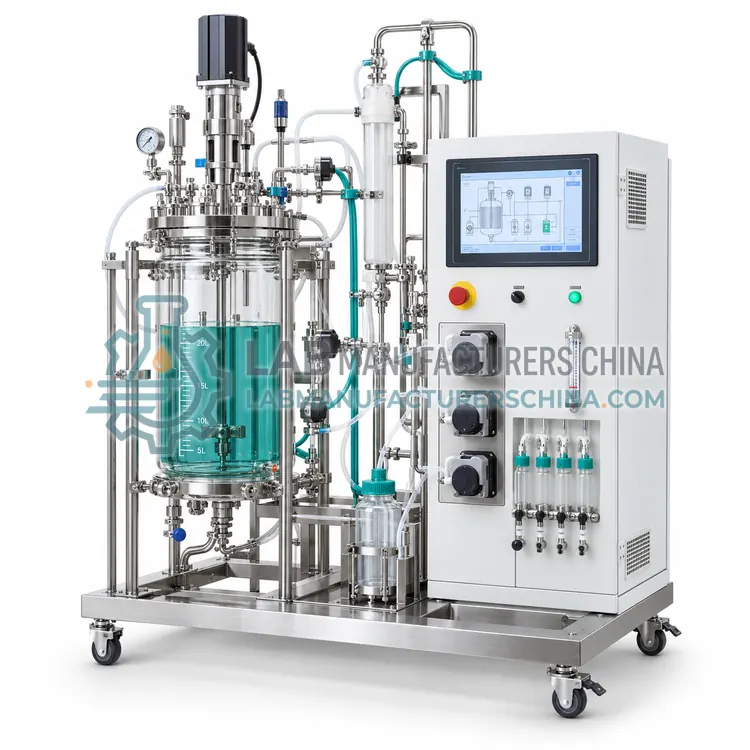
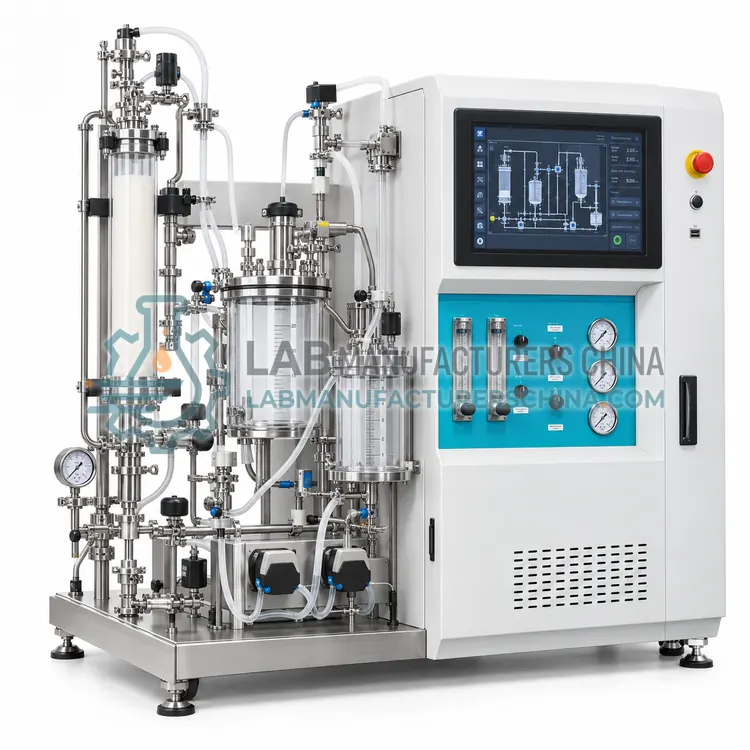
A bioprocess system links unit operations into a controlled sequence. Upstream, a vessel or bag holds cells in medium while sensors measure temperature, pH and dissolved oxygen and controllers adjust heating, gas flow, agitation and feed. Cells and product are then separated by centrifugation or filtration, and downstream capture uses affinity or ion-exchange chromatography followed by polishing steps and tangential flow filtration to concentrate and buffer-exchange the product. Pumps, valves and flow meters move liquid between steps, and in-line sensors measure conductivity, pH, ultraviolet absorbance and pressure. Automation software schedules operations, applies recipes and records critical parameters. Materials contacting product are chosen for low extractables, cleanability or single-use operation, and every step is documented for quality and traceability.
Which Bioprocess Systems variants are available?
- Upstream Bioprocess System — An upstream bioprocess system cultivates cells or microorganisms and controls the conditions that drive growth and product formation.
- Downstream Bioprocess System — A downstream bioprocess system harvests, captures and purifies a biological product through clarification, centrifugation, filtration and chromatography.
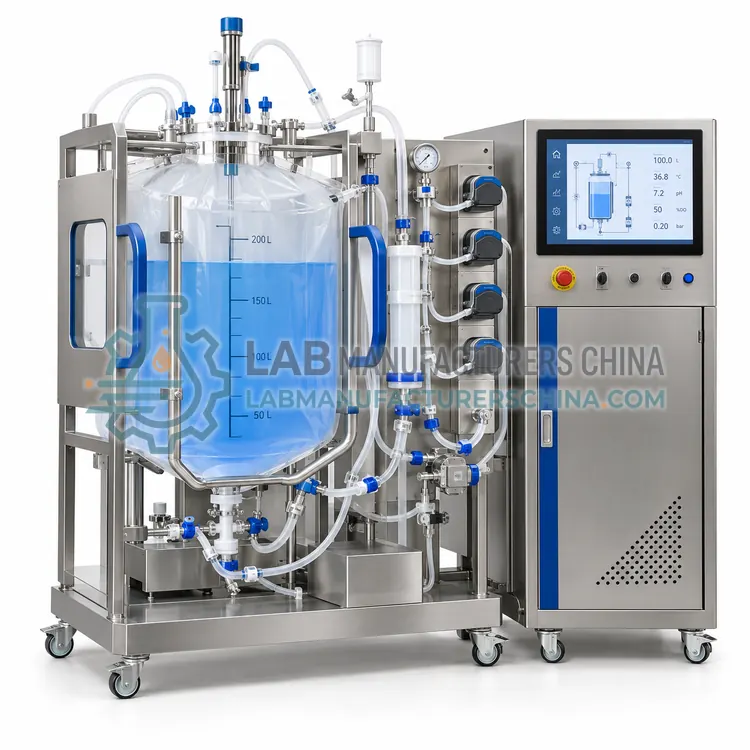
- Single-Use Bioprocess System — A single-use bioprocess system uses pre-sterilized bags, tubing, filters and connectors instead of a cleaned stainless-steel fluid path.
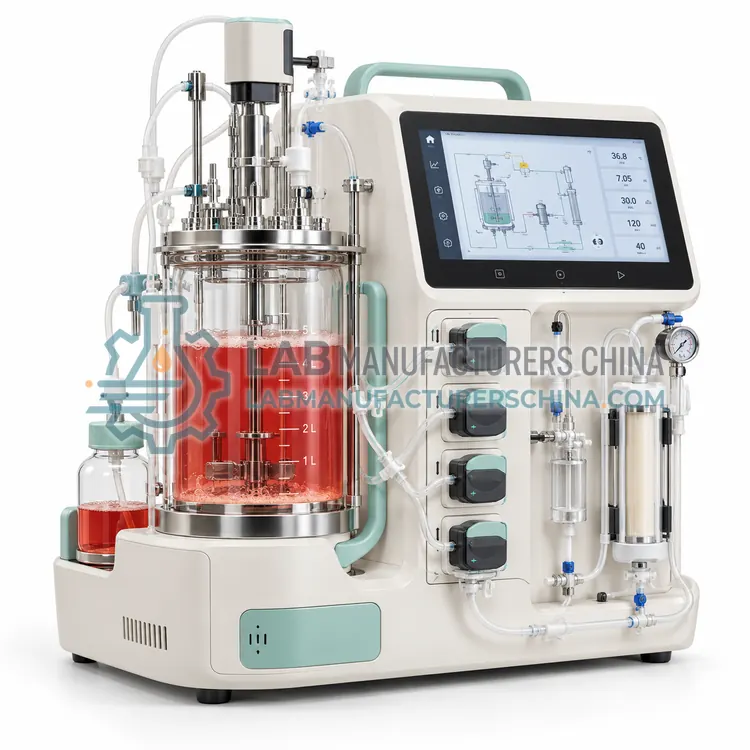
- Perfusion Bioprocess System — A perfusion bioprocess system continuously removes spent medium while retaining cells, supporting high cell densities and extended production runs.
- Automated Bioprocess Control System — An automated bioprocess control system uses software, controllers and instruments to run recipes, hold setpoints and record data across all bioprocess equipment.
How do I choose the right variant?
Define the process flow and scale first, because they determine which unit operations and vessel sizes are needed. Decide between stainless steel and single-use based on product changeover frequency, cleaning validation cost and batch size, and confirm that material compatibility and leachables data suit the product. For upstream systems, specify control loops for temperature, pH, dissolved oxygen and feed, the number of gas and sensor ports, and whether perfusion or high cell density support is required. For downstream systems, match chromatography column size, flow rate and pressure rating, and choose filtration areas from the expected volumetric throughput. Confirm that in-line analytics, the automation recipes and the data historian meet your recording needs, and ask for validation, commissioning and service documentation.
Where are Bioprocess Systems used?
Bioprocess Systems are specified in biopharmaceutical process development, monoclonal antibody production, vaccine and viral vector manufacturing, recombinant protein production, cell therapy manufacturing and contract development and manufacturing.
Which standards and certifications apply?
Work with Bioprocess Systems is commonly governed by EU GMP Annex 1, EU GMP Annex 11, 21 CFR Part 11, 21 CFR Part 211, ICH Q7, ICH Q11, USP <1050>, USP <661> and IEC 61010-1. Instrument certifications such as CE marking are confirmed per configuration and never assumed.
What are the key considerations before purchase?
Qualify the system after installation with documented installation, operational and performance testing, and verify that control and recording functions behave as specified. Calibrate pH, dissolved oxygen, conductivity and pressure sensors on schedule and keep the certificates. Establish clean-in-place and sterilize-in-place procedures and confirm them with rinse water conductivity and biological indicators as appropriate. Manage single-use bag and filter lot changes through change control. Monitor hold times, tubing integrity and pump calibration. For regulated manufacture, confirm that the automation system supports audit trails and access control and that recipes are locked and version controlled. Electrical safety follows IEC 61010-1 and applicable machinery safety standards.