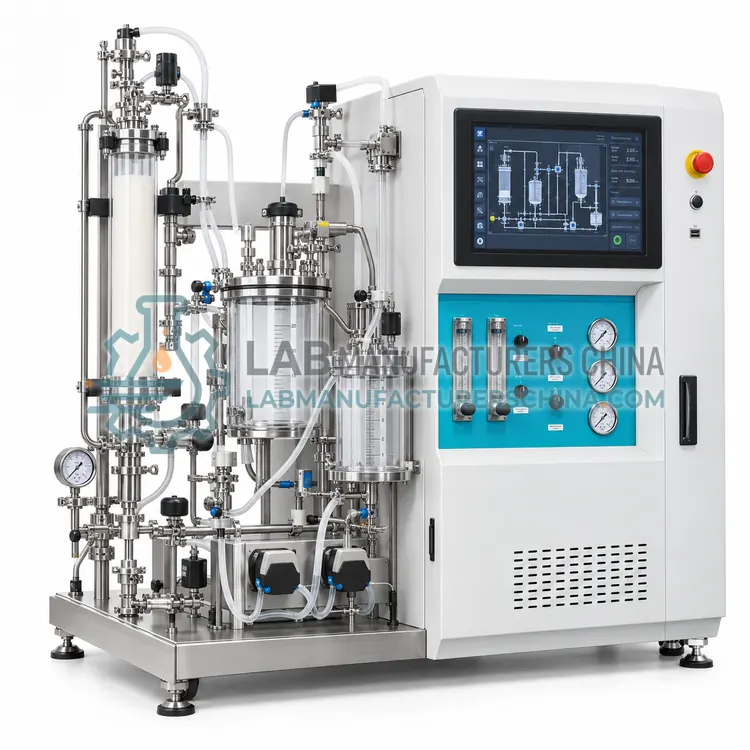
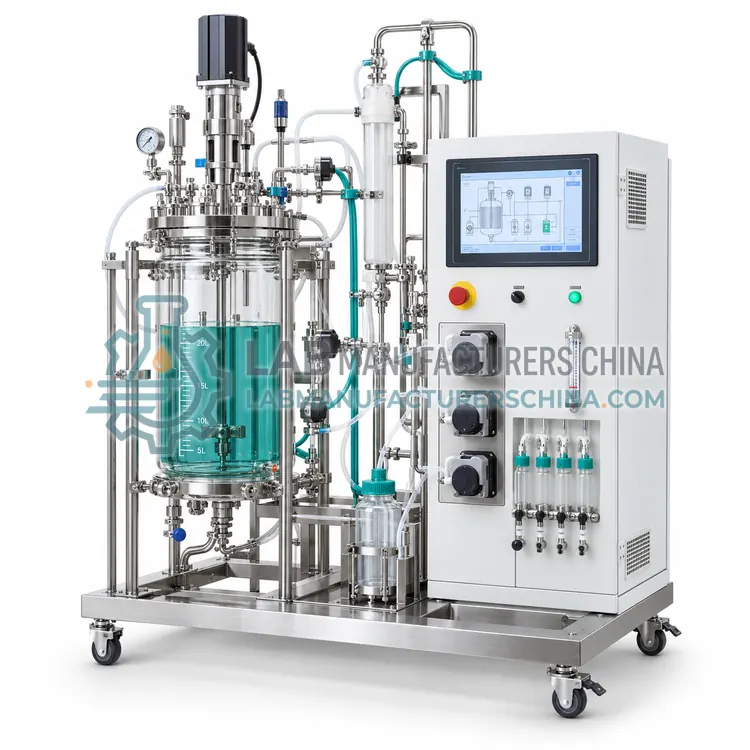
Upstream Bioprocess System
上游生物工艺系统
- SKU BIS-0001
- Bioprocess Systems
- CE (to be confirmed)
- ISO 9001 manufacturing (to be confirmed)
- 21 CFR Part 11 software documentation (to be confirmed)
Price on request — FOB / CIF quoted per order
Prices depend on configuration, quantity and destination port.
Key specifications
| Working volume | 0.1–2,000 L |
|---|---|
| Temperature range | 15–45 °C, ±0.2 °C |
| pH control | 6.0–8.0, ±0.05 |
| Dissolved oxygen control | 0–100% air saturation |
| Agitation | 10–1,000 rpm, impeller dependent |
| Aeration | Air, O2 and CO2 blending |
Request a quote Download brochure · to be provided
By Lab Manufacturers China Technical TeamLast reviewed Standards: EU GMP Annex 1, EU GMP Annex 11, 21 CFR Part 11
What is the Upstream Bioprocess System?
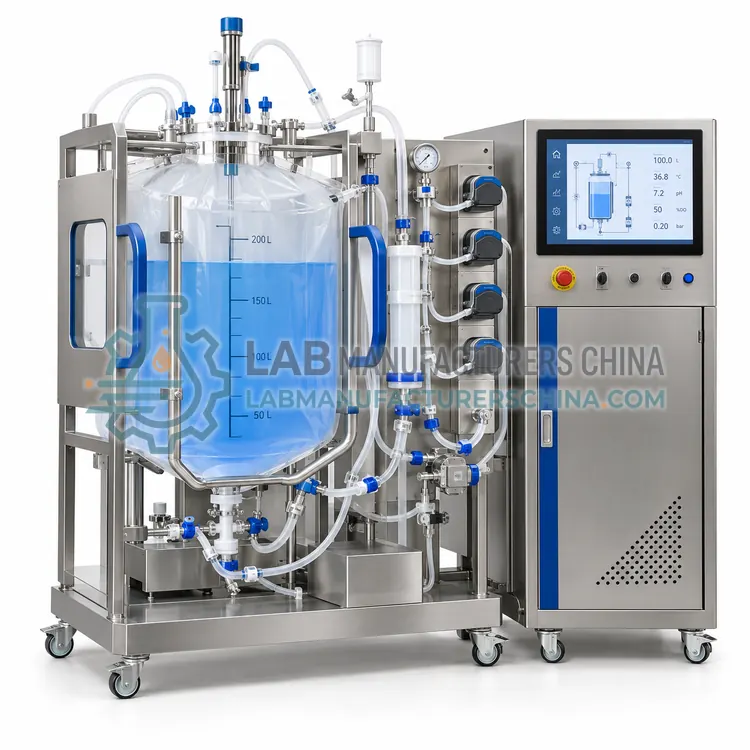
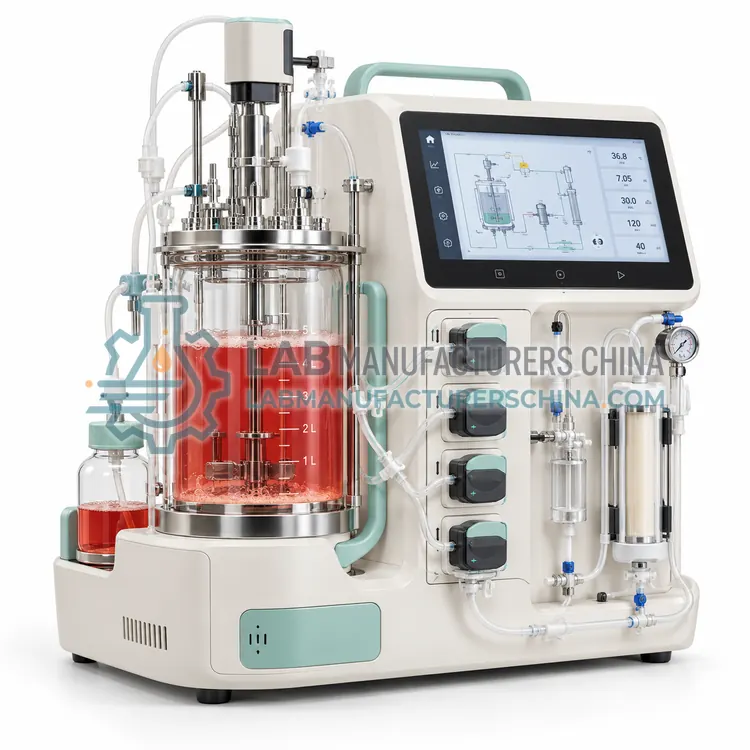
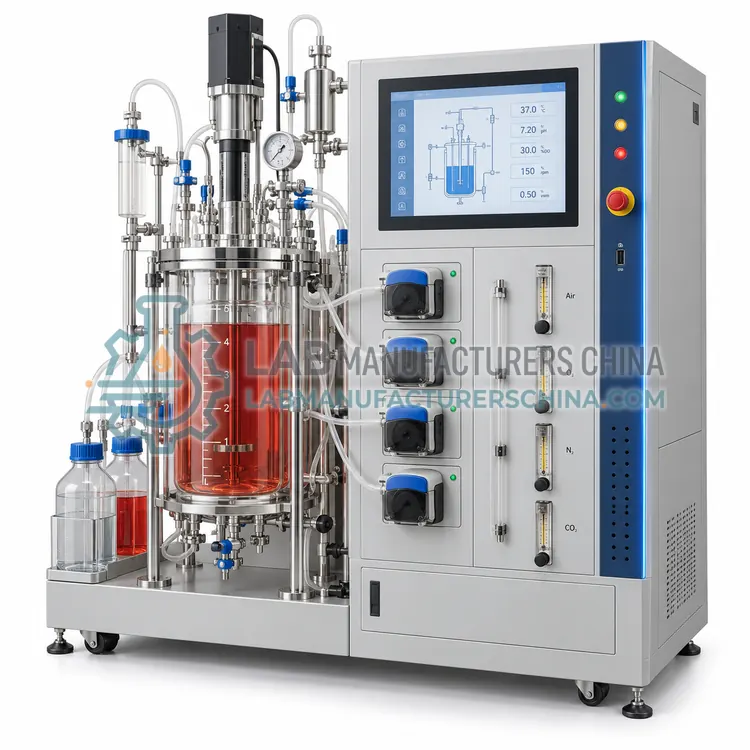
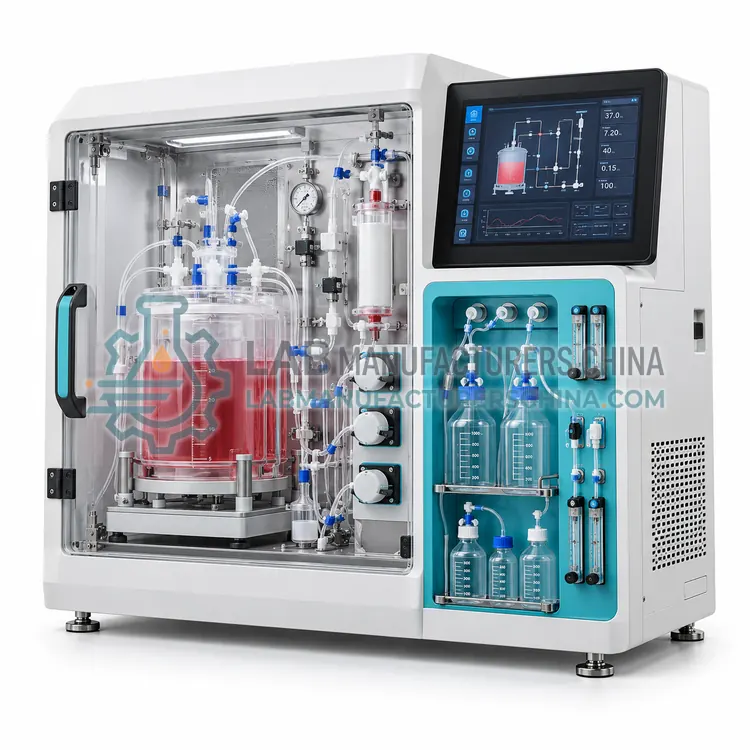
An upstream bioprocess system cultivates cells or microorganisms and controls the conditions that drive growth and product formation. It integrates the vessel or bag, sensors, gas supply, agitation, aeration and feed control.
What is the Upstream Bioprocess System?
An upstream bioprocess system cultivates cells or microorganisms and controls the conditions that drive growth and product formation. It integrates the vessel or bag, sensors, gas supply, agitation, aeration and feed control.
Overview
An upstream bioprocess system brings together the cultivation vessel, monitoring and control loops, gas and liquid handling, and the software that runs the batch. In cell culture it may be a stirred-tank bioreactor with a marine or pitched-blade impeller, or a rocking single-use bag for gentler mixing. In microbial work it uses higher agitation and aeration to meet oxygen demand. Sensors for temperature, pH and dissolved oxygen feed PID controllers that adjust heating, carbon dioxide or base addition, gas flow and stirrer speed, and feed pumps deliver carbon source or nutrients in fed-batch mode. Exhaust gas analysis and off-gas data help quantify metabolism. The system records parameters as a batch profile, applies recipes for reproducibility and supports scale-up by exposing the process parameters that must be matched at larger scale.
How does it work?
A bioprocess system links unit operations into a controlled sequence. Upstream, a vessel or bag holds cells in medium while sensors measure temperature, pH and dissolved oxygen and controllers adjust heating, gas flow, agitation and feed. Cells and product are then separated by centrifugation or filtration, and downstream capture uses affinity or ion-exchange chromatography followed by polishing steps and tangential flow filtration to concentrate and buffer-exchange the product. Pumps, valves and flow meters move liquid between steps, and in-line sensors measure conductivity, pH, ultraviolet absorbance and pressure. Automation software schedules operations, applies recipes and records critical parameters. Materials contacting product are chosen for low extractables, cleanability or single-use operation, and every step is documented for quality and traceability.
What are the key features?
- Stirred-tank or rocking single-use cultivation vessel
- PID loops for temperature, pH and dissolved oxygen
- Gas blending, sparging and exhaust handling
- Fed-batch feed pumps with weight-based control
- Batch profile recording and recipe support
What are the technical specifications?
A typical upstream bioprocess system configuration offers working volume of 0.1–2,000 L, temperature range of 15–45 °C, ±0.2 °C, pH control of 6.0–8.0, ±0.05, dissolved oxygen control of 0–100% air saturation, agitation of 10–1,000 rpm, impeller dependent and aeration of Air, O2 and CO2 blending. Values are indicative of the product class; the exact figures for each configuration are confirmed on the quotation and the calibration documents supplied with the instrument.
Which applications is it used for?
The Upstream Bioprocess System is used in process development, monoclonal antibody production, vaccine and viral vector production and recombinant protein expression. Across the wider Bioprocess Systems class, laboratories also deploy it for biopharmaceutical process development, monoclonal antibody production and vaccine and viral vector manufacturing.
Which standards and certifications apply?
Relevant standards and methods include EU GMP Annex 1, EU GMP Annex 11, 21 CFR Part 11, 21 CFR Part 211, ICH Q7, ICH Q11, USP <1050>, USP <661> and IEC 61010-1. Certification candidates for this model are CE, ISO 9001 manufacturing and 21 CFR Part 11 software documentation; each is to be confirmed for the specific configuration before shipment, and certificates are supplied only where they have been issued.
Qualify the system after installation with documented installation, operational and performance testing, and verify that control and recording functions behave as specified. Calibrate pH, dissolved oxygen, conductivity and pressure sensors on schedule and keep the certificates. Establish clean-in-place and sterilize-in-place procedures and confirm them with rinse water conductivity and biological indicators as appropriate. Manage single-use bag and filter lot changes through change control. Monitor hold times, tubing integrity and pump calibration. For regulated manufacture, confirm that the automation system supports audit trails and access control and that recipes are locked and version controlled. Electrical safety follows IEC 61010-1 and applicable machinery safety standards.
How do I select the right Upstream Bioprocess System?
Choose an upstream system to match the cell type, oxygen demand and scale. In an RFQ specify working volume, control loops and ranges, agitation and aeration capability, feed strategy, sensor ports, data recording and the material format, and identify whether perfusion must be supported.
How does it compare with other Bioprocess Systems variants?
Define the process flow and scale first, because they determine which unit operations and vessel sizes are needed. Decide between stainless steel and single-use based on product changeover frequency, cleaning validation cost and batch size, and confirm that material compatibility and leachables data suit the product. For upstream systems, specify control loops for temperature, pH, dissolved oxygen and feed, the number of gas and sensor ports, and whether perfusion or high cell density support is required. For downstream systems, match chromatography column size, flow rate and pressure rating, and choose filtration areas from the expected volumetric throughput. Confirm that in-line analytics, the automation recipes and the data historian meet your recording needs, and ask for validation, commissioning and service documentation.
Full specifications
| Working volume | 0.1–2,000 L |
|---|---|
| Temperature range | 15–45 °C, ±0.2 °C |
| pH control | 6.0–8.0, ±0.05 |
| Dissolved oxygen control | 0–100% air saturation |
| Agitation | 10–1,000 rpm, impeller dependent |
| Aeration | Air, O2 and CO2 blending |
| Feed control | Weight-based or flow-based |
| Control platform | PLC or PC-based with data historian |
| Material | Stainless steel or single-use bag |
Indicative values for this product class. Final specifications are confirmed on the quotation and in the calibration documents supplied with the instrument.
Applications
- Process development
- Monoclonal antibody production
- Vaccine and viral vector production
- Recombinant protein expression
Key features
- Stirred-tank or rocking single-use cultivation vessel
- PID loops for temperature, pH and dissolved oxygen
- Gas blending, sparging and exhaust handling
- Fed-batch feed pumps with weight-based control
- Batch profile recording and recipe support
Frequently asked questions about Upstream Bioprocess System
Choose a volume that accommodates your current batch and the next scale-up step, leaving headspace for foam and aeration. Development often starts at 1 to 10 litres, with pilot runs at 50 to 500 litres and production above that. Geometry should remain comparable across scales.
Cascade control maintains a primary setpoint, such as dissolved oxygen, by adjusting a secondary variable, such as stirrer speed, gas flow or oxygen fraction. It keeps the process stable when demand changes and avoids overshooting, which matters when oxygen demand rises during rapid growth.
Exhaust gas analysis measures carbon dioxide and oxygen in the gas leaving the vessel, which reflects metabolic activity and the respiratory quotient. It helps operators judge feed timing, detect metabolic shifts and supply data for mass-transfer calculations during scale-up.
It cultivates cells, harvests and purifies the product, and controls the process with sensors and software. Bioprocess systems are used to develop and manufacture antibodies, recombinant proteins, vaccines and cell therapies under documented, reproducible conditions.
Upstream processing grows the cells and produces the product in a controlled vessel or bag. Downstream processing harvests, captures and purifies the product through centrifugation, filtration and chromatography to achieve the required purity, concentration and formulation.
Single-use suits multi-product facilities, clinical batches and processes where cleaning validation would be costly or risky. It reduces changeover time and cross-contamination risk, but consumable cost, extractables data, bag volume limits and supply continuity must be assessed.
Related models