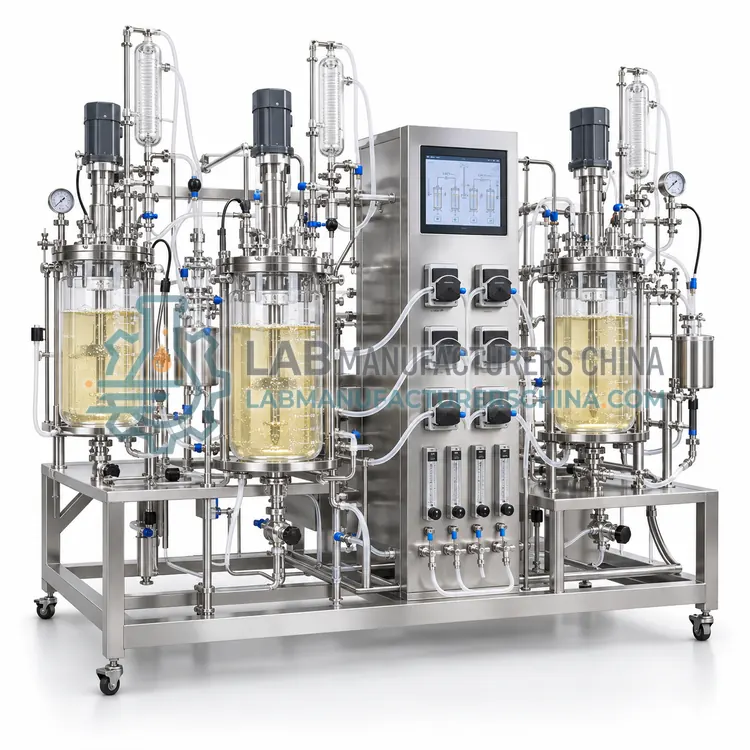
How do Pilot Bioreactors work?
A pilot bioreactor applies the same biological principles as a smaller vessel but at a scale where mixing, oxygen transfer and heat removal behave differently. Larger impellers and higher gas flow increase oxygen transfer, described by the volumetric mass-transfer coefficient, while a jacket or coil removes the greater metabolic heat load. Sensors for temperature, pH, dissolved oxygen, pressure and often foam or level sit in hygienic fittings, and cascade control adjusts agitation, gas composition and back pressure to hold dissolved oxygen. Because mixing time, tip speed and mass-transfer coefficient cannot all be matched to bench scale, engineers choose the most critical criterion and verify performance during the run. Pilot vessels may be reusable stainless steel or single-use, and they include defined sampling, feed and harvest points.
Which Pilot Bioreactors variants are available?
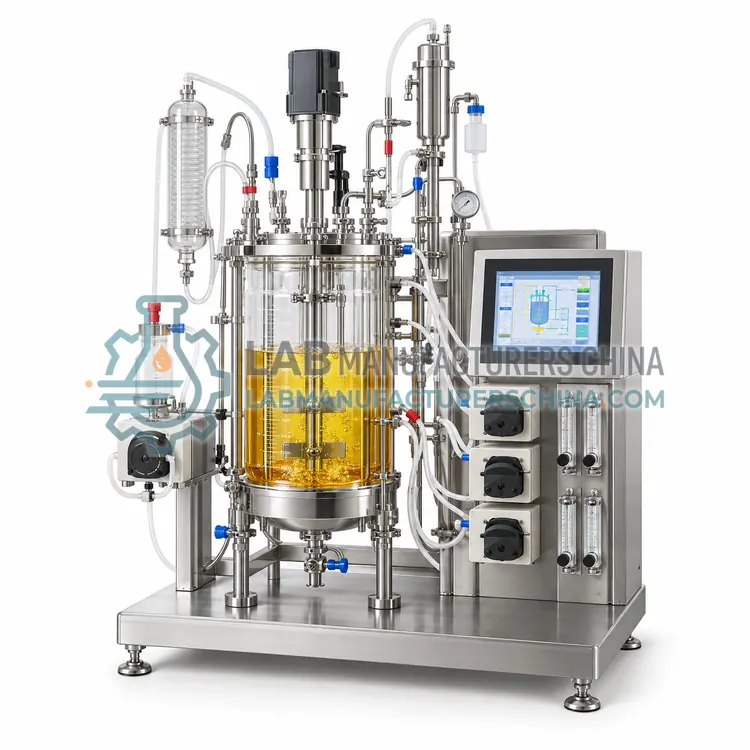
- Pilot Stirred-Tank Bioreactor — A pilot stirred-tank bioreactor is a 50 to 500 litre vessel with agitation, sparging and full control that reproduces stirred bench conditions.
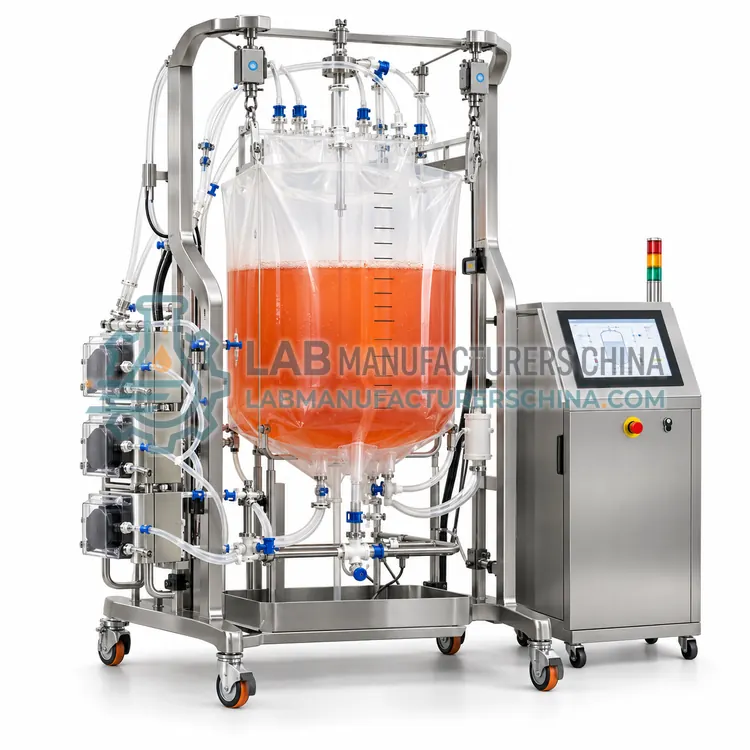
- Pilot Single-Use Bioreactor — A pilot single-use bioreactor uses a pre-sterilized bag in a reusable support, avoiding cleaning validation at intermediate scale.
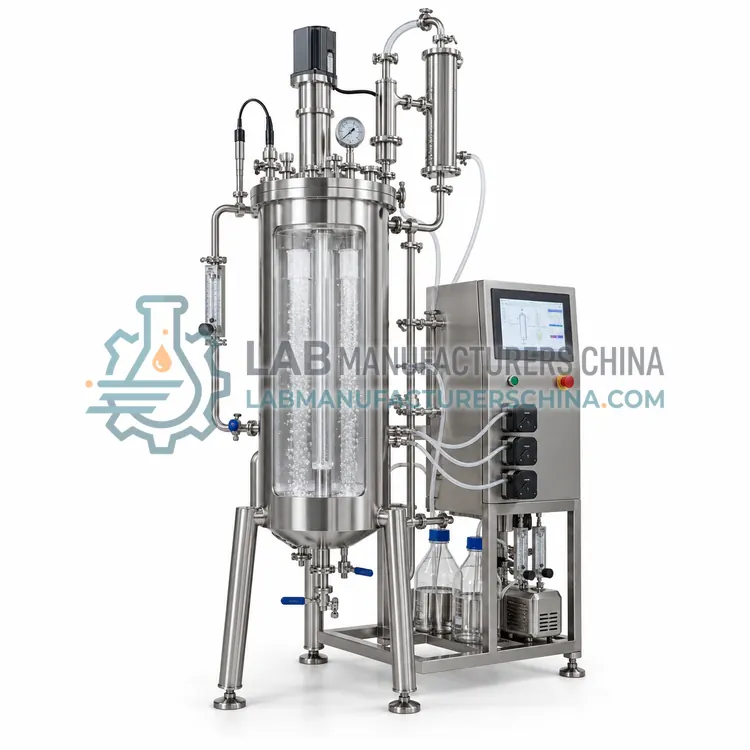
- Pilot Airlift Bioreactor — A pilot airlift bioreactor circulates the culture with gas in a tall column, providing low-shear mixing and good oxygen transfer.
- Pilot Perfusion Bioreactor — A pilot perfusion bioreactor continuously feeds medium and removes spent medium while retaining cells, supporting high densities and continuous harvest.
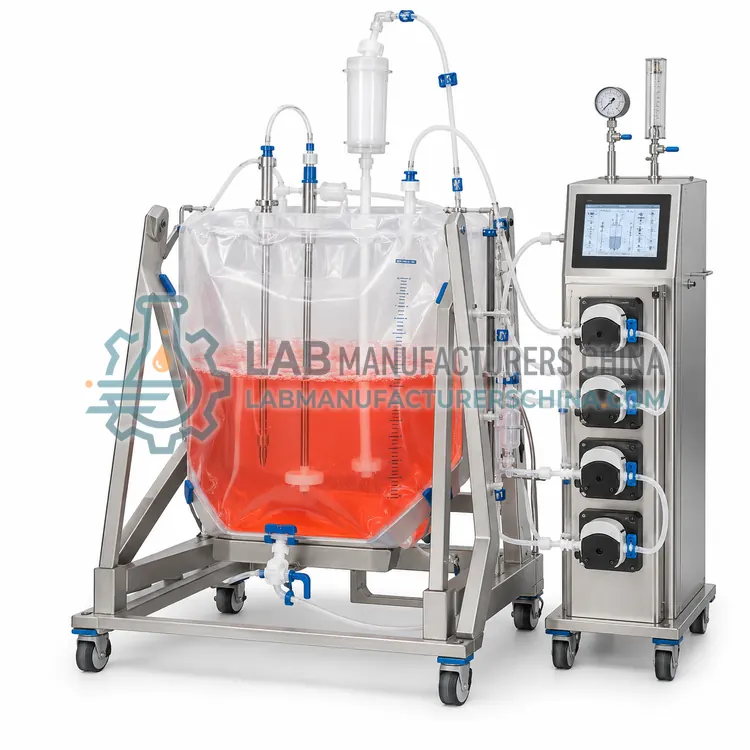
- Pilot Wave-Mixed Bioreactor — A pilot wave-mixed bioreactor uses a rocking single-use bag to mix and aerate the culture gently, providing low shear at intermediate volumes.
How do I choose the right variant?
Size the vessel to reproduce the most important bench parameter and to produce enough material for the next step, whether that is a clinical batch, a trial quantity or data for production design. Decide between stainless steel, which suits repeated campaigns and higher pressure, and single-use, which shortens changeover and reduces cleaning validation. Match the geometry, impeller type and gas handling to the scale-up criterion you intend to hold constant. List control loops and ranges, the number of feed, sampling and harvest ports, and whether redox, off-gas analysis or back pressure control are needed. Evaluate clean-in-place and sterilize-in-place for reusable designs, single-use bag performance for disposable designs, and the records and qualification package available for regulated work.
Where are Pilot Bioreactors used?
Pilot Bioreactors are specified in scale-up verification, clinical and trial batch production, monoclonal antibody and protein production, vaccine and viral vector production and process transfer to production.
Which standards and certifications apply?
Work with Pilot Bioreactors is commonly governed by EU GMP Annex 1, EU GMP Annex 11, 21 CFR Part 11, 21 CFR Part 211, GB/T 150, ISO 13485, USP <87>, USP <88>, ICH Q11 and IEC 61010-1. Instrument certifications such as CE marking are confirmed per configuration and never assumed.
What are the key considerations before purchase?
Qualify the vessel and its utilities with documented pressure, temperature, cleaning and sterilization tests. Calibrate pH and dissolved oxygen probes before each run and verify sensor placement so readings reflect bulk conditions. Establish the scale-up criterion and document why it was chosen, then record the supporting data. Monitor foam, heat removal and dissolved oxygen closely, since these are the usual scale-dependent problems. Keep batch records that capture setpoints, deviations and offline measurements such as cell count and metabolite levels. For reusable vessels, control cleaning cycles and gaskets; for single-use, manage bag lots, integrity and extractables data. Confirm electrical safety to IEC 61010-1.