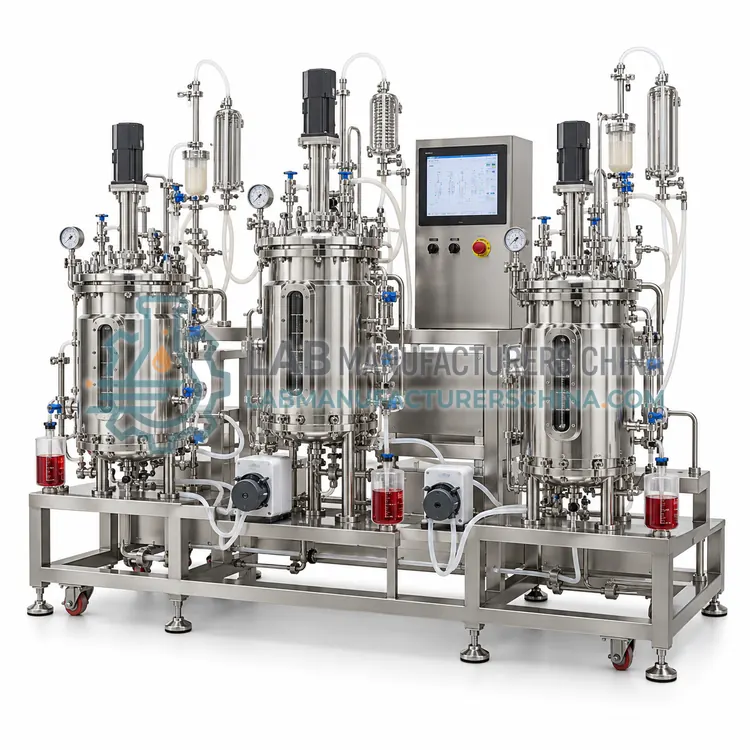
How do Stainless Steel Bioreactors work?
A stainless steel bioreactor provides a durable, pressure-rated and cleanable environment for cell culture or fermentation. The vessel is built from 316L or comparable stainless steel with hygienic welds and a smooth interior, and heat is supplied or removed through a jacket or internal coil. Mixing is by impeller, gas-driven circulation or a packed bed, and a sparger introduces air, oxygen, nitrogen and carbon dioxide. Because the vessel is reusable, it must be cleaned and sterilized between batches: spray devices and validated cleaning cycles remove soil, and steam sterilization raises all product-contact surfaces above the required temperature. Sensors for temperature, pH, dissolved oxygen, pressure and level are mounted in hygienic fittings, and the control system holds setpoints and records the batch.
Which Stainless Steel Bioreactors variants are available?
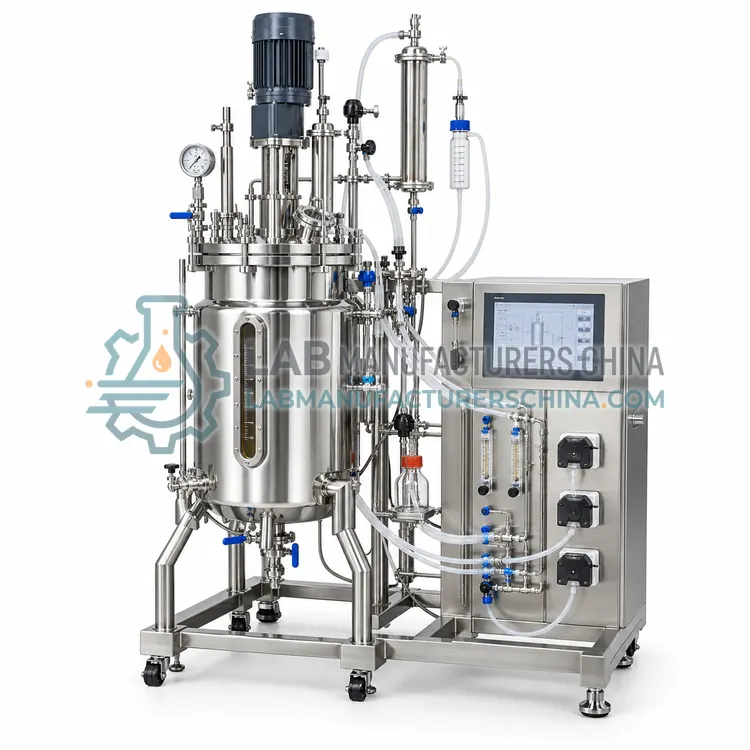
- Stirred-Tank Stainless Steel Bioreactor — A stirred-tank stainless steel bioreactor uses one or more impellers to mix and aerate the culture, giving flexible power input.
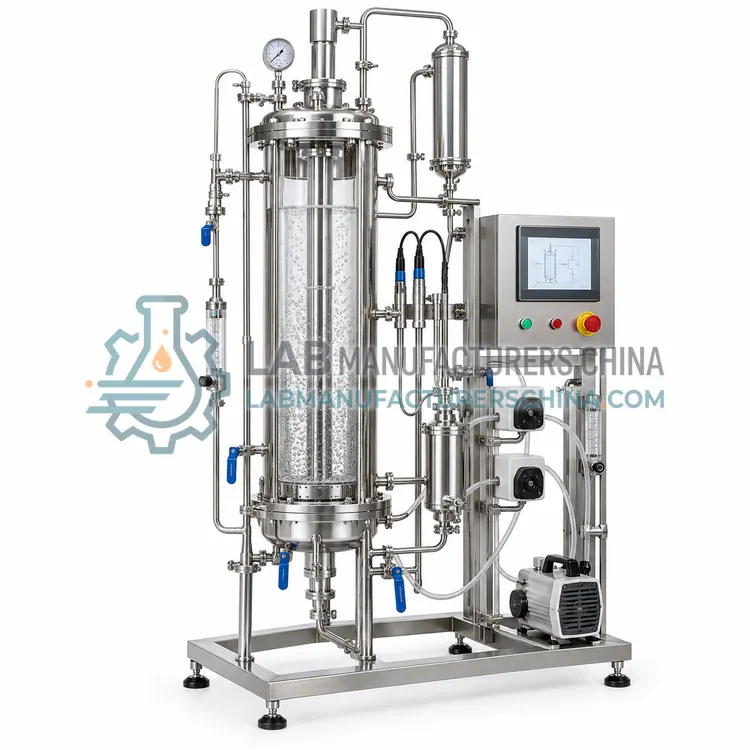
- Airlift Stainless Steel Bioreactor — An airlift stainless steel bioreactor circulates the broth with gas rather than an agitator, using a riser and downcomer.
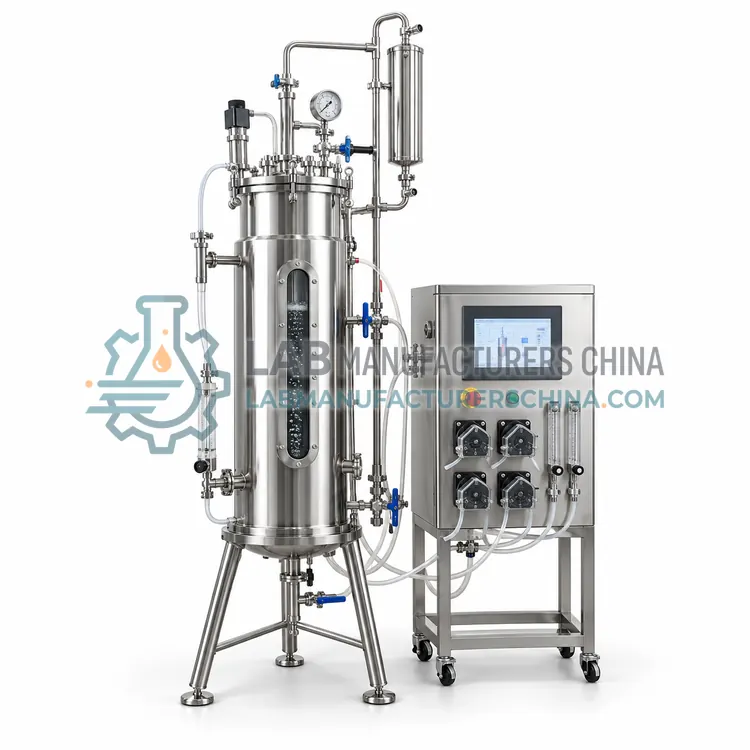
- Bubble Column Stainless Steel Bioreactor — A bubble column stainless steel bioreactor mixes and aerates the culture with gas rising through a simple column, with no impeller or draft tube.
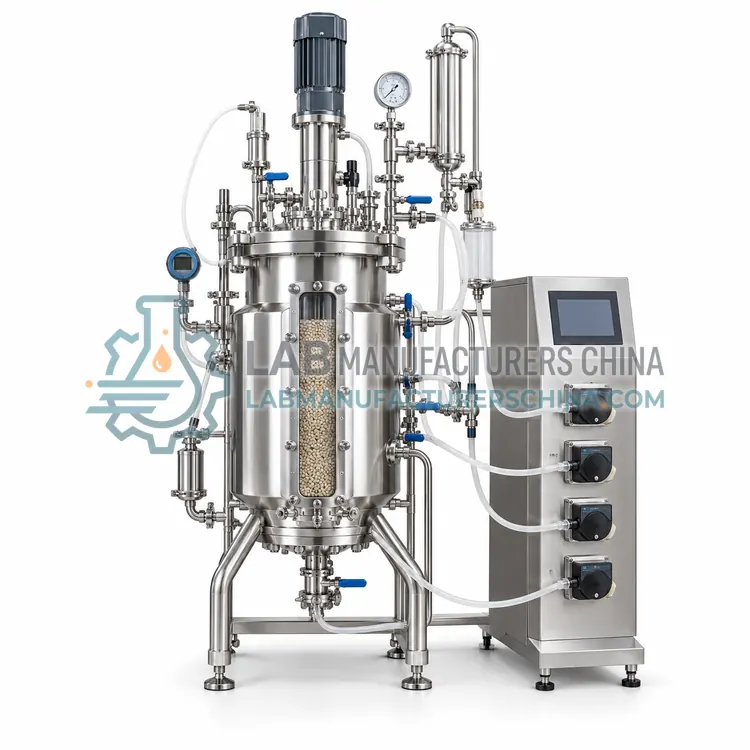
- Packed-Bed Stainless Steel Bioreactor — A packed-bed stainless steel bioreactor grows adherent cells on carriers held in a fixed bed while medium recirculates.
- Perfusion Stainless Steel Bioreactor — A perfusion stainless steel bioreactor continuously feeds fresh medium and removes spent medium while retaining cells, supporting high cell densities and long production runs.
How do I choose the right variant?
Choose stainless steel when you need repeated campaigns, higher pressure, intensive mixing or full sterilization at scale. Select the mixing principle from the cell type and oxygen demand, and confirm the design pressure and temperature against the sterilization method. Specify the material grade, surface finish and welding standard so that clean-in-place and sterilize-in-place are effective, and define the port list for probes, feeds, sampling, foam and cleaning devices. Decide whether the vessel needs a jacket, a coil or both, and check agitation power and gas handling against the expected oxygen uptake rate. Confirm control, data recording and audit-trail capability, and request design documents, material certificates, pressure test records and a qualification package.
Where are Stainless Steel Bioreactors used?
Stainless Steel Bioreactors are specified in pilot and production bioprocessing, monoclonal antibody manufacturing, vaccine and viral vector production, industrial fermentation and contract manufacturing.
Which standards and certifications apply?
Work with Stainless Steel Bioreactors is commonly governed by GB/T 150, ASME BPVC Section VIII, EU GMP Annex 1, EU GMP Annex 11, 21 CFR Part 11, 21 CFR Part 211, USP <661>, ISO 13485 and IEC 61010-1. Instrument certifications such as CE marking are confirmed per configuration and never assumed.
What are the key considerations before purchase?
Qualify the vessel and its utilities before the first run, covering pressure, temperature and cleaning performance. Establish and validate clean-in-place and sterilize-in-place cycles, then confirm them periodically with rinse water conductivity, swabs or biological indicators as appropriate. Calibrate probes and verify their position so that readings reflect bulk conditions, and replace gaskets, seals and diaphragms on schedule. Monitor jacket and coil fouling, agitator seals and sparger condition, since these affect heat transfer, sterility and oxygen supply. Keep the automated control system under change control with audit trails enabled, and retain batch records, alarm logs and maintenance history.