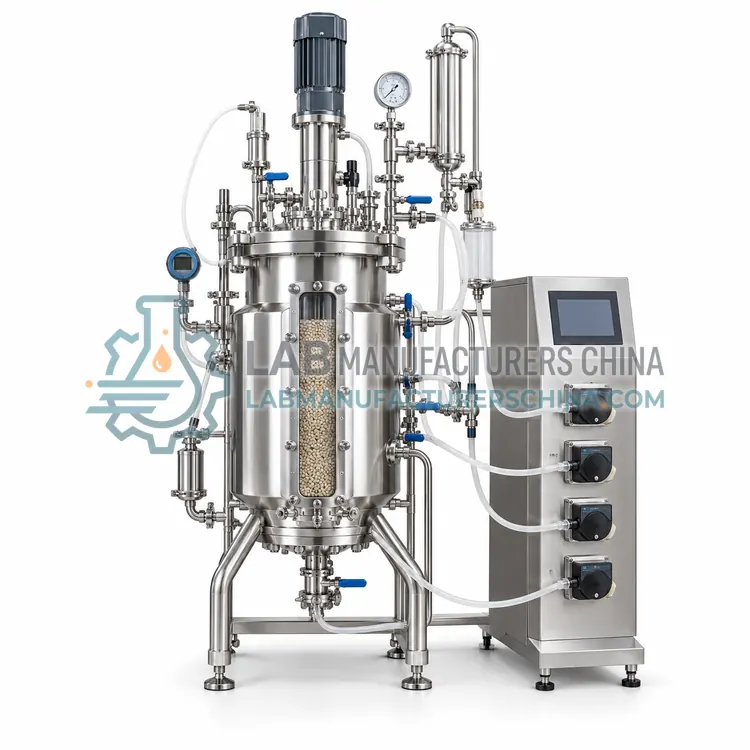
Packed-Bed Stainless Steel Bioreactor
填充床不锈钢生物反应器
- SKU SSB-0004
- Stainless Steel Bioreactors
- CE (to be confirmed)
- ISO 13485 manufacturing (to be confirmed)
- Pressure vessel compliance (to be confirmed)
Price on request — FOB / CIF quoted per order
Prices depend on configuration, quantity and destination port.
Key specifications
| Bed volume | 1–100 L |
|---|---|
| Carrier type | Porous glass, ceramic or polymer beads |
| Surface area per volume | Up to several thousand cm²/L |
| Flow rate | 1–500 L/h recirculation |
| Material | 316L stainless steel |
| Temperature range | 20–45 °C, ±0.2 °C |
Request a quote Download brochure · to be provided
By Lab Manufacturers China Technical TeamLast reviewed Standards: GB/T 150, ASME BPVC Section VIII, EU GMP Annex 1
What is the Packed-Bed Stainless Steel Bioreactor?
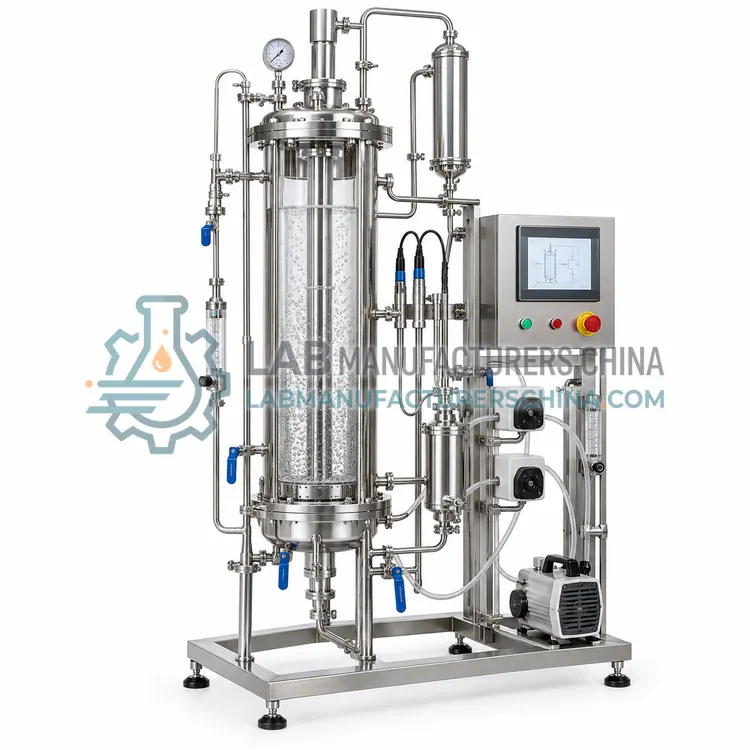
A packed-bed stainless steel bioreactor grows adherent cells on carriers held in a fixed bed while medium recirculates. It offers high surface area per volume and low shear for anchorage-dependent cells at larger scale.
What is the Packed-Bed Stainless Steel Bioreactor?
A packed-bed stainless steel bioreactor grows adherent cells on carriers held in a fixed bed while medium recirculates. It offers high surface area per volume and low shear for anchorage-dependent cells at larger scale.
Overview
A packed-bed stainless steel bioreactor holds carriers such as porous glass, ceramic or polymer beads in a column through which medium recirculates. Adherent cells attach to the carrier surfaces and grow in a fixed bed, so the culture is protected from shear and the surface area per unit volume is far higher than in flat vessels. A reservoir and loop provide medium, gas exchange, pH and dissolved oxygen control and sampling, and fresh medium is added while spent medium is removed. The stainless construction allows steam sterilization, clean-in-place and operation at pressure, so packed beds can run at pilot and production scale. Flow distribution and gas pockets are the main technical challenges, and harvesting cells from the bed is difficult, so many processes collect only secreted product from the perfusate.
How does it work?
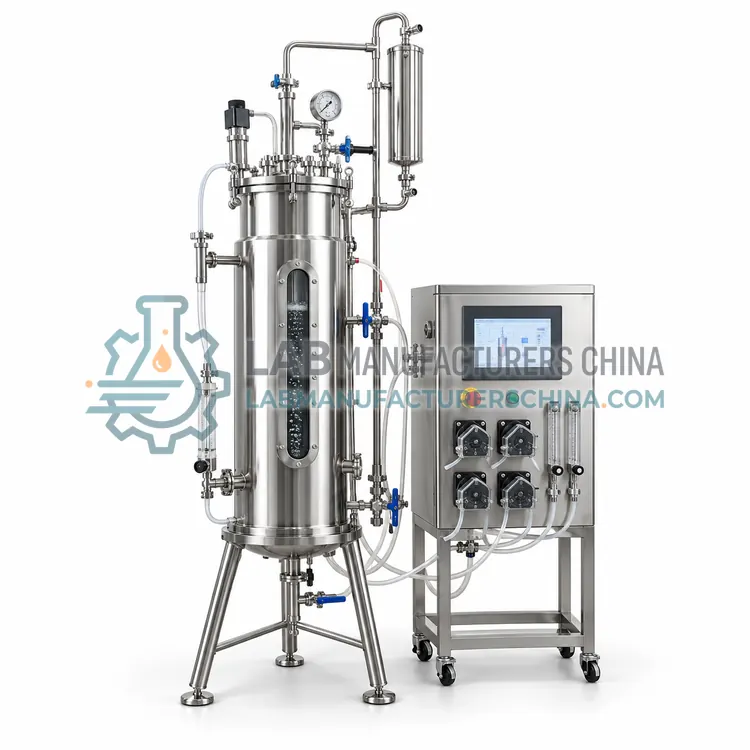
A stainless steel bioreactor provides a durable, pressure-rated and cleanable environment for cell culture or fermentation. The vessel is built from 316L or comparable stainless steel with hygienic welds and a smooth interior, and heat is supplied or removed through a jacket or internal coil. Mixing is by impeller, gas-driven circulation or a packed bed, and a sparger introduces air, oxygen, nitrogen and carbon dioxide. Because the vessel is reusable, it must be cleaned and sterilized between batches: spray devices and validated cleaning cycles remove soil, and steam sterilization raises all product-contact surfaces above the required temperature. Sensors for temperature, pH, dissolved oxygen, pressure and level are mounted in hygienic fittings, and the control system holds setpoints and records the batch.
What are the key features?
- Fixed bed of carriers in a stainless column
- High surface area per unit volume
- Low shear for adherent cells
- Recirculation loop with gas exchange and control
- Steam sterilizable and cleanable in place
What are the technical specifications?
A typical packed-bed stainless steel bioreactor configuration offers bed volume of 1–100 L, carrier type of Porous glass, ceramic or polymer beads, surface area per volume of Up to several thousand cm²/L, flow rate of 1–500 L/h recirculation, material of 316L stainless steel and temperature range of 20–45 °C, ±0.2 °C. Values are indicative of the product class; the exact figures for each configuration are confirmed on the quotation and the calibration documents supplied with the instrument.
Which applications is it used for?
The Packed-Bed Stainless Steel Bioreactor is used in anchorage-dependent cell culture, vaccine production, monoclonal antibody production and cell therapy research. Across the wider Stainless Steel Bioreactors class, laboratories also deploy it for pilot and production bioprocessing, monoclonal antibody manufacturing and vaccine and viral vector production.
Which standards and certifications apply?
Relevant standards and methods include GB/T 150, ASME BPVC Section VIII, EU GMP Annex 1, EU GMP Annex 11, 21 CFR Part 11, 21 CFR Part 211, USP <661>, ISO 13485 and IEC 61010-1. Certification candidates for this model are CE, ISO 13485 manufacturing and Pressure vessel compliance; each is to be confirmed for the specific configuration before shipment, and certificates are supplied only where they have been issued.
Qualify the vessel and its utilities before the first run, covering pressure, temperature and cleaning performance. Establish and validate clean-in-place and sterilize-in-place cycles, then confirm them periodically with rinse water conductivity, swabs or biological indicators as appropriate. Calibrate probes and verify their position so that readings reflect bulk conditions, and replace gaskets, seals and diaphragms on schedule. Monitor jacket and coil fouling, agitator seals and sparger condition, since these affect heat transfer, sterility and oxygen supply. Keep the automated control system under change control with audit trails enabled, and retain batch records, alarm logs and maintenance history.
How do I select the right Packed-Bed Stainless Steel Bioreactor?
Choose a packed-bed bioreactor for adherent cells needing high surface area and low shear at pilot scale. In an RFQ specify bed volume, carrier type and size, flow rate, gas exchange design, control requirements and the harvesting approach.
How does it compare with other Stainless Steel Bioreactors variants?
Choose stainless steel when you need repeated campaigns, higher pressure, intensive mixing or full sterilization at scale. Select the mixing principle from the cell type and oxygen demand, and confirm the design pressure and temperature against the sterilization method. Specify the material grade, surface finish and welding standard so that clean-in-place and sterilize-in-place are effective, and define the port list for probes, feeds, sampling, foam and cleaning devices. Decide whether the vessel needs a jacket, a coil or both, and check agitation power and gas handling against the expected oxygen uptake rate. Confirm control, data recording and audit-trail capability, and request design documents, material certificates, pressure test records and a qualification package.
Full specifications
| Bed volume | 1–100 L |
|---|---|
| Carrier type | Porous glass, ceramic or polymer beads |
| Surface area per volume | Up to several thousand cm²/L |
| Flow rate | 1–500 L/h recirculation |
| Material | 316L stainless steel |
| Temperature range | 20–45 °C, ±0.2 °C |
| Dissolved oxygen control | Via gas exchanger |
| Cleaning | Clean in place with carrier removal |
Indicative values for this product class. Final specifications are confirmed on the quotation and in the calibration documents supplied with the instrument.
Applications
- Anchorage-dependent cell culture
- Vaccine production
- Monoclonal antibody production
- Cell therapy research
Key features
- Fixed bed of carriers in a stainless column
- High surface area per unit volume
- Low shear for adherent cells
- Recirculation loop with gas exchange and control
- Steam sterilizable and cleanable in place
Frequently asked questions about Packed-Bed Stainless Steel Bioreactor
Porous carriers offer several thousand square centimetres of growth surface per litre of bed, far more than a flask or roller bottle. This allows high cell numbers or product titres in a compact vessel, which is why packed beds suit adherent cell processes.
Ensuring even flow distribution and avoiding gas pockets in the bed are the main challenges, because channeling starves part of the bed. Flow rate, carrier size and packing are adjusted to limit these, and pressure monitoring helps detect developing blockages.
The vessel and loop are cleaned in place with validated cycles, usually after removing or replacing the carrier, and steam sterilization raises all product-contact surfaces to the required temperature. Because carriers can trap soil, cleaning validation must demonstrate that residues are controlled.
Stainless steel tolerates repeated campaigns, higher pressures and intensive mixing, and its performance can be qualified for many years. It also handles large volumes that disposable bags do not reach, though it requires cleaning validation and longer changeover between products.
Product-contact surfaces are usually finished to a roughness below about 0.8 micrometres with smooth, crevice-free welds, so that cleaning removes soil completely. The exact specification follows the hygiene standard agreed for the product and is verified during qualification.
Steam is introduced through the jacket, sparger or dedicated lines to raise all product-contact surfaces above the sterilization temperature for the required time. Temperature is monitored at the coldest point, and the cycle is validated with temperature records and, where required, biological indicators.
Related models