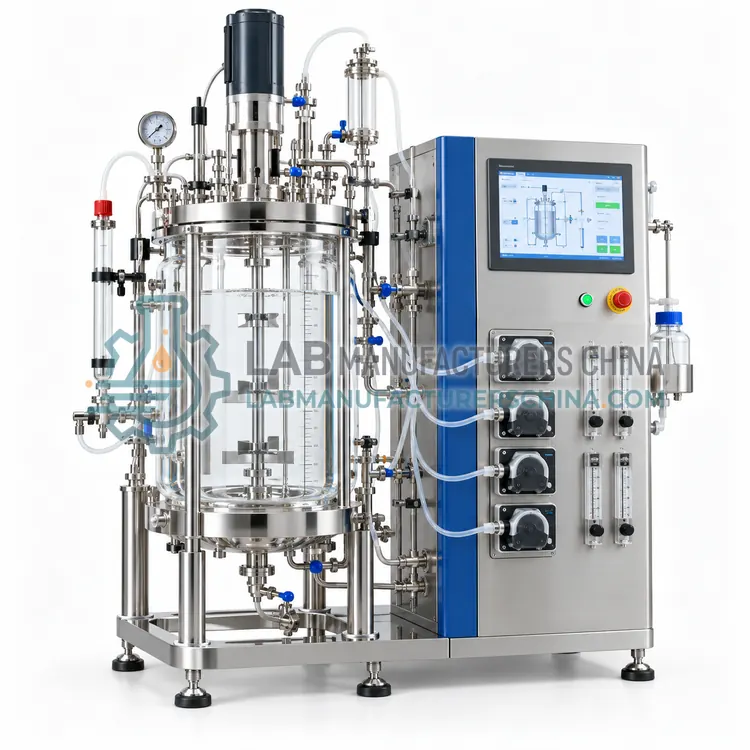
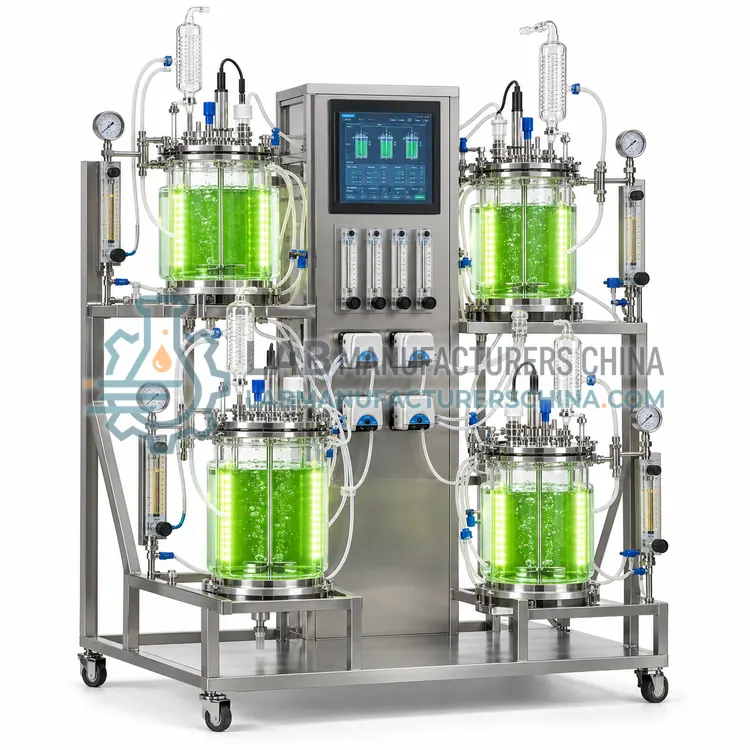
Glass Photobioreactor
玻璃光生物反应器
- SKU GLB-0005
- Glass Bioreactors
- CE (to be confirmed)
- ISO 9001 manufacturing (to be confirmed)
- IEC 61010-1 compliance (to be confirmed)
Price on request — FOB / CIF quoted per order
Prices depend on configuration, quantity and destination port.
Key specifications
| Working volume | 0.5–50 L |
|---|---|
| Light source | LED panels or tubes, 400–700 nm |
| Light intensity | 50–2,000 µmol/m²/s (adjustable) |
| Photoperiod | Programmable, 0–24 h |
| Temperature range | 15–45 °C, ±0.5 °C |
| CO2 supply | Sparged, 0.5–5% in air |
Request a quote Download brochure · to be provided
By Lab Manufacturers China Technical TeamLast reviewed Standards: ISO 9001, USP <87>, USP <88>
What is the Glass Photobioreactor?
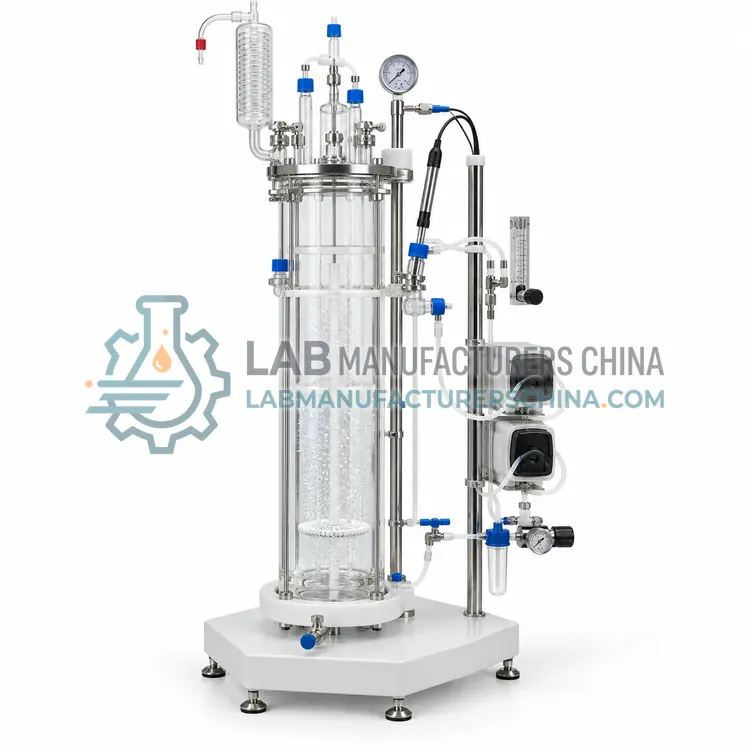
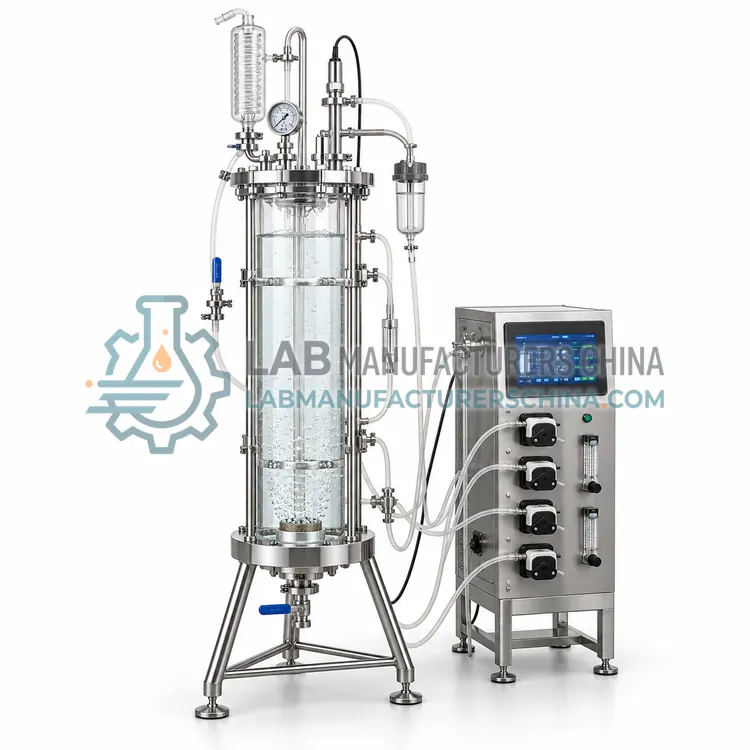
A glass photobioreactor cultivates photosynthetic organisms with controlled light, carbon dioxide, mixing and temperature in a transparent vessel. It is widely used in research laboratories for microalgae, cyanobacteria and plant cell research.
What is the Glass Photobioreactor?
A glass photobioreactor cultivates photosynthetic organisms with controlled light, carbon dioxide, mixing and temperature in a transparent vessel. It is widely used in research laboratories for microalgae, cyanobacteria and plant cell research.
Overview
A glass photobioreactor adds controlled illumination to a transparent cultivation vessel so that photosynthetic organisms receive enough light for growth. Light is supplied by external lamps, light-emitting diodes or, in some designs, internal light guides or optical fibres that distribute light through the culture and reduce self-shading. Carbon dioxide is sparged to supply carbon and to help control pH, and mixing keeps cells in suspension and cycles them between light and dark zones. Temperature is controlled by a jacket, bath or heat exchanger, and designs range from flat panels and tubes to airlift and stirred columns. Glass transparency and resistance to cleaning make it convenient for research, and parameters such as light intensity, photoperiod and gas composition are logged with the run. Scale is limited by light penetration and by the difficulty of sterilizing large glass elements.
How does it work?
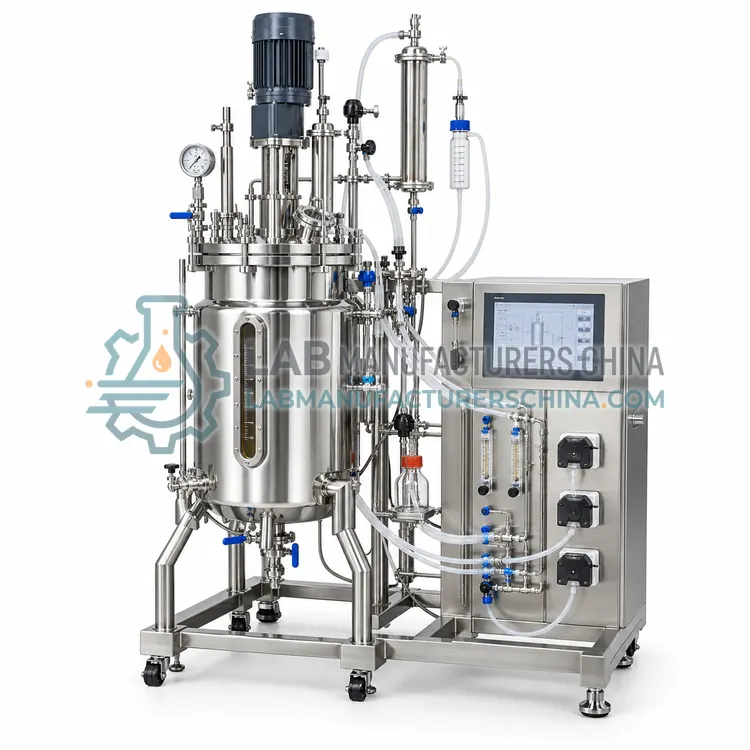
A glass bioreactor uses a transparent vessel so that mixing, foam, color and biomass can be observed directly during culture. Borosilicate glass resists thermal shock and most cleaning agents, and a detachable headplate carries the agitator, sparger, probes and ports. Temperature is controlled by a water jacket, a heating blanket or a water bath, pH is adjusted by dosing acid, base or carbon dioxide, and dissolved oxygen is held by adjusting gas flow, oxygen fraction or agitation speed. Mixing may be by impeller, by gas-driven circulation in airlift or bubble column designs, or by gentle rocking for sensitive cells. Glass vessels are usually sterilized in an autoclave, which limits their practical size, but they allow rapid changes of impeller, sparger and sensor configuration between experiments.
What are the key features?
- Transparent vessel with controlled illumination
- External or internal light sources
- Carbon dioxide sparging for carbon and pH
- Mixing for light-dark cycling
- Logged light intensity and photoperiod
What are the technical specifications?
A typical glass photobioreactor configuration offers working volume of 0.5–50 L, light source of LED panels or tubes, 400–700 nm, light intensity of 50–2,000 µmol/m²/s (adjustable), photoperiod of Programmable, 0–24 h, temperature range of 15–45 °C, ±0.5 °C and CO2 supply of Sparged, 0.5–5% in air. Values are indicative of the product class; the exact figures for each configuration are confirmed on the quotation and the calibration documents supplied with the instrument.
Which applications is it used for?
The Glass Photobioreactor is used in microalgae and cyanobacteria culture, biofuel and pigment research, carbon fixation studies and plant cell culture research. Across the wider Glass Bioreactors class, laboratories also deploy it for process development and scale-down models, cell culture optimization and microbial fermentation studies.
Which standards and certifications apply?
Relevant standards and methods include ISO 9001, USP <87>, USP <88>, IEC 61010-1, ISO 11133 and GB/T 150. Certification candidates for this model are CE, ISO 9001 manufacturing and IEC 61010-1 compliance; each is to be confirmed for the specific configuration before shipment, and certificates are supplied only where they have been issued.
Inspect glass for chips or cracks before each run, because even a small flaw can fail under autoclaving or pressure. Assemble the headplate carefully so that probes do not touch the impeller, and check that all ports are sealed. Calibrate pH and dissolved oxygen probes before sterilization and confirm they survive the cycle. Use a protective shield or cabinet where pressure or a fragile vessel could present a hazard. Clean glass promptly to avoid baked-on residue, and avoid strong alkalis that etch the surface over time. Replace gaskets and O-rings on a schedule, and keep a log of sterilization cycles for each vessel and headplate.
How do I select the right Glass Photobioreactor?
Choose a photobioreactor for photosynthetic organisms where light delivery must be carefully controlled. In an RFQ specify the volume, the light source and intensity range, the photoperiod control, carbon dioxide supply, temperature range and mixing principle.
How does it compare with other Glass Bioreactors variants?
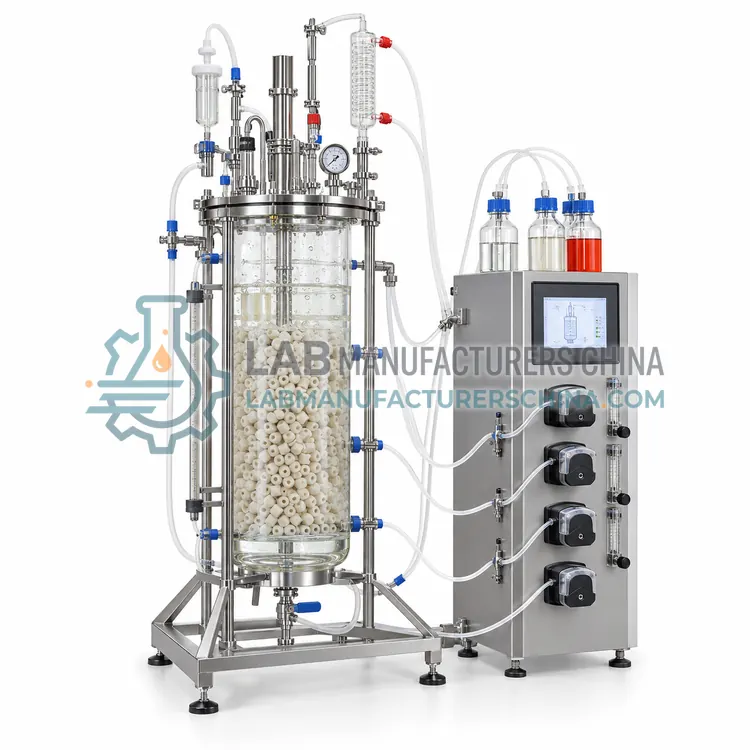
Choose a glass bioreactor when you need to see the culture, change configuration quickly or work at small volumes. Select the mixing principle from the cell type and oxygen demand: stirred designs give flexible power input, airlift and bubble columns suit shear-sensitive cultures, packed-bed designs suit adherent cells on carriers, and photobioreactors suit photosynthetic organisms. Confirm the working volume and headspace, the number and type of ports, and whether the headplate can accommodate the probes and feeds you need. Check the temperature control method, since a water jacket gives more uniform heating than a blanket, and confirm how the vessel is sterilized. Verify that materials and connectors suit autoclaving and that spare headplates and vessels allow parallel or rapid sequential experiments.
Full specifications
| Working volume | 0.5–50 L |
|---|---|
| Light source | LED panels or tubes, 400–700 nm |
| Light intensity | 50–2,000 µmol/m²/s (adjustable) |
| Photoperiod | Programmable, 0–24 h |
| Temperature range | 15–45 °C, ±0.5 °C |
| CO2 supply | Sparged, 0.5–5% in air |
| pH control | Via CO2 addition, ±0.05 |
| Material | Borosilicate glass panels or tubes |
Indicative values for this product class. Final specifications are confirmed on the quotation and in the calibration documents supplied with the instrument.
Applications
- Microalgae and cyanobacteria culture
- Biofuel and pigment research
- Carbon fixation studies
- Plant cell culture research
Key features
- Transparent vessel with controlled illumination
- External or internal light sources
- Carbon dioxide sparging for carbon and pH
- Mixing for light-dark cycling
- Logged light intensity and photoperiod
Frequently asked questions about Glass Photobioreactor
Photosynthetic cells grow only where light reaches them, and dense cultures self-shade so that inner zones become dark. Mixing, short light paths and internal illumination help distribute light, so reactor geometry and light source placement strongly affect productivity.
Carbon dioxide added with the gas stream dissolves to form carbonic acid, lowering pH, and its consumption by photosynthesis raises pH. Adjusting the carbon dioxide fraction therefore controls pH and supplies carbon at the same time, with bicarbonate buffers used in some systems.
Small glass vessels are autoclaved together with lines and probes, but large panels and tubes can be difficult to sterilize in place because of thermal stress and size. Many laboratories use cleaning and chemical disinfection rather than strict sterilization for open algae culture.
It cultivates cells or microorganisms at small scale while allowing direct observation. Uses include process development, scale-down modelling of production vessels, cell culture optimization, algae research and teaching, where visibility and quick configuration changes are valuable.
Glass is used mainly at bench scale, commonly up to about 10 to 20 litres, because autoclaving and pressure ratings limit size. Large volumes use stainless steel or single-use bags, and glass also needs care to avoid breakage during handling and sterilization.
Most glass vessels are dismantled and autoclaved together with the headplate, probes, lines and filters. Some designs allow in-situ sterilization with steam for larger glass vessels, but the pressure and thermal limits of glass must be respected.
Related models