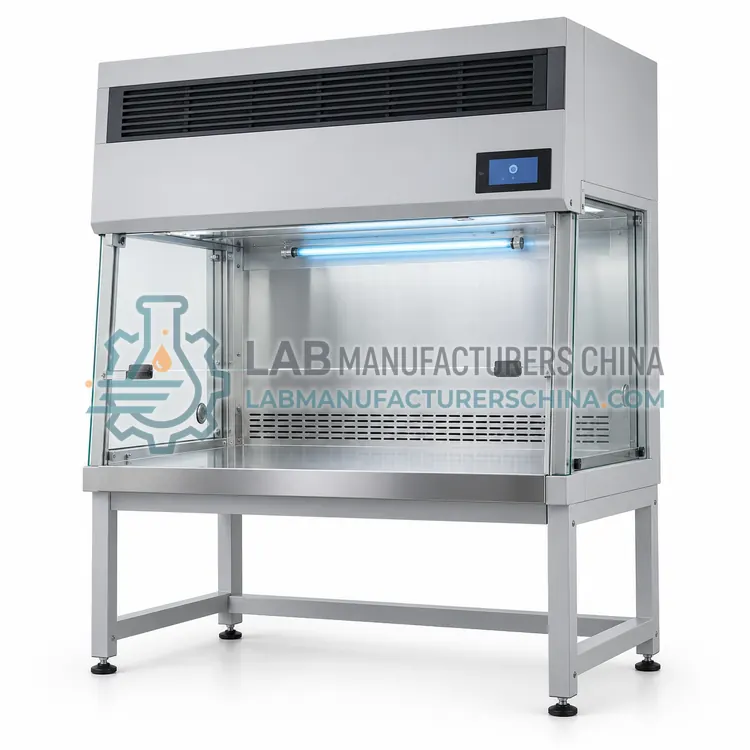
How do PCR Cabinets work?
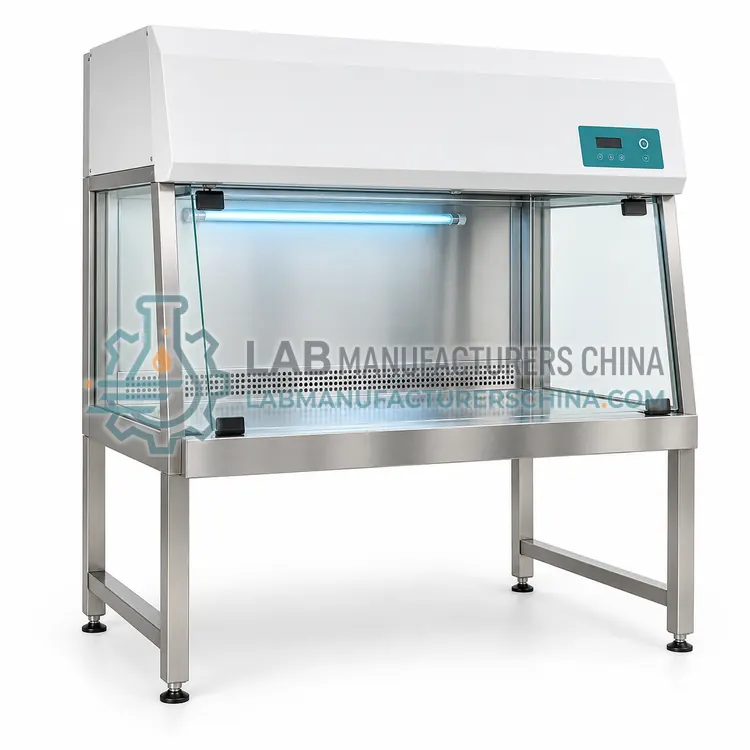
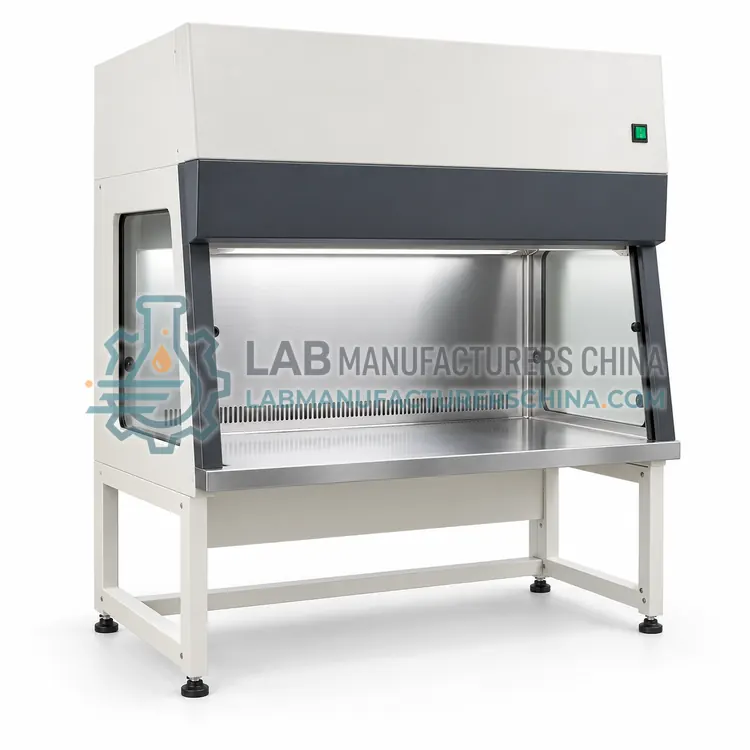
A PCR cabinet reduces the chance that stray DNA or RNA contaminates a reaction or that amplified product carries over into the next sample. Two mechanisms are used. A laminar flow PCR cabinet passes HEPA-filtered air across the work surface at 0.3–0.5 m/s, sweeping particles and aerosols away, and gives ISO 5 cleanliness at the work point. A dead-air or still-air workstation instead encloses the work but does not supply filtered air, relying on limited air exchange, UV irradiation and careful technique to reduce contamination. Both types usually include a 254 nm UV lamp for surface decontamination between sessions, and many include a timer and an interlock so that UV cannot run while the sash is open. Some models are ducted for vapour removal. Regular cleaning, separate pre- and post-PCR areas and dedicated equipment remain essential.
Which PCR Cabinets variants are available?
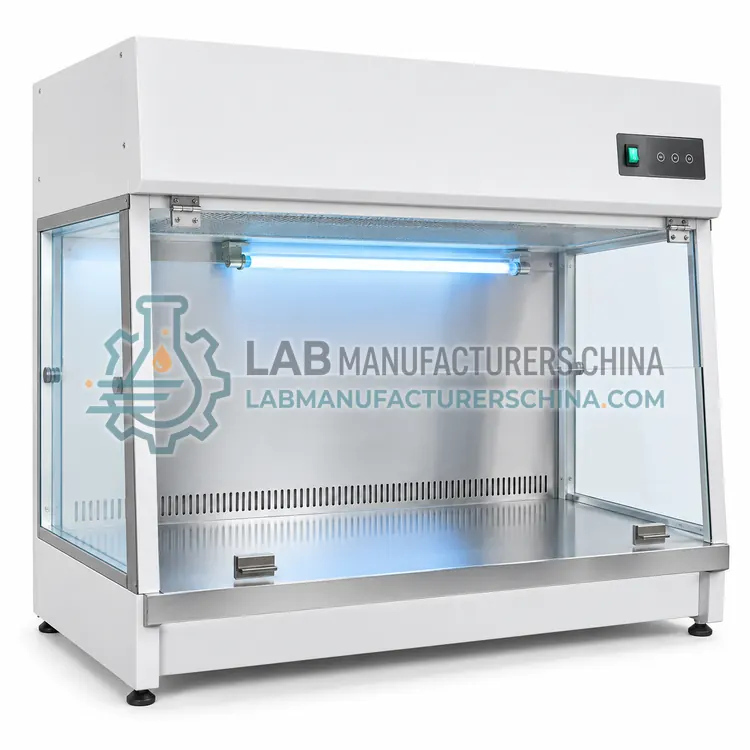
- Dead-Air PCR Workstation — A dead-air PCR workstation encloses reaction set-up in a still-air box with UV decontamination.
- Vertical Laminar Flow PCR Cabinet — A vertical laminar flow PCR cabinet supplies HEPA-filtered air downward over the work zone with UV decontamination.
- UV Sterilizing PCR Cabinet — A UV sterilizing PCR cabinet emphasises timed ultraviolet decontamination of the work zone alongside a contained front.
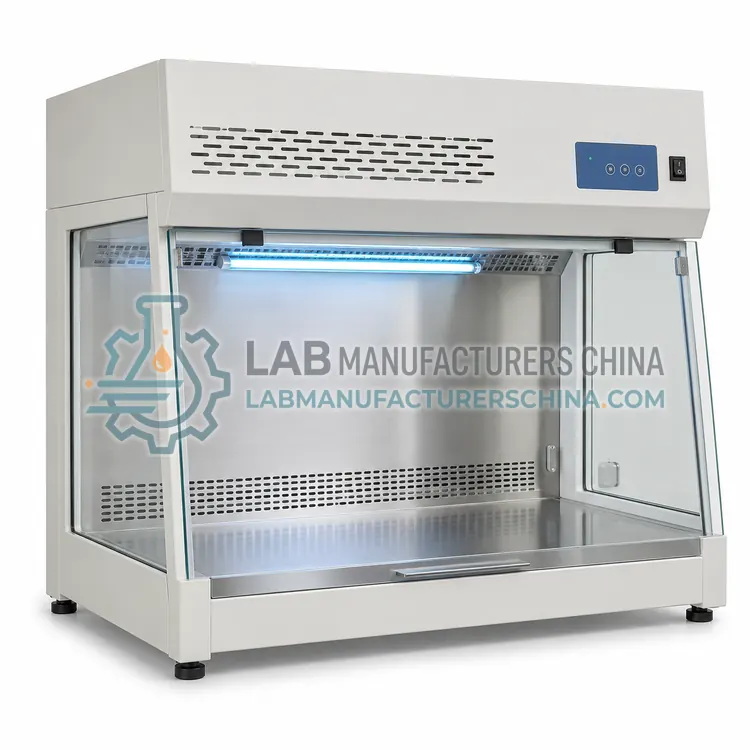
- Benchtop PCR Cabinet — A benchtop PCR cabinet is a small enclosure that fits on an existing bench for single-operator reaction set-up.
- Ducted PCR Cabinet — A ducted PCR cabinet exhausts its air to atmosphere through a duct, removing airborne contamination and odour.
How do I choose the right variant?
Choose a HEPA laminar flow PCR cabinet when the work needs a clean air zone over the samples, for example when preparing reactions from low-copy templates. Choose a dead-air or still-air workstation when the priority is physical isolation and UV decontamination rather than particle removal. Confirm that the UV lamp, timer and sash interlock suit the decontamination procedure, and that the internal height and footprint fit pipettes, racks and a small centrifuge. Decide whether the cabinet recirculates or is ducted, and whether a white light or blue light option is needed. For regulated diagnostics, check that the cabinet supports the workflow and cleaning validation, and verify filter performance where HEPA is fitted. Good laboratory layout with separate pre- and post-PCR zones matters as much as the cabinet itself.
Where are PCR Cabinets used?
PCR Cabinets are specified in PCR reaction set-up, nucleic acid extraction and handling, molecular diagnostics, forensic and research molecular work and sample preparation before amplification.
Which standards and certifications apply?
Work with PCR Cabinets is commonly governed by ISO 14644-1 (cleanroom classification), ISO 14644-3 (test methods), EN 1822 (HEPA and ULPA filters), IEST-RP-CC002 (unidirectional flow clean-air devices), ISO 15190 (medical laboratories, safety requirements) and IEC 61010-1. Instrument certifications such as CE marking are confirmed per configuration and never assumed.
What are the key considerations before purchase?
Place the cabinet in the pre-PCR area for reaction set-up and keep a separate area for post-PCR work, using dedicated pipettes and consumables. Clean the work surface with a validated decontaminant before and after each session, and run the UV lamp for the set period, ensuring the sash interlock prevents exposure. Replace the UV lamp at the end of its rated life, since output falls before total failure, and check lamps with a meter if available. For HEPA models, verify filter integrity and face velocity at installation and at least annually, and change prefilters as specified. Do not use the cabinet for hazardous aerosols or chemical vapour, and keep airflow free of draughts by siting it away from doors.