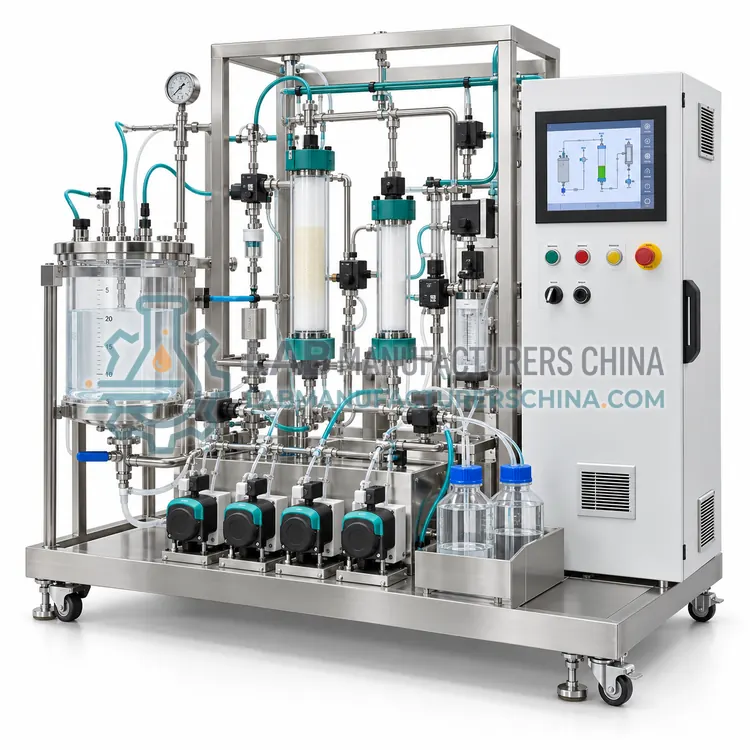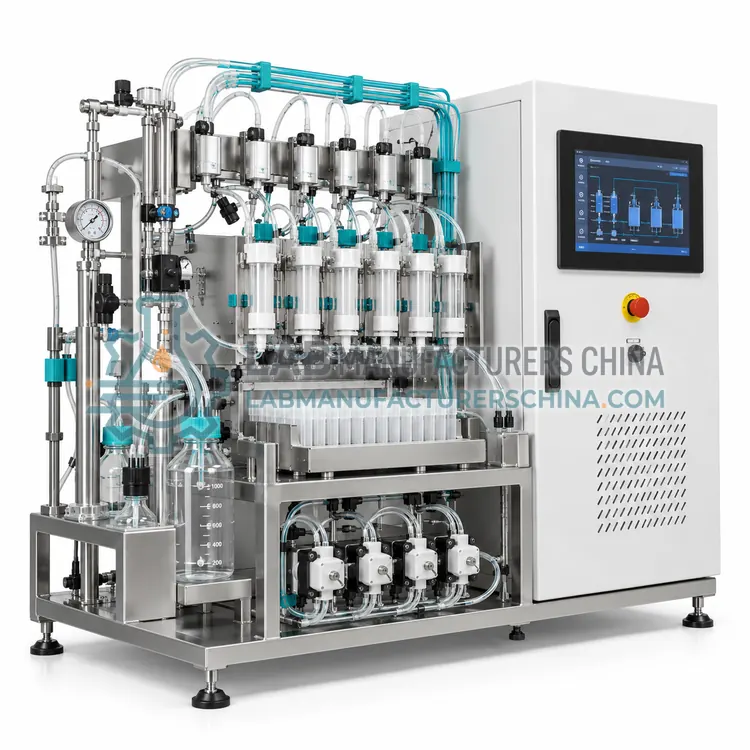
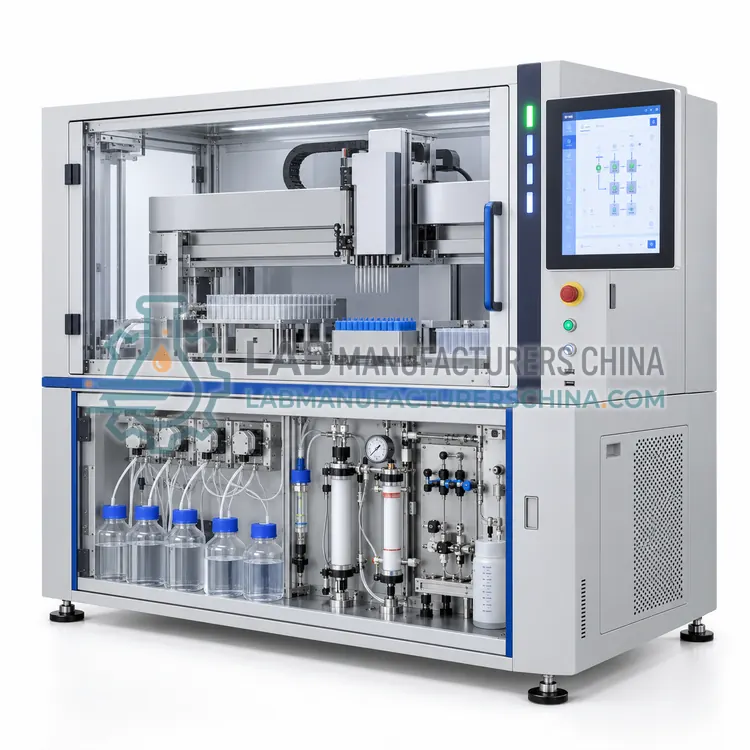
Molecular Workflow Automation System
分子流程自动化系统
- SKU MOP-0005
- Molecular Processing
- CE-IVD (to be confirmed)
- ISO 13485 manufacturing (to be confirmed)
- 21 CFR Part 11 software documentation (to be confirmed)
Price on request — FOB / CIF quoted per order
Prices depend on configuration, quantity and destination port.
Key specifications
| Pipetting channels | 1–8 channels |
|---|---|
| Plate formats | 96-well, 384-well, strip tubes |
| Integrated modules | Lysis heating, magnet, thermal cycler, optics |
| Throughput | Up to several hundred samples per shift |
| Pipetting volume | 1–1,000 µL |
| Tip and plate capacity | Multiple racks and hotels |
Request a quote Download brochure · to be provided
By Lab Manufacturers China Technical TeamLast reviewed Standards: ISO 13485, ISO 20395, CLSI MM13
What is the Molecular Workflow Automation System?
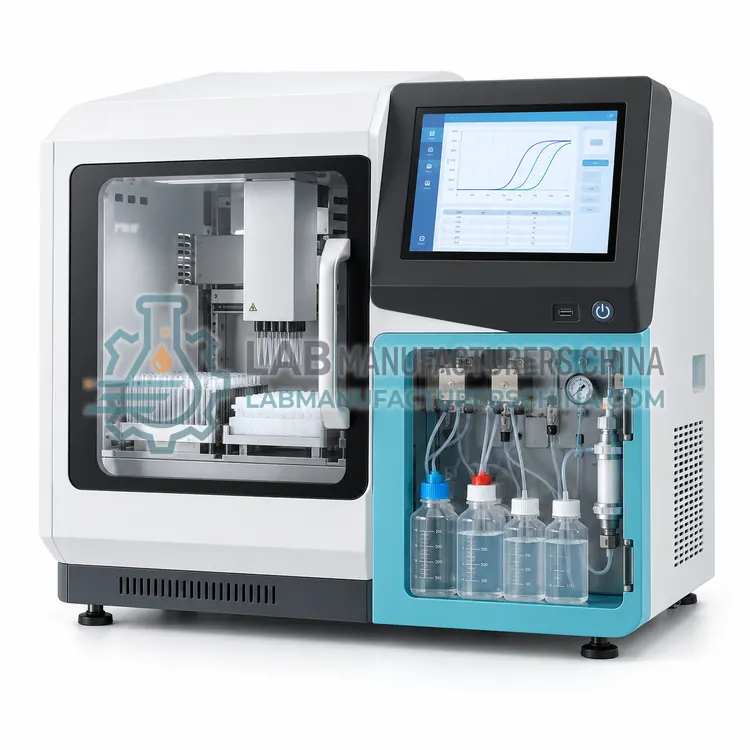
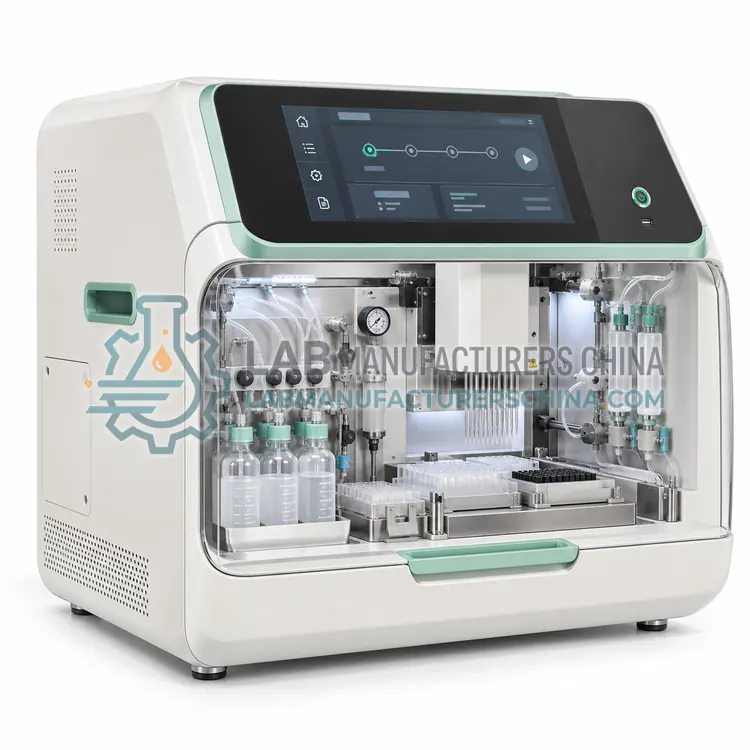
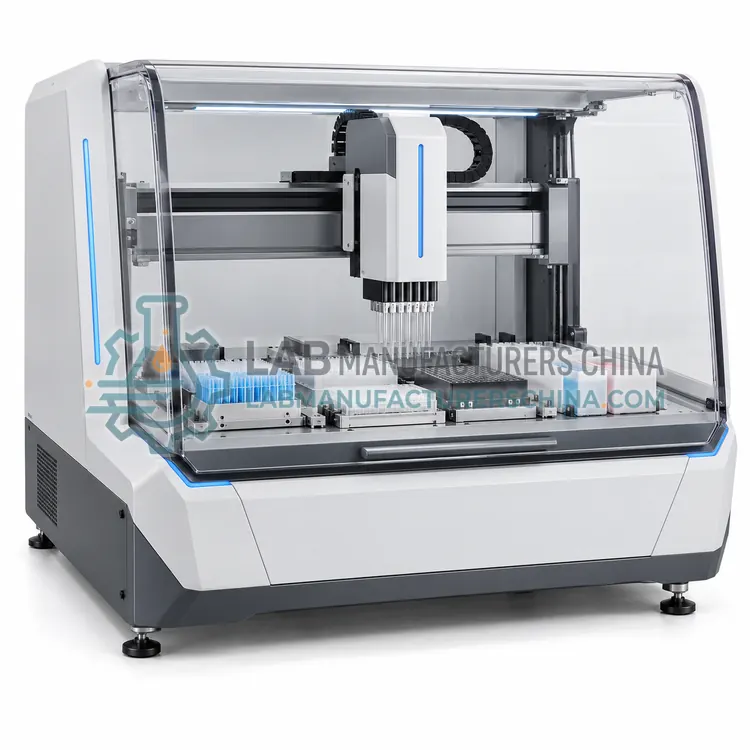
A molecular workflow automation system integrates liquid handling, heating, magnetic separation and detection to run nucleic acid workflows end to end. It reduces manual steps and improves traceability across extraction, PCR and library preparation.
What is the Molecular Workflow Automation System?
A molecular workflow automation system integrates liquid handling, heating, magnetic separation and detection to run nucleic acid workflows end to end. It reduces manual steps and improves traceability across extraction, PCR and library preparation.
Overview
A molecular workflow automation system coordinates several molecular biology steps on one platform. A robotic arm or pipetting head moves plates between modules for lysis heating, magnetic bead separation, thermal cycling and fluorescence detection, and software applies a workflow that tracks each sample and reagent. Onboard plate hotels, reagent cooling positions, tip racks and barcode readers allow long unattended runs, and some platforms add qPCR modules so that results are obtained without transferring plates. Because the same instrument handles extraction and amplification, operators must control contamination with directional workflow, filter tips, UV decontamination and separated modules. Scheduling software manages multiple concurrent methods and reports results to a laboratory information system. These systems are used where sample numbers are high and consistency and documentation are critical.
How does it work?
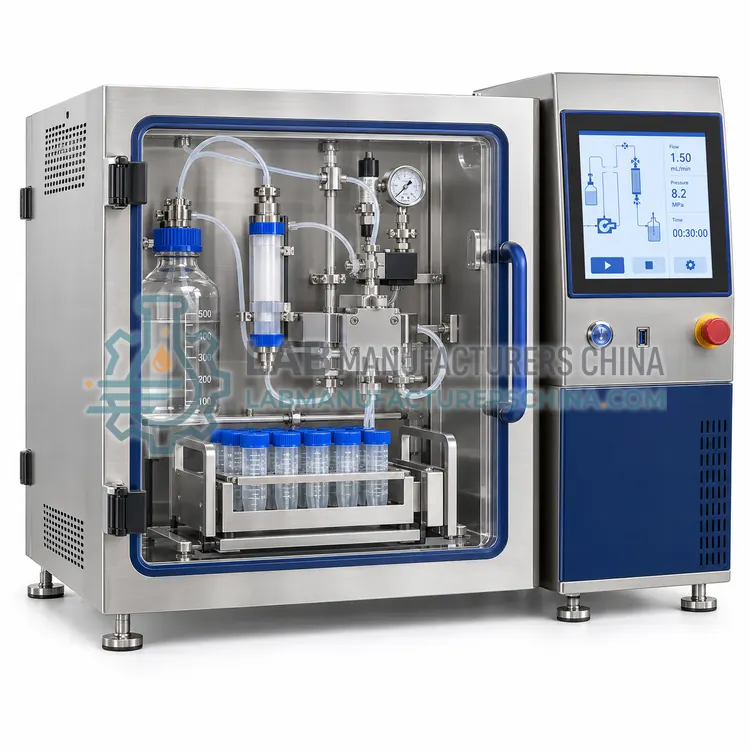
Molecular processing systems manipulate DNA and RNA through controlled chemistry and liquid handling. Extraction isolates nucleic acid from cells or samples by lysis followed by binding to silica membranes or magnetic beads, with washing to remove proteins and inhibitors and elution into a small volume. Quantification measures concentration and purity by ultraviolet absorbance or fluorescent dye binding, and integrity may be checked by electrophoresis or fragment analysis. Fragmentation breaks long DNA into a controlled size range by enzymatic digestion, sonication or hydrodynamic shearing, which is required before short-read sequencing. Library preparation then ligates adapters and barcodes and amplifies the fragments. Automation platforms coordinate these steps with precise pipetting, heating and magnetic separation, and software tracks samples, reagents and results with the traceability molecular workflows require.
What are the key features?
- Integrated liquid handling, heating and magnetic separation
- Onboard thermal cycler and fluorescence detection
- Barcode reading and sample tracking
- Scheduling software for multiple concurrent methods
- Unattended runs with plate hotels and reagent cooling
What are the technical specifications?
A typical molecular workflow automation system configuration offers pipetting channels of 1–8 channels, plate formats of 96-well, 384-well, strip tubes, integrated modules of Lysis heating, magnet, thermal cycler, optics, throughput of Up to several hundred samples per shift, pipetting volume of 1–1,000 µL and tip and plate capacity of Multiple racks and hotels. Values are indicative of the product class; the exact figures for each configuration are confirmed on the quotation and the calibration documents supplied with the instrument.
Which applications is it used for?
The Molecular Workflow Automation System is used in high-throughput molecular diagnostics, genomics and sequencing sample preparation, viral and microbial testing at scale and biopharmaceutical analytical workflows. Across the wider Molecular Processing class, laboratories also deploy it for genomics and sequencing workflows, molecular diagnostics development and biopharmaceutical cell line characterization.
Which standards and certifications apply?
Relevant standards and methods include ISO 13485, ISO 20395, CLSI MM13, CLSI MM03, 21 CFR Part 11, ISO 15189 and IEC 61010-1. Certification candidates for this model are CE-IVD, ISO 13485 manufacturing and 21 CFR Part 11 software documentation; each is to be confirmed for the specific configuration before shipment, and certificates are supplied only where they have been issued.
Work in a unidirectional flow from extraction to amplification to prevent amplicon contamination, and use separate areas and pipettes for each stage. Clean benches and equipment with the recommended agents and include no-template controls to detect contamination. Store reagents within their specified temperature range and check lot-to-lot performance when methods are validated. Monitor nucleic acid purity ratios and integrity, because inhibitors carried into amplification cause false negatives. Keep extraction and library preparation methods version controlled, and record reagent lot numbers with each batch. For clinical or regulated use, validate against reference methods and confirm that software provides the required audit trails and data security.
How do I select the right Molecular Workflow Automation System?
Choose an integrated automation platform when sample numbers are high and you need consistent, traceable workflows. In an RFQ specify modules required, throughput, plate formats, scheduling capacity, contamination controls, LIS or LIMS integration and the validation support offered.
How does it compare with other Molecular Processing variants?
Match the system to the sample type, throughput and downstream application. For extraction, confirm the sample matrices supported, the input range, elution volume and the yield and purity achievable for your targets, and whether magnetic bead or membrane chemistry fits your workflow. For quantification, choose ultraviolet absorbance for broad concentration ranges or fluorescence for higher sensitivity with small amounts of DNA or RNA. For fragmentation, define the target insert size and the acceptable size distribution. For library preparation, check compatibility with your sequencing platform and read length, the number of samples per run and the barcode options. Across the category, verify automation level, cross-contamination controls, reagent formats, software traceability and the validation documentation required.
Full specifications
| Pipetting channels | 1–8 channels |
|---|---|
| Plate formats | 96-well, 384-well, strip tubes |
| Integrated modules | Lysis heating, magnet, thermal cycler, optics |
| Throughput | Up to several hundred samples per shift |
| Pipetting volume | 1–1,000 µL |
| Tip and plate capacity | Multiple racks and hotels |
| Contamination control | Filter tips, UV, HEPA option |
| Data output | LIS or LIMS integration with audit trail |
Indicative values for this product class. Final specifications are confirmed on the quotation and in the calibration documents supplied with the instrument.
Applications
- High-throughput molecular diagnostics
- Genomics and sequencing sample preparation
- Viral and microbial testing at scale
- Biopharmaceutical analytical workflows
Key features
- Integrated liquid handling, heating and magnetic separation
- Onboard thermal cycler and fluorescence detection
- Barcode reading and sample tracking
- Scheduling software for multiple concurrent methods
- Unattended runs with plate hotels and reagent cooling
Frequently asked questions about Molecular Workflow Automation System
Automation removes manual pipetting variability, enforces consistent timing and volumes, and traces each sample and reagent through the run. This improves reproducibility and allows long unattended operation, but the workflow and software must still be validated.
Platforms use filter tips, sealed plates, ultraviolet decontamination, directional air flow and physically separated modules for extraction and amplification. Laboratories add no-template controls and clean benches regularly to confirm that the environment stays free of amplicon.
Installation, operational and performance qualification, plus method validation against a reference procedure, are expected for clinical or regulated testing. Software must provide audit trails, access control and result traceability, and changes to methods or modules are managed through change control.
It prepares nucleic acids for downstream analysis by extracting, quantifying, fragmenting and building libraries from samples. Laboratories use it for sequencing, molecular diagnostics, microbial detection and biopharmaceutical characterization where results depend on clean, well-quantified DNA or RNA.
Magnetic bead methods scale easily to plates and automation and handle many sample types, while silica membranes in spin columns often give higher concentration from small volumes. The choice depends on sample matrix, throughput, elution volume and the yield your assay requires.
For DNA, a ratio of absorbance at 260 to 280 nm near 1.8 is common, and near 2.0 for RNA, with 260 to 230 nm ratios above about 1.8 to 2.0 indicating low carry-over of salts and inhibitors. Purity requirements depend on the downstream method.
Related models