
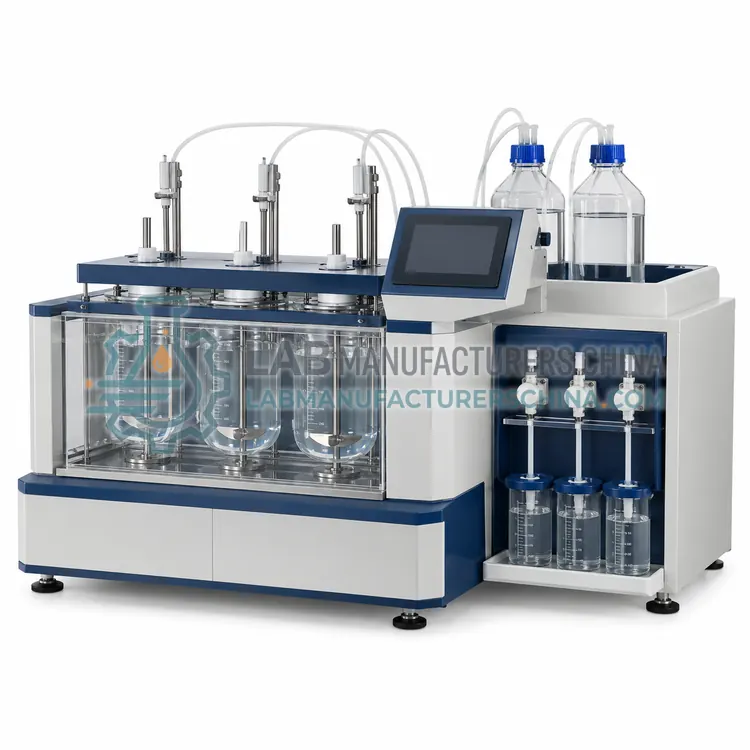
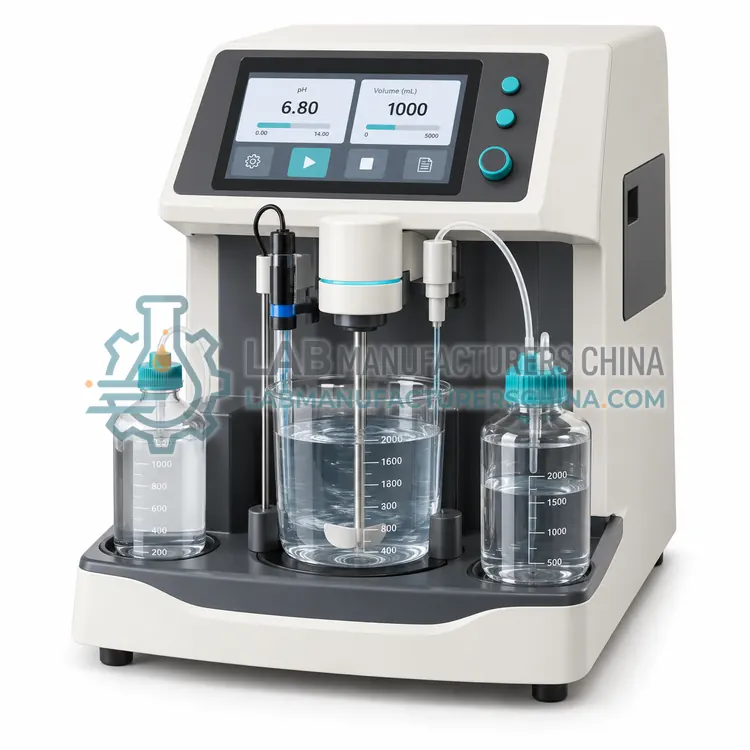
Buffer Concentrate Dilution Station with pH Control
带 pH 控制的缓冲液浓缩液稀释站
- SKU MEP-0005
- Media Preparation
- CE (to be confirmed)
- ISO 9001 manufacturing (to be confirmed)
Price on request — FOB / CIF quoted per order
Prices depend on configuration, quantity and destination port.
Key specifications
| Output rate | up to 30 L/h |
|---|---|
| Dilution ratio | 1:10 to 1:40 |
| Dilution accuracy | ±1% |
| pH range | 1.0–10.0 |
| pH accuracy | ±0.05 |
| Conductivity range | 0–20 mS/cm |
Request a quote Download brochure · to be provided
By Lab Manufacturers China Technical TeamLast reviewed Standards: USP <711>, USP <791>, USP <1092>
What is the Buffer Concentrate Dilution Station with pH Control?
A buffer concentrate dilution station mixes purified water with stored concentrate, such as 20x phosphate buffer, and verifies the final pH and conductivity before release. It is aimed at laboratories that want consistent buffer preparation without weighing salts for every batch.
What is the Buffer Concentrate Dilution Station with pH Control?
A buffer concentrate dilution station mixes purified water with stored concentrate, such as 20x phosphate buffer, and verifies the final pH and conductivity before release. It is aimed at laboratories that want consistent buffer preparation without weighing salts for every batch.
Overview
Preparing pH 1.2, 4.5 and 6.8 media from powders is time-consuming and error-prone. This station stores concentrated buffer in a reservoir, doses it with a precision pump at 1:20 or other ratios, and blends it with purified water in a mixing chamber. An inline pH electrode with automatic temperature compensation and a conductivity cell check the final medium, and the result is logged. Adjustment to target pH within ±0.05 can be made by small additions of acid or base from secondary reservoirs. Output is delivered to a holding tank or carboy for subsequent degassing. Concentrates are prepared by the laboratory or purchased ready-made and have limited shelf life, which must be defined. The instrument reduces balance work and pH adjustment time, and improves lot-to-lot consistency of medium, although the concentrate preparation itself should be controlled and documented.
How does it work?
Dissolution media such as 0.1 N HCl, pH 4.5 acetate buffer and pH 6.8 phosphate buffer must have correct composition, pH, volume, temperature and dissolved gas content. Preparation equipment automates these steps. Proportioning pumps or valves mix concentrate and purified water; pH electrodes and conductivity cells verify composition; degassing removes dissolved gases by vacuum with heat, vacuum membranes, or helium sparging, since gas bubbles on tablets or baskets change local hydrodynamics and surface area; and volumetric dispensers fill vessels to ±1% at 37–41 °C. Gas solubility falls with temperature and pressure, which is the basis for heated vacuum degassing, while helium displaces air because of its very low solubility. Materials contacting medium are PTFE, silicone or stainless steel to prevent leachables.
What are the key features?
- Stored concentrate with 1:10 to 1:40 dilution ratios
- Inline pH electrode with temperature compensation
- Conductivity check of final medium
- Automatic pH trim using acid or base additions
- Output to holding tank for downstream degassing
- Logged pH, conductivity and lot entries
What are the technical specifications?
A typical buffer concentrate dilution station with ph control configuration offers output rate of up to 30 L/h, dilution ratio of 1:10 to 1:40, dilution accuracy of ±1%, pH range of 1.0–10.0, pH accuracy of ±0.05 and conductivity range of 0–20 mS/cm. Values are indicative of the product class; the exact figures for each configuration are confirmed on the quotation and the calibration documents supplied with the instrument.
Which applications is it used for?
The Buffer Concentrate Dilution Station with pH Control is used in multi-pH media preparation, biorelevant buffers, reducing manual weighing and lot-consistent QC media. Across the wider Media Preparation class, laboratories also deploy it for dissolution medium preparation, buffer standardization and degassing for UV and HPLC methods.
Which standards and certifications apply?
Relevant standards and methods include USP <711>, USP <791>, USP <1092>, Ph. Eur. 2.9.3, Ph. Eur. 2.2.3, JP 6.10, ChP 0931 and ASTM E2503. Certification candidates for this model are CE and ISO 9001 manufacturing; each is to be confirmed for the specific configuration before shipment, and certificates are supplied only where they have been issued.
Calibrate pumps gravimetrically and pH sensors with at least two buffers on a regular schedule. Replace membrane filters, tubing and seals at defined intervals, and flush lines after each medium to prevent precipitation and microbial growth, especially with phosphate buffers. Use purified water meeting the method specification. Helium systems need leak-tight fittings and cylinder safety. Record concentrate lot numbers and expiry, and verify final pH at 37 °C where the monograph requires it. Include the equipment in IQ/OQ and preventive maintenance programs.
How do I select the right Buffer Concentrate Dilution Station with pH Control?
Choose the dilution station when multiple compendial buffers are prepared daily and pH correction consumes analyst time. Specify ratios, number of concentrate lines, pH and conductivity accuracy, output volume and cleaning features. If only one buffer is used rarely, preparing it manually is more economical.
How does it compare with other Media Preparation variants?
Match the equipment to daily medium volume, number of buffer recipes and compliance needs. A benchtop vacuum degasser suits laboratories preparing under 20 liters per day by hand. A helium station suits heat-labile or surfactant media. A volumetric dispenser removes filling error for many vessels. A dilution station with pH control reduces salt weighing. A fully automated system combines all steps and records batch data for GMP sites. Evaluate volume accuracy (±1%), dissolved oxygen endpoint, compatible recipes, cleaning and carry-over control, wetted materials, and software audit-trail features. Method validation must show that the degassing approach gives dissolution results equivalent to the compendial procedure.
Full specifications
| Output rate | up to 30 L/h |
|---|---|
| Dilution ratio | 1:10 to 1:40 |
| Dilution accuracy | ±1% |
| pH range | 1.0–10.0 |
| pH accuracy | ±0.05 |
| Conductivity range | 0–20 mS/cm |
| Concentrate reservoirs | 2–4 × 5 L |
| Trim reservoirs | acid and base, 1 L each |
| Output tank | 20 L |
| Power supply | 220 V AC, 50/60 Hz, about 0.8 kW |
Indicative values for this product class. Final specifications are confirmed on the quotation and in the calibration documents supplied with the instrument.
Applications
- Multi-pH media preparation
- Biorelevant buffers
- Reducing manual weighing
- Lot-consistent QC media
Key features
- Stored concentrate with 1:10 to 1:40 dilution ratios
- Inline pH electrode with temperature compensation
- Conductivity check of final medium
- Automatic pH trim using acid or base additions
- Output to holding tank for downstream degassing
- Logged pH, conductivity and lot entries
Frequently asked questions about Buffer Concentrate Dilution Station with pH Control
Shelf life depends on the buffer salts and storage temperature. Phosphate concentrates may crystallize at low temperature, so storage conditions and expiry should be defined and verified by the laboratory.
Calibrate with at least two buffers, typically pH 4.01 and 7.00 and optionally 10.01, before each use or daily, and replace the electrode when slope falls below about 95%.
Yes, with a suitable acid concentrate and acid-resistant wetted parts. Because concentrated acids require safe handling, confirm material compatibility and secondary containment with the supplier.
Dissolved gases form bubbles on tablets, baskets and vessel walls during the test. Bubbles reduce surface contact and alter hydrodynamics, which lowers measured dissolution. USP <711> therefore requires degassing unless validated otherwise.
USP <711> requires that medium volume be within ±1% of the specified volume, such as 900 ± 9 mL. Volumetric dispensers or calibrated glassware are needed to meet this consistently.
Medium is typically preheated to 37–41 °C so vessels equilibrate to 37.0 ± 0.5 °C rapidly. The temperature is verified in each vessel before dosage forms are introduced.
Related models
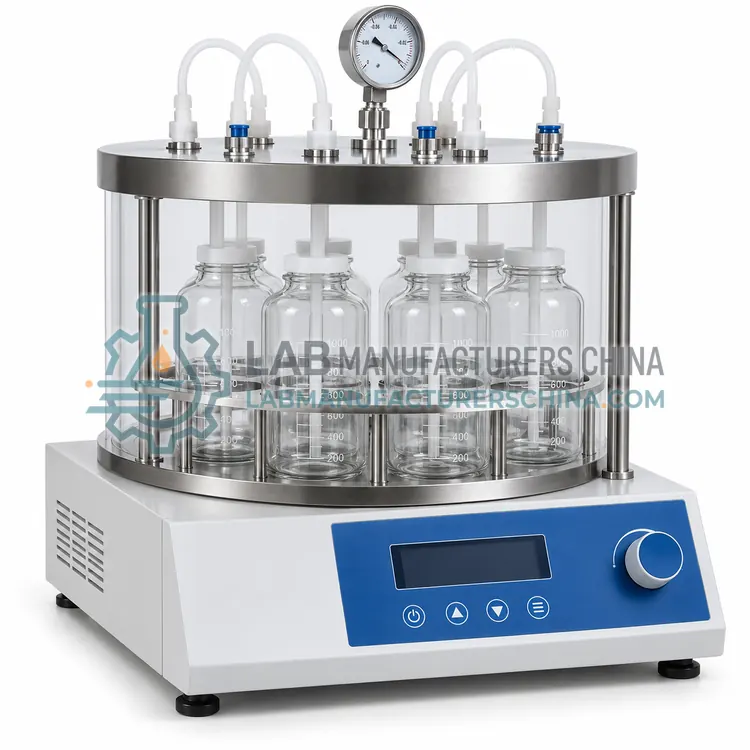
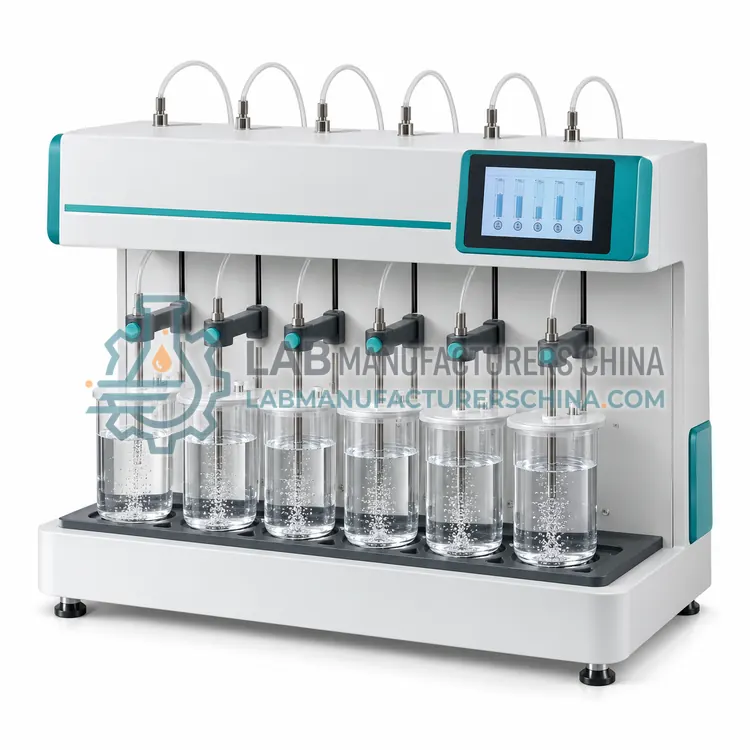
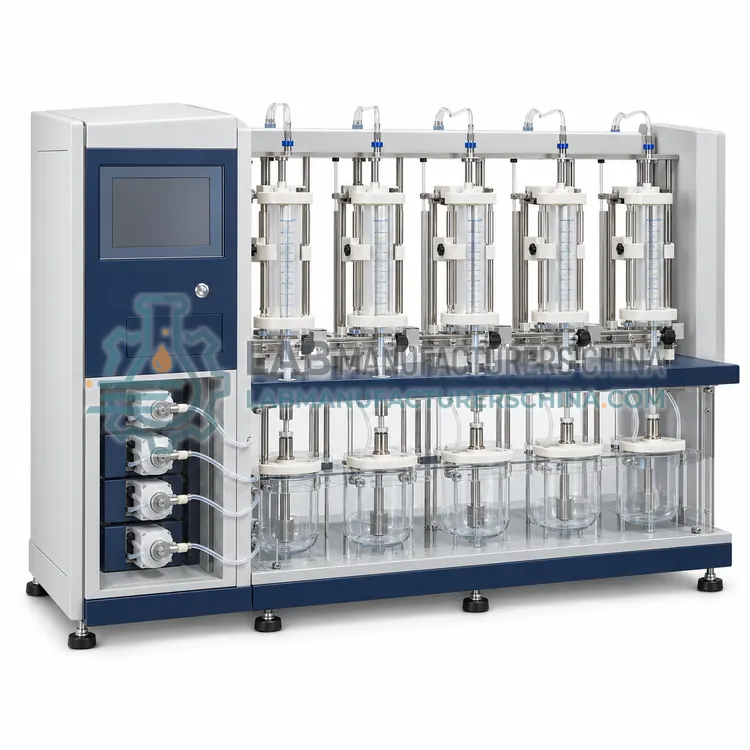
Open-Loop Flow-Through Dissolution System (USP Apparatus 4)
开环流通池溶出系统(USP 装置 4)
- CE (to be confirmed)
- +1