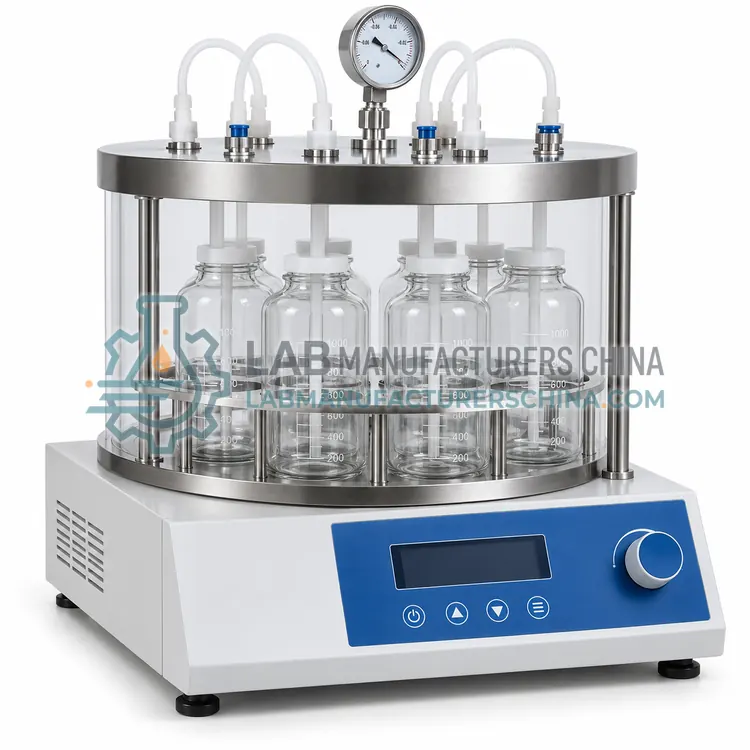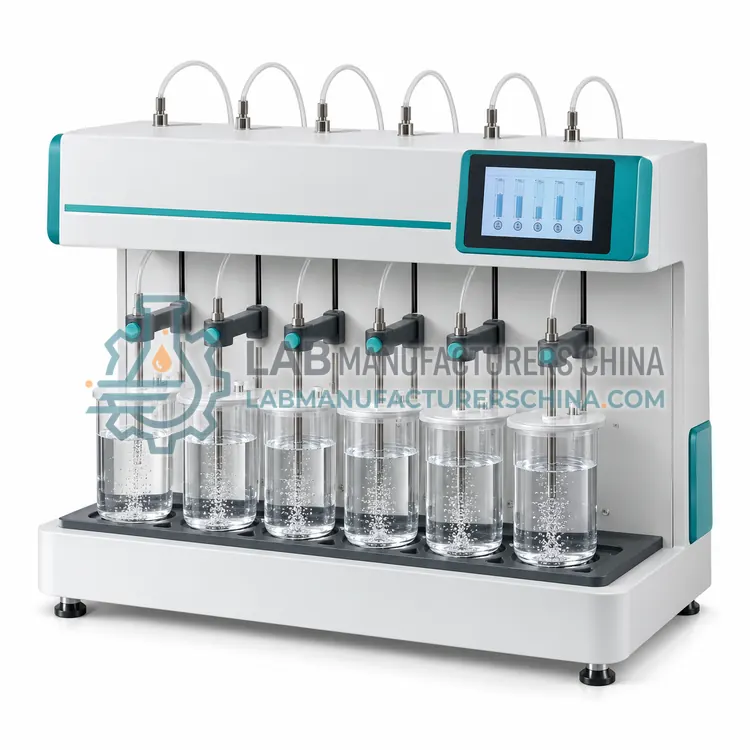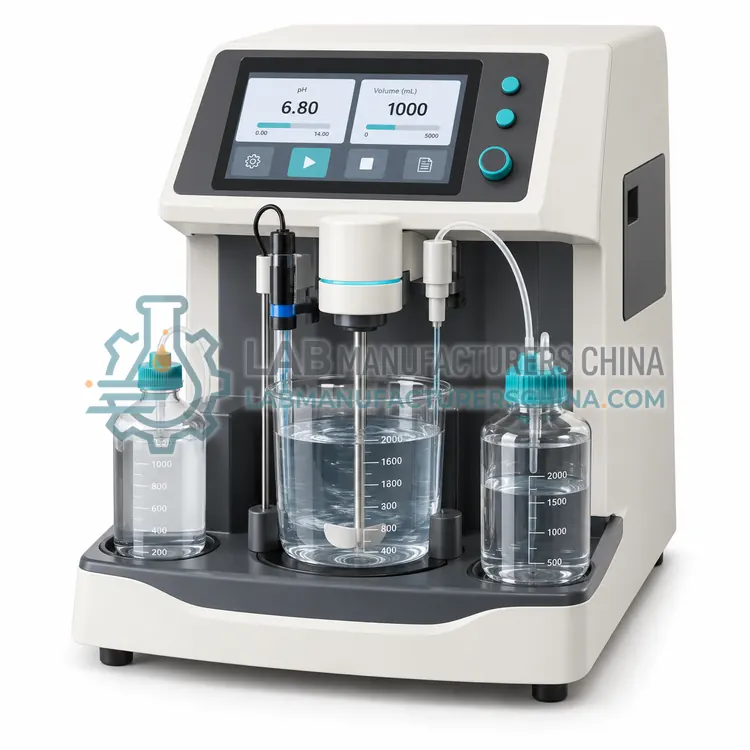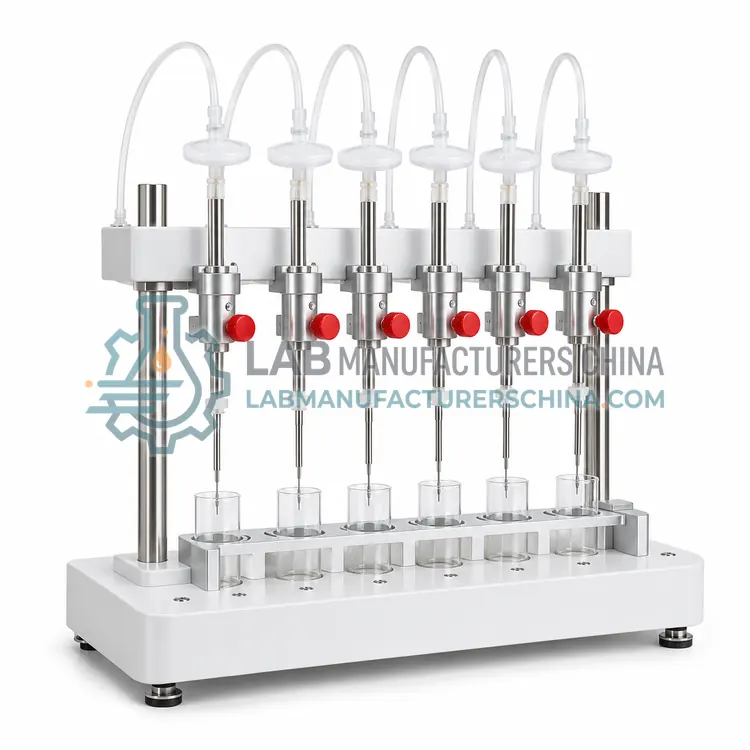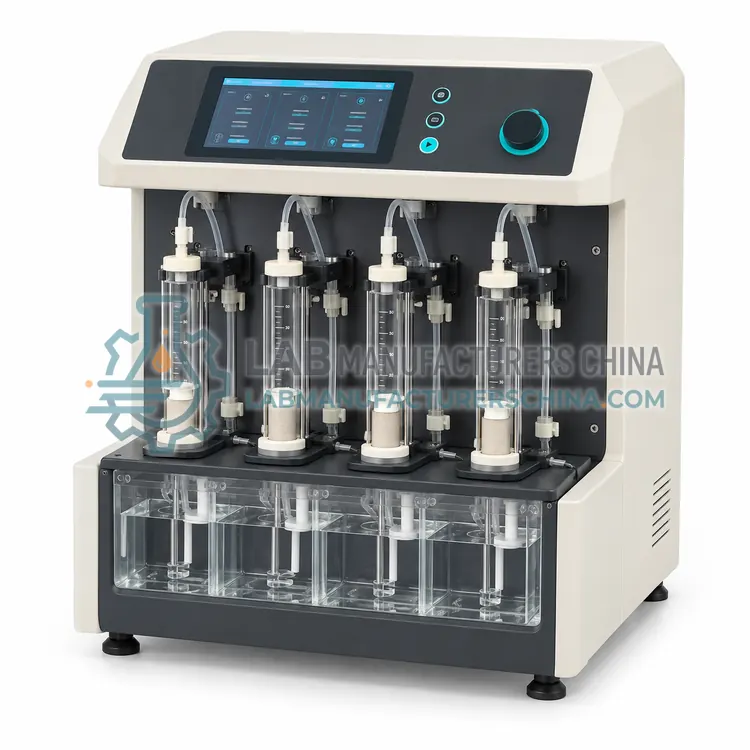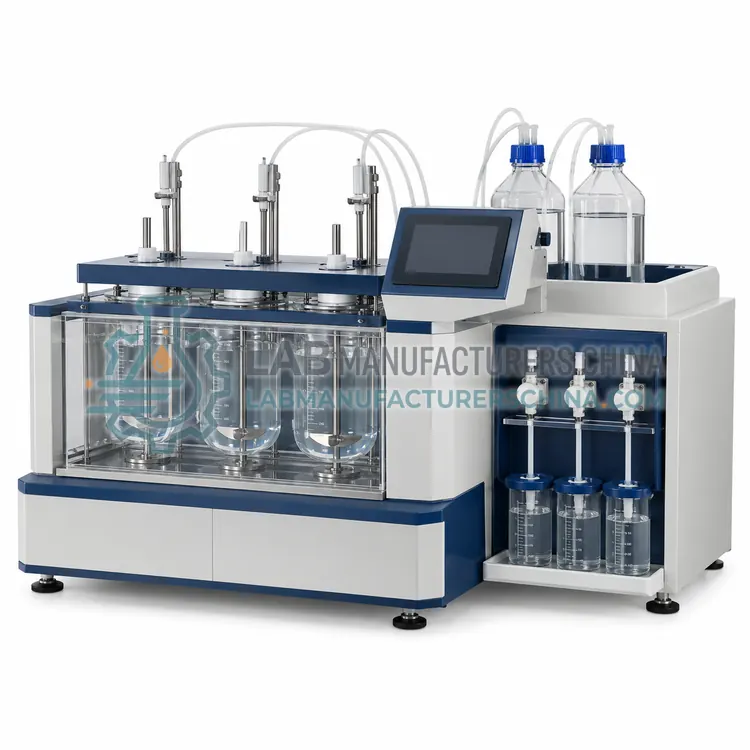
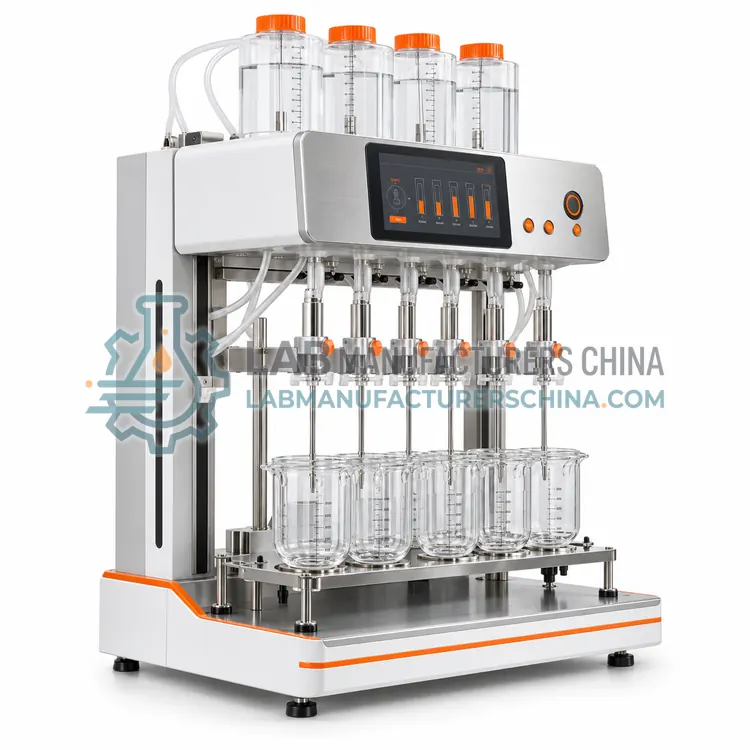
Volumetric Dissolution Medium Dispensing Station
定量溶出介质分配站
- SKU MEP-0004
- Media Preparation
- CE (to be confirmed)
- ISO 9001 manufacturing (to be confirmed)
Price on request — FOB / CIF quoted per order
Prices depend on configuration, quantity and destination port.
Key specifications
| Fill volume range | 100–1000 mL |
|---|---|
| Volume accuracy | ±1% |
| Repeatability | RSD ≤ 0.3% |
| Pump type | peristaltic or gear |
| Flow rate | up to 2 L/min |
| Outlet temperature | 37–41 °C |
Request a quote Download brochure · to be provided
By Lab Manufacturers China Technical TeamLast reviewed Standards: USP <711>, USP <791>, USP <1092>
What is the Volumetric Dissolution Medium Dispensing Station?
A volumetric dispensing station fills dissolution vessels with a preset volume of pre-heated medium, typically 500 to 1000 mL, to within about ±1%. It removes the variability and time of pouring or using graduated cylinders and is suited to laboratories running many vessels daily.
What is the Volumetric Dissolution Medium Dispensing Station?
A volumetric dispensing station fills dissolution vessels with a preset volume of pre-heated medium, typically 500 to 1000 mL, to within about ±1%. It removes the variability and time of pouring or using graduated cylinders and is suited to laboratories running many vessels daily.
Overview
Accurate medium volume matters because it affects concentration and sink conditions, yet manual filling with cylinders is slow and operator-dependent. The dispensing station uses a peristaltic pump, gear pump or syringe pump with a calibrated flow path to deliver a programmed volume into one or several vessels. A preheating chamber brings medium to 37–41 °C so that vessels reach test temperature quickly, and recirculation prevents cooling in the lines. Flow is ramped at the end to avoid splashing or bubble formation. The station may take medium from a bulk container that has been degassed elsewhere, and can be programmed for stored volumes, for example 500, 900 and 1000 mL. Gravimetric calibration ensures accuracy, and flush and drain functions prevent carry-over between media types. Some models interface with the dissolution tester software to log volume and medium ID.
How does it work?
Dissolution media such as 0.1 N HCl, pH 4.5 acetate buffer and pH 6.8 phosphate buffer must have correct composition, pH, volume, temperature and dissolved gas content. Preparation equipment automates these steps. Proportioning pumps or valves mix concentrate and purified water; pH electrodes and conductivity cells verify composition; degassing removes dissolved gases by vacuum with heat, vacuum membranes, or helium sparging, since gas bubbles on tablets or baskets change local hydrodynamics and surface area; and volumetric dispensers fill vessels to ±1% at 37–41 °C. Gas solubility falls with temperature and pressure, which is the basis for heated vacuum degassing, while helium displaces air because of its very low solubility. Materials contacting medium are PTFE, silicone or stainless steel to prevent leachables.
What are the key features?
- Programmable fill volumes from 100 to 1000 mL
- Preheating chamber delivering medium at 37–41 °C
- Volume accuracy about ±1% with gravimetric calibration
- Slow final flow to limit bubbles and splashing
- Flush and drain cycles between media
- Optional data link to dissolution tester software
What are the technical specifications?
A typical volumetric dissolution medium dispensing station configuration offers fill volume range of 100–1000 mL, volume accuracy of ±1%, repeatability of RSD ≤ 0.3%, pump type of peristaltic or gear, flow rate of up to 2 L/min and outlet temperature of 37–41 °C. Values are indicative of the product class; the exact figures for each configuration are confirmed on the quotation and the calibration documents supplied with the instrument.
Which applications is it used for?
The Volumetric Dissolution Medium Dispensing Station is used in high-throughput dissolution, reducing operator variability, multi-vessel fast filling and GMP laboratories. Across the wider Media Preparation class, laboratories also deploy it for dissolution medium preparation, buffer standardization and degassing for UV and HPLC methods.
Which standards and certifications apply?
Relevant standards and methods include USP <711>, USP <791>, USP <1092>, Ph. Eur. 2.9.3, Ph. Eur. 2.2.3, JP 6.10, ChP 0931 and ASTM E2503. Certification candidates for this model are CE and ISO 9001 manufacturing; each is to be confirmed for the specific configuration before shipment, and certificates are supplied only where they have been issued.
Calibrate pumps gravimetrically and pH sensors with at least two buffers on a regular schedule. Replace membrane filters, tubing and seals at defined intervals, and flush lines after each medium to prevent precipitation and microbial growth, especially with phosphate buffers. Use purified water meeting the method specification. Helium systems need leak-tight fittings and cylinder safety. Record concentrate lot numbers and expiry, and verify final pH at 37 °C where the monograph requires it. Include the equipment in IQ/OQ and preventive maintenance programs.
How do I select the right Volumetric Dissolution Medium Dispensing Station?
Select a volumetric station when vessel filling is a bottleneck or when volume errors contribute to failed calibrations. State the vessel volume range, number of outputs, preheating needs, required accuracy and compatibility with dissolution vessels and bath layouts. Laboratories filling fewer than three vessels per day may find calibrated cylinders adequate.
How does it compare with other Media Preparation variants?
Match the equipment to daily medium volume, number of buffer recipes and compliance needs. A benchtop vacuum degasser suits laboratories preparing under 20 liters per day by hand. A helium station suits heat-labile or surfactant media. A volumetric dispenser removes filling error for many vessels. A dilution station with pH control reduces salt weighing. A fully automated system combines all steps and records batch data for GMP sites. Evaluate volume accuracy (±1%), dissolved oxygen endpoint, compatible recipes, cleaning and carry-over control, wetted materials, and software audit-trail features. Method validation must show that the degassing approach gives dissolution results equivalent to the compendial procedure.
Full specifications
| Fill volume range | 100–1000 mL |
|---|---|
| Volume accuracy | ±1% |
| Repeatability | RSD ≤ 0.3% |
| Pump type | peristaltic or gear |
| Flow rate | up to 2 L/min |
| Outlet temperature | 37–41 °C |
| Preheat capacity | up to 20 L |
| Wetted materials | PTFE, silicone, 316 stainless steel |
| Stored programs | up to 20 volumes |
| Power supply | 220 V AC, 50/60 Hz, about 1.0 kW |
Indicative values for this product class. Final specifications are confirmed on the quotation and in the calibration documents supplied with the instrument.
Applications
- High-throughput dissolution
- Reducing operator variability
- Multi-vessel fast filling
- GMP laboratories
Key features
- Programmable fill volumes from 100 to 1000 mL
- Preheating chamber delivering medium at 37–41 °C
- Volume accuracy about ±1% with gravimetric calibration
- Slow final flow to limit bubbles and splashing
- Flush and drain cycles between media
- Optional data link to dissolution tester software
Frequently asked questions about Volumetric Dissolution Medium Dispensing Station
USP <711> expects medium volume within ±1% of the specified value, for instance 900 ± 9 mL. A dispensing station with gravimetric calibration can meet this consistently, which a graduated cylinder may not.
Not normally. The station dispenses medium that has been degassed beforehand, although some models integrate a degassing module. Check the specification if degassing is required.
Flush and drain cycles using purified water or the next medium clean the flow path. Validation should confirm that residual buffer does not affect the next run.
Dissolved gases form bubbles on tablets, baskets and vessel walls during the test. Bubbles reduce surface contact and alter hydrodynamics, which lowers measured dissolution. USP <711> therefore requires degassing unless validated otherwise.
USP <711> requires that medium volume be within ±1% of the specified volume, such as 900 ± 9 mL. Volumetric dispensers or calibrated glassware are needed to meet this consistently.
Medium is typically preheated to 37–41 °C so vessels equilibrate to 37.0 ± 0.5 °C rapidly. The temperature is verified in each vessel before dosage forms are introduced.