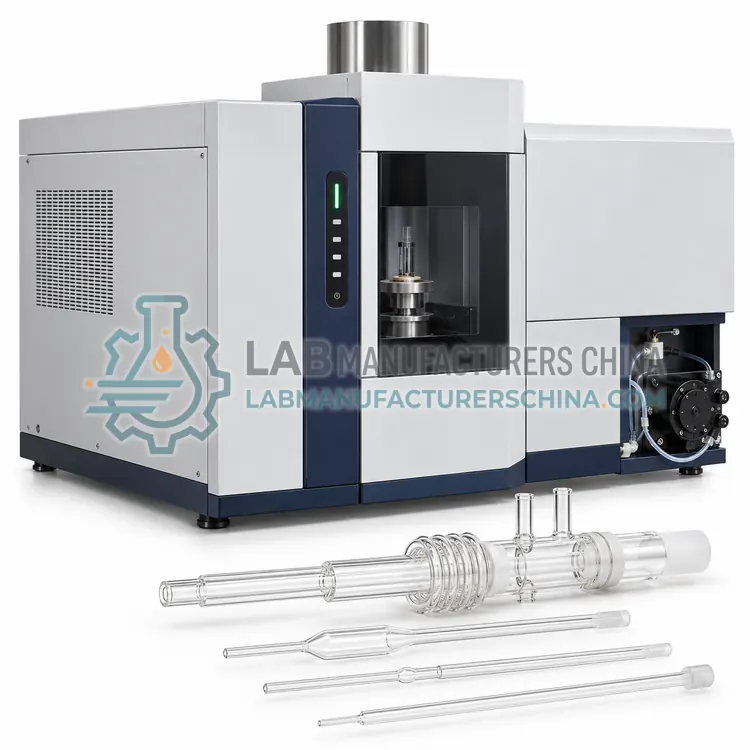
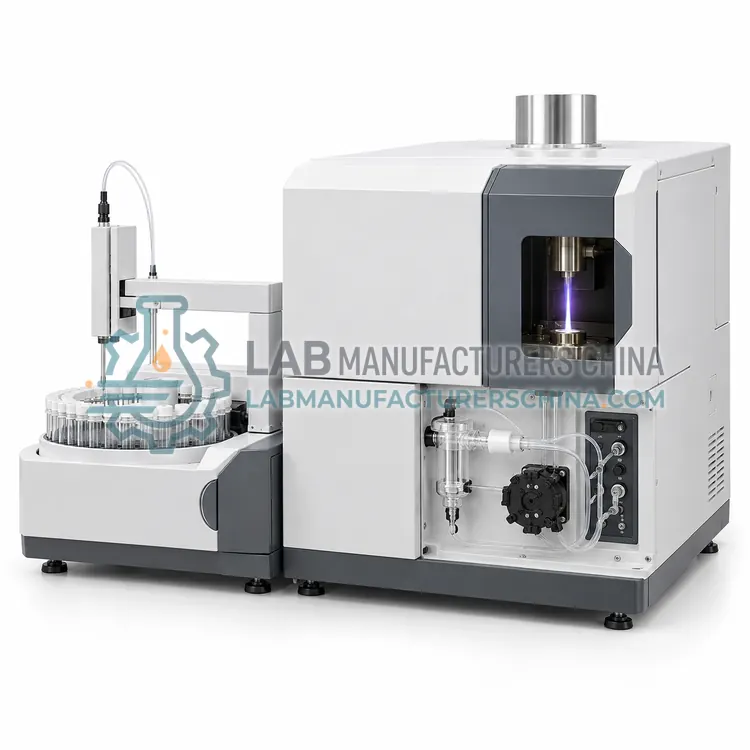
Nebulizers for ICP Sample Introduction
ICP 样品引入雾化器
- SKU IAC-0002
- ICP Accessories
- CE (to be confirmed)
- ISO 9001 manufacturing (to be confirmed)
- Elemental cleanliness test (to be confirmed)
Price on request — FOB / CIF quoted per order
Prices depend on configuration, quantity and destination port.
Key specifications
| Nebulizer types | concentric, V-groove, Babington |
|---|---|
| Capillary diameter | 0.1–0.4 mm |
| Sample uptake rate | 0.1–2 mL/min |
| Nebulizer gas flow | 0.6–1.2 L/min |
| Transport efficiency | 2–5% typical |
| Materials | glass, quartz, PFA or PEEK |
Request a quote Download brochure · to be provided
By Lab Manufacturers China Technical TeamLast reviewed Standards: USP <730> Plasma Spectrochemistry, USP <1058> Analytical Instrument Qualification, ISO 11885 Water quality — ICP-OES determination of elements
What is the Nebulizers for ICP Sample Introduction?
Nebulizers convert liquid samples into the aerosol that enters the ICP plasma. They are critical consumables whose design and condition directly determine transport efficiency, sensitivity, matrix tolerance and blockage resistance, and hence analytical performance.
What is the Nebulizers for ICP Sample Introduction?
Nebulizers convert liquid samples into the aerosol that enters the ICP plasma. They are critical consumables whose design and condition directly determine transport efficiency, sensitivity, matrix tolerance and blockage resistance, and hence analytical performance.
Overview
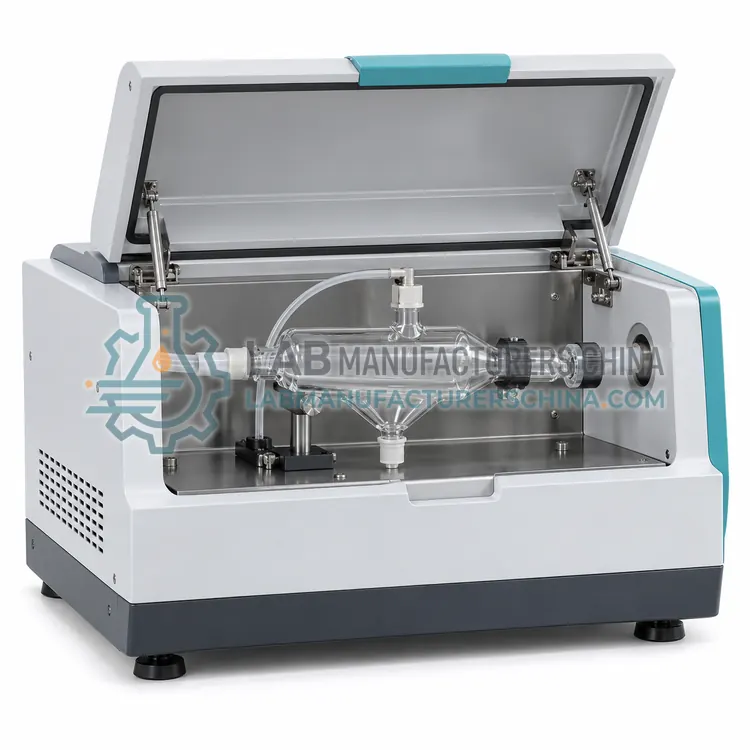
A nebulizer uses a high-velocity gas stream to shear liquid into droplets, which the spray chamber then filters. Concentric nebulizers give fine aerosols and high sensitivity for clean solutions but have narrow capillaries that block easily. Cross-flow and V-groove designs have larger orifices and tolerate higher dissolved solids. Babington and parallel-path nebulizers pass the liquid over a surface with holes, resisting blockage from slurries and high-salt samples. Inert PFA or PEEK nebulizers are available for hydrofluoric acid and ultrapure work. Uptake rate, gas flow and free aspiration characteristics differ between designs, so nebulizer changes may require method reoptimization. Nebulizer condition is checked by uptake rate and signal response, and a spare matched to the main sample type should always be available.
How does it work?
The plasma and sample path are exposed to high temperature, acid fumes and salt deposits, so their components are consumables that wear, corrode or become contaminated. Quartz torches and injectors shape the plasma and must be replaced when they devitrify, crack or accumulate deposits that change sensitivity. Nebulizers and spray chambers set aerosol quality and transport efficiency. RF load coils and torch boxes deliver the plasma power and must be matched to the generator and torch. Peristaltic pump tubing controls sample flow and internal standard addition, and worn tubing changes volumes. Autosampler probes, trays and rinse stations determine carry-over and throughput. Using the correct part number and material for each instrument, element and matrix, and replacing parts on schedule, protects sensitivity, precision and safety.
What are the key features?
- Concentric design for clean high-sensitivity work
- V-groove, cross-flow or parallel-path for high solids
- Babington type resistant to slurries and salt
- Inert PFA or PEEK versions for HF and ultratrace
- Uptake rates from 0.1 to 2 mL/min
- Condition checked by uptake and signal response
What are the technical specifications?
A typical nebulizers for icp sample introduction configuration offers nebulizer types of concentric, V-groove, Babington, capillary diameter of 0.1–0.4 mm, sample uptake rate of 0.1–2 mL/min, nebulizer gas flow of 0.6–1.2 L/min, transport efficiency of 2–5% typical and materials of glass, quartz, PFA or PEEK. Values are indicative of the product class; the exact figures for each configuration are confirmed on the quotation and the calibration documents supplied with the instrument.
Which applications is it used for?
The Nebulizers for ICP Sample Introduction is used in routine aqueous sample nebulization, high dissolved solids and brine samples, slurry and suspension sampling and hydrofluoric acid and ultrapure matrices. Across the wider ICP Accessories class, laboratories also deploy it for replacement torches and injectors for plasma systems, nebulizer and spray chamber maintenance kits and RF coil and torch box service parts.
Which standards and certifications apply?
Relevant standards and methods include USP <730> Plasma Spectrochemistry, USP <1058> Analytical Instrument Qualification, ISO 11885 Water quality — ICP-OES determination of elements, ISO 17294-2 Water quality — ICP-MS determination of elements, IEC 61010-1 and ISO/IEC 17025. Certification candidates for this model are CE, ISO 9001 manufacturing and Elemental cleanliness test; each is to be confirmed for the specific configuration before shipment, and certificates are supplied only where they have been issued.
Accessory condition is the most common reason for drifting sensitivity, noisy baselines and failed quality checks. Establish a maintenance schedule based on sample load and matrix: inspect torches and injectors for deposits and cracks, clean or replace nebulizers when uptake falls, and replace pump tubing and probes at defined intervals. Keep spares of the parts most likely to fail, because a blocked nebulizer or cracked torch stops the laboratory. Handle quartz carefully, store it clean and dry, and never use abrasive tools on injectors or nebulizers. After any replacement, verify performance with a check standard, confirm plasma stability and update the instrument log with the part and date.
How do I select the right Nebulizers for ICP Sample Introduction?
Select a nebulizer by matrix and detection limit target, and confirm the gas flow and uptake match your instrument and spray chamber. Keep both a concentric type for clean samples and a high-solids type for difficult matrices. Check uptake and response after cleaning, and replace when sensitivity cannot be restored.
How does it compare with other ICP Accessories variants?
Select accessories by exact instrument model, torch type and application. Quartz torches are standard for aqueous and many organic methods, while ceramic or inert torches suit hydrofluoric acid and high-purity work. Injector bore diameter affects aerosol velocity and plasma stability, so match it to the sample introduction system and matrix. Nebulizers range from concentric for clean solutions to V-groove or parallel-path for high solids. Spray chambers differ in transport efficiency and washout time. RF coils and torch boxes must match the generator frequency and power. Pump tubing is chosen by internal diameter and chemical resistance. Autosampler probes and trays must fit the sampler. Confirm part numbers, materials and availability of performance data before ordering.
Full specifications
| Nebulizer types | concentric, V-groove, Babington |
|---|---|
| Capillary diameter | 0.1–0.4 mm |
| Sample uptake rate | 0.1–2 mL/min |
| Nebulizer gas flow | 0.6–1.2 L/min |
| Transport efficiency | 2–5% typical |
| Materials | glass, quartz, PFA or PEEK |
| Dissolved solids tolerance | 0.2–20% by design |
| Free aspiration | design dependent |
| Compatible instruments | model specific |
| Cleaning | dilute acid or solvent rinse |
Indicative values for this product class. Final specifications are confirmed on the quotation and in the calibration documents supplied with the instrument.
Applications
- Routine aqueous sample nebulization
- High dissolved solids and brine samples
- Slurry and suspension sampling
- Hydrofluoric acid and ultrapure matrices
Key features
- Concentric design for clean high-sensitivity work
- V-groove, cross-flow or parallel-path for high solids
- Babington type resistant to slurries and salt
- Inert PFA or PEEK versions for HF and ultratrace
- Uptake rates from 0.1 to 2 mL/min
- Condition checked by uptake and signal response
Frequently asked questions about Nebulizers for ICP Sample Introduction
A clogged nebulizer shows reduced or zero uptake, unstable signal and low sensitivity, while a worn one may aspirate too much or produce a coarse aerosol. Measure uptake with water, inspect the capillary under magnification and try gentle cleaning. Replace if cleaning does not restore performance.
Minor blockages can be cleared by soaking in acid or solvent, and some concentric nebulizers can be unblocked by gentle gas pressure. Cracked, etched or deformed nebulizers cannot be repaired and must be replaced. Never insert wire or hard tools into the capillary.
Detection limits depend on how much sample reaches the plasma and how fine the aerosol is. A design that produces more small droplets improves transport and sensitivity, while a high-solids design may sacrifice some efficiency for robustness. Matching the nebulizer to the matrix optimizes the trade-off.
Replace the torch when it shows devitrification, cracks, a distorted tip, partial melting or deposits that cleaning cannot remove. Symptoms include unstable plasma, poor ignition, rising background and falling sensitivity. Torch life depends on sample matrix, power and cleaning practice, so inspect it at each maintenance interval.
High dissolved solids, high sample uptake and incomplete nebulization leave salt deposits on the injector tip and inside the bore. Deposits change aerosol velocity and can cause signal drift or plasma instability. Diluting samples, using a high-solids nebulizer and cleaning the injector in dilute acid reduce the problem.
Not usually, because torch dimensions, coil geometry, injector adapters and sampler fittings are instrument specific. Some third parties supply compatible parts for common models, but dimensional differences can cause poor plasma performance or damage. Confirm the exact model and part number, and prefer parts verified for your instrument.
Related models