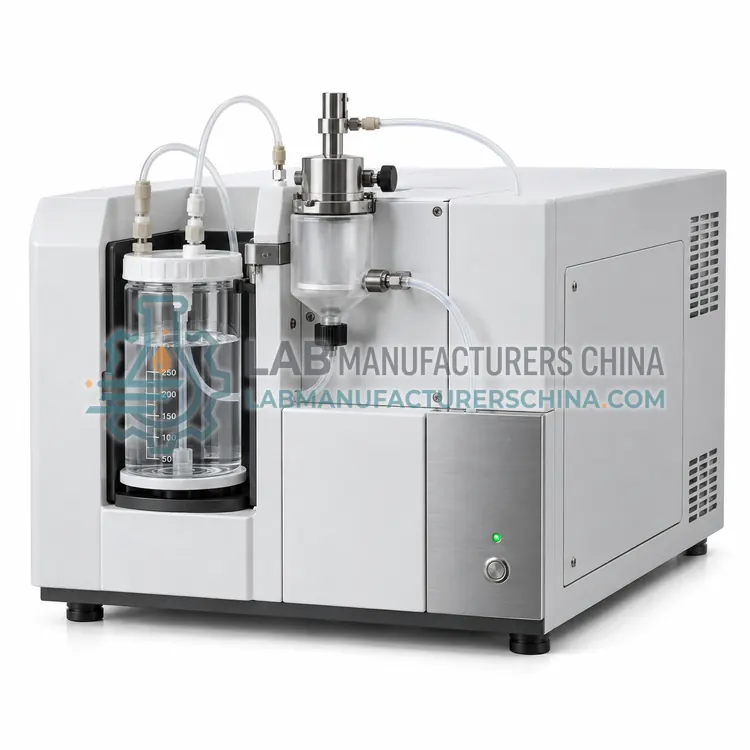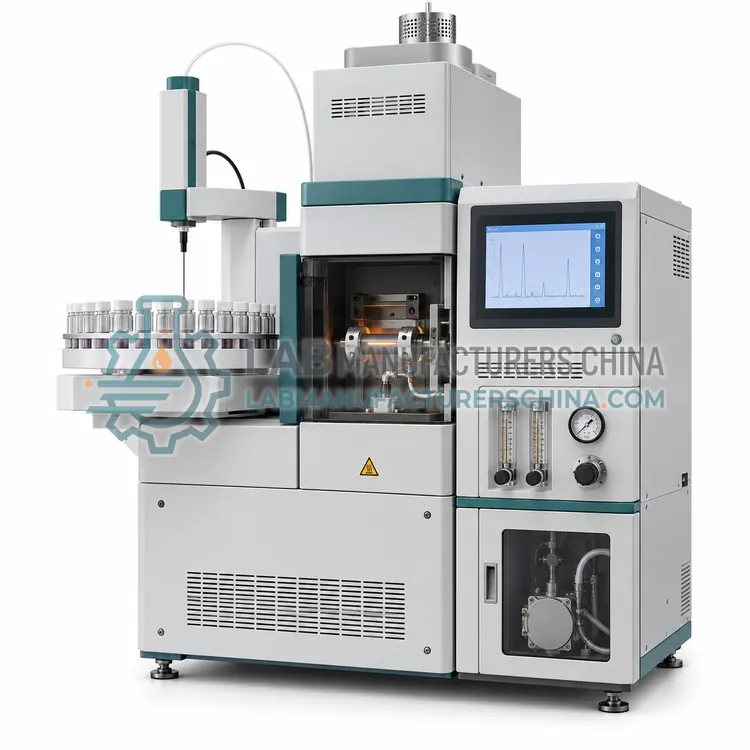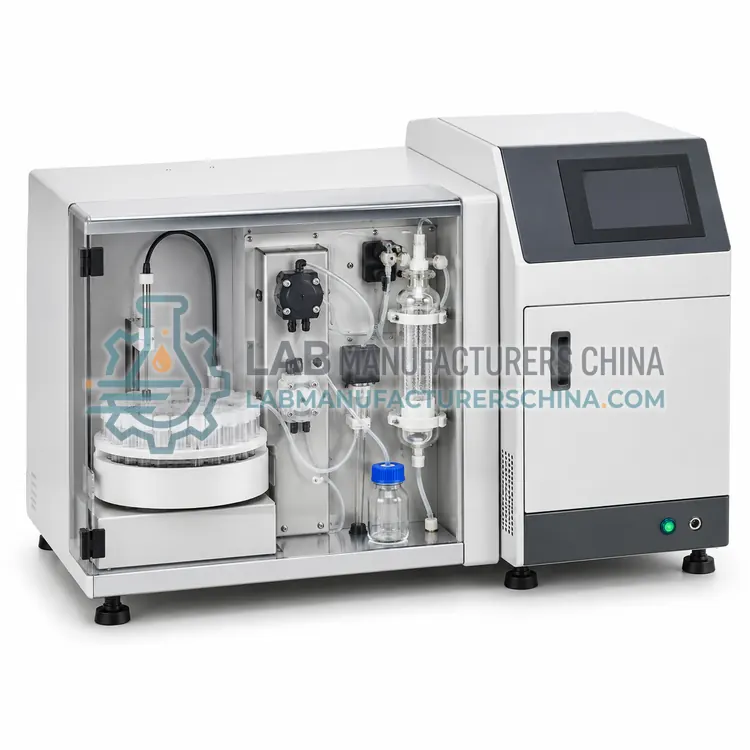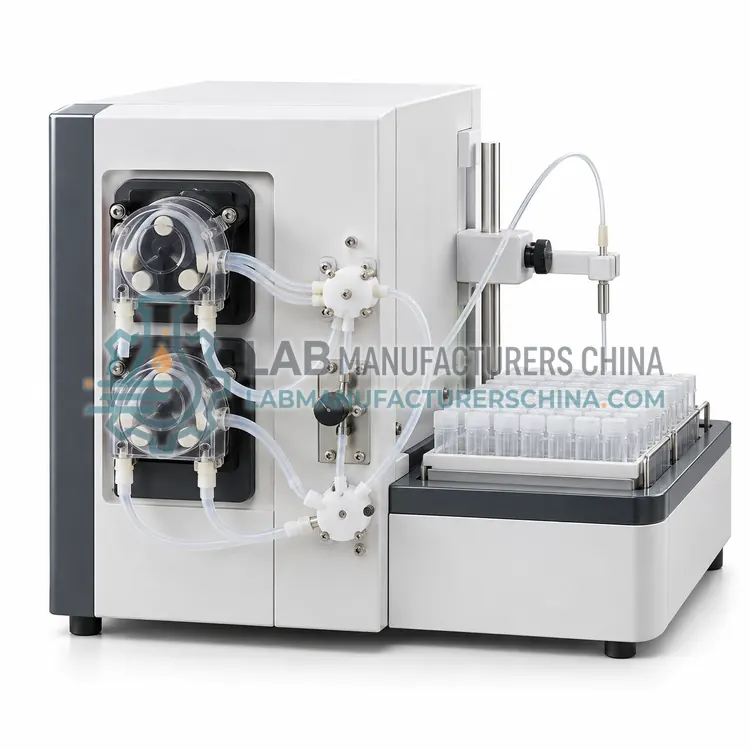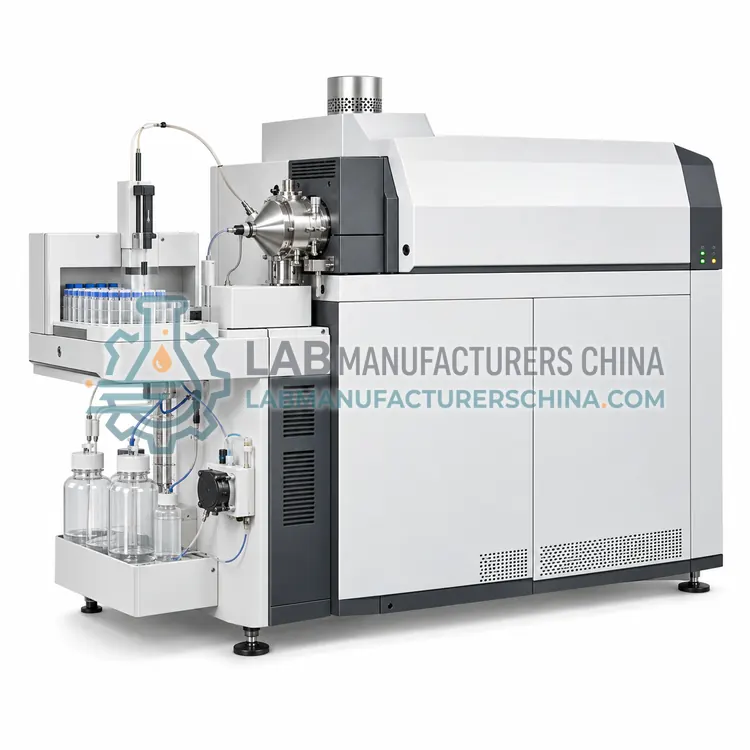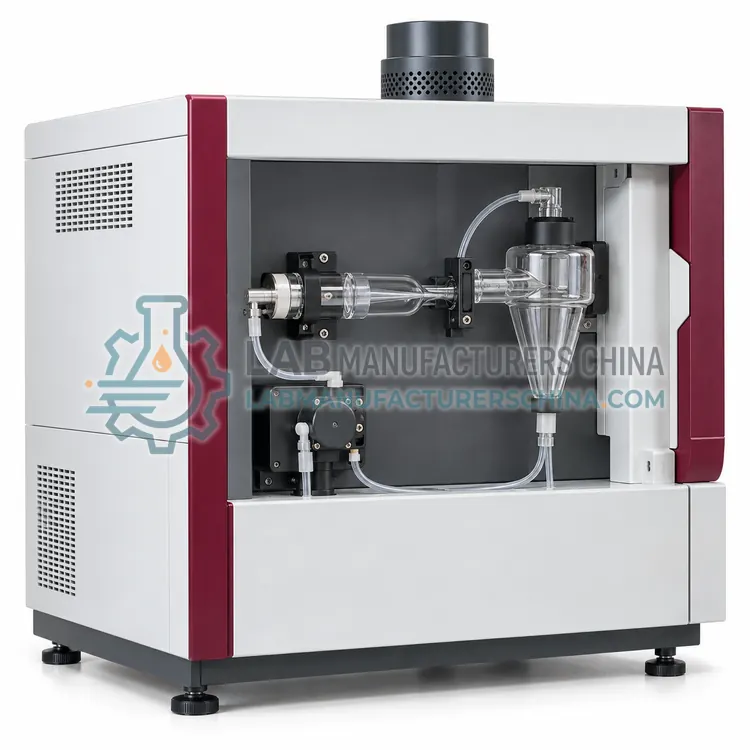
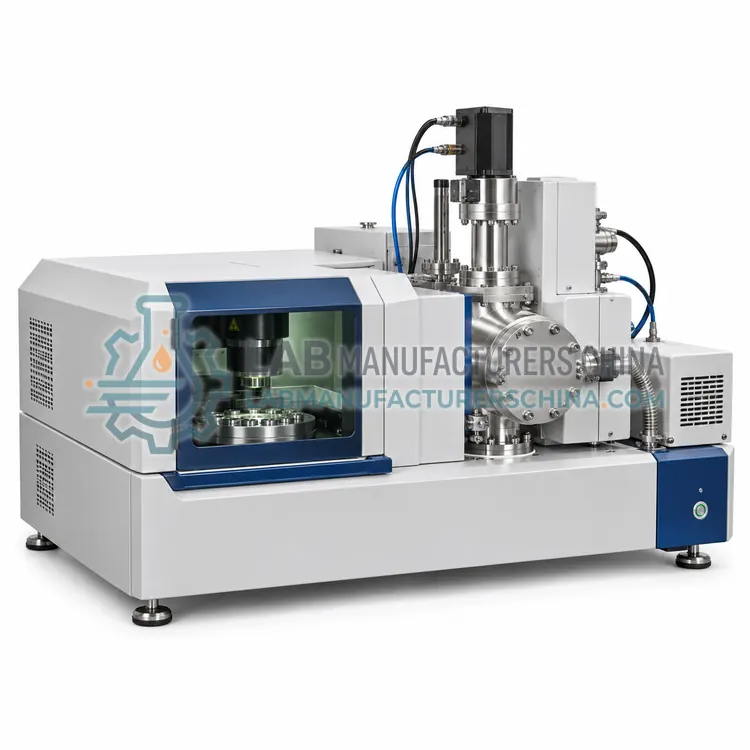
Laser Ablation Sample Introduction System
激光烧蚀样品引入系统
- SKU ISI-0003
- ICP Sample Introduction Systems
- CE (to be confirmed)
- Laser safety class 4 enclosure (to be confirmed)
- ISO 9001 manufacturing (to be confirmed)
Price on request — FOB / CIF quoted per order
Prices depend on configuration, quantity and destination port.
Key specifications
| Laser type | 193 nm excimer or 213 nm Nd:YAG |
|---|---|
| Spot size | 5–200 µm |
| Repetition rate | 1–100 Hz |
| Carrier gas | helium with argon makeup |
| Ablation cell | fast washout design |
| Transport time | < 1 s with optimized tubing |
Request a quote Download brochure · to be provided
By Lab Manufacturers China Technical TeamLast reviewed Standards: USP <730> Plasma Spectrochemistry, ISO 11885 Water quality — ICP-OES determination of elements, US EPA Method 200.7
What is the Laser Ablation Sample Introduction System?
A laser ablation sample introduction system uses a focused laser to remove solid material for direct plasma analysis. It is chosen for spatially resolved mapping and for solids that are difficult or undesirable to digest.
What is the Laser Ablation Sample Introduction System?
A laser ablation sample introduction system uses a focused laser to remove solid material for direct plasma analysis. It is chosen for spatially resolved mapping and for solids that are difficult or undesirable to digest.
Overview
The laser beam is focused onto a polished solid sample inside a sealed ablation cell, vaporizing a small amount of material that is transported as fine particles by helium or argon into the plasma. Because the sample is not dissolved, contamination and analyte loss from digestion are avoided, and the ablation pattern can be programmed to map elemental distributions across a surface or to sample inclusions and layers. Spot sizes typically range from about 5 to 200 micrometres, and pulse repetition rates determine sampling density and speed. Quantification relies on matrix-matched solid reference materials because ablation yield depends on material properties. Fast-washout cells and short transport tubing are essential for imaging, and the laser requires a class 4 safety enclosure and interlocks.
How does it work?
The sample introduction system determines how much sample reaches the plasma and in what form. For liquids, a peristaltic pump delivers sample to a nebulizer, which creates an aerosol; a spray chamber then removes large droplets so only fine droplets enter the plasma. Nebulizer type and spray chamber design set transport efficiency, which is typically only a few percent, and thus sensitivity. Ultrasonic nebulizers use vibration to produce finer aerosols and improve transport, while electrothermal vaporization heats a small sample to form a vapor. Hydride generation converts certain elements into volatile species, separating them from the matrix. Laser ablation removes solid particles from a sample surface for direct analysis. Whichever approach is used, transport tubing length and gas flows must be optimized, and washout between samples controls carry-over.
What are the key features?
- Focused laser beam with programmable ablation pattern
- Sealed ablation cell with helium transport
- Spot sizes from about 5 to 200 µm
- Spatial elemental mapping and depth profiling
- Matrix-matched solid reference calibration
- Class 4 laser safety enclosure and interlocks
What are the technical specifications?
A typical laser ablation sample introduction system configuration offers laser type of 193 nm excimer or 213 nm Nd:YAG, spot size of 5–200 µm, repetition rate of 1–100 Hz, carrier gas of helium with argon makeup, ablation cell of fast washout design and transport time of < 1 s with optimized tubing. Values are indicative of the product class; the exact figures for each configuration are confirmed on the quotation and the calibration documents supplied with the instrument.
Which applications is it used for?
The Laser Ablation Sample Introduction System is used in mineral and inclusion geochemistry, coating and multilayer element mapping, biological tissue imaging and forensic and archaeological materials. Across the wider ICP Sample Introduction Systems class, laboratories also deploy it for routine liquid sample delivery for ICP-OES and ICP-MS, trace analysis with improved transport efficiency and direct solid sampling and elemental mapping.
Which standards and certifications apply?
Relevant standards and methods include USP <730> Plasma Spectrochemistry, ISO 11885 Water quality — ICP-OES determination of elements, US EPA Method 200.7, US EPA Method 200.8, US EPA Method 6020B and ISO/IEC 17025. Certification candidates for this model are CE, Laser safety class 4 enclosure and ISO 9001 manufacturing; each is to be confirmed for the specific configuration before shipment, and certificates are supplied only where they have been issued.
Sample introduction components are the most frequently replaced parts of an ICP system and are the usual cause of reduced sensitivity or precision. Nebulizers clog, corrode or crack; spray chambers accumulate deposits; pump tubing stretches and changes flow; and laser cells and transport lines adsorb analytes. Establish cleaning and replacement schedules and keep spares. Transport efficiency depends on gas flow, tubing length and chamber design, so changing one component may require method reoptimization. For high-solids samples, dilute or use a matrix-tolerant nebulizer to avoid blockages. Always check uptake rate and aerosol quality after maintenance, and verify performance with a check standard before releasing results.
How do I select the right Laser Ablation Sample Introduction System?
Select laser ablation when solids must be measured directly or when spatial distribution is required, and confirm the laser wavelength and spot size suit your material. Specify the spatial resolution, the reference materials available and the required transport speed. Plan for laser safety training and an interlocked installation.
How does it compare with other ICP Sample Introduction Systems variants?
Select a sample introduction system by sample type, detection limit requirements and matrix. A concentric nebulizer with a cyclonic spray chamber is the standard, efficient choice for clean aqueous solutions. High dissolved solids need a V-groove, cross-flow or high-solids nebulizer that resists blockage. Ultrasonic nebulization improves detection limits for trace work when sample volume allows. Laser ablation is chosen for solid samples and spatial mapping, and electrothermal vaporization for very small volumes or micro-samples. Hydride generation targets arsenic, selenium and related elements with matrix separation. Autosamplers with peristaltic pumps provide reproducible delivery and throughput. Confirm compatibility with your torch, plasma gas flows and instrument software.
Full specifications
| Laser type | 193 nm excimer or 213 nm Nd:YAG |
|---|---|
| Spot size | 5–200 µm |
| Repetition rate | 1–100 Hz |
| Carrier gas | helium with argon makeup |
| Ablation cell | fast washout design |
| Transport time | < 1 s with optimized tubing |
| Detection limit | 0.01–1 mg/kg typical |
| Sample size | up to 100 mm across |
| Coupling | ICP-MS or ICP-OES |
| Imaging software | mapping and profile tools |
Indicative values for this product class. Final specifications are confirmed on the quotation and in the calibration documents supplied with the instrument.
Applications
- Mineral and inclusion geochemistry
- Coating and multilayer element mapping
- Biological tissue imaging
- Forensic and archaeological materials
Key features
- Focused laser beam with programmable ablation pattern
- Sealed ablation cell with helium transport
- Spot sizes from about 5 to 200 µm
- Spatial elemental mapping and depth profiling
- Matrix-matched solid reference calibration
- Class 4 laser safety enclosure and interlocks
Frequently asked questions about Laser Ablation Sample Introduction System
Deep ultraviolet wavelengths, especially 193 nanometres from an excimer laser, are preferred because they are strongly absorbed by many materials and produce smaller particles with less elemental fractionation. A 213 nanometre Nd:YAG laser is a common alternative with good performance and lower cost.
Ablated particles spread as they travel, so long tubing broadens the signal and blurs the spatial resolution of the resulting map. Short, smooth, large-bore tubing and a fast-washout cell keep the signal sharp and allow fast scanning without mixing adjacent points.
Yes, but quantification depends on solid reference materials matched to the sample matrix, because ablation efficiency differs between materials. Where no matched reference exists, relative sensitivity factors from a similar reference and an internal standard element are used, with the results reported as semi-quantitative.
A pneumatic nebulizer produces droplets of many sizes, and the spray chamber removes most of them to prevent solvent overload and plasma instability. Only a few percent of the sample reaches the plasma. This is why nebulizer and spray chamber design, and the resulting fine aerosol fraction, strongly affect sensitivity.
V-groove, cross-flow, Babington or parallel-path nebulizers tolerate high salt content better than concentric designs because they have wider orifices and resist blockage. A heated spray chamber and dilution also help. Dedicated high-solids kits reduce maintenance and improve long-term stability.
Ultrasonic nebulization produces a finer aerosol and improves transport efficiency, lowering detection limits by roughly five to ten times for clean samples. It uses more sample volume and needs desolvation, and it is more affected by high dissolved solids, so it suits trace analysis of relatively clean solutions.