HPLC System with Diode-Array Detection for Method Validation
配二极管阵列检测器的 HPLC 方法验证系统
- SKU HPC-0005
- HPLC
- CE (to be confirmed)
- IEC 61010-1 compliance (to be confirmed)
- ISO 13485 manufacturing (to be confirmed)
Price on request — FOB / CIF quoted per order
Prices depend on configuration, quantity and destination port.
Key specifications
| Wavelength range | 190–800 nm |
|---|---|
| Bandwidth | 1–8 nm selectable |
| Wavelength accuracy | ±1 nm |
| Noise | about 0.02 mAU or better |
| Data rate | up to 80–100 Hz |
| Peak purity function | Spectral comparison included |
Request a quote Download brochure · to be provided
By Lab Manufacturers China Technical TeamLast reviewed Standards: USP <621>, USP <711>, USP <905>
What is the HPLC System with Diode-Array Detection for Method Validation?
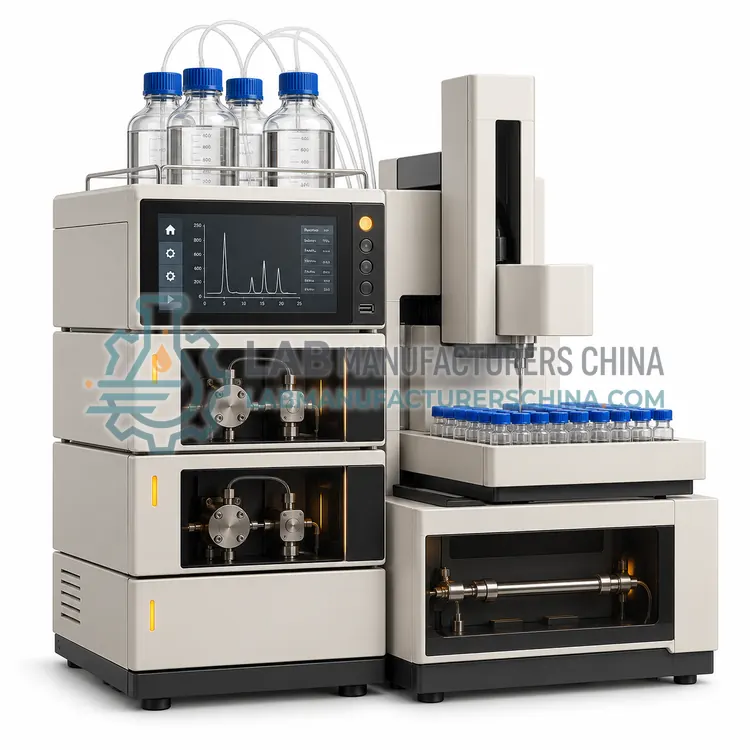
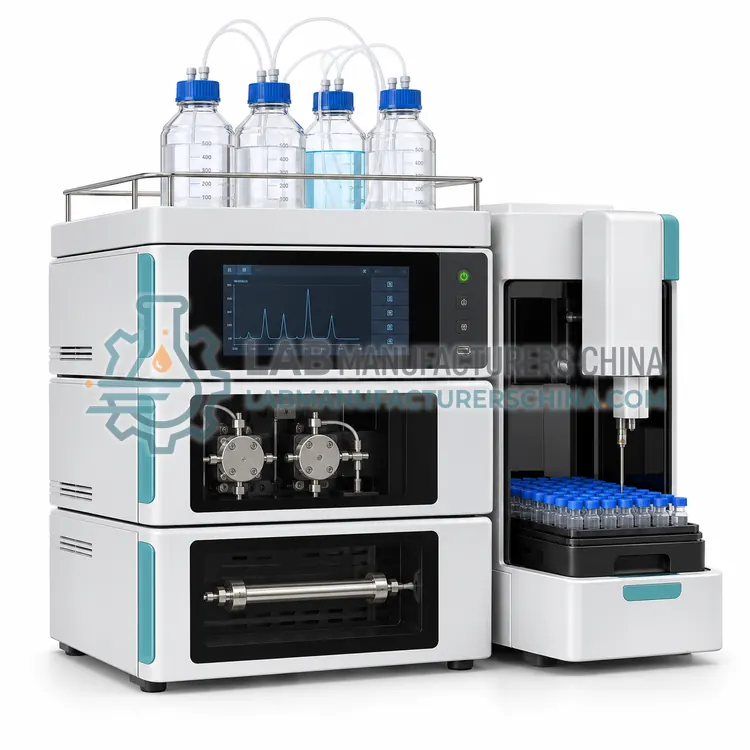
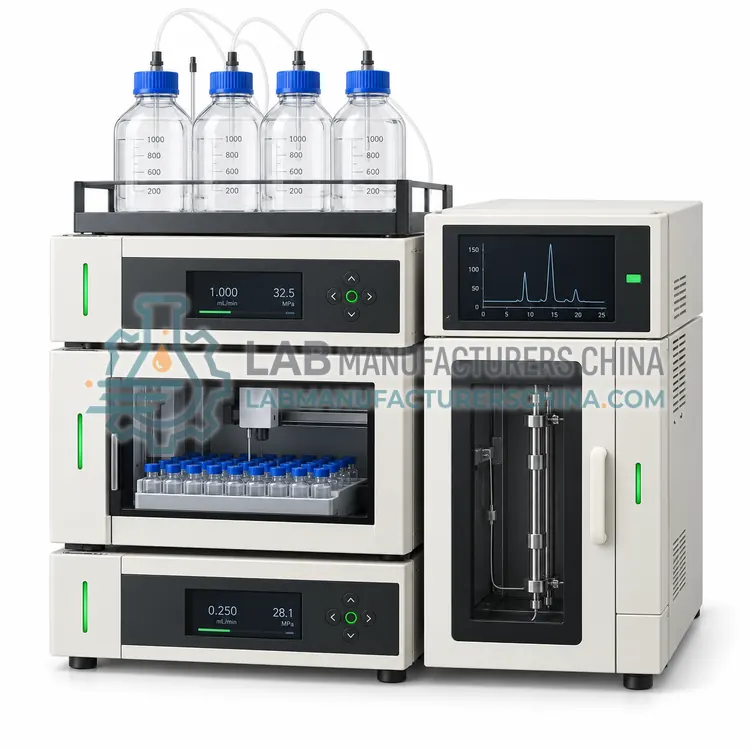
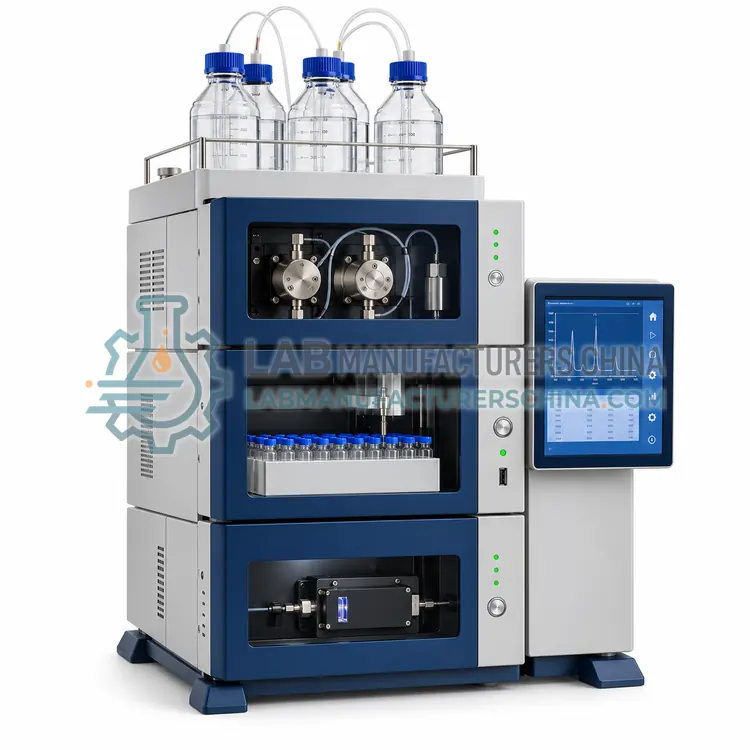
An HPLC system with diode-array detection records full ultraviolet spectra for method development and validation work. It is chosen when peak purity, specificity and forced degradation studies must be supported with spectral evidence.
What is the HPLC System with Diode-Array Detection for Method Validation?
An HPLC system with diode-array detection records full ultraviolet spectra for method development and validation work. It is chosen when peak purity, specificity and forced degradation studies must be supported with spectral evidence.
Overview
A diode-array detector captures the ultraviolet spectrum at every point across each peak, in addition to the chromatogram at selected wavelengths. This makes it the preferred detector for method development and validation, where specificity, peak purity and stability indicating capability must be demonstrated. Analysts can store and compare spectra, detect co-eluting impurities, select the best detection wavelength after the run and confirm that a peak is not a composite. Forced degradation studies rely on this capability because degradation peaks must be resolved from the main peak and shown to be spectrally distinct. Data systems add library searching, multi-wavelength reporting and, where required, mass confirmation interfaces. The detector should have low noise and adequate data rate for narrow peaks.
How does it work?
HPLC pumps a liquid mobile phase through a column packed with stationary phase. The sample is injected, and components partition between the mobile and stationary phases, so they elute at characteristic retention times. A detector, usually UV-Vis or diode-array, records absorbance and gives peak areas proportional to concentration. Pharmaceutical methods use reversed-phase columns in most cases, with buffered aqueous and organic mobile phases, isocratic or gradient elution, and a column oven for reproducibility. System suitability parameters such as resolution, tailing factor, theoretical plates and relative standard deviation must meet the criteria in the monograph before results are reported. Pump accuracy, injector precision, detector linearity, column temperature and mobile phase preparation all influence performance, so qualification and method control are essential.
What are the key features?
- Full ultraviolet spectra recorded across each peak
- Multiple simultaneous wavelength monitoring
- Peak purity and co-elution detection
- Post-run wavelength selection
- Spectral library comparison
- Low noise with high data rate
What are the technical specifications?
A typical hplc system with diode-array detection for method validation configuration offers wavelength range of 190–800 nm, bandwidth of 1–8 nm selectable, wavelength accuracy of ±1 nm, noise of about 0.02 mAU or better, data rate of up to 80–100 Hz and peak purity function of Spectral comparison included. Values are indicative of the product class; the exact figures for each configuration are confirmed on the quotation and the calibration documents supplied with the instrument.
Which applications is it used for?
The HPLC System with Diode-Array Detection for Method Validation is used in method development and validation, forced degradation studies, peak purity assessment and specificity testing. Across the wider HPLC class, laboratories also deploy it for pharmacopoeial assay of drug substances, related substances and impurity testing and dissolution sample analysis.
Which standards and certifications apply?
Relevant standards and methods include USP <621>, USP <711>, USP <905>, ICH Q2(R2), ICH Q3A and IEC 61010-1. Certification candidates for this model are CE, IEC 61010-1 compliance and ISO 13485 manufacturing; each is to be confirmed for the specific configuration before shipment, and certificates are supplied only where they have been issued.
Install the system on a stable bench with a solvent tray and waste container below it, and keep the laboratory free of vibration and temperature swings that affect retention. Use HPLC-grade solvents and filtered, degassed mobile phases, and prepare buffers fresh because microbial growth damages columns. Equilibrate the column at the method flow and temperature before each run, and verify system suitability before samples. Change seals, pistons and lamps on schedule, and record maintenance. Retain raw chromatograms, integration parameters and audit trails, because regulators expect the original data. Dispose of solvent waste as hazardous waste according to local rules.
How do I select the right HPLC System with Diode-Array Detection for Method Validation?
Specify a diode-array system when the work involves method development, validation, forced degradation or specificity studies, because spectral evidence supports peak purity conclusions. Confirm wavelength accuracy, noise and data rate, and that the software provides peak purity and library functions with audit trails.
How does it compare with other HPLC variants?
Select an HPLC system from the method itself. For pharmacopoeial assay, a robust isocratic or simple gradient system with UV detection is usually enough. For related substances and degradation products, gradient capability, low dwell volume and a diode-array or mass spectrometer detector help separate and identify impurities at low levels. For dissolution samples, a system with a high-capacity autosampler and fast run times is more valuable than high resolution. UHPLC suits laboratories that want shorter run times and better resolution, provided the method is transferred and validated. Compare pressure limit, flow range, autosampler capacity and precision, detector options, column oven control and software for data integrity. Confirm qualification documents and service support.
Full specifications
| Wavelength range | 190–800 nm |
|---|---|
| Bandwidth | 1–8 nm selectable |
| Wavelength accuracy | ±1 nm |
| Noise | about 0.02 mAU or better |
| Data rate | up to 80–100 Hz |
| Peak purity function | Spectral comparison included |
| Detector linearity | up to about 2 AU |
| Power supply | 220 V, 50 Hz, about 1.2 kW |
Indicative values for this product class. Final specifications are confirmed on the quotation and in the calibration documents supplied with the instrument.
Applications
- Method development and validation
- Forced degradation studies
- Peak purity assessment
- Specificity testing
Key features
- Full ultraviolet spectra recorded across each peak
- Multiple simultaneous wavelength monitoring
- Peak purity and co-elution detection
- Post-run wavelength selection
- Spectral library comparison
- Low noise with high data rate
Frequently asked questions about HPLC System with Diode-Array Detection for Method Validation
Peak purity indicates whether a chromatographic peak contains only one component. With a diode-array detector, spectra taken across the peak are compared; consistent spectra and a purity angle below the purity threshold indicate a single component.
Samples are stressed by acid, base, oxidation, heat and light, and the resulting chromatograms must show that degradation peaks are resolved from the main peak and are spectrally distinct. This demonstrates that the method is stability indicating.
Yes, because full spectra are stored. Analysts can review the data and select a wavelength that gives the best sensitivity and specificity, or report several wavelengths, without repeating the analysis, which saves time during development.
It is a set of checks that confirm the instrument, column and method perform as expected at the time of analysis. Resolution, tailing factor, theoretical plates and precision must meet monograph criteria before sample results are considered valid.
It records the full ultraviolet spectrum at each point in the run, so peaks can be checked for purity and compared with reference spectra. This helps distinguish a true impurity from a co-eluting peak and supports peak identification.
When shorter run times, better resolution or higher throughput are needed, or when the laboratory already has validated UHPLC methods. The method must be transferred with attention to extra-column volume and frictional heating, and the expected benefit should justify the change.