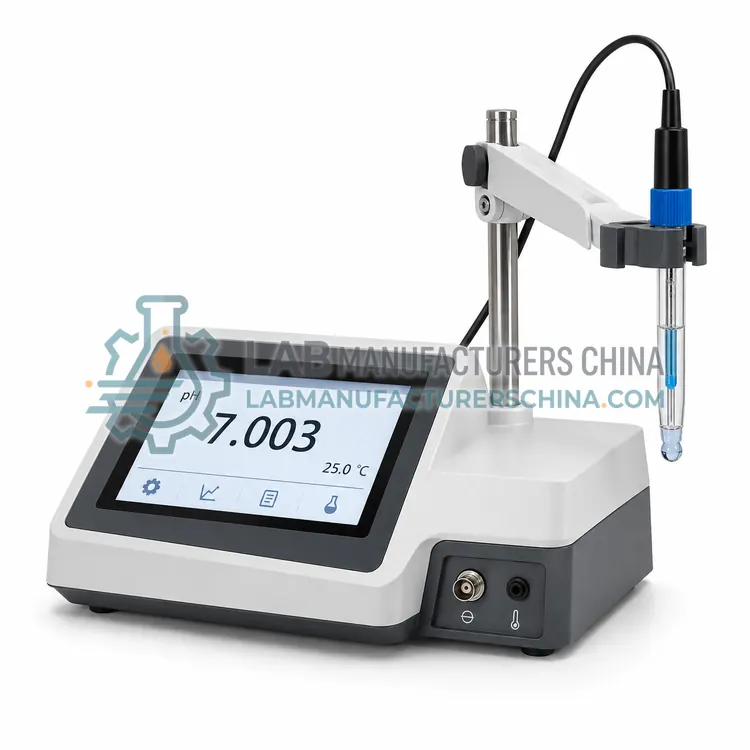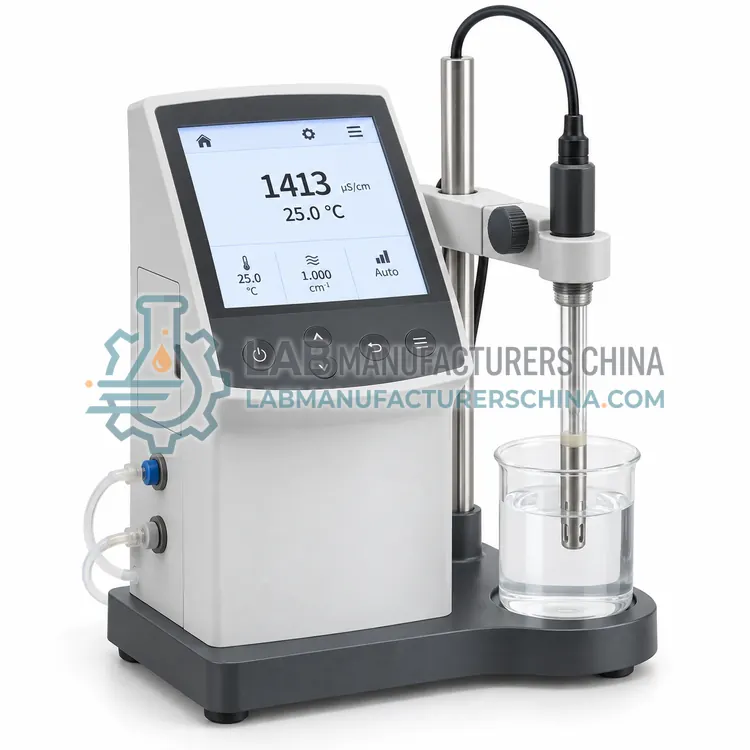
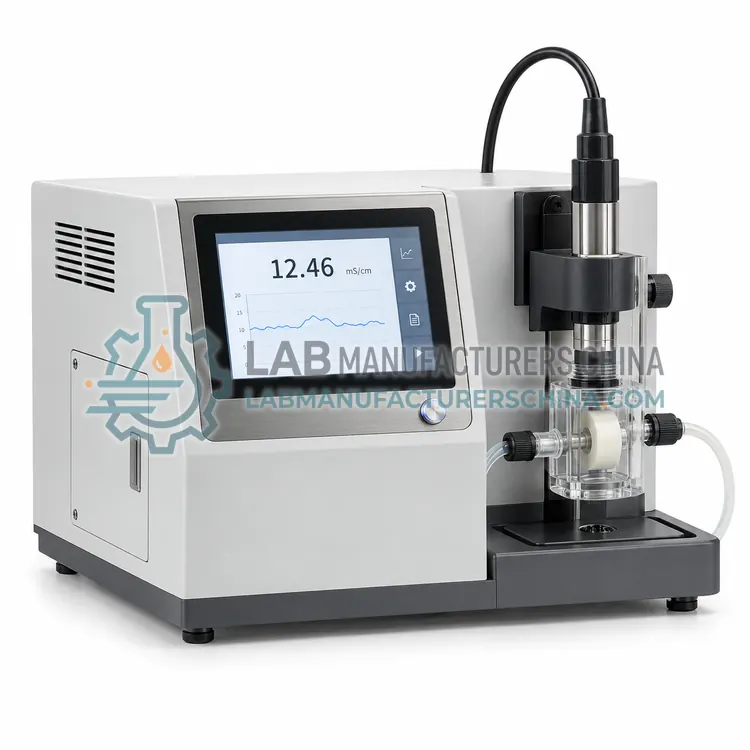
Toroidal (Inductive) Conductivity Analyzer
环形(电感式)电导率分析仪
- SKU COM-0005
- Conductivity Meters
- CE (to be confirmed)
- IEC 61010-1 safety (to be confirmed)
- ISO 9001 manufacturing (to be confirmed)
Price on request — FOB / CIF quoted per order
Prices depend on configuration, quantity and destination port.
Key specifications
| Measuring range | 100 µS/cm–2000 mS/cm |
|---|---|
| Accuracy | ±1–2% of reading |
| Repeatability | ±0.5% of reading |
| Process temperature | −10 to 130 °C (up to 200 °C option) |
| Process pressure | up to 10–16 bar |
| Sensor materials | PEEK, PVDF, PFA or PP |
Request a quote Download brochure · to be provided
By Lab Manufacturers China Technical TeamLast reviewed Standards: USP <645>, Ph. Eur. 2.2.38, ASTM D1125
What is the Toroidal (Inductive) Conductivity Analyzer?
A toroidal or inductive conductivity analyzer measures conductivity with two coupled coils and no exposed electrodes, so it resists fouling and corrosion. It suits high-conductivity or aggressive media such as acids, bases, brines and wastewater in process industries.
What is the Toroidal (Inductive) Conductivity Analyzer?
A toroidal or inductive conductivity analyzer measures conductivity with two coupled coils and no exposed electrodes, so it resists fouling and corrosion. It suits high-conductivity or aggressive media such as acids, bases, brines and wastewater in process industries.
Overview
In an inductive sensor, one toroidal coil induces an alternating current in the liquid loop that passes through the sensor bore, and a second coil measures the current produced, which is proportional to conductivity. Because no metal touches the liquid and electrode polarization does not occur, the sensor works over a wide range, typically 100 microsiemens per centimeter to 2000 millisiemens per centimeter, and tolerates coatings that would block conventional electrodes. Housings are made from PEEK, PVDF, PFA or PP, resisting concentrated acids and alkalis. Temperature is measured with an integrated Pt1000 or NTC and compensation uses linear or acid and base tables. Accuracy is typically ±1 to ±2 percent of reading. Installation must keep the sensor at a minimum distance from pipe walls, since walls affect the measuring field. Inductive analyzers are common in chemical plants, pulp and paper, food processing and wastewater.
How does it work?
Conductivity is measured by applying an alternating voltage across two or four electrodes of a cell with known geometry and measuring the resulting current. The conductance, in siemens, multiplied by the cell constant (the ratio of electrode spacing to area, in reciprocal centimeters) gives conductivity in microsiemens or millisiemens per centimeter. Alternating current at frequencies from hundreds of hertz to several kilohertz avoids electrode polarization. Conductivity rises by about 2 percent per degree Celsius, so meters compensate to a reference temperature, usually 25 degrees Celsius, using a linear coefficient or a nonlinear function for natural or ultrapure water. Cells with constants of 0.01 to 0.1 per centimeter are used for pure water, 1 per centimeter for general work and 10 per centimeter for concentrated solutions. Inductive cells use two toroidal coils and have no exposed electrodes, which suits aggressive or fouling media. TDS is estimated by multiplying conductivity by a factor of about 0.5 to 0.7.
What are the key features?
- Electrodeless toroidal sensor immune to electrode polarization and surface fouling
- Wide range from 100 µS/cm to 2000 mS/cm for concentrated solutions
- PEEK, PVDF or PFA body resistant to strong acids, alkalis and solvents
- Integrated Pt1000 temperature sensor with acid and base compensation tables
- Insertion, flow-through and immersion mounting options with process connections
- Concentration curves for common acids, alkalis and salts in the transmitter
What are the technical specifications?
A typical toroidal (inductive) conductivity analyzer configuration offers measuring range of 100 µS/cm–2000 mS/cm, accuracy of ±1–2% of reading, repeatability of ±0.5% of reading, process temperature of −10 to 130 °C (up to 200 °C option), process pressure of up to 10–16 bar and sensor materials of PEEK, PVDF, PFA or PP. Values are indicative of the product class; the exact figures for each configuration are confirmed on the quotation and the calibration documents supplied with the instrument.
Which applications is it used for?
The Toroidal (Inductive) Conductivity Analyzer is used in acid and alkali concentration control, clean-in-place phase separation, wastewater and effluent monitoring, pulp and paper liquor monitoring and brine and salt solution control. Across the wider Conductivity Meters class, laboratories also deploy it for pharmaceutical purified water testing, drinking and wastewater monitoring and boiler and cooling water control.
Which standards and certifications apply?
Relevant standards and methods include USP <645>, Ph. Eur. 2.2.38, ASTM D1125, ASTM D5391, ISO 7888, OIML R 68, IEC 60746-3 and GB/T 6908. Certification candidates for this model are CE, IEC 61010-1 safety and ISO 9001 manufacturing; each is to be confirmed for the specific configuration before shipment, and certificates are supplied only where they have been issued.
Calibrate with traceable potassium chloride standards close to the sample range, for example 84, 1413 or 12880 microsiemens per centimeter, at a controlled temperature. For ultrapure water, measure in a flow-through cell to avoid absorption of carbon dioxide, which raises conductivity within minutes. Rinse the cell with sample before measuring and store it dry or in deionized water as recommended. Platinum black coating should be protected from contamination and re-platinized when needed. Verify the cell constant periodically. Pharmaceutical laboratories should follow USP <645> or Ph. Eur. 2.2.38 staged testing and keep calibration and verification records. Keep cables away from power lines to avoid interference and ensure samples are not contaminated by handling.
How do I select the right Toroidal (Inductive) Conductivity Analyzer?
Choose an inductive sensor when the medium is conductive, corrosive or fouling and low-range accuracy is not needed. It is not suitable for pure water. In an RFQ specify process media, concentration range, temperature and pressure, wetted material, pipe size and output signals.
How does it compare with other Conductivity Meters variants?
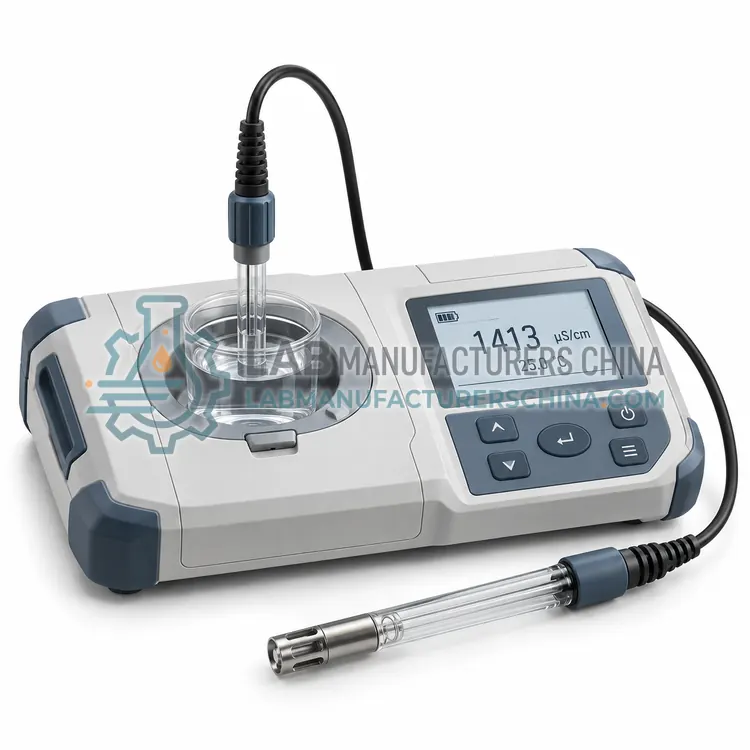
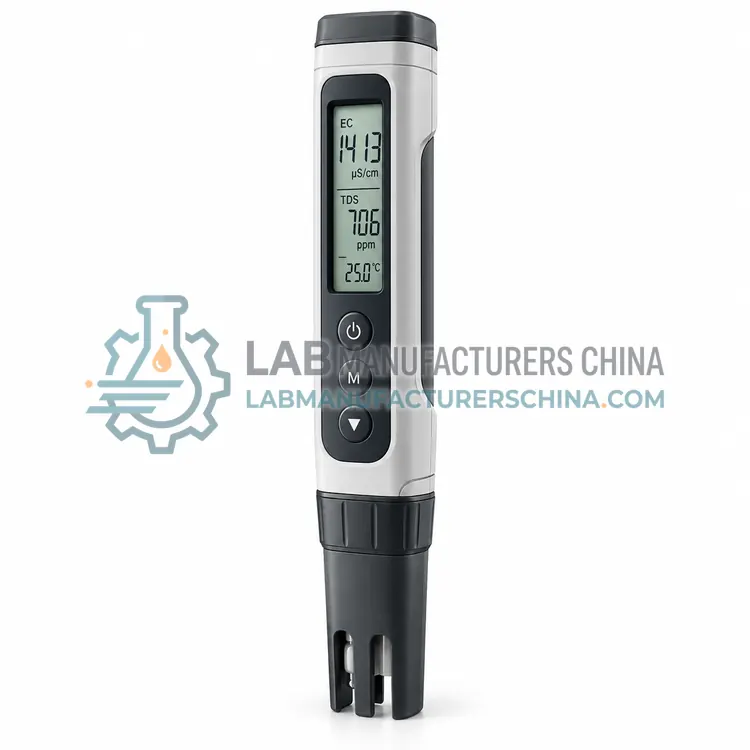
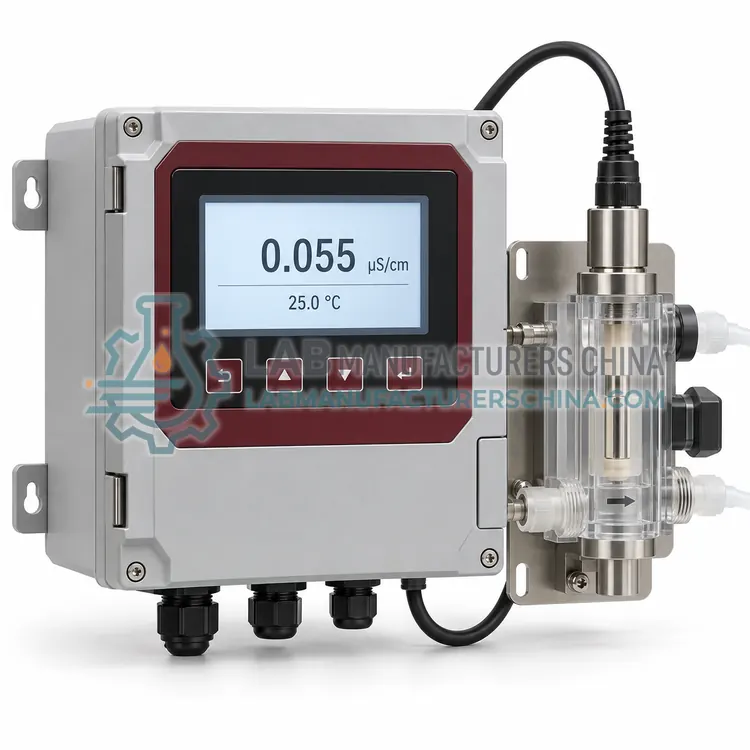
Start with the conductivity range of your samples, because the cell constant must match it: use 0.01 to 0.1 per centimeter for ultrapure water, 1 per centimeter for drinking water and most laboratory work, and 10 per centimeter for brines and concentrated solutions. Then choose the format. Benchtop meters give the best accuracy and GLP features, portable meters suit field sampling and plant rounds, pen testers suit screening, and online analyzers give continuous monitoring with relay and 4–20 mA outputs. Pharmaceutical water testing requires a meter and cell that support USP <645> with temperature compensation disabled and calibration traceable to standards. For fouling or corrosive media consider inductive sensors. Check the accuracy specification, temperature compensation options, cell material and the cost of calibration standards.
Full specifications
| Measuring range | 100 µS/cm–2000 mS/cm |
|---|---|
| Accuracy | ±1–2% of reading |
| Repeatability | ±0.5% of reading |
| Process temperature | −10 to 130 °C (up to 200 °C option) |
| Process pressure | up to 10–16 bar |
| Sensor materials | PEEK, PVDF, PFA or PP |
| Temperature sensor | Pt1000 / NTC |
| Analog output | 4–20 mA (1–2 channels) |
| Digital interface | Modbus RTU / HART / PROFIBUS |
| Minimum wall clearance | approx. 10–20 mm |
Indicative values for this product class. Final specifications are confirmed on the quotation and in the calibration documents supplied with the instrument.
Applications
- Acid and alkali concentration control
- Clean-in-place phase separation
- Wastewater and effluent monitoring
- Pulp and paper liquor monitoring
- Brine and salt solution control
Key features
- Electrodeless toroidal sensor immune to electrode polarization and surface fouling
- Wide range from 100 µS/cm to 2000 mS/cm for concentrated solutions
- PEEK, PVDF or PFA body resistant to strong acids, alkalis and solvents
- Integrated Pt1000 temperature sensor with acid and base compensation tables
- Insertion, flow-through and immersion mounting options with process connections
- Concentration curves for common acids, alkalis and salts in the transmitter
Frequently asked questions about Toroidal (Inductive) Conductivity Analyzer
It has no exposed electrodes, so it is not affected by polarization or coatings and resists corrosive media. This gives long maintenance intervals in fouling or aggressive applications compared with contacting cells, which clog and need frequent cleaning.
No. Inductive sensors lack sensitivity below about 100 microsiemens per centimeter, so contacting cells with low cell constants are used for purified and ultrapure water. Use inductive sensors for process liquids and concentrated solutions.
Yes. The measuring field extends outside the sensor, so walls, metal pipes or fittings too close to it change the reading. Follow the manufacturer's minimum clearance, or calibrate in place so the installation factor is included.
It measures how well a solution conducts electricity, reported in microsiemens or millisiemens per centimeter. Because dissolved ions carry the current, conductivity indicates total ionic content and is used for water purity, salinity and TDS estimation.
TDS meters measure conductivity and multiply it by a conversion factor, commonly 0.5 to 0.7, to estimate dissolved solids in mg/L. The factor depends on the ion mix, so the result is an estimate unless verified against gravimetric TDS.
Choose a cell constant that places the sample in the middle of the cell range: 0.01 to 0.1 per centimeter for ultrapure water below 20 microsiemens per centimeter, 1 per centimeter for 10 to 20,000 microsiemens per centimeter, and 10 per centimeter for higher values.