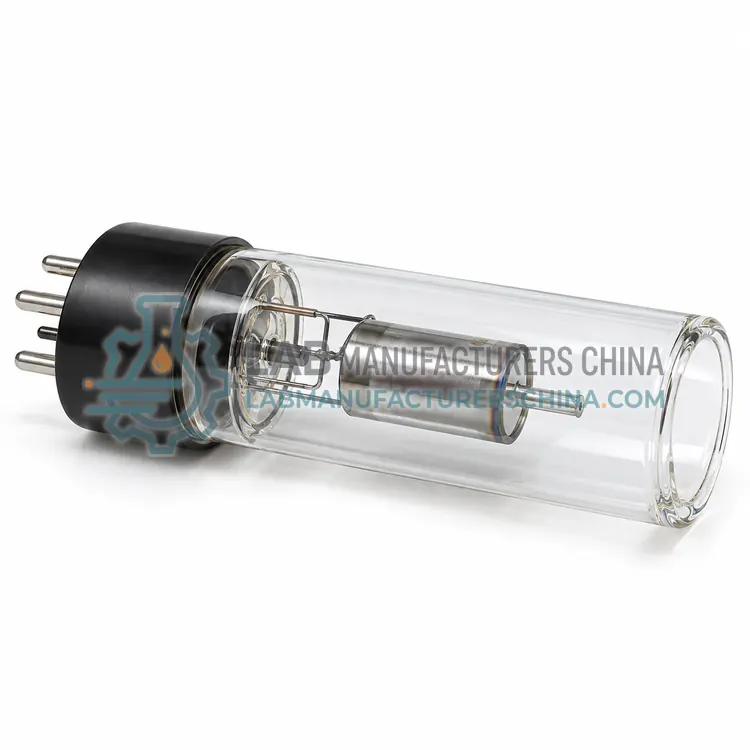
Graphite Tubes and Platforms for Atomic Absorption
原子吸收石墨管和平台
- SKU AAA-0003
- AAS Accessories
- CE (to be confirmed)
- ISO 9001 manufacturing (to be confirmed)
- Batch performance verification (to be confirmed)
Price on request — FOB / CIF quoted per order
Prices depend on configuration, quantity and destination port.
Key specifications
| Compatible furnace | transverse or end heated |
|---|---|
| Tube coating | uncoated or pyrolytic |
| Platform options | L'vov or integrated |
| Maximum temperature | 2800–3000 °C |
| Rated firings | 200–2000 |
| Injection hole diameter | 1.5–2.0 mm |
Request a quote Download brochure · to be provided
By Lab Manufacturers China Technical TeamLast reviewed Standards: Ph. Eur. 2.2.22 Atomic absorption spectrometry, USP <852> Atomic Absorption Spectroscopy, USP <1058> Analytical Instrument Qualification
What is the Graphite Tubes and Platforms for Atomic Absorption?
Graphite tubes and platforms are the atomizer consumables for graphite furnace atomic absorption. Their geometry, coating and physical condition determine sensitivity, peak shape and usable tube life for routine laboratory trace-metal measurements.
What is the Graphite Tubes and Platforms for Atomic Absorption?
Graphite tubes and platforms are the atomizer consumables for graphite furnace atomic absorption. Their geometry, coating and physical condition determine sensitivity, peak shape and usable tube life for routine laboratory trace-metal measurements.
Overview
The graphite tube is the furnace chamber where sample drying, pyrolysis and atomization occur. Tubes differ by heating geometry, matching transverse or end-heated furnaces, and by coating. Uncoated electrographite tubes suit many routine elements, while pyrolytically coated tubes reduce analyte interaction with the graphite and improve sensitivity for carbide-forming elements. Platforms are small plates placed inside the tube that delay atomization until the gas phase is uniform, reducing interference. Special tubes are available for high-acid matrices, for elements such as aluminum, silicon and titanium that form carbides, and for solid sampling. Tubes are consumable and rating is expressed in firings; sensitivity, peak shape and baseline noise indicate wear. Correct storage and careful handling of the fragile graphite extend usability.
How does it work?
Accessories determine the practical performance of an atomic absorption instrument. Light sources must emit the correct resonance line with sufficient intensity and stability; hollow-cathode and electrodeless discharge lamps are selected by element and current range. Atomizers convert the sample into free atoms, and their condition strongly affects sensitivity and precision. Graphite tubes and platforms are consumables whose coating, geometry and number of firings set detection limits and tube life. Burner heads and nebulizers control aerosol formation and flame stability, and worn components cause noise, drift and poor recovery. Autosamplers provide reproducible sample and modifier delivery, and hydride manifolds add volatile-element capability. Choosing the right accessory for the element, matrix and instrument model, and replacing consumables on schedule, is essential for valid results.
What are the key features?
- Transverse and end-heated geometries available
- Uncoated and pyrolytically coated options
- Platforms to delay atomization and reduce interference
- Special tubes for carbide-forming elements
- Rated in number of firings
- Fragile graphite requiring careful handling
What are the technical specifications?
A typical graphite tubes and platforms for atomic absorption configuration offers compatible furnace of transverse or end heated, tube coating of uncoated or pyrolytic, platform options of L'vov or integrated, maximum temperature of 2800–3000 °C, rated firings of 200–2000 and injection hole diameter of 1.5–2.0 mm. Values are indicative of the product class; the exact figures for each configuration are confirmed on the quotation and the calibration documents supplied with the instrument.
Which applications is it used for?
The Graphite Tubes and Platforms for Atomic Absorption is used in trace-metal analysis by graphite furnace, carbide-forming element determination, high-acid and high-salt matrices and solid sampling applications. Across the wider AAS Accessories class, laboratories also deploy it for replacement lamps for element-specific analysis, atomizer consumables for trace-metal programs and automation upgrades for high-throughput laboratories.
Which standards and certifications apply?
Relevant standards and methods include Ph. Eur. 2.2.22 Atomic absorption spectrometry, USP <852> Atomic Absorption Spectroscopy, USP <1058> Analytical Instrument Qualification, ISO/IEC 17025 and IEC 61010-1. Certification candidates for this model are CE, ISO 9001 manufacturing and Batch performance verification; each is to be confirmed for the specific configuration before shipment, and certificates are supplied only where they have been issued.
Consumables degrade with use, and their condition affects accuracy more than many operators expect. Hollow-cathode lamps lose intensity and drift as they age; record lamp hours and replace before performance falls. Graphite tubes develop cracks, change sensitivity and eventually fail; monitor firings and apparent sensitivity. Burner slots clog with salt deposits that cause noise, and nebulizers block or corrode, so clean them regularly. Autosampler tubing stretches and changes volume, requiring scheduled replacement. Keep spare critical parts, especially for high-throughput laboratories, and store lamps and tubes in dry conditions. When replacing parts, verify performance with standards and record the change in the instrument log.
How do I select the right Graphite Tubes and Platforms for Atomic Absorption?
Select tubes by furnace geometry and coating, and confirm the correct part number for the instrument model. Use pyrolytically coated tubes and platforms for carbide-forming elements or when maximum sensitivity is needed, and high-acid or special tubes for aggressive matrices. Order in quantities that match your consumption and inspect each tube for cracks before use.
How does it compare with other AAS Accessories variants?
Select accessories by matching them exactly to the instrument model, the element and the matrix. Lamps must be specified for the correct element and compatible socket, and the current range should suit the instrument. Graphite tubes should match the furnace geometry, whether transverse or end heated, and the coating must suit the elements measured, since carbide-forming elements need pyrolytically coated or special tubes. Burner heads and nebulizers must be chosen for the gas mixture and dissolved-solids level. Autosampler capacity and vial type depend on throughput and sample volume. Hydride manifolds must be compatible with the existing gas-liquid separator and quartz cell. Confirm part numbers, expected life and availability of certified performance data before ordering.
Full specifications
| Compatible furnace | transverse or end heated |
|---|---|
| Tube coating | uncoated or pyrolytic |
| Platform options | L'vov or integrated |
| Maximum temperature | 2800–3000 °C |
| Rated firings | 200–2000 |
| Injection hole diameter | 1.5–2.0 mm |
| Tube length | model specific |
| Storage conditions | dry, dust free |
| Special types | high-acid, carbide-forming, solid sampling |
| Pack size | 10 or 20 pieces |
Indicative values for this product class. Final specifications are confirmed on the quotation and in the calibration documents supplied with the instrument.
Applications
- Trace-metal analysis by graphite furnace
- Carbide-forming element determination
- High-acid and high-salt matrices
- Solid sampling applications
Key features
- Transverse and end-heated geometries available
- Uncoated and pyrolytically coated options
- Platforms to delay atomization and reduce interference
- Special tubes for carbide-forming elements
- Rated in number of firings
- Fragile graphite requiring careful handling
Frequently asked questions about Graphite Tubes and Platforms for Atomic Absorption
Pyrolytic coating reduces the interaction between the analyte and the graphite surface, which improves sensitivity and peak shape for many elements and extends tube life. It is recommended for carbide-forming elements, low-level work and matrices that attack uncoated graphite. The extra cost is usually recovered in better performance.
A platform heats mainly by radiation from the tube wall, so it reaches atomization temperature later than the wall itself. This delays sample vaporization until the gas phase is stable and uniform, reducing chemical interference and giving more reproducible, sharper peaks. Platforms are standard in many furnace methods.
Store tubes and platforms in their packaging in a dry, dust-free place, away from solvents and moisture, because adsorbed water and contaminants degrade performance. Handle them with clean gloves or tweezers, avoid dropping or bending, and inspect for cracks or chips before installation. Do not use damaged tubes.
Performance falls when sensitivity drops, baseline noise rises, or the lamp cannot reach the required current without unstable output. Lamps also fail to ignite or flicker at the end of life. Track accumulated milliamp hours and replace before results degrade, keeping the old lamp until the replacement is verified.
Tube life depends on maximum atomization temperature, total firings, sample acidity, matrix salts and the use of oxygen during cleaning. Halogen or alkaline matrices and high pyrolysis temperatures shorten life. Monitoring sensitivity and peak shape indicates when a tube is near the end of its useful life.
Sometimes, but compatibility depends on physical dimensions, electrical connections and firmware recognition. Lamps are generally interchangeable if the socket and pin configuration match, while tubes, burners and autosampler trays are model specific. Confirm the exact instrument model and part number before ordering to avoid damage or invalid results.