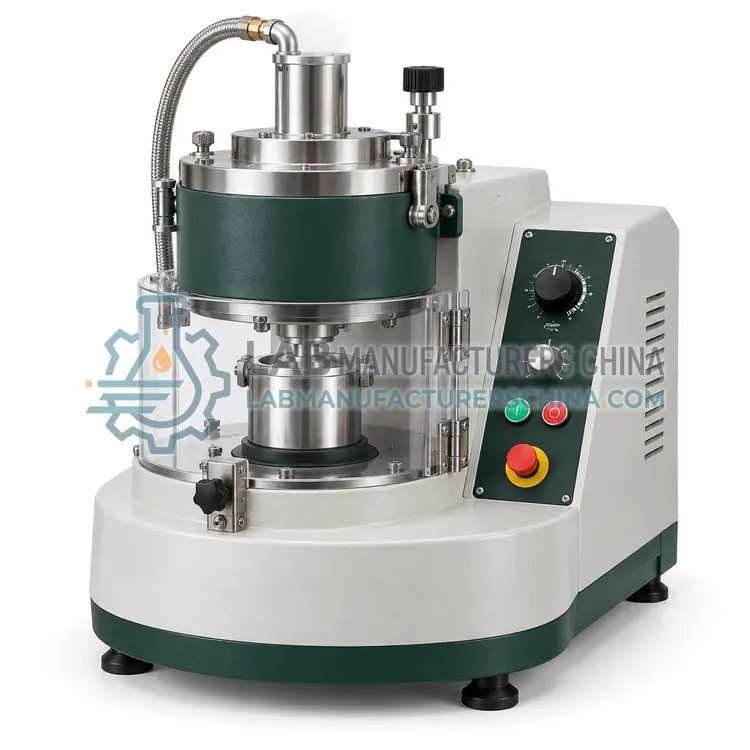
How do Grinders work?
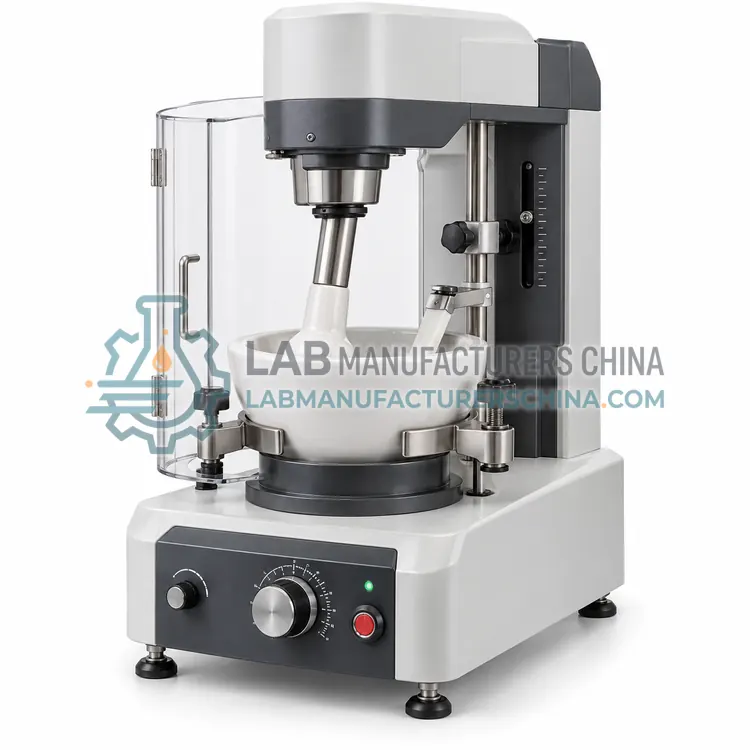
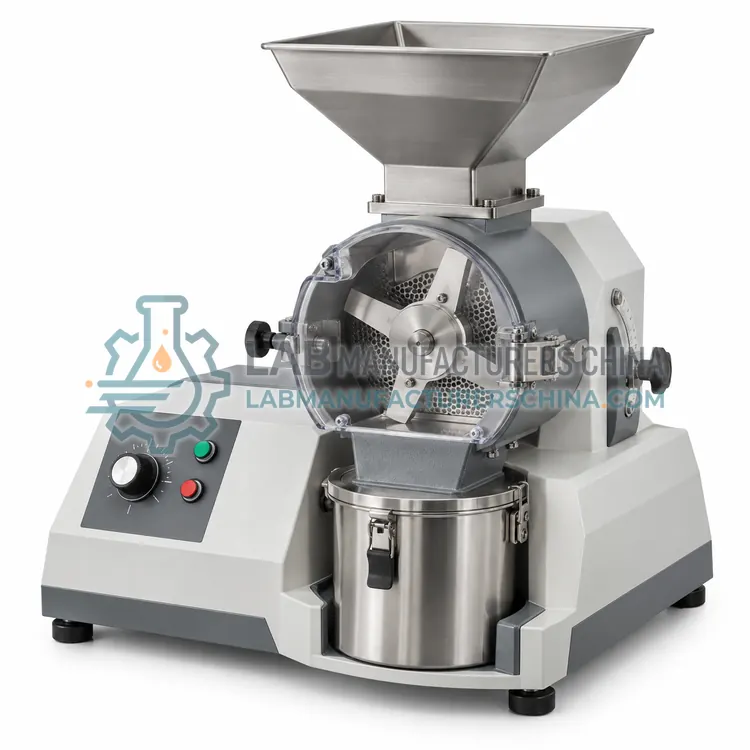
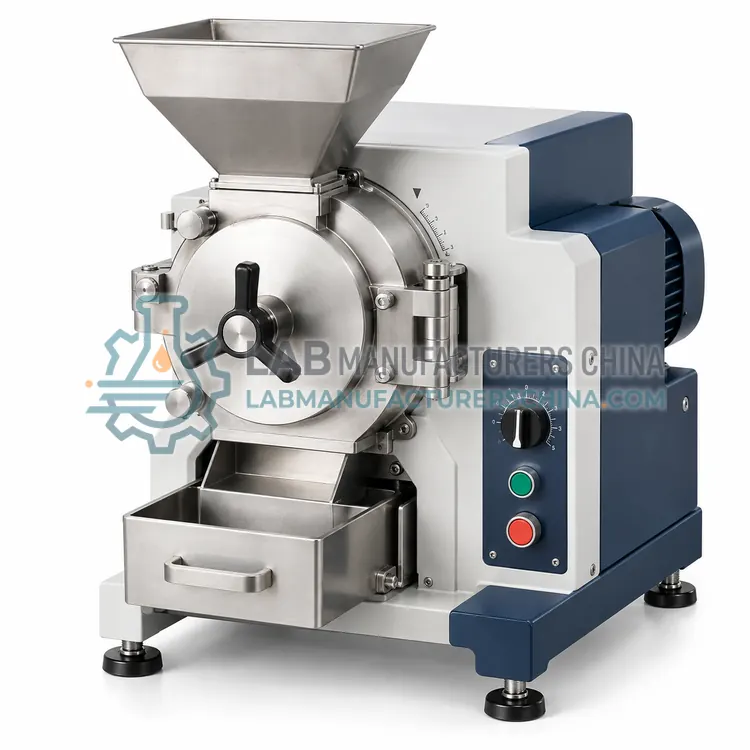
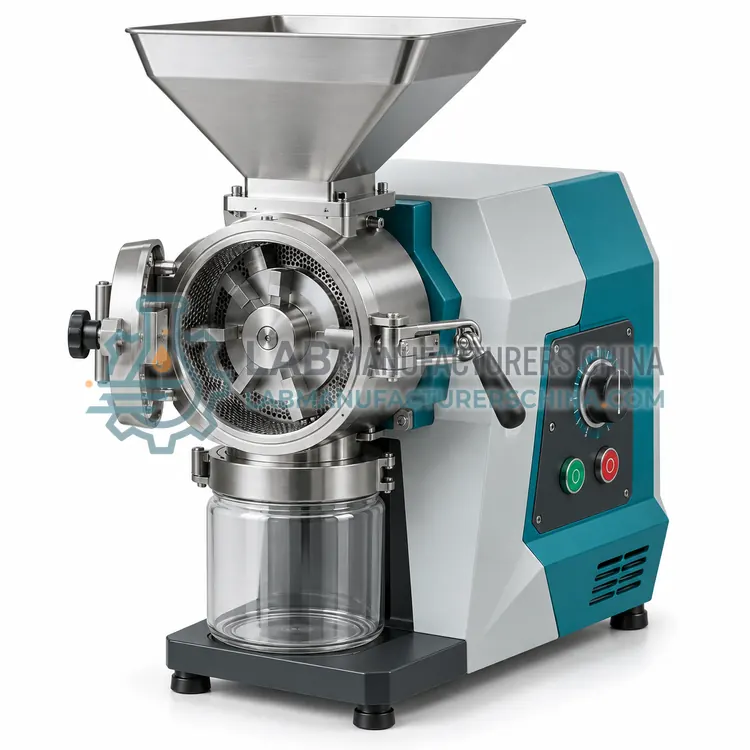
Grinders reduce particle size by different mechanisms. Mortar grinders rub the sample between a pestle and a bowl, producing a fine product with little contamination when agate is used. Cutting grinders shear material between rotating blades and fixed counter knives, which suits fibrous, soft and elastic samples. Disc grinders press material between rotating discs and give a controlled particle size. Rotor beater grinders use rapidly moving beaters to shatter brittle and medium-hard material, and cryogenic grinders embrittle the sample with liquid nitrogen before impact so that heat-sensitive or sticky samples grind cleanly. Particle size, throughput and contamination depend on the mechanism, the tool material and the grinding time.
Which Grinders variants are available?
- Mortar Grinder — A mortar grinder reproduces hand grinding mechanically, using a pestle against a bowl to produce a fine, homogeneous powder.
- Cutting Grinder — A cutting grinder shears material with rotating blades against fixed counter knives.
- Disc Grinder — A disc grinder reduces brittle material between rotating grinding discs, giving a controlled and reproducible particle size.
- Rotor Beater Grinder — A rotor beater grinder shatters brittle and medium-hard material with rapidly rotating beaters.
- Cryogenic Grinder — A cryogenic grinder embrittles samples with liquid nitrogen before grinding, so heat-sensitive, elastic or sticky materials break cleanly.
How do I choose the right variant?
Choose a grinder according to the sample properties and the required final particle size. Hard, brittle material suits a disc or rotor grinder; fibrous, soft and elastic material suits a cutting grinder; and fine, homogeneous powder for trace analysis favours a mortar grinder with an agate set. Heat-sensitive, sticky or volatile samples suit cryogenic grinding with liquid nitrogen. Confirm the final particle size range, sample capacity and throughput, and that the grinding set material does not introduce the elements being analyzed. Consider cleaning between samples, noise and dust, and whether the method requires a defined particle size distribution.
Where are Grinders used?
Grinders are specified in food and feed sample homogenisation, soil, sediment and rock preparation, plant and biomass material grinding and pharmaceutical and materials sample reduction.
Which standards and certifications apply?
Work with Grinders is commonly governed by ISO 3310-1, ASTM E11, ISO 2591-1, EPA 3050B and IEC 61010-1. Instrument certifications such as CE marking are confirmed per configuration and never assumed.
What are the key considerations before purchase?
Clean the grinding set thoroughly between samples to prevent cross-contamination, and pre-grind a portion of the sample or an inert material to condition the surfaces when trace work demands it. Do not overfill the grinding chamber, since excess sample reduces efficiency and raises temperature. Allow heat-sensitive samples to cool, or use cryogenic grinding, to avoid loss of volatiles and changes in composition. Inspect blades, discs and pestles for wear, and replace them on schedule to keep particle size reproducible. Follow the electrical safety requirements of IEC 61010-1 and, for cryogenic work, handle liquid nitrogen with appropriate ventilation and protection.