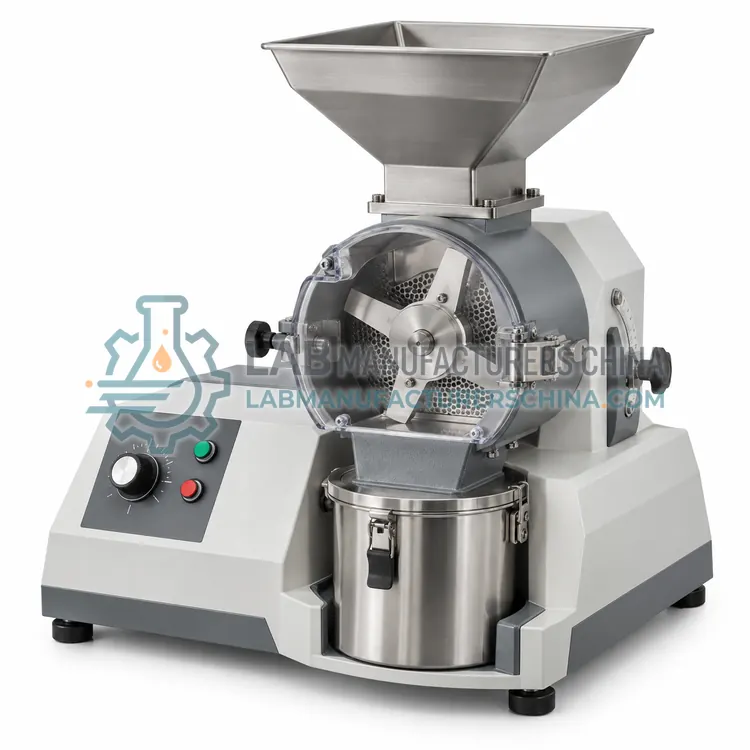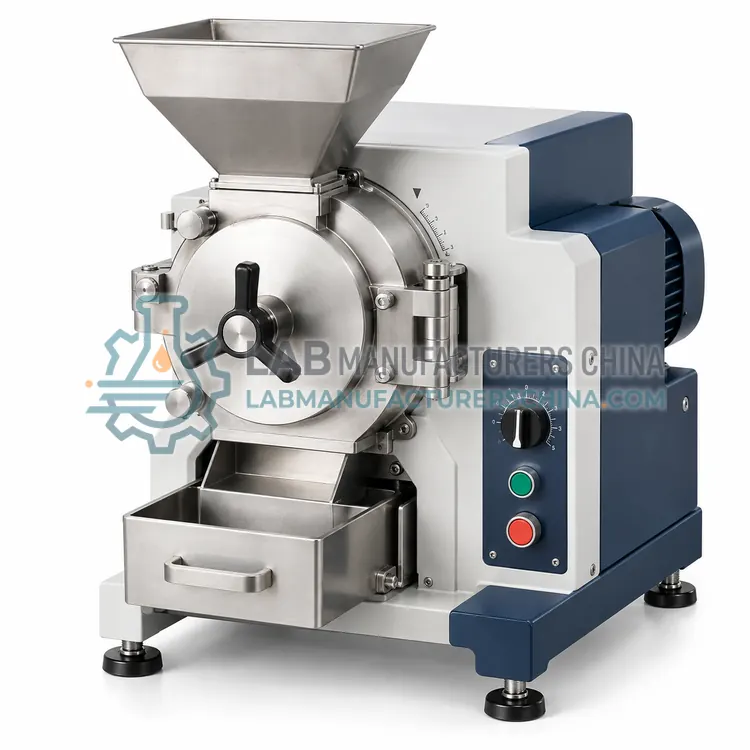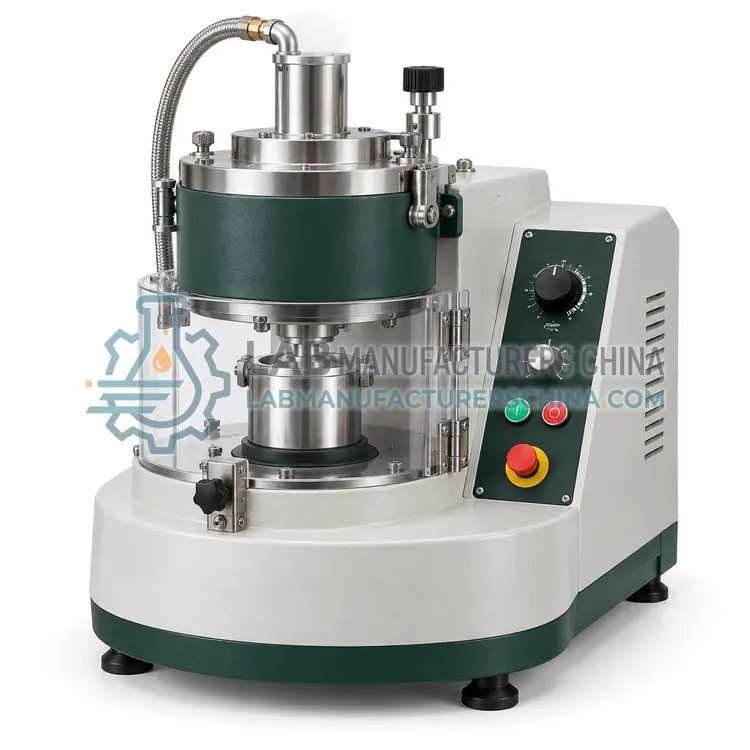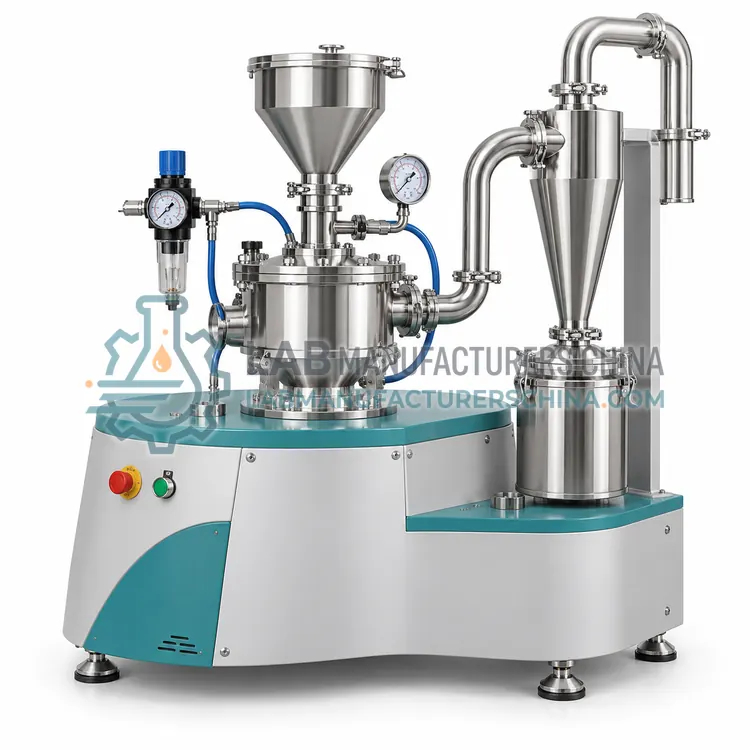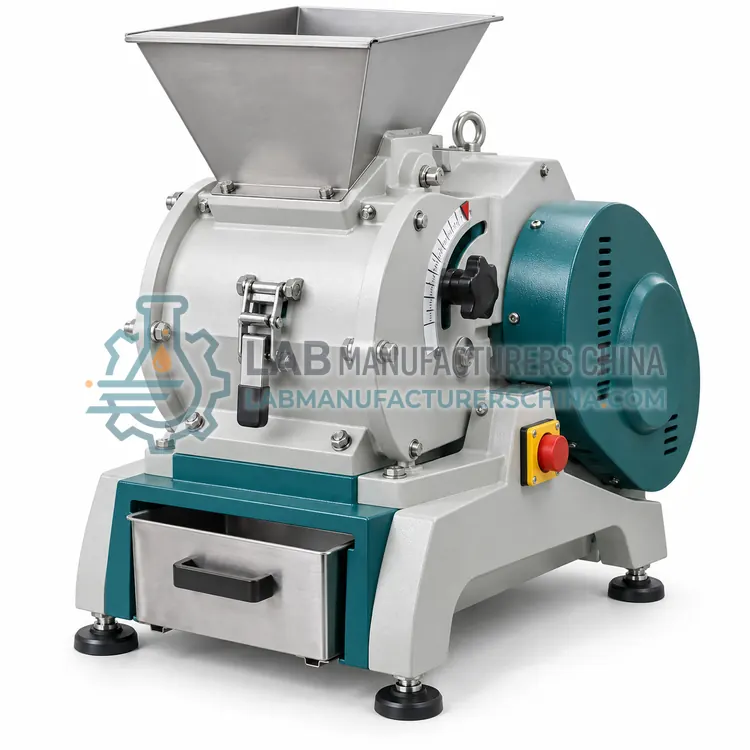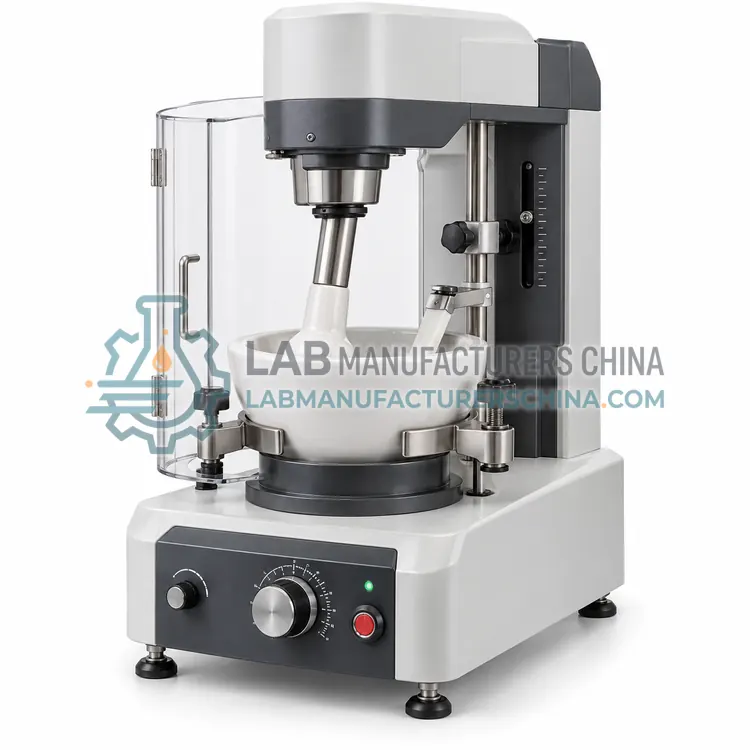
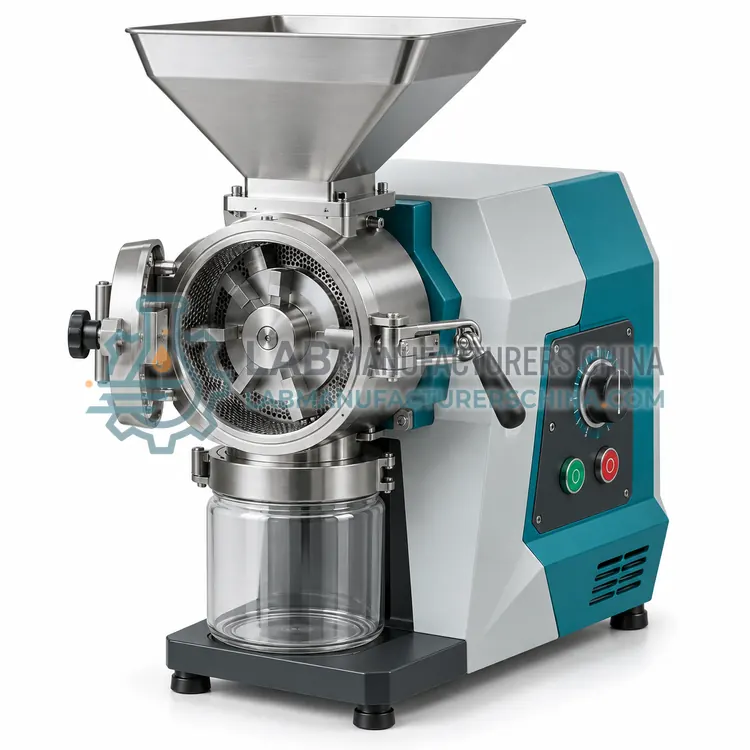
Rotor Beater Grinder
转子击打式研磨机
- SKU GRI-0004
- Grinders
- CE (to be confirmed)
- ISO 9001 manufacturing (to be confirmed)
Price on request — FOB / CIF quoted per order
Prices depend on configuration, quantity and destination port.
Key specifications
| Final particle size | 0.1–5 mm, sieve dependent |
|---|---|
| Max feed size | 10 mm |
| Throughput | Up to 5 kg/h |
| Rotor speed | 3,000–10,000 rpm |
| Beater material | Stainless steel or tungsten carbide |
| Sieve options | 0.12, 0.25, 0.5, 1, 2 mm |
Request a quote Download brochure · to be provided
By Lab Manufacturers China Technical TeamLast reviewed Standards: ISO 3310-1, ASTM E11, ISO 2591-1
What is the Rotor Beater Grinder?
A rotor beater grinder shatters brittle and medium-hard material with rapidly rotating beaters. It gives fast, high-throughput grinding and suits grains, minerals and dry samples for subsequent analysis in food, mineral and chemical laboratories.
What is the Rotor Beater Grinder?
A rotor beater grinder shatters brittle and medium-hard material with rapidly rotating beaters. It gives fast, high-throughput grinding and suits grains, minerals and dry samples for subsequent analysis in food, mineral and chemical laboratories.
Overview
A rotor beater grinder drives a rotor fitted with beaters or hammers at high speed inside a chamber lined with a sieve. Feed is struck and thrown outward, breaking by impact, and the particles exit through the sieve once small enough. The high rotor speed gives fast grinding and good throughput, and interchangeable sieves set the particle size. The design suits brittle, medium-hard and dry materials such as grains, dried plant tissue, minerals and chemicals. Because breakage is by impact, very elastic or fatty samples are better handled by a cutting grinder, and abrasive material accelerates beater wear.
How does it work?
Grinders reduce particle size by different mechanisms. Mortar grinders rub the sample between a pestle and a bowl, producing a fine product with little contamination when agate is used. Cutting grinders shear material between rotating blades and fixed counter knives, which suits fibrous, soft and elastic samples. Disc grinders press material between rotating discs and give a controlled particle size. Rotor beater grinders use rapidly moving beaters to shatter brittle and medium-hard material, and cryogenic grinders embrittle the sample with liquid nitrogen before impact so that heat-sensitive or sticky samples grind cleanly. Particle size, throughput and contamination depend on the mechanism, the tool material and the grinding time.
What are the key features?
- High-speed rotor beaters for impact breakage
- Interchangeable sieves for particle size
- Fast grinding with good throughput
- Suits dry, brittle and medium-hard samples
- Quick-release chamber for cleaning
What are the technical specifications?
A typical rotor beater grinder configuration offers final particle size of 0.1–5 mm, sieve dependent, max feed size of 10 mm, throughput of Up to 5 kg/h, rotor speed of 3,000–10,000 rpm, beater material of Stainless steel or tungsten carbide and sieve options of 0.12, 0.25, 0.5, 1, 2 mm. Values are indicative of the product class; the exact figures for each configuration are confirmed on the quotation and the calibration documents supplied with the instrument.
Which applications is it used for?
The Rotor Beater Grinder is used in grain and cereal sample grinding, dried plant tissue preparation, mineral and chemical sample reduction and feed and food analysis preparation. Across the wider Grinders class, laboratories also deploy it for food and feed sample homogenisation, soil, sediment and rock preparation and plant and biomass material grinding.
Which standards and certifications apply?
Relevant standards and methods include ISO 3310-1, ASTM E11, ISO 2591-1, EPA 3050B and IEC 61010-1. Certification candidates for this model are CE and ISO 9001 manufacturing; each is to be confirmed for the specific configuration before shipment, and certificates are supplied only where they have been issued.
Clean the grinding set thoroughly between samples to prevent cross-contamination, and pre-grind a portion of the sample or an inert material to condition the surfaces when trace work demands it. Do not overfill the grinding chamber, since excess sample reduces efficiency and raises temperature. Allow heat-sensitive samples to cool, or use cryogenic grinding, to avoid loss of volatiles and changes in composition. Inspect blades, discs and pestles for wear, and replace them on schedule to keep particle size reproducible. Follow the electrical safety requirements of IEC 61010-1 and, for cryogenic work, handle liquid nitrogen with appropriate ventilation and protection.
How do I select the right Rotor Beater Grinder?
Choose a rotor beater grinder for fast, high-throughput grinding of dry, brittle and medium-hard samples. Confirm the sieve range covers the required particle size and that the beater material does not contaminate the sample. For elastic, fatty or moist samples, a cutting grinder is a better fit.
How does it compare with other Grinders variants?
Choose a grinder according to the sample properties and the required final particle size. Hard, brittle material suits a disc or rotor grinder; fibrous, soft and elastic material suits a cutting grinder; and fine, homogeneous powder for trace analysis favours a mortar grinder with an agate set. Heat-sensitive, sticky or volatile samples suit cryogenic grinding with liquid nitrogen. Confirm the final particle size range, sample capacity and throughput, and that the grinding set material does not introduce the elements being analyzed. Consider cleaning between samples, noise and dust, and whether the method requires a defined particle size distribution.
Full specifications
| Final particle size | 0.1–5 mm, sieve dependent |
|---|---|
| Max feed size | 10 mm |
| Throughput | Up to 5 kg/h |
| Rotor speed | 3,000–10,000 rpm |
| Beater material | Stainless steel or tungsten carbide |
| Sieve options | 0.12, 0.25, 0.5, 1, 2 mm |
| Motor power | 0.75–1.5 kW |
| Collection vessel | 0.5–2 L |
| Timer | 0–10 min digital |
| Power supply | 220–240 V AC |
Indicative values for this product class. Final specifications are confirmed on the quotation and in the calibration documents supplied with the instrument.
Applications
- Grain and cereal sample grinding
- Dried plant tissue preparation
- Mineral and chemical sample reduction
- Feed and food analysis preparation
Key features
- High-speed rotor beaters for impact breakage
- Interchangeable sieves for particle size
- Fast grinding with good throughput
- Suits dry, brittle and medium-hard samples
- Quick-release chamber for cleaning
Frequently asked questions about Rotor Beater Grinder
Higher rotor speed increases impact energy and throughput, producing a finer and faster result but also more heat and wear. Very high speeds can degrade heat-sensitive samples. The speed and sieve are chosen together to give the required particle size without damaging the sample.
Not well. Moist, fatty and elastic samples tend to coat the rotor and blind the sieve, reducing throughput and distorting particle size. These samples suit a cutting grinder or, for very difficult cases, cryogenic grinding with liquid nitrogen.
The chamber, rotor and sieve should be cleaned between samples, and for trace work an inert material can be ground first to condition the surfaces. Beater and sieve materials are chosen to avoid adding the elements of interest, and a blank check confirms cleanliness.
Cutting grinders shear material with blades and suit soft, fibrous, elastic or moist samples that impact mills would smear or fail to break. Impact and disc grinders shatter hard, brittle material into powder. Some samples need both, first cutting then fine grinding.
Cryogenic grinding cools the sample with liquid nitrogen until it becomes brittle, so heat-sensitive, sticky, elastic or volatile materials can be ground cleanly without melting, smearing or losing components. It is common for polymers, rubber, food and biological samples.
Choose a grinding set material that does not contain the elements being analyzed: agate for most trace work, zirconia or tungsten carbide for harder samples, and plastic or corrosion-resistant steel where appropriate. Clean between samples and run a blank to confirm that contamination is acceptable.
Related models