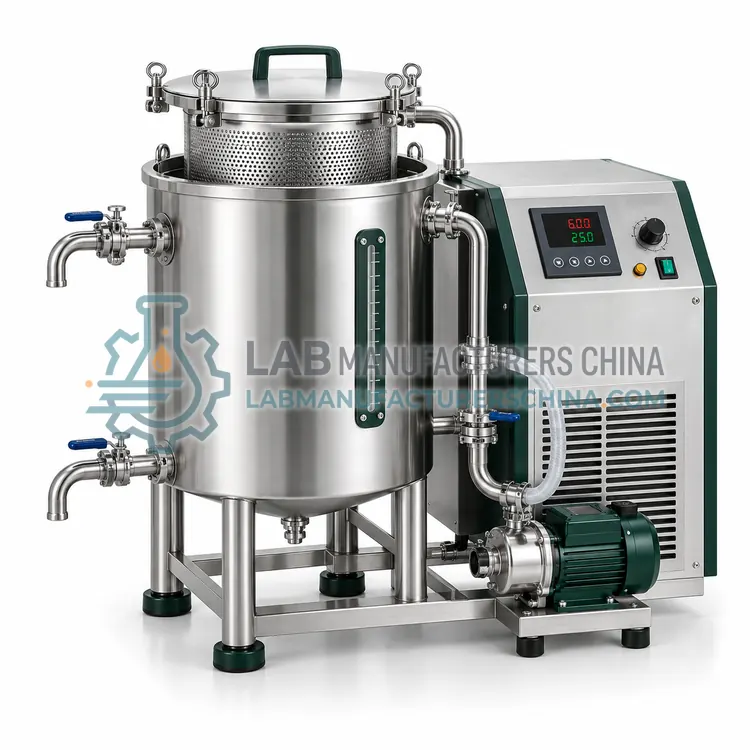
Extraction transfers analytes from a solid or semi-solid matrix into a solvent that can be analyzed or further cleaned. Soxhlet extraction repeatedly cycles condensed solvent through the sample, giving thorough extraction over time. Accelerated solvent extraction uses elevated temperature and pressure to keep the solvent liquid and speed transfer. Supercritical fluid extraction uses carbon dioxide above its critical point, whose low viscosity and high diffusivity penetrate the matrix rapidly and leave little residue. Microwave extraction heats the solvent and sample together, while ultrasonic extraction uses cavitation to disrupt the matrix and improve mass transfer. Temperature, pressure, solvent choice and time determine recovery.
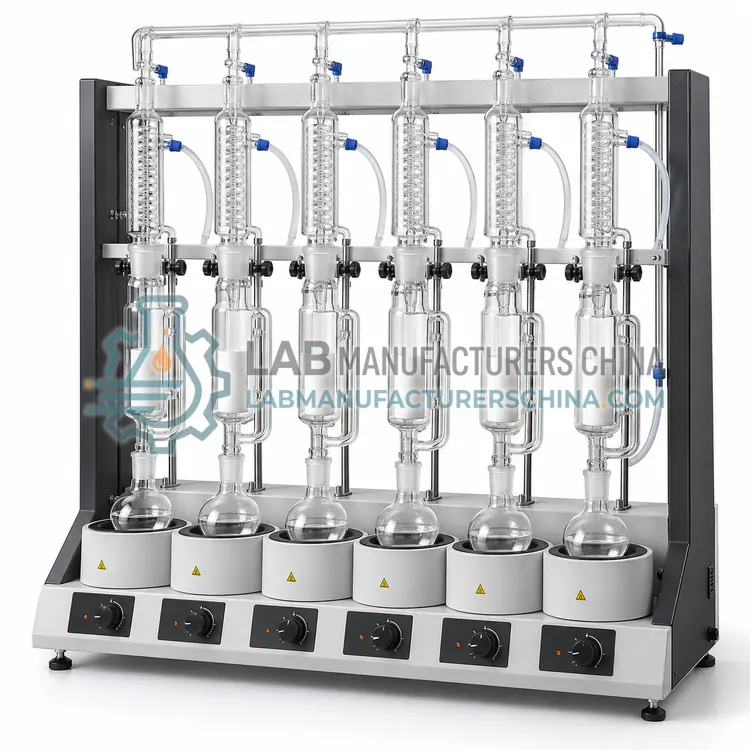
- Soxhlet Extraction System — A Soxhlet extraction system cycles condensed solvent through a sample to extract fats, oils and other analytes.
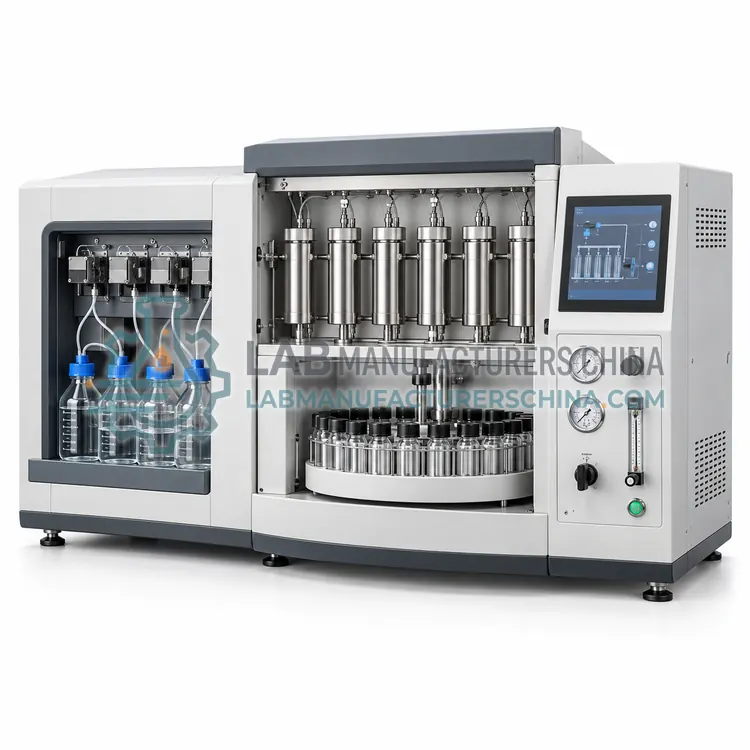
- Accelerated Solvent Extractor — An accelerated solvent extractor uses high temperature and pressure to extract analytes in minutes with little solvent.
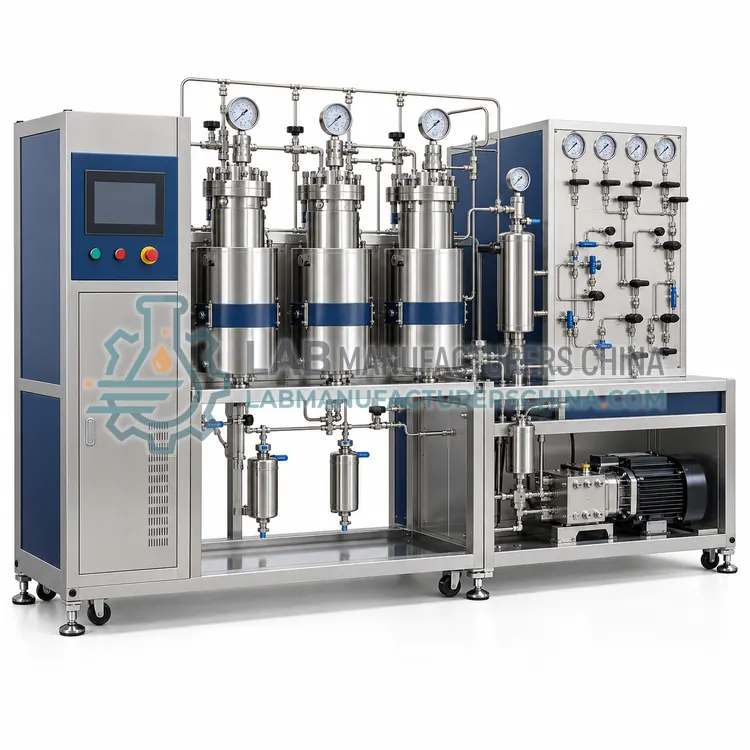
- Supercritical Fluid Extractor — A supercritical fluid extractor uses carbon dioxide above its critical point to extract analytes efficiently with little or no organic solvent.
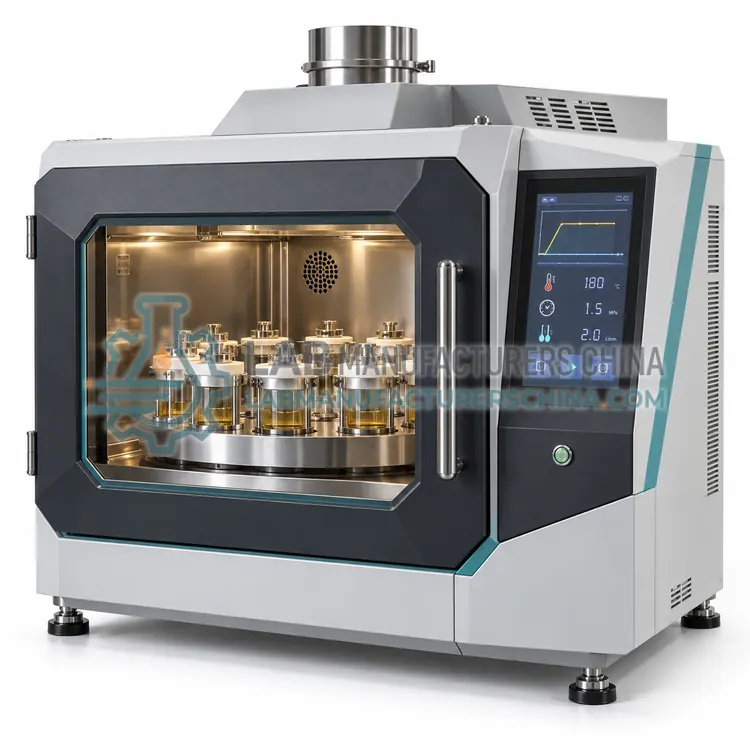
- Microwave Extraction System — A microwave extraction system heats solvent and sample rapidly with microwave energy to speed extraction.
- Ultrasonic Extraction System — An ultrasonic extraction system uses cavitation from ultrasound to disrupt the sample matrix and speed extraction.
How do I choose the right variant?
Choose an extraction technique according to the analyte, the matrix and the required throughput. Soxhlet extraction is the classical reference method and suits fat and oil determination, but it is slow and uses more solvent. Accelerated solvent extraction is faster and uses less solvent, and suits many environmental and food methods. Supercritical fluid extraction is efficient and nearly solvent-free, and suits non-polar and moderately polar analytes. Microwave and ultrasonic extraction are rapid and suit samples where the matrix is easily penetrated. Confirm the achievable recovery, the solvent consumption, the temperature and pressure limits, and whether the system can handle the sample number required.
Extractors are specified in fat and oil determination in food, environmental organic pollutant extraction, pharmaceutical and natural product isolation and polymer and material additive analysis.
Which standards and certifications apply?
Work with Extractors is commonly governed by EPA 3540C, EPA 3545A, EPA 3546, ISO 659 and IEC 61010-1. Instrument certifications such as CE marking are confirmed per configuration and never assumed.
What are the key considerations before purchase?
Handle solvents in a fume hood and use the protective equipment specified for the solvent and the extraction conditions. Dry and grind the sample consistently, because moisture and particle size affect penetration and recovery. Optimise and validate temperature, pressure, solvent and time for each matrix, and verify recovery with a certified reference material or a spiked sample. Clean and check seals, vessels and tubing, since leaks waste solvent and can be hazardous at high pressure. Recover or dispose of solvents according to regulations, and record all parameters for traceability.