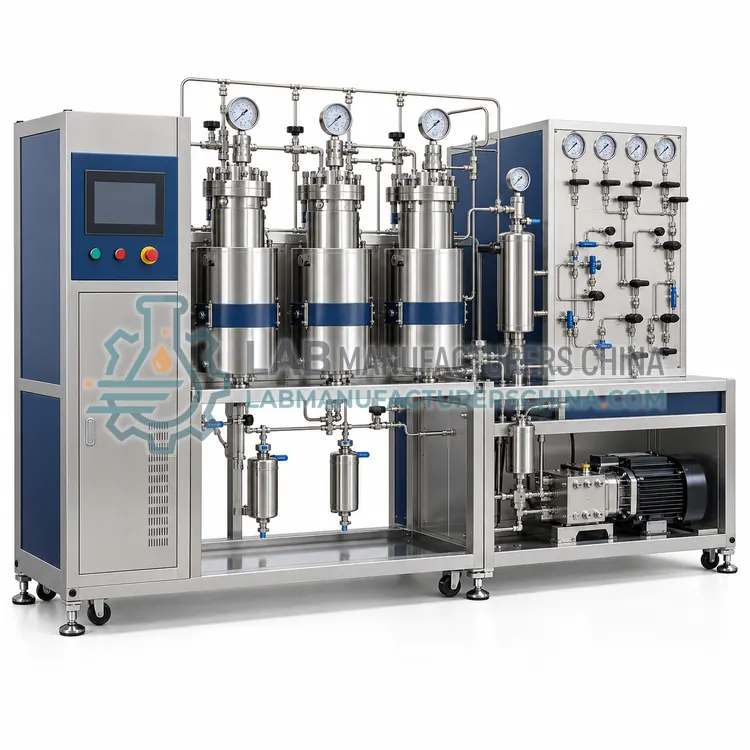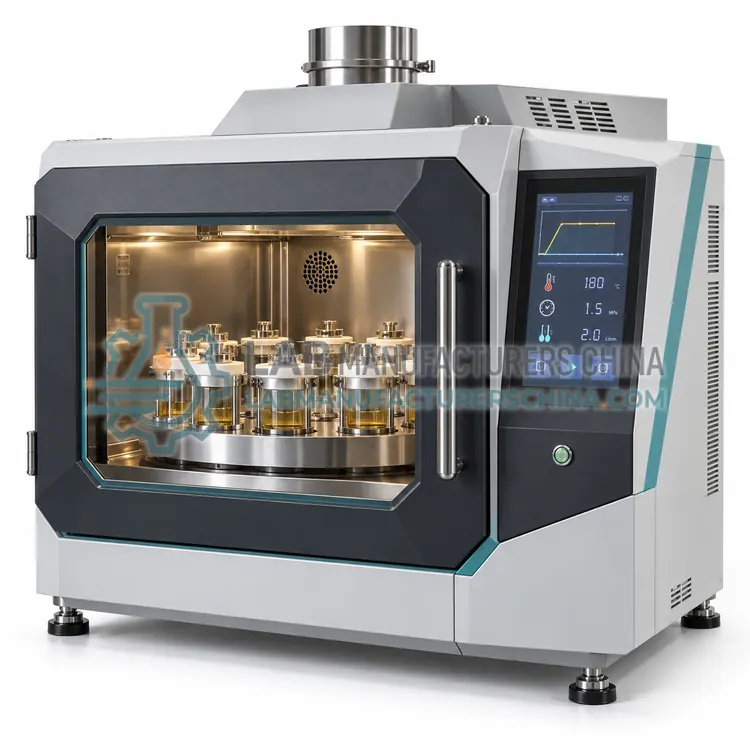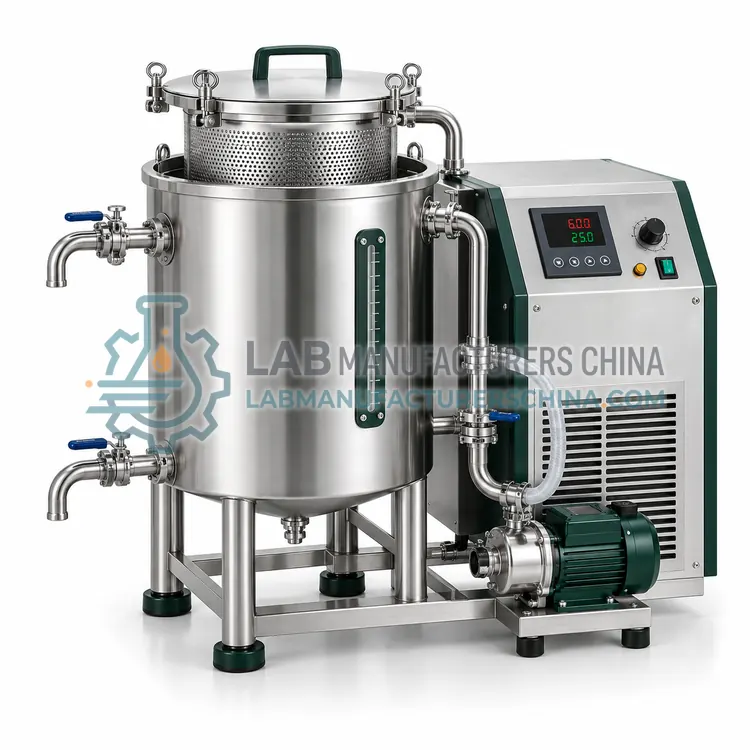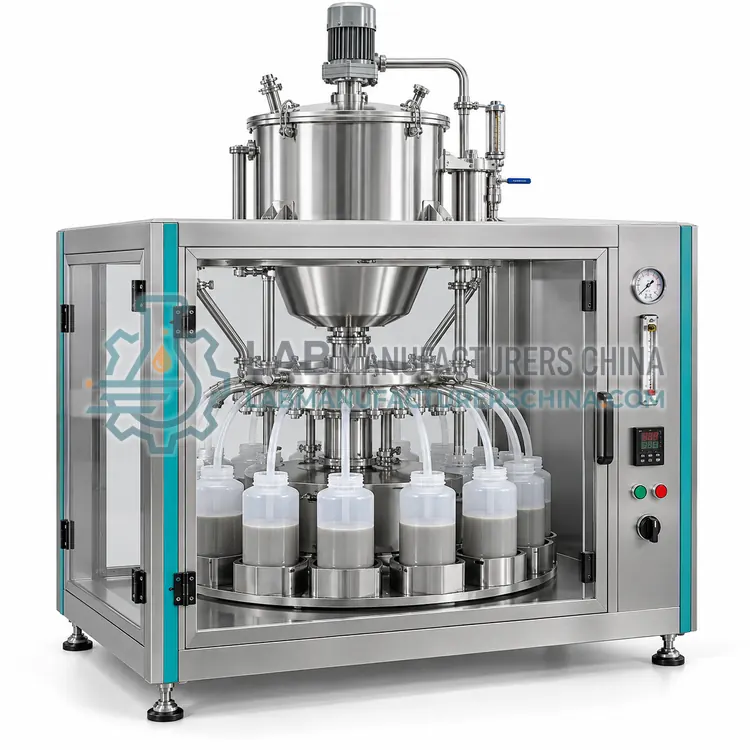
Accelerated Solvent Extractor
加速溶剂萃取仪
- SKU EXT-0002
- Extractors
- CE (to be confirmed)
- ISO 9001 manufacturing (to be confirmed)
Price on request — FOB / CIF quoted per order
Prices depend on configuration, quantity and destination port.
Key specifications
| Cell volume | 1–100 mL |
|---|---|
| Temperature range | 40–200 °C |
| Pressure | Up to 20 MPa |
| Extraction time | 10–30 min per sample |
| Solvent volume | 10–50 mL per sample |
| Static cycles | 1–5 |
Request a quote Download brochure · to be provided
By Lab Manufacturers China Technical TeamLast reviewed Standards: EPA 3540C, EPA 3545A, EPA 3546
What is the Accelerated Solvent Extractor?
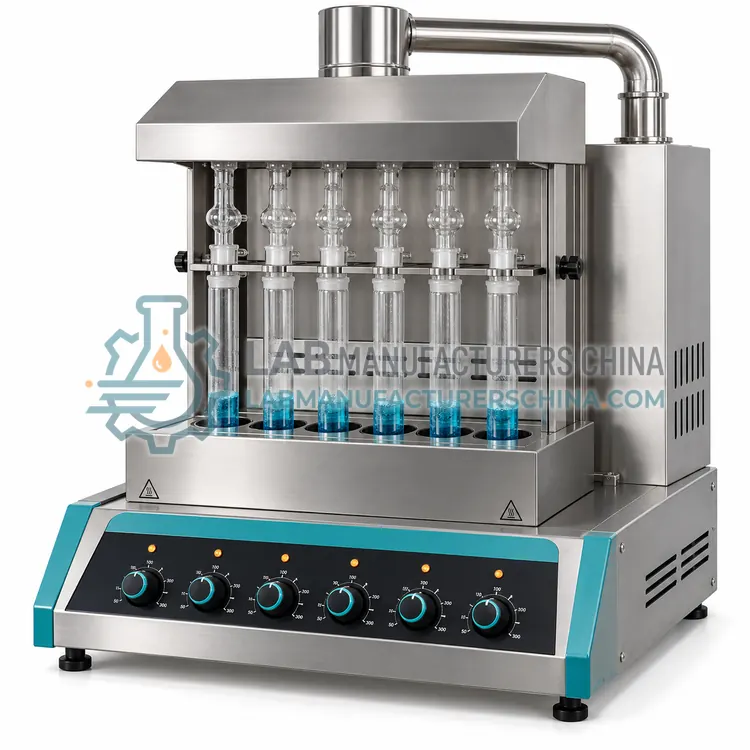
An accelerated solvent extractor uses high temperature and pressure to extract analytes in minutes with little solvent. It is used for environmental, food and polymer samples where fast, efficient extraction is needed.
What is the Accelerated Solvent Extractor?
An accelerated solvent extractor uses high temperature and pressure to extract analytes in minutes with little solvent. It is used for environmental, food and polymer samples where fast, efficient extraction is needed.
Overview
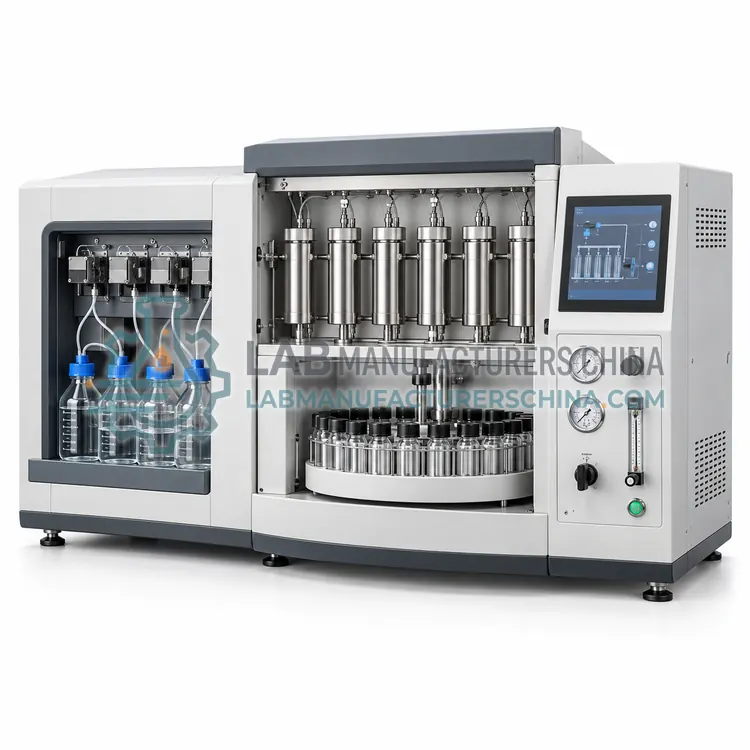
An accelerated solvent extractor fills a stainless steel extraction cell with the sample, pumps solvent into it and heats it under pressure, so the solvent remains liquid above its normal boiling point. Higher temperature increases solubility and diffusion while pressure keeps the solvent in the liquid state and forces it into the matrix pores. After a short static period, the extract is purged into a collection vial, and the cell is rinsed with fresh solvent. The process is automated and repeatable, uses much less solvent than Soxhlet, and suits many environmental and food methods. Cell size, temperature, pressure and cycle count are the main parameters.
How does it work?
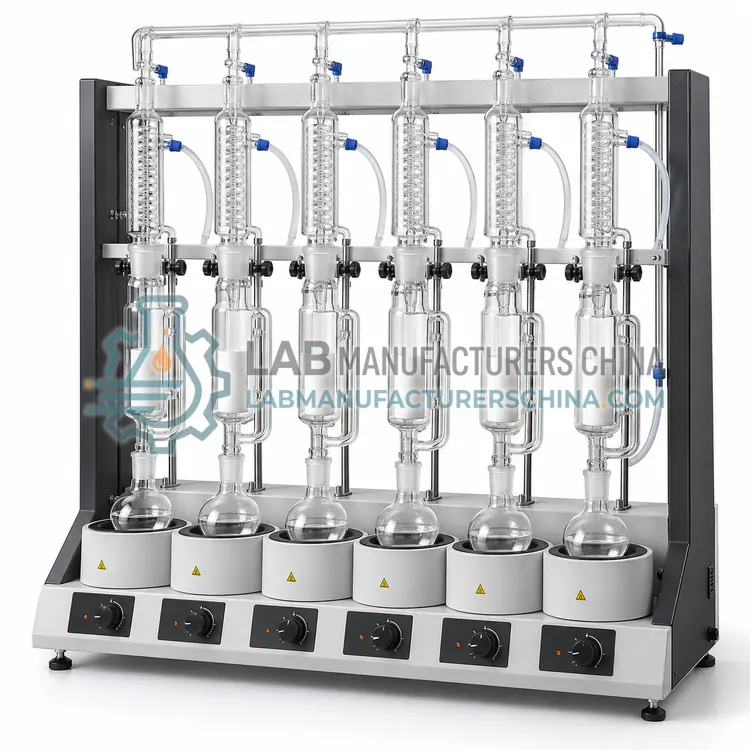
Extraction transfers analytes from a solid or semi-solid matrix into a solvent that can be analyzed or further cleaned. Soxhlet extraction repeatedly cycles condensed solvent through the sample, giving thorough extraction over time. Accelerated solvent extraction uses elevated temperature and pressure to keep the solvent liquid and speed transfer. Supercritical fluid extraction uses carbon dioxide above its critical point, whose low viscosity and high diffusivity penetrate the matrix rapidly and leave little residue. Microwave extraction heats the solvent and sample together, while ultrasonic extraction uses cavitation to disrupt the matrix and improve mass transfer. Temperature, pressure, solvent choice and time determine recovery.
What are the key features?
- High temperature and pressure for fast extraction
- Stainless steel extraction cells
- Automated filling, purging and rinsing
- Low solvent consumption
- Repeatable, programmable extraction cycles
What are the technical specifications?
A typical accelerated solvent extractor configuration offers cell volume of 1–100 mL, temperature range of 40–200 °C, pressure of Up to 20 MPa, extraction time of 10–30 min per sample, solvent volume of 10–50 mL per sample and static cycles of 1–5. Values are indicative of the product class; the exact figures for each configuration are confirmed on the quotation and the calibration documents supplied with the instrument.
Which applications is it used for?
The Accelerated Solvent Extractor is used in environmental organic pollutant extraction, food contaminant and residue analysis, polymer and plastic additive extraction and pharmaceutical sample preparation. Across the wider Extractors class, laboratories also deploy it for fat and oil determination in food, environmental organic pollutant extraction and pharmaceutical and natural product isolation.
Which standards and certifications apply?
Relevant standards and methods include EPA 3540C, EPA 3545A, EPA 3546, ISO 659 and IEC 61010-1. Certification candidates for this model are CE and ISO 9001 manufacturing; each is to be confirmed for the specific configuration before shipment, and certificates are supplied only where they have been issued.
Handle solvents in a fume hood and use the protective equipment specified for the solvent and the extraction conditions. Dry and grind the sample consistently, because moisture and particle size affect penetration and recovery. Optimise and validate temperature, pressure, solvent and time for each matrix, and verify recovery with a certified reference material or a spiked sample. Clean and check seals, vessels and tubing, since leaks waste solvent and can be hazardous at high pressure. Recover or dispose of solvents according to regulations, and record all parameters for traceability.
How do I select the right Accelerated Solvent Extractor?
Choose an accelerated solvent extractor for fast, solvent-efficient extraction of many samples. Confirm the cell volume suits the sample mass, the temperature and pressure meet the method, and the automation matches the throughput. In an RFQ state the matrix, analyte, solvent, sample mass and required number of samples per day.
How does it compare with other Extractors variants?
Choose an extraction technique according to the analyte, the matrix and the required throughput. Soxhlet extraction is the classical reference method and suits fat and oil determination, but it is slow and uses more solvent. Accelerated solvent extraction is faster and uses less solvent, and suits many environmental and food methods. Supercritical fluid extraction is efficient and nearly solvent-free, and suits non-polar and moderately polar analytes. Microwave and ultrasonic extraction are rapid and suit samples where the matrix is easily penetrated. Confirm the achievable recovery, the solvent consumption, the temperature and pressure limits, and whether the system can handle the sample number required.
Full specifications
| Cell volume | 1–100 mL |
|---|---|
| Temperature range | 40–200 °C |
| Pressure | Up to 20 MPa |
| Extraction time | 10–30 min per sample |
| Solvent volume | 10–50 mL per sample |
| Static cycles | 1–5 |
| Cell material | Stainless steel 316 |
| Automation | Automatic cell handling option |
| Solvent recovery | Integrated |
| Power supply | 220–240 V AC |
Indicative values for this product class. Final specifications are confirmed on the quotation and in the calibration documents supplied with the instrument.
Applications
- Environmental organic pollutant extraction
- Food contaminant and residue analysis
- Polymer and plastic additive extraction
- Pharmaceutical sample preparation
Key features
- High temperature and pressure for fast extraction
- Stainless steel extraction cells
- Automated filling, purging and rinsing
- Low solvent consumption
- Repeatable, programmable extraction cycles
Frequently asked questions about Accelerated Solvent Extractor
Pressure keeps the solvent liquid above its normal boiling point, so the extraction can run hot without evaporation, and it forces solvent into the pores of the matrix where analytes are held. The combination of high temperature and pressure shortens extraction time and improves recovery.
Samples are often mixed with a drying agent such as diatomaceous earth to absorb moisture and prevent the cell from blocking, and to improve solvent contact. The dispersant also fills void volume, reducing the solvent needed. Wet samples can be run with appropriate dispersion and method adjustment.
Accelerated solvent extraction is much faster, typically minutes rather than hours, and uses far less solvent. Recovery is comparable for many analytes when the method is optimised. Soxhlet remains the reference in some classical methods, so the required procedure governs the choice.
Soxhlet extraction cycles solvent through the sample at atmospheric pressure and takes hours, but it is the classical reference method. Accelerated solvent extraction uses high temperature and pressure to extract in minutes with less solvent. Both are accepted, and the choice depends on throughput and the method specified.
Smaller particles shorten the distance the solvent must travel to reach the analyte and increase the surface area, so extraction is faster and more complete. However, very fine powder can compact and restrict flow, so a consistent, moderate particle size is preferred and should be reproducible.
Recovery is verified by extracting a certified reference material or a blank sample spiked with a known amount of the analyte and comparing the measured amount with the added amount. Acceptable recovery ranges depend on the method and analyte concentration, and regular checks confirm method performance.
Related models