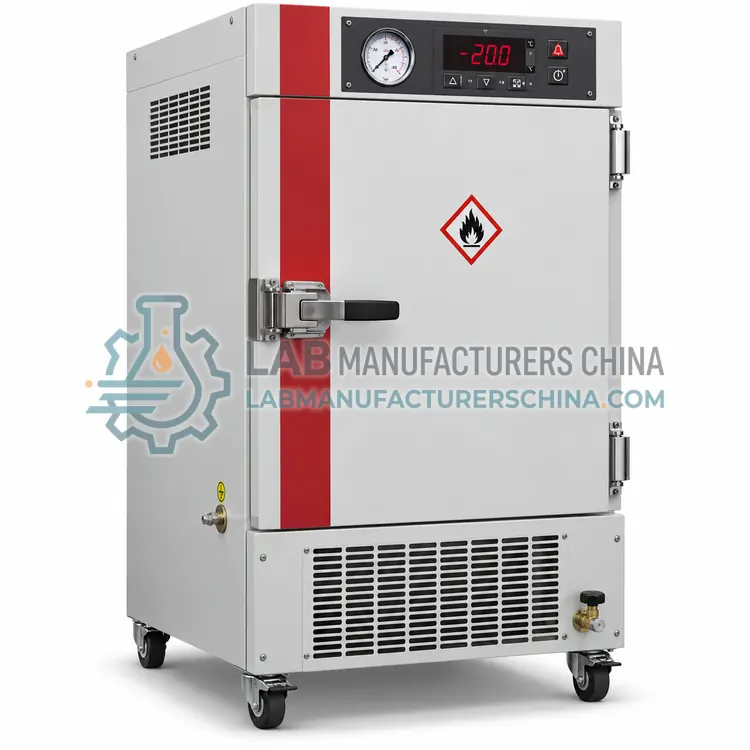
How do -20°C Freezers work?
A –20 °C freezer uses a single-stage vapour-compression circuit with hydrocarbon refrigerant such as R600a or R290. The evaporator either lines the compartment as plates, giving static cooling with high stability and manual defrost, or sits behind a panel with a fan, giving forced-air cooling and automatic defrost. Polyurethane foam of 60–80 mm provides insulation, and magnetic gaskets limit air leakage. A microprocessor controller reads a sensor, sets the temperature between –10 and –25 °C and drives alarms. Higher-specification models add an independent alarm probe, battery backup and a data logger. Spark-free models relocate controls outside the compartment for flammable storage. The temperature reached is sufficient to slow chemical degradation and enzyme activity but does not stop them entirely.
Which -20°C Freezers variants are available?
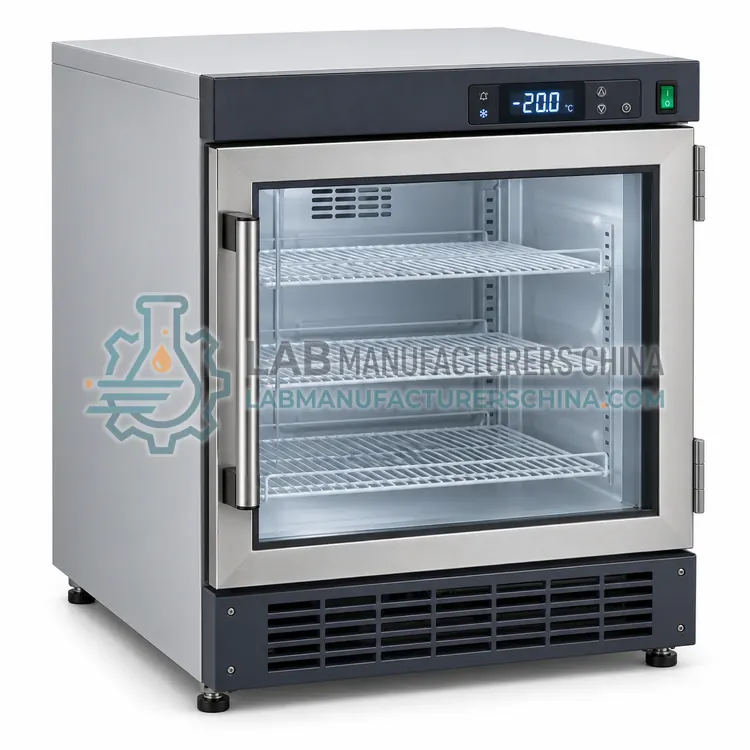
- Undercounter –20 °C Laboratory Freezer — A compact freezer of about 100–150 L that holds –10 to –25 °C beneath a laboratory bench.
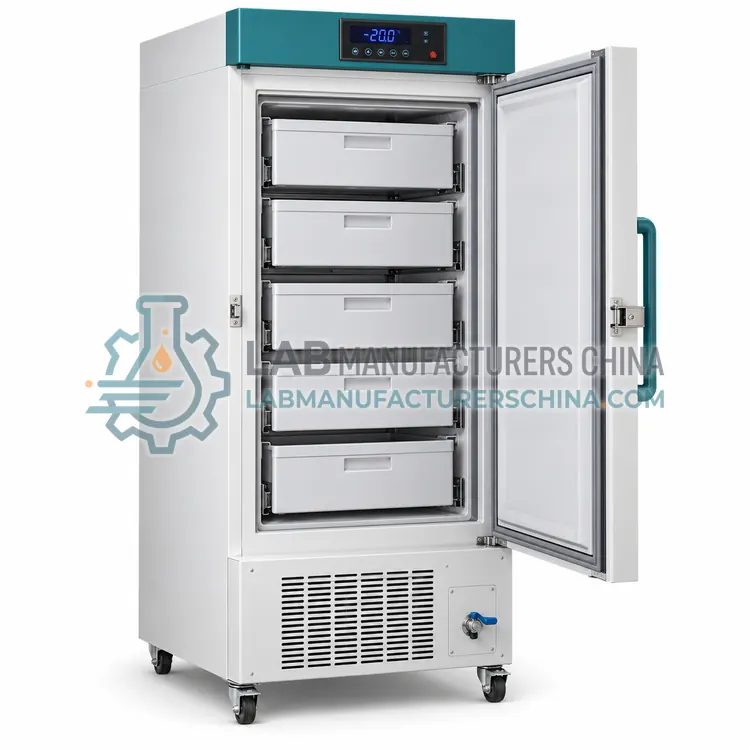
- Upright –20 °C Laboratory Freezer with Drawers — A floor-standing –20 °C freezer of roughly 250–600 L with several drawers or shelves.
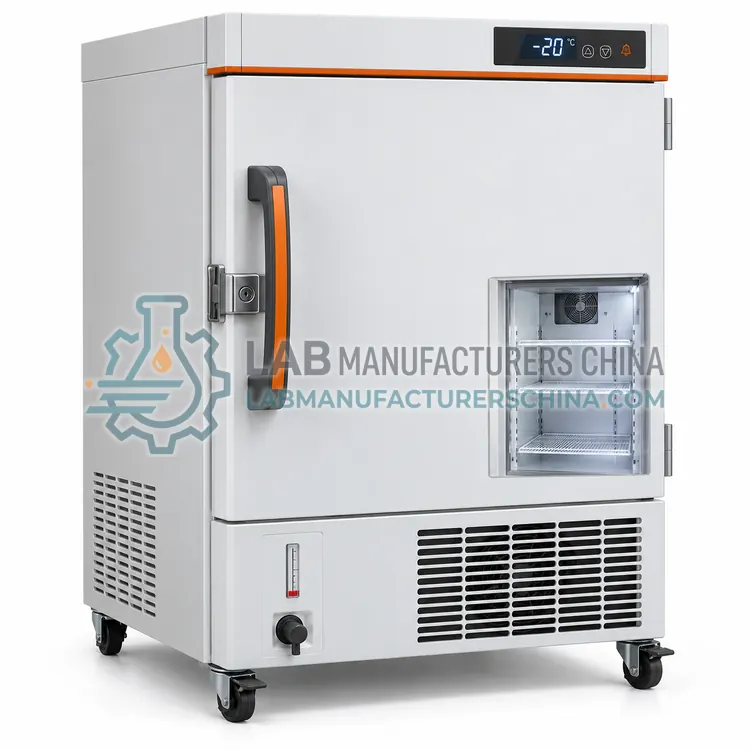
- Frost-Free Upright –20 °C Freezer — An upright –20 °C freezer with forced-air cooling and automatic defrost, removing the need to empty the cabinet for ice removal.
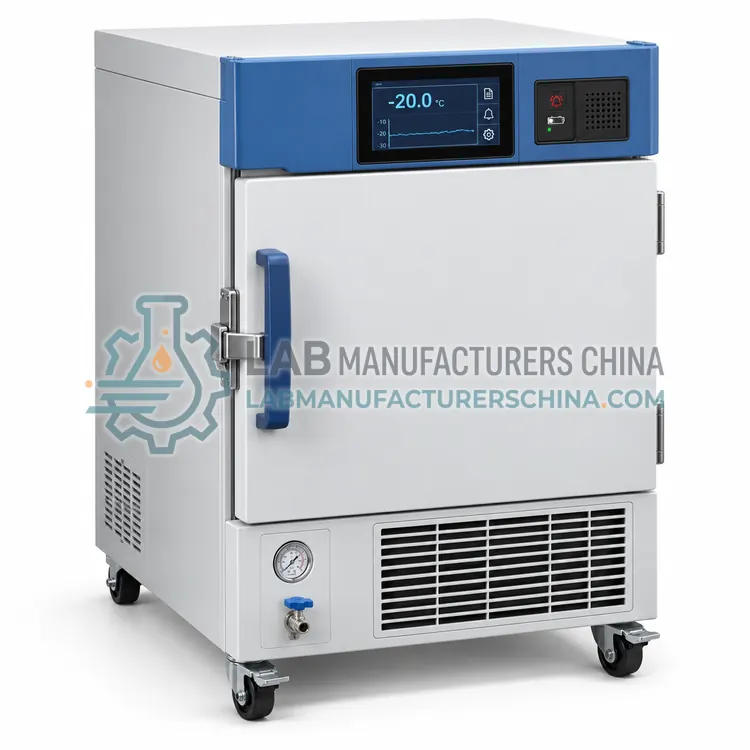
- Biomedical –20 °C Freezer with Backup Alarm and Data Logging — A –20 °C freezer for regulated reagent, kit and sample storage, with tight control, an independent alarm, battery backup and data logging.
- Spark-Free Flammable-Storage –20 °C Freezer — A –20 °C freezer with no sparking parts in the storage compartment, for sealed flammable liquids and reagents that need sub-zero storage.
How do I choose the right variant?
Choose by what is stored and how it tolerates temperature change. Enzymes and sensitive reagents favour static, manual-defrost cabinets, while general chemicals and media suit frost-free models. Regulated kits and calibrators need independent alarms and logging. Flammable materials require spark-free or explosion-proof designs. Then select capacity, from 100 L undercounter to 600 L upright, and compare temperature uniformity, recovery, drawer layout and lock. Check ambient range, electrical supply and noise. Consider whether –20 °C is sufficient, because many biological samples, nucleic acids and tissues are kept at –80 °C for long-term stability, and some vaccines need different storage.
Where are -20°C Freezers used?
-20°C Freezers are specified in enzyme and reagent storage, diagnostic kit storage, culture media and supplements, clinical laboratory stock and teaching laboratories.
Which standards and certifications apply?
Work with -20°C Freezers is commonly governed by IEC 61010-1, IEC 61010-2-011, IEC 61326-1, ISO 15189, NFPA 45 and ISO 9001. Instrument certifications such as CE marking are confirmed per configuration and never assumed.
What are the key considerations before purchase?
Place the freezer on a level floor with clearance for ventilation as specified, away from heat and sunlight, and allow it to run for several hours before loading. Avoid overloading and block-free airflow in fan-assisted models. Defrost static units when frost reaches about 5 mm, and clean the condenser every few months. Calibrate probes and alarms at least annually, and map temperature where storage is regulated. Keep an emergency plan for power failure, including backup freezer space or a generator-backed circuit. Do not store flammable liquids unless the unit is specifically built for it.