How do Seed Purity Equipment work?
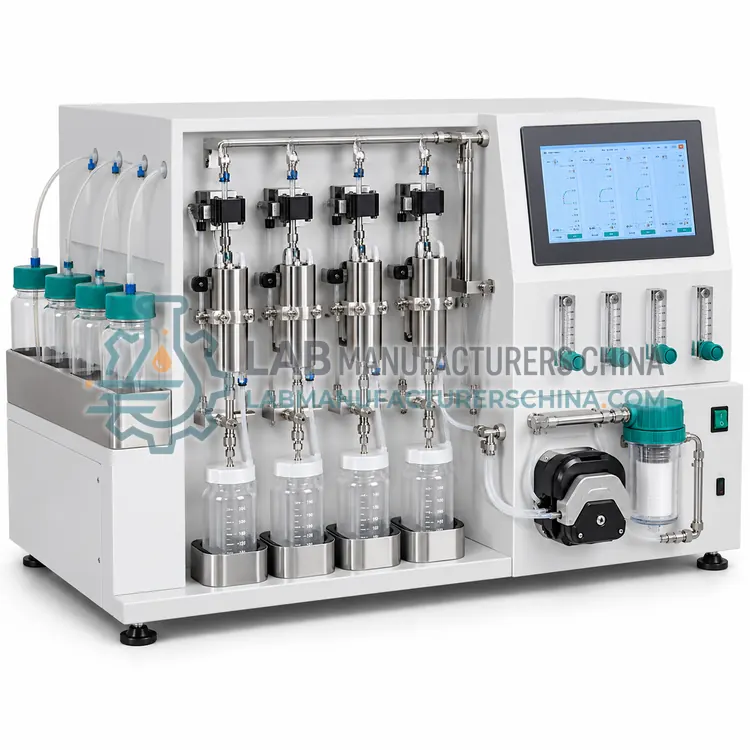
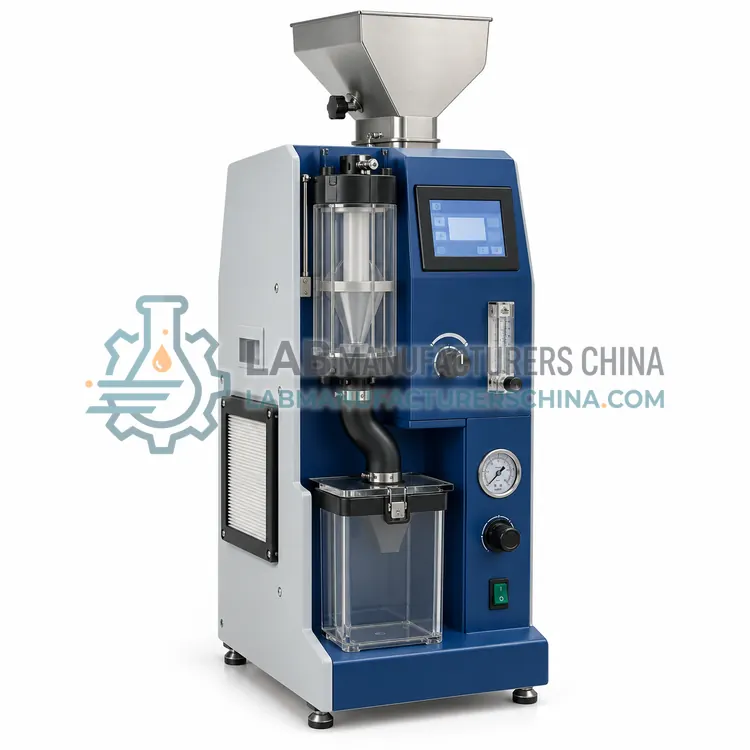
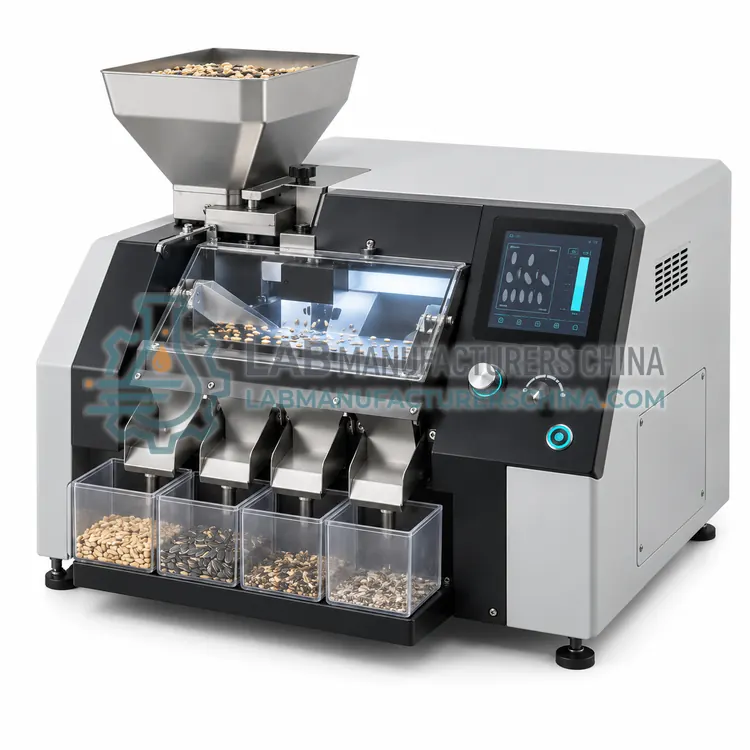
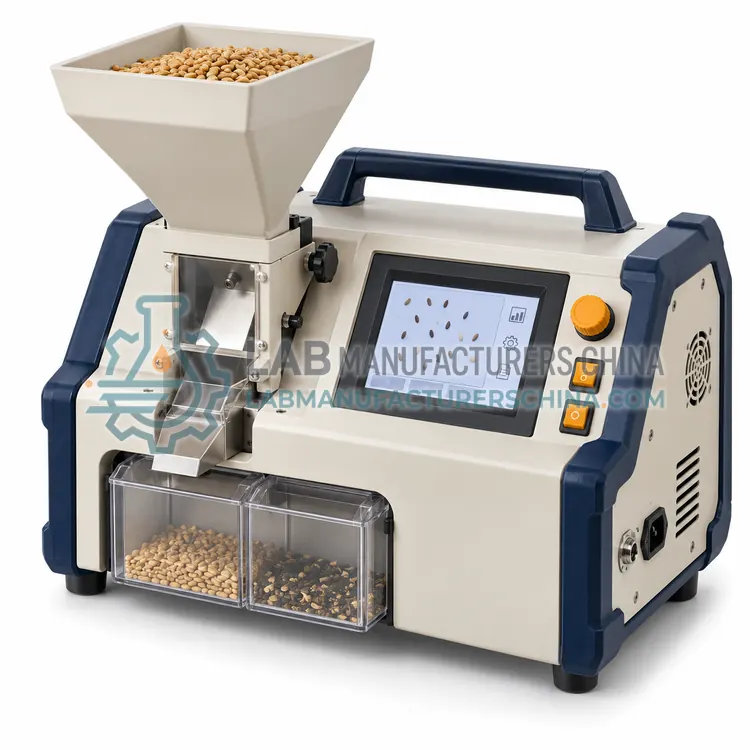
Purity work combines visual examination with mechanical separation. A purity analysis table provides even lighting, a ruled grid, trays and magnifiers so an analyst can identify each particle and weigh the fractions. Seed blowers separate particles by aerodynamic drag, since light chaff and empty seeds are lifted by an air stream at a lower speed than dense, sound seed. Indented cylinder separators trap seeds in pockets according to their length and shape, lifting round or short seeds away from long ones. Electrostatic separators charge seed surfaces and separate those that hold a charge from those that conduct it away, which is useful for removing discoloured, damaged or coated seed. Sieve sets classify by width and thickness, and precision sieves prepare defined size fractions. Together these tools reduce a working sample to fractions that can be weighed and expressed as percentages.
Which Seed Purity Equipment variants are available?
- Seed Purity Analysis Table — A workbench with even lighting, a ruled grid and trays for separating and identifying seed fractions.
- Seed Blower — A device that separates chaff, empty seeds and light material from sound seed with a controlled air stream.
- Indented Cylinder Seed Separator — A separator that lifts seeds by length and roundness using indented pockets in a rotating cylinder.
- Electrostatic Seed Separator — A separator that uses surface charge differences to remove discoloured, damaged or immature seed of the same size as good seed.
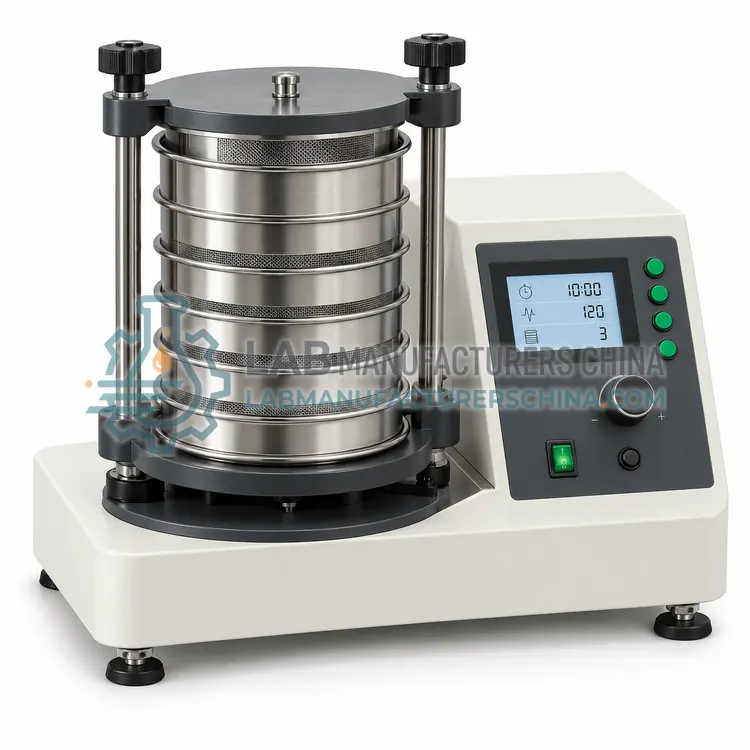
- Precision Seed Sieve Set — A stack of certified sieves that classifies seeds by width and thickness for purity analysis and size grading.
How do I choose the right variant?
Choose equipment based on the species, the fraction to be separated and the volume of work. For the reference purity analysis that produces the reported percentages, the essential tools are an adequately lit purity table, sieves of the required apertures, a blower for chaff and light fractions, and a balance of suitable resolution; almost every laboratory needs these. Indented cylinder separators are added when slender or round seeds must be removed and for cleaning seed lots. Electrostatic separators are selected for removing discoloured, immature or damaged seed of the same size as good seed. Confirm that the working sample mass and sieve apertures match the species requirements in the applicable rules, and that cleaning between samples is practical. Also check the resolution and calibration schedule of the balance, since purity results depend on accurate weighing of each fraction.
Where are Seed Purity Equipment used?
Seed Purity Equipment are specified in seed purity certification testing, seed lot cleaning and upgrading, weed seed contamination checks and seed conditioning plant quality control.
Which standards and certifications apply?
Work with Seed Purity Equipment is commonly governed by ISTA International Rules for Seed Testing (purity), AOSA Rules for Testing Seeds (purity), GB/T 3543.3 (purity analysis), ISO 520 (1000-grain mass) and ISTA Rules (other seed determination). Instrument certifications such as CE marking are confirmed per configuration and never assumed.
What are the key considerations before purchase?
Take the working sample from the submitted sample by proper dividing, because purity results depend on the sample being representative. Follow the rule-defined masses and the order of separation for each species, and work methodically through the fractions so that nothing is lost or double-counted. Keep the purity table clean and the lighting consistent, and use magnifiers or a stereo microscope for difficult identifications. Calibrate and level the balance, and weigh each fraction to the resolution the rules require. Clean sieves, blowers and separators thoroughly between samples to avoid carry-over of small weed seeds, which is a major source of error. Retain fractions or photographs for verification, record species, method and operator, and store the working sample so results can be checked later.