Lab Manufacturers China

Seed Moisture Meters

种子水分测定仪

SMM · Seed Testing Equipment · 5 models

By Lab Manufacturers China Technical TeamLast reviewed Standards: ISTA Rules Chapter 9 (moisture), ISO 712 (cereals moisture), ISO 6540 (maize moisture)

Standards referenced

  • ISTA Rules Chapter 9 (moisture)
  • ISO 712 (cereals moisture)
  • ISO 6540 (maize moisture)
  • AACC Method 44-15A
  • GB/T 3543.6 (seed moisture)

What are Seed Moisture Meters?

Seed moisture meters determine the water content of seeds by capacitance, near-infrared or loss-on-drying methods. They are used by seed testing laboratories, seed companies, storage operators and traders to check that lots are safe for storage, meet contract moisture limits and can be sold or sown at the correct weight.

5 models of Seed Moisture Meters

The 5 models below are current configurations; specifications are confirmed on quotation.

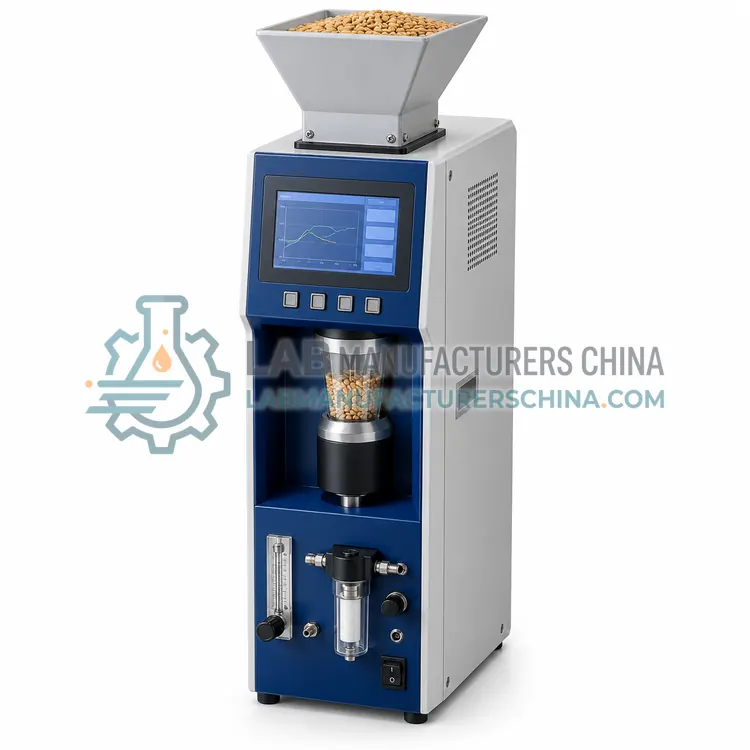
Capacitance Seed Moisture Meter

电容式种子水分仪

  • SMM-0001
  • Seed Moisture Meters
  • CE (to be confirmed)
  • RoHS (to be confirmed)
  • ISO 9001 manufacturing (to be confirmed)
Measurement principle:
Capacitance (dielectric constant)
Moisture range:
5–40%, species dependent
Accuracy:
±0.5% vs oven method
Repeatability:
±0.1%
Measurement time:
3–10 s
Sample volume:
100–500 mL

A meter that reads seed moisture from the dielectric constant of a fixed sample volume. It is the right choice for fast, routine checks of grain and seed lots at intake, in stores and during drying.

Request a quote
View details

Near-Infrared Seed Moisture Meter

近红外种子水分仪

  • SMM-0002
  • Seed Moisture Meters
  • CE (to be confirmed)
  • RoHS (to be confirmed)
  • ISO 9001 manufacturing (to be confirmed)
Measurement principle:
Near-infrared reflectance or transmission
Wavelength range:
900–2200 nm
Moisture range:
5–35%
Accuracy:
±0.3–0.5% vs oven method
Measurement time:
5–30 s
Sample type:
Whole seeds, no grinding

A spectrometer that predicts seed moisture from reflectance or transmission spectra. It is the right choice for non-destructive and rapid moisture measurement of whole intact seeds where a suitable species calibration is available.

Request a quote
View details

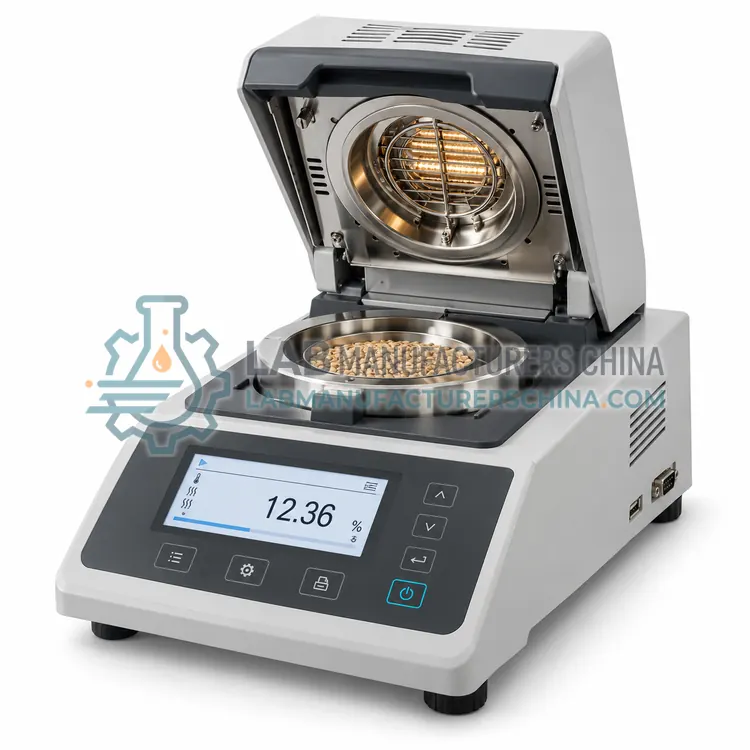
Halogen Loss-on-Drying Seed Moisture Analyzer

卤素干燥失重种子水分分析仪

  • SMM-0003
  • Seed Moisture Meters
  • CE (to be confirmed)
  • RoHS (to be confirmed)
  • ISO 9001 manufacturing (to be confirmed)
Measurement principle:
Halogen or infrared loss on drying
Moisture range:
0.1–100%
Resolution:
0.01%
Readability:
0.001 g
Sample mass:
2–20 g
Drying temperature:
50–200 °C, programmable

A benchtop analyzer that dries a ground seed sample with a halogen heater and reports moisture from the mass loss. It is the right choice for accurate laboratory checks that are faster than the oven method.

Request a quote
View details

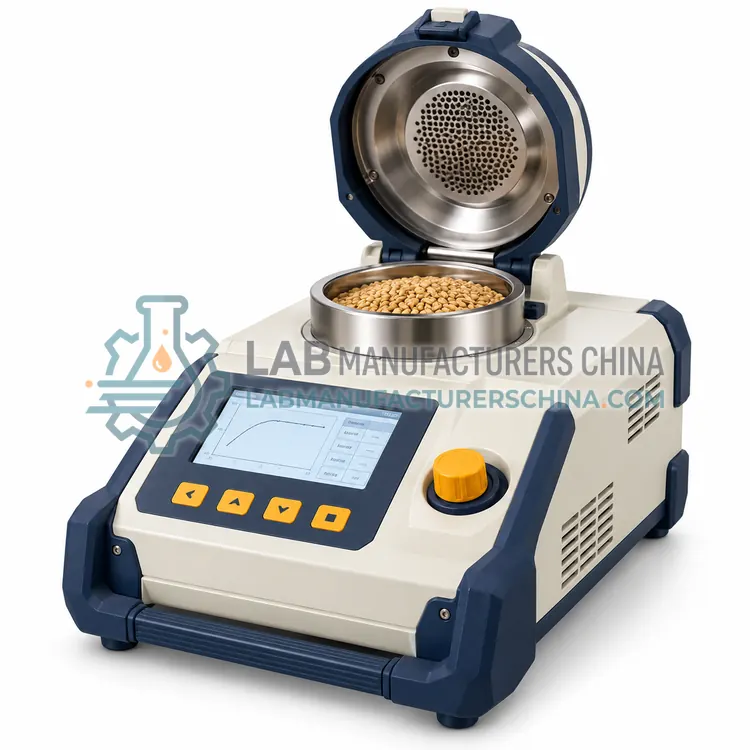
Microwave Seed Moisture Analyzer

微波种子水分分析仪

  • SMM-0004
  • Seed Moisture Meters
  • CE (to be confirmed)
  • RoHS (to be confirmed)
  • ISO 9001 manufacturing (to be confirmed)
Measurement principle:
Microwave loss on drying
Moisture range:
1–40%
Resolution:
0.01%
Sample mass:
50–300 g
Microwave power:
300–1000 W, adjustable
Drying time:
2–10 min

An analyzer that dries seed samples quickly with microwave energy and reports moisture from the mass loss. It is the right choice for fast field or laboratory checks where the oven is too slow and capacitance lacks detail.

Request a quote
View details

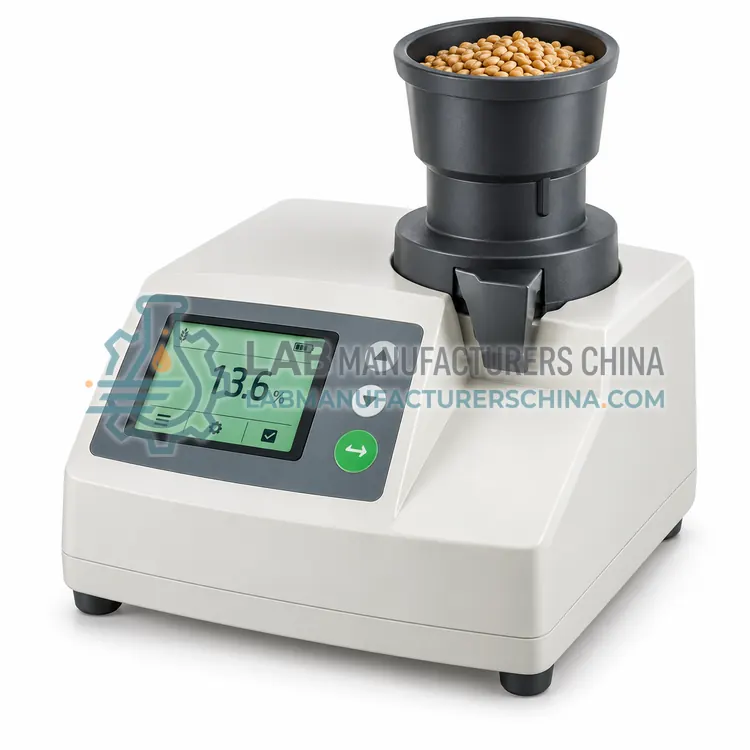
Portable Grain and Seed Moisture Tester

便携式谷物和种子水分测定仪

  • SMM-0005
  • Seed Moisture Meters
  • CE (to be confirmed)
  • RoHS (to be confirmed)
  • ISO 9001 manufacturing (to be confirmed)
Measurement principle:
Capacitance or resistance
Moisture range:
5–40%, species dependent
Accuracy:
±0.5–1.0% vs oven, with calibration
Repeatability:
±0.2%
Measurement time:
3–10 s
Sample volume:
100–500 mL

A battery-powered meter for on-the-spot moisture checks in the field, warehouse or drying facility. It is the right choice for growers and storekeepers who need immediate results to make drying and storage decisions.

Request a quote
View details

Compare Seed Moisture Meters models

ModelMeasurement principleMoisture rangeAccuracyRepeatabilityMeasurement time
Capacitance Seed Moisture MeterSMM-0001Capacitance (dielectric constant)5–40%, species dependent±0.5% vs oven method±0.1%3–10 s
Near-Infrared Seed Moisture MeterSMM-0002Near-infrared reflectance or transmission5–35%±0.3–0.5% vs oven method—5–30 s
Halogen Loss-on-Drying Seed Moisture AnalyzerSMM-0003Halogen or infrared loss on drying0.1–100%———
Microwave Seed Moisture AnalyzerSMM-0004Microwave loss on drying1–40%———
Portable Grain and Seed Moisture TesterSMM-0005Capacitance or resistance5–40%, species dependent±0.5–1.0% vs oven, with calibration±0.2%3–10 s

Indicative values for this product class. Final specifications are confirmed on the quotation and in the calibration documents supplied with the instrument.

How do Seed Moisture Meters work?

Moisture meters exploit the difference between water and dry matter. Capacitance meters place a fixed volume of seed in an electric field and measure the dielectric constant, which rises strongly with water content, converting the value to moisture percentage through a calibration specific to species, variety and temperature. Near-infrared meters measure reflectance or transmission and predict moisture from spectra, again using species-specific models. Loss-on-drying analyzers, using halogen, infrared or microwave heating, weigh the sample, dry it until the mass is stable and calculate the water driven off, which is the reference approach. Results may be expressed on a wet basis, the water fraction of the fresh sample, or a dry basis, which is needed for some standards. Equilibrium between the seed and the surrounding air means samples must be sealed and analysed quickly.

Which Seed Moisture Meters variants are available?

  • Capacitance Seed Moisture Meter — A meter that reads seed moisture from the dielectric constant of a fixed sample volume.
  • Near-Infrared Seed Moisture Meter — A spectrometer that predicts seed moisture from reflectance or transmission spectra.
  • Halogen Loss-on-Drying Seed Moisture Analyzer — A benchtop analyzer that dries a ground seed sample with a halogen heater and reports moisture from the mass loss.
  • Microwave Seed Moisture Analyzer — An analyzer that dries seed samples quickly with microwave energy and reports moisture from the mass loss.
  • Portable Grain and Seed Moisture Tester — A battery-powered meter for on-the-spot moisture checks in the field, warehouse or drying facility.

How do I choose the right variant?

Select the method according to the standard and the required accuracy. When a result must be reported under ISTA, national seed rules or a contract, use the oven procedure specified in the method, and use a meter only for screening or process control. For rapid checks on many lots, choose a capacitance or near-infrared instrument with a calibration for the exact species and variety group, and verify it against the oven method. Nominal capacitance readings are strongly affected by temperature and fill volume, so temperature compensation and consistent sample filling are essential. Near-infrared instruments need representative, clean samples and periodic bias adjustment. For oily seeds, small seeds and coated seed, confirm that a calibration exists. Consider portability, data export and sample throughput when many lots are checked daily.

Where are Seed Moisture Meters used?

Seed Moisture Meters are specified in seed lot storage safety assessment, trade contract moisture compliance, drying and conditioning control and sowing weight and rate calculation.

Which standards and certifications apply?

Work with Seed Moisture Meters is commonly governed by ISTA Rules Chapter 9 (moisture), ISO 712 (cereals moisture), ISO 6540 (maize moisture), AACC Method 44-15A and GB/T 3543.6 (seed moisture). Instrument certifications such as CE marking are confirmed per configuration and never assumed.

What are the key considerations before purchase?

Seal samples in moisture-tight containers immediately after sampling and analyse within the time the method allows, because seeds exchange water with ambient air. Fill capacitance meters to the correct volume, use the species calibration and record the sample temperature. For oven methods, control temperature, time and grinding exactly as specified, and cool samples in a desiccator before weighing to the required resolution. Verify meters against the oven method for each species and season, and keep a reference sample for checks. Avoid measuring seed that has been in a warm room for a long time without equilibration, since surface drying gives a low reading. Record species, variety, calibration used and result basis, and maintain the instrument's temperature sensor and balance on a calibration schedule.

Frequently asked questions about Seed Moisture Meters

Wet basis expresses water as a percentage of the fresh sample mass, while dry basis expresses it as a percentage of the dry matter. Trade and most seed rules use wet basis, but some standards and research report dry basis, so the basis must always be stated.

Need help specifying Seed Moisture Meters?

Request a quote