Near-Infrared Seed Moisture Meter
近红外种子水分仪
- SKU SMM-0002
- Seed Moisture Meters
- CE (to be confirmed)
- RoHS (to be confirmed)
- ISO 9001 manufacturing (to be confirmed)
Price on request — FOB / CIF quoted per order
Prices depend on configuration, quantity and destination port.
Key specifications
| Measurement principle | Near-infrared reflectance or transmission |
|---|---|
| Wavelength range | 900–2200 nm |
| Moisture range | 5–35% |
| Accuracy | ±0.3–0.5% vs oven method |
| Measurement time | 5–30 s |
| Sample type | Whole seeds, no grinding |
Request a quote Download brochure · to be provided
By Lab Manufacturers China Technical TeamLast reviewed Standards: ISTA Rules Chapter 9 (moisture), ISO 712 (cereals moisture), ISO 6540 (maize moisture)
What is the Near-Infrared Seed Moisture Meter?
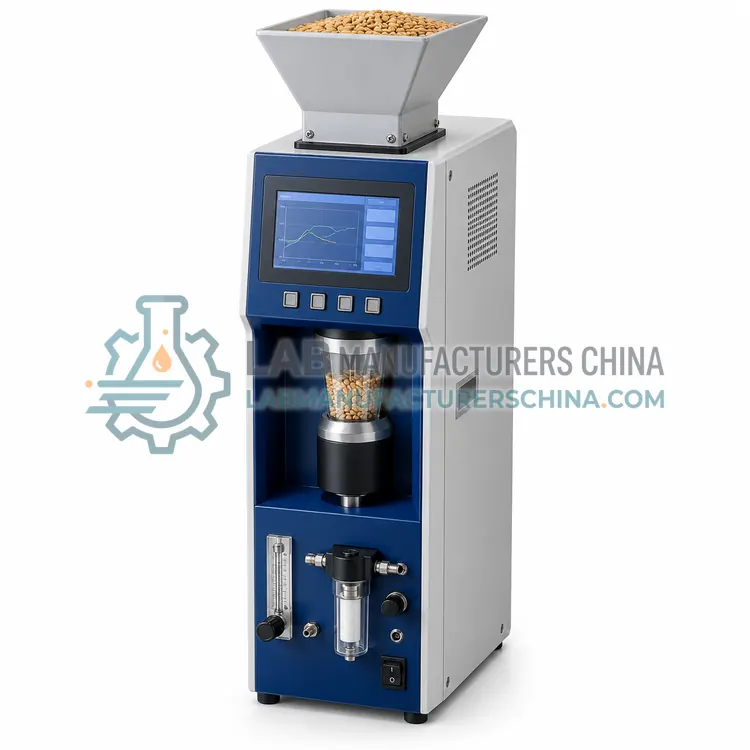
A spectrometer that predicts seed moisture from reflectance or transmission spectra. It is the right choice for non-destructive and rapid moisture measurement of whole intact seeds where a suitable species calibration is available.
What is the Near-Infrared Seed Moisture Meter?
A spectrometer that predicts seed moisture from reflectance or transmission spectra. It is the right choice for non-destructive and rapid moisture measurement of whole intact seeds where a suitable species calibration is available.
Overview
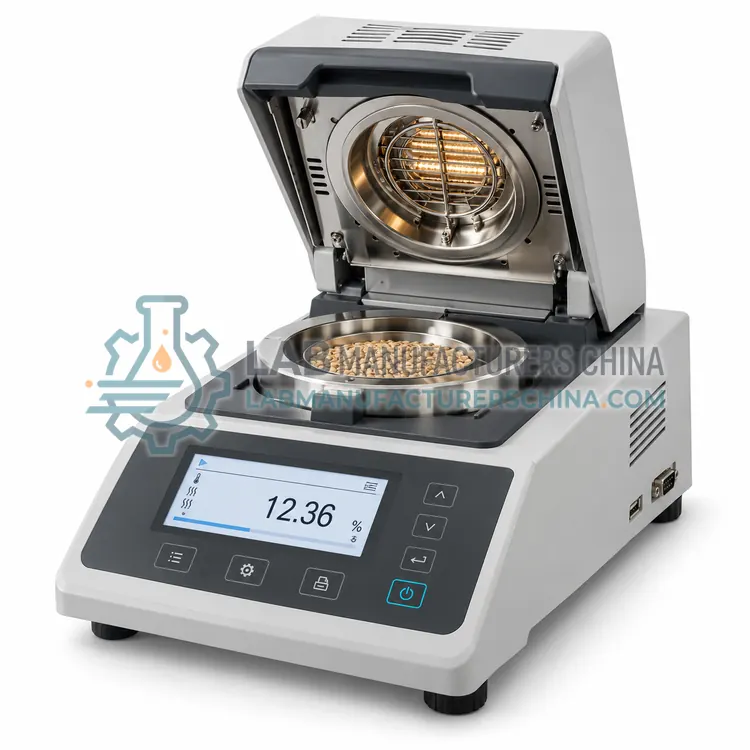
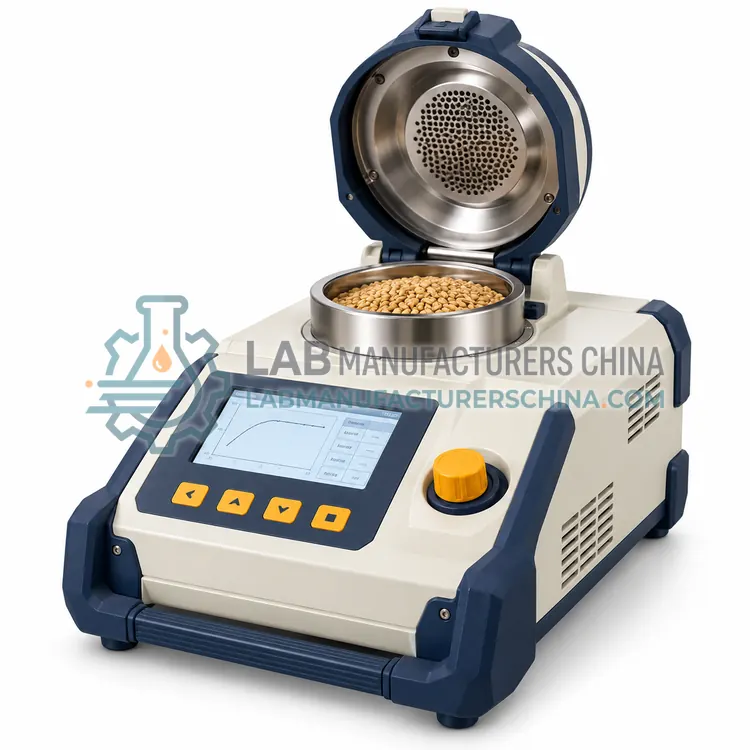
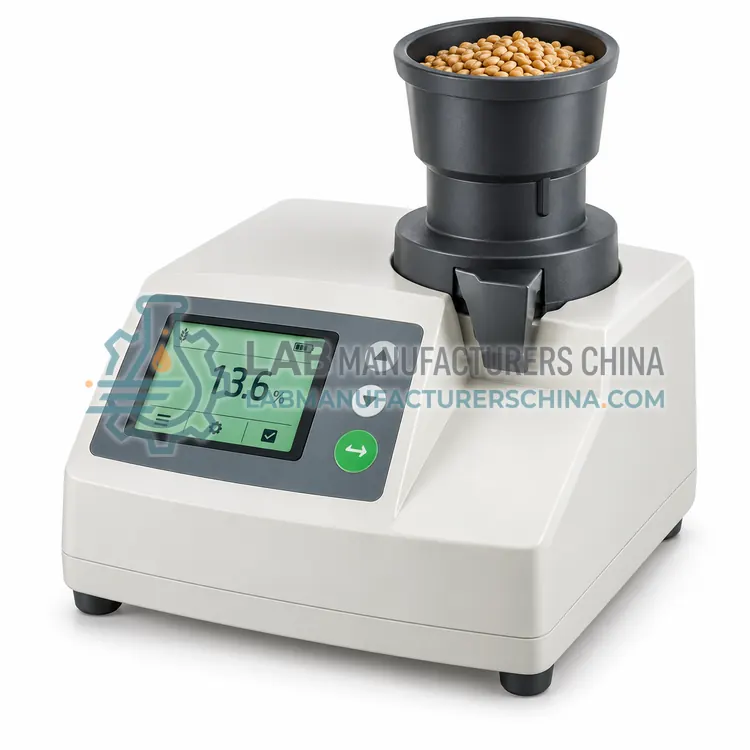
The near-infrared moisture meter shines light onto or through whole seeds and measures the absorption bands of water, chiefly around 1450 and 1940 nanometres, and applies a calibration model to predict moisture content. Measurement takes a few seconds and leaves the seeds intact, so the same sample can be used for germination or purity tests afterwards, which is valuable when seed is scarce or expensive. Models are developed from samples whose moisture was determined by the oven method, and they are species and often variety specific because seed size, coat and composition alter the spectra. Instruments may use a hopper for flowing grain or a sample cup for small lots. Grinding is not required, but sample presentation and temperature must be controlled, and the instrument must be verified with reference samples. Results are normally reported on a wet basis and can be exported for lot records.
How does it work?
Moisture meters exploit the difference between water and dry matter. Capacitance meters place a fixed volume of seed in an electric field and measure the dielectric constant, which rises strongly with water content, converting the value to moisture percentage through a calibration specific to species, variety and temperature. Near-infrared meters measure reflectance or transmission and predict moisture from spectra, again using species-specific models. Loss-on-drying analyzers, using halogen, infrared or microwave heating, weigh the sample, dry it until the mass is stable and calculate the water driven off, which is the reference approach. Results may be expressed on a wet basis, the water fraction of the fresh sample, or a dry basis, which is needed for some standards. Equilibrium between the seed and the surrounding air means samples must be sealed and analysed quickly.
What are the key features?
- Non-destructive measurement leaves seeds intact for other tests.
- Reading in seconds suits frequent lot checks.
- Species-specific calibrations are built from oven reference data.
- Whole-seed measurement needs no grinding or sample destruction.
- Results export for lot records and trading documents.
- Hopper or cup presentation adapts to large or small samples.
What are the technical specifications?
A typical near-infrared seed moisture meter configuration offers measurement principle of Near-infrared reflectance or transmission, wavelength range of 900–2200 nm, moisture range of 5–35%, accuracy of ±0.3–0.5% vs oven method, measurement time of 5–30 s and sample type of Whole seeds, no grinding. Values are indicative of the product class; the exact figures for each configuration are confirmed on the quotation and the calibration documents supplied with the instrument.
Which applications is it used for?
The Near-Infrared Seed Moisture Meter is used in non-destructive seed lot checks, high-value seed quality control, breeding seed moisture screening and storage and drying monitoring. Across the wider Seed Moisture Meters class, laboratories also deploy it for seed lot storage safety assessment, trade contract moisture compliance and drying and conditioning control.
Which standards and certifications apply?
Relevant standards and methods include ISTA Rules Chapter 9 (moisture), ISO 712 (cereals moisture), ISO 6540 (maize moisture), AACC Method 44-15A and GB/T 3543.6 (seed moisture). Certification candidates for this model are CE, RoHS and ISO 9001 manufacturing; each is to be confirmed for the specific configuration before shipment, and certificates are supplied only where they have been issued.
Seal samples in moisture-tight containers immediately after sampling and analyse within the time the method allows, because seeds exchange water with ambient air. Fill capacitance meters to the correct volume, use the species calibration and record the sample temperature. For oven methods, control temperature, time and grinding exactly as specified, and cool samples in a desiccator before weighing to the required resolution. Verify meters against the oven method for each species and season, and keep a reference sample for checks. Avoid measuring seed that has been in a warm room for a long time without equilibration, since surface drying gives a low reading. Record species, variety, calibration used and result basis, and maintain the instrument's temperature sensor and balance on a calibration schedule.
How do I select the right Near-Infrared Seed Moisture Meter?
Select the near-infrared meter when seeds must remain intact or when many species and lots are handled and calibrations cover them. For reference reporting, the oven method is still required. In an RFQ, specify species, required accuracy, sample volume and data export.
How does it compare with other Seed Moisture Meters variants?
Select the method according to the standard and the required accuracy. When a result must be reported under ISTA, national seed rules or a contract, use the oven procedure specified in the method, and use a meter only for screening or process control. For rapid checks on many lots, choose a capacitance or near-infrared instrument with a calibration for the exact species and variety group, and verify it against the oven method. Nominal capacitance readings are strongly affected by temperature and fill volume, so temperature compensation and consistent sample filling are essential. Near-infrared instruments need representative, clean samples and periodic bias adjustment. For oily seeds, small seeds and coated seed, confirm that a calibration exists. Consider portability, data export and sample throughput when many lots are checked daily.
Full specifications
| Measurement principle | Near-infrared reflectance or transmission |
|---|---|
| Wavelength range | 900–2200 nm |
| Moisture range | 5–35% |
| Accuracy | ±0.3–0.5% vs oven method |
| Measurement time | 5–30 s |
| Sample type | Whole seeds, no grinding |
| Sample volume | 50–500 mL |
| Calibration | Species-specific, oven based |
| Outputs | USB, Ethernet, LIMS export |
| Power supply | Battery or mains |
| Operating temperature | 5–40 °C |
Indicative values for this product class. Final specifications are confirmed on the quotation and in the calibration documents supplied with the instrument.
Applications
- Non-destructive seed lot checks
- High-value seed quality control
- Breeding seed moisture screening
- Storage and drying monitoring
Key features
- Non-destructive measurement leaves seeds intact for other tests.
- Reading in seconds suits frequent lot checks.
- Species-specific calibrations are built from oven reference data.
- Whole-seed measurement needs no grinding or sample destruction.
- Results export for lot records and trading documents.
- Hopper or cup presentation adapts to large or small samples.
Frequently asked questions about Near-Infrared Seed Moisture Meter
No. Light exposure is brief and does not affect viability, so measured seeds can still be used for germination, purity or sowing. This is a major advantage over oven methods, which consume the sample.
Seed size, coat thickness, oil content and colour change how light is scattered and absorbed, so a model built for one species will not predict moisture accurately in another. Calibrations also need verification after variety changes or several seasons of use.
Measure a set of samples spanning the moisture range with both the near-infrared meter and the oven method, and calculate the bias and standard error. Repeat the check periodically and whenever the sample presentation or environment changes.
Wet basis expresses water as a percentage of the fresh sample mass, while dry basis expresses it as a percentage of the dry matter. Trade and most seed rules use wet basis, but some standards and research report dry basis, so the basis must always be stated.
Seeds continuously exchange water with the air and reach an equilibrium with ambient humidity. If a sample is left open, it gains or loses water, so the measured value no longer represents the lot at sampling. Sealed analysis within the allowed time avoids this error.
Compare it with the oven reference method for each species, using samples spanning the working moisture range, and calculate the average bias and scatter. Repeat the check each season and after repair or calibration changes, adjusting the meter if bias exceeds tolerance.
Related models