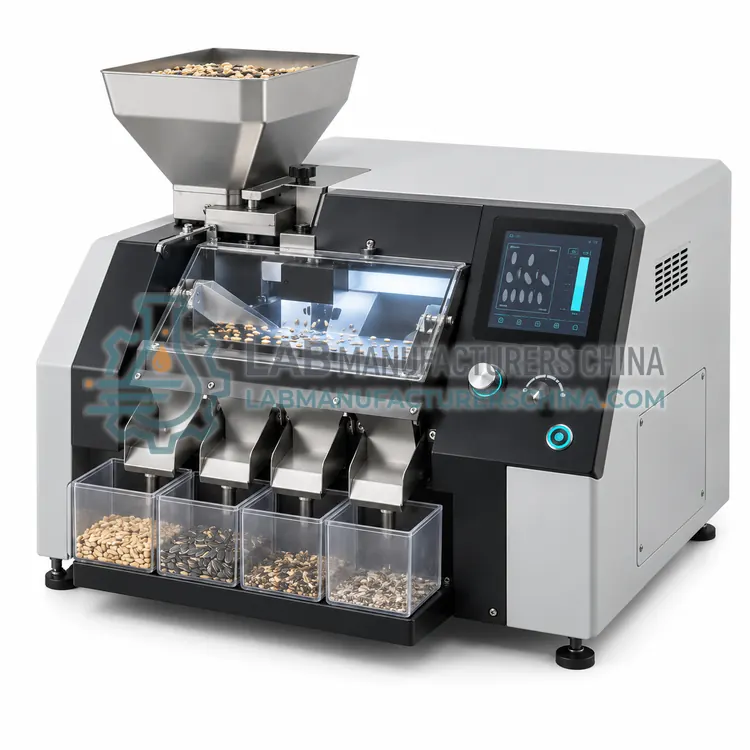
Indented Cylinder Seed Separator
窝眼筒种子分离机
- SKU SEE-0003
- Seed Purity Equipment
- CE (to be confirmed)
- ISO 9001 manufacturing (to be confirmed)
Price on request — FOB / CIF quoted per order
Prices depend on configuration, quantity and destination port.
Key specifications
| Separating principle | Indented pocket cylinders |
|---|---|
| Pocket diameters | 1.5–12 mm, interchangeable |
| Cylinder speed | 20–60 rpm, adjustable |
| Inclination | Adjustable |
| Throughput | 20–500 kg/h |
| Sample mass | 100 g–10 kg |
Request a quote Download brochure · to be provided
By Lab Manufacturers China Technical TeamLast reviewed Standards: ISTA International Rules for Seed Testing (purity), AOSA Rules for Testing Seeds (purity), GB/T 3543.3 (purity analysis)
What is the Indented Cylinder Seed Separator?
A separator that lifts seeds by length and roundness using indented pockets in a rotating cylinder. It is the right choice for removing round weed seeds, broken grains and short impurities from seed lots and working samples.
What is the Indented Cylinder Seed Separator?
A separator that lifts seeds by length and roundness using indented pockets in a rotating cylinder. It is the right choice for removing round weed seeds, broken grains and short impurities from seed lots and working samples.
Overview
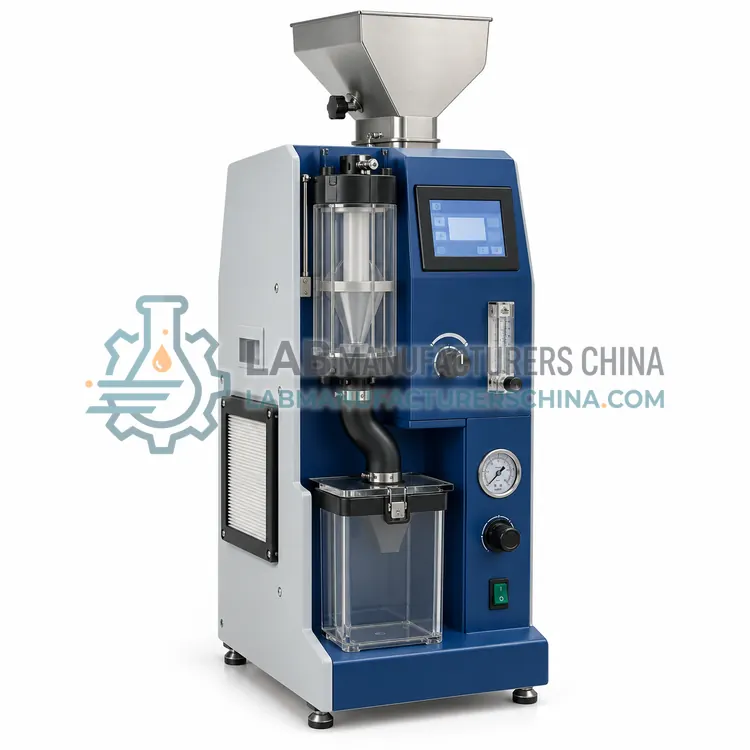
The indented cylinder separator uses a slightly inclined rotating cylinder whose inner surface is covered with pockets of a defined diameter. Seeds that fit the pockets are lifted as the cylinder turns until gravity drops them into a collecting trough, while longer or larger seeds slide along the cylinder and exit separately. By choosing the pocket diameter, seeds can be separated by length, which no sieve can do. This makes the machine valuable for removing round weed seeds such as wild mustard from cereals, for recovering clean grain from screenings and for preparing specific fractions for purity analysis. Cylinder speed, inclination and pocket size are adjusted to suit the species, and the recovered fractions are collected for inspection. Cleaning the pockets between samples is important because small seeds lodge in them, and worn or damaged cylinders reduce efficiency.
How does it work?
Purity work combines visual examination with mechanical separation. A purity analysis table provides even lighting, a ruled grid, trays and magnifiers so an analyst can identify each particle and weigh the fractions. Seed blowers separate particles by aerodynamic drag, since light chaff and empty seeds are lifted by an air stream at a lower speed than dense, sound seed. Indented cylinder separators trap seeds in pockets according to their length and shape, lifting round or short seeds away from long ones. Electrostatic separators charge seed surfaces and separate those that hold a charge from those that conduct it away, which is useful for removing discoloured, damaged or coated seed. Sieve sets classify by width and thickness, and precision sieves prepare defined size fractions. Together these tools reduce a working sample to fractions that can be weighed and expressed as percentages.
What are the key features?
- Separates seeds by length, which sieves cannot do.
- Interchangeable cylinders with different pocket diameters.
- Adjustable speed and inclination suit different species.
- Recovers clean grain from screenings.
- Removes round weed seeds and broken grains.
- Collects separated fractions for inspection.
What are the technical specifications?
A typical indented cylinder seed separator configuration offers separating principle of Indented pocket cylinders, pocket diameters of 1.5–12 mm, interchangeable, cylinder speed of 20–60 rpm, adjustable, inclination of Adjustable, throughput of 20–500 kg/h and sample mass of 100 g–10 kg. Values are indicative of the product class; the exact figures for each configuration are confirmed on the quotation and the calibration documents supplied with the instrument.
Which applications is it used for?
The Indented Cylinder Seed Separator is used in round weed seed removal, clean grain recovery from screenings, seed lot upgrading and length-based fraction preparation. Across the wider Seed Purity Equipment class, laboratories also deploy it for seed purity certification testing, seed lot cleaning and upgrading and weed seed contamination checks.
Which standards and certifications apply?
Relevant standards and methods include ISTA International Rules for Seed Testing (purity), AOSA Rules for Testing Seeds (purity), GB/T 3543.3 (purity analysis), ISO 520 (1000-grain mass) and ISTA Rules (other seed determination). Certification candidates for this model are CE and ISO 9001 manufacturing; each is to be confirmed for the specific configuration before shipment, and certificates are supplied only where they have been issued.
Take the working sample from the submitted sample by proper dividing, because purity results depend on the sample being representative. Follow the rule-defined masses and the order of separation for each species, and work methodically through the fractions so that nothing is lost or double-counted. Keep the purity table clean and the lighting consistent, and use magnifiers or a stereo microscope for difficult identifications. Calibrate and level the balance, and weigh each fraction to the resolution the rules require. Clean sieves, blowers and separators thoroughly between samples to avoid carry-over of small weed seeds, which is a major source of error. Retain fractions or photographs for verification, record species, method and operator, and store the working sample so results can be checked later.
How do I select the right Indented Cylinder Seed Separator?
Select the indented cylinder separator when separation by length or roundness is needed, which the purity analysis workflow and seed conditioning both require. For width and thickness separation, use sieves. In an RFQ, specify the species, pocket diameters, throughput and whether sample or production scale is needed.
How does it compare with other Seed Purity Equipment variants?
Choose equipment based on the species, the fraction to be separated and the volume of work. For the reference purity analysis that produces the reported percentages, the essential tools are an adequately lit purity table, sieves of the required apertures, a blower for chaff and light fractions, and a balance of suitable resolution; almost every laboratory needs these. Indented cylinder separators are added when slender or round seeds must be removed and for cleaning seed lots. Electrostatic separators are selected for removing discoloured, immature or damaged seed of the same size as good seed. Confirm that the working sample mass and sieve apertures match the species requirements in the applicable rules, and that cleaning between samples is practical. Also check the resolution and calibration schedule of the balance, since purity results depend on accurate weighing of each fraction.
Full specifications
| Separating principle | Indented pocket cylinders |
|---|---|
| Pocket diameters | 1.5–12 mm, interchangeable |
| Cylinder speed | 20–60 rpm, adjustable |
| Inclination | Adjustable |
| Throughput | 20–500 kg/h |
| Sample mass | 100 g–10 kg |
| Cylinder material | Sheet steel or stainless steel |
| Trough adjustment | Adjustable position |
| Power supply | 220 or 380 VAC, 50 Hz |
| Operating temperature | 5–40 °C |
| Maintenance | Clean pockets between samples |
Indicative values for this product class. Final specifications are confirmed on the quotation and in the calibration documents supplied with the instrument.
Applications
- Round weed seed removal
- Clean grain recovery from screenings
- Seed lot upgrading
- Length-based fraction preparation
Key features
- Separates seeds by length, which sieves cannot do.
- Interchangeable cylinders with different pocket diameters.
- Adjustable speed and inclination suit different species.
- Recovers clean grain from screenings.
- Removes round weed seeds and broken grains.
- Collects separated fractions for inspection.
Frequently asked questions about Indented Cylinder Seed Separator
Match the pocket to the size of the seeds to be removed: the pockets must capture the unwanted round or short seeds while allowing the retained seed to slide past. Trial runs and inspection of the fractions confirm the choice.
A sieve sorts particles by the smallest cross-section that can pass the aperture, which relates to width or thickness, not length. A long thin seed and a short round one of the same width both pass, so length separation needs pockets.
Worn or deformed pockets, incorrect speed, too steep an inclination and overloading all reduce separation. Pockets clogged with small seeds are a common cause, so cleaning after each sample keeps performance stable.
The working sample is separated into pure seed of the test species, other crop seed, weed seed and inert matter, and each fraction is weighed and expressed as a percentage. The fractions must total one hundred percent within the tolerance set by the rules.
An air stream lifts light particles, empty seeds and chaff while dense, sound seed stays in the container. By adjusting the airflow, the operator removes the light fraction in a controlled and repeatable way, reducing manual work before visual examination.
It is used when seeds must be separated by length or roundness, for example removing round weed seeds from wheat or separating broken grains. Pockets of a defined diameter capture matching seeds and lift them out of the main flow.
Related models