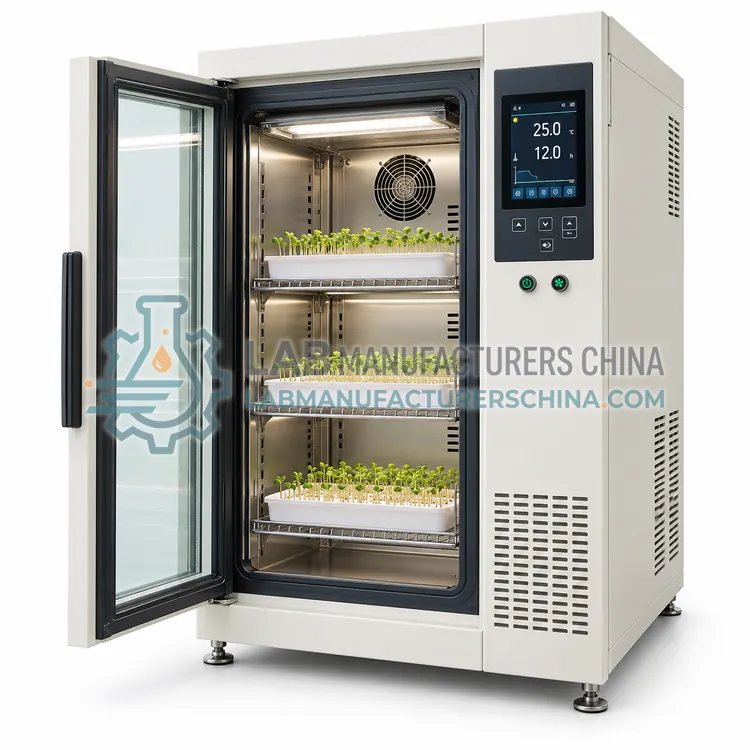
How do Seed Germinators work?
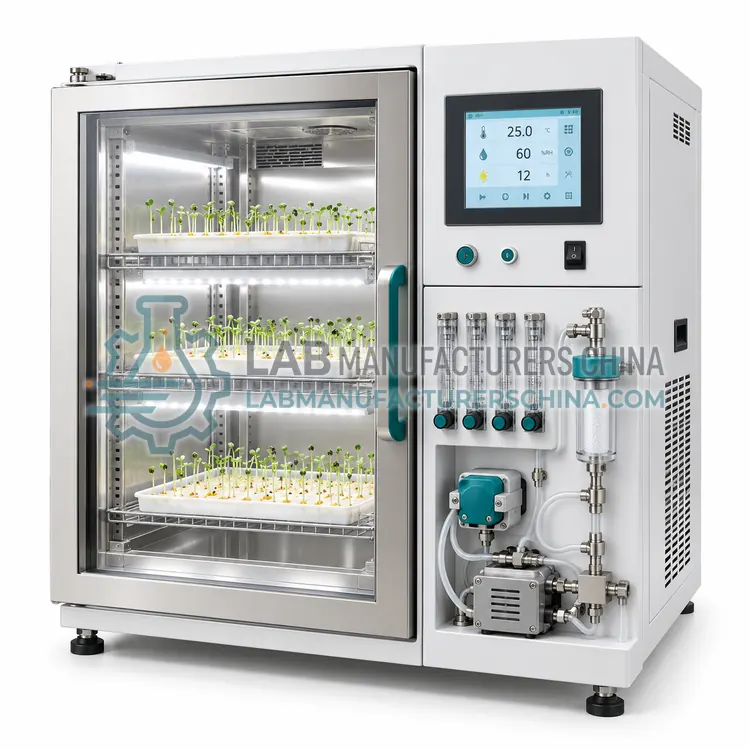
A germinator maintains a defined microclimate around germination substrates such as paper, sand or soil. A heating and cooling system holds temperature at the value or alternating programme required by the species, with cooling needed for species that need a cold period or a night-time drop. Humidity is controlled by wetting the substrate and by managing air circulation, and excess condensation is drained or ventilated away. Lighting is provided by fluorescent or LED lamps with timers so that a photoperiod, often eight or sixteen hours, can be applied. Air is circulated gently to keep temperature uniform and to supply oxygen while avoiding drying. Samples are placed on trays or in boxes according to the standard method, and counts of normal and abnormal seedlings are made after the prescribed periods. Uniformity, temperature accuracy and light quality are the key performance factors.
Which Seed Germinators variants are available?
- Illuminated Seed Germination Chamber — A benchtop chamber with controlled temperature, light and humidity for routine standard germination tests.
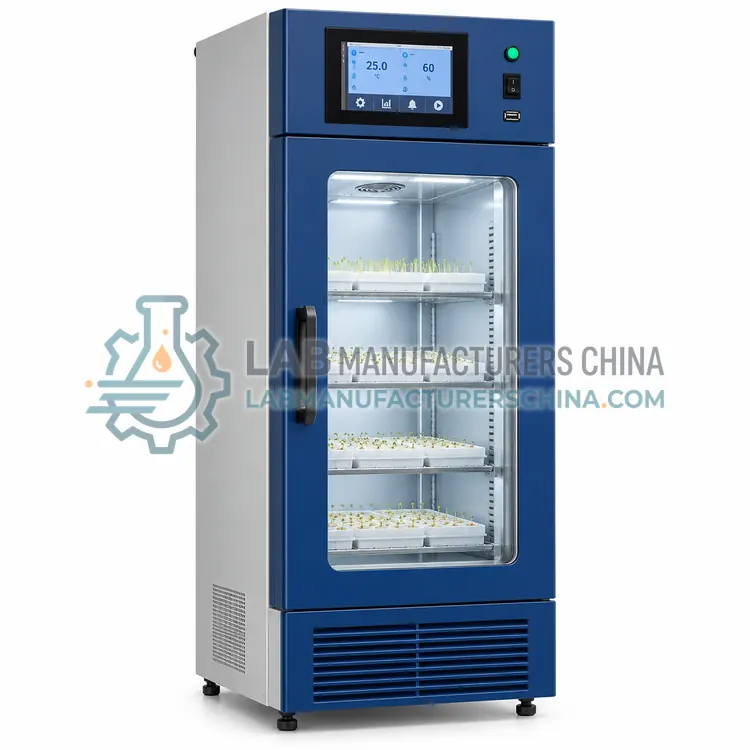
- Seed Germination Incubator — A temperature-controlled cabinet designed for germination tests that do not require any light.
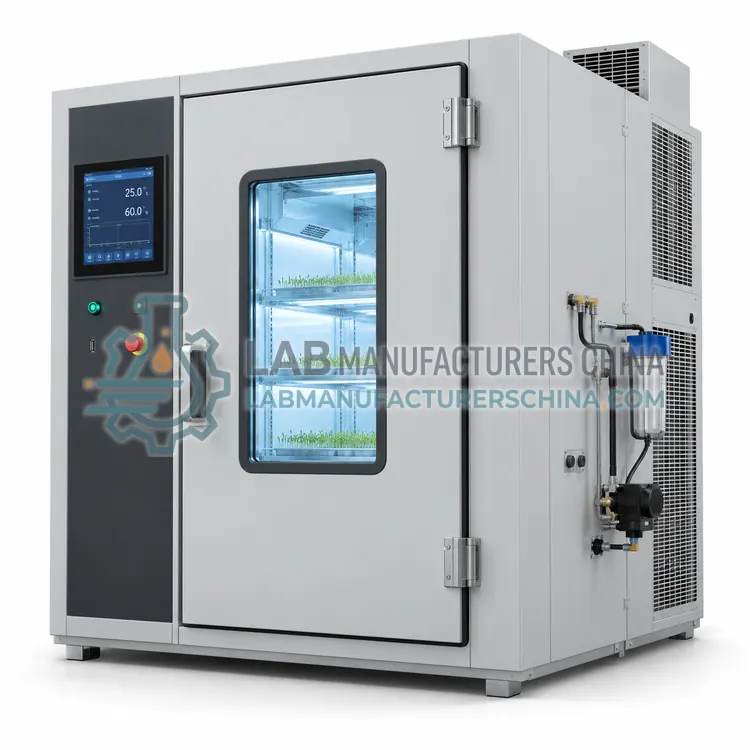
- Walk-In Germination Room — A full-size controlled-environment room that holds several hundred germination trays for routine large-scale testing.
- Seedling Growth Chamber — A controlled-environment chamber with higher light output for growing seedlings and young plants to a stage suitable for assessment.
- Alternating-Temperature Germination Cabinet — A cabinet that cycles between day and night temperatures to break dormancy and meet species-specific germination requirements.
How do I choose the right variant?
Begin with the species and the standard method, because these define the temperature programme, light requirement and duration. Species needing alternating temperatures require a chamber with both heating and cooling, while many tropical species need only a constant warm temperature. Choose between a benchtop chamber for small sample numbers and a walk-in room for large routine testing, and check the usable volume after trays and boxes are loaded, not just the external size. Confirm temperature uniformity across the chamber, as corners and door areas are often cooler, and verify that the control system can log and alarm. Humidity control and condensation management matter for paper methods, where drying biases results. Lighting must meet the required intensity and spectral quality, and lamp ageing should be monitored. Consider data logging, calibration access and cleaning between tests to prevent contamination.
Where are Seed Germinators used?
Seed Germinators are specified in seed germination testing, seedling vigour assessment, breeding line germination screening and phytosanitary and quarantine testing.
Which standards and certifications apply?
Work with Seed Germinators is commonly governed by ISTA Rules Chapter 5 (germination), AOSA Rules for Testing Seeds, GB/T 3543.4 (germination test), ISO 11269-2 and ISO 18763. Instrument certifications such as CE marking are confirmed per configuration and never assumed.
What are the key considerations before purchase?
Install the chamber on a level surface with clearance for air circulation and door opening, and away from direct sun and heat sources. Calibrate the temperature sensor against a reference thermometer at several points and intervals, and record uniformity and stability as part of quality control. Use only clean, appropriate germination substrate and hydration, and avoid overfilling so that air can circulate. Do not open the door more than necessary, because each opening disturbs temperature and light and can delay germination. Clean and disinfect trays and interiors between tests to prevent mould and cross-contamination, and replace aging lamps when intensity falls below the specification. Keep records of settings, sample identity and counts for each test, and follow the applicable seed testing rules for evaluation.