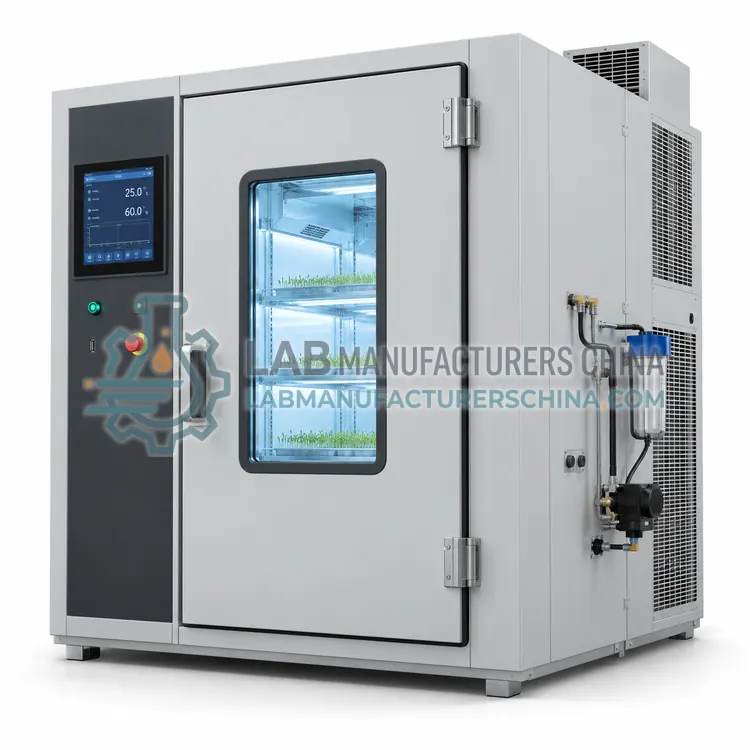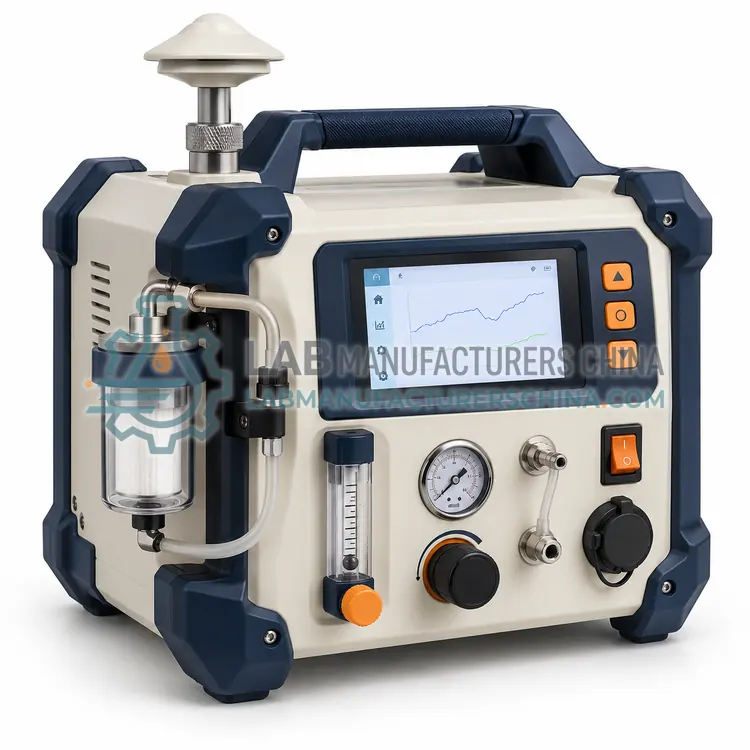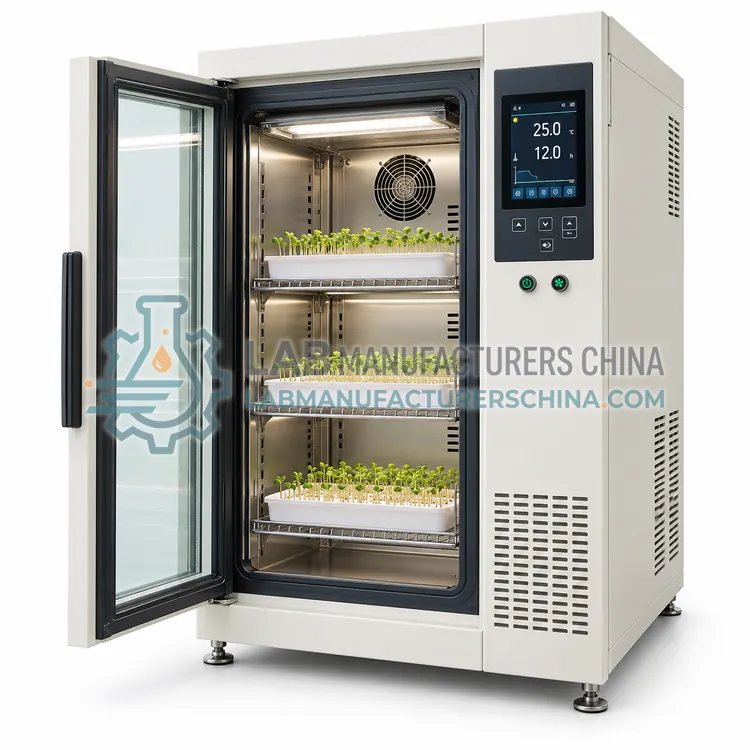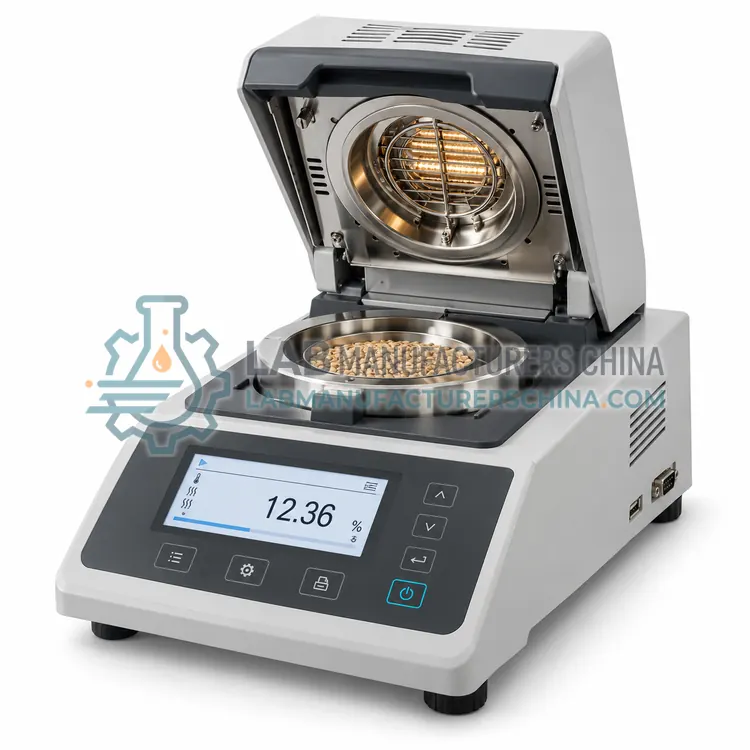
Seed Germination Incubator
种子发芽培养箱
- SKU SEG-0002
- Seed Germinators
- CE (to be confirmed)
- RoHS (to be confirmed)
- ISO 9001 manufacturing (to be confirmed)
Price on request — FOB / CIF quoted per order
Prices depend on configuration, quantity and destination port.
Key specifications
| Temperature range | 0–60 °C, with cooling |
|---|---|
| Temperature accuracy | ±0.3 °C |
| Temperature uniformity | ±0.8 °C |
| Alternating programme | Programmable, up to 10 steps |
| Usable volume | 100–1000 L |
| Shelves | 4–10 tiers |
Request a quote Download brochure · to be provided
By Lab Manufacturers China Technical TeamLast reviewed Standards: ISTA Rules Chapter 5 (germination), AOSA Rules for Testing Seeds, GB/T 3543.4 (germination test)
What is the Seed Germination Incubator?
A temperature-controlled cabinet designed for germination tests that do not require any light. It is the right choice for dark-germinating species and for high-capacity routine seed counting in busy seed testing laboratories.
What is the Seed Germination Incubator?
A temperature-controlled cabinet designed for germination tests that do not require any light. It is the right choice for dark-germinating species and for high-capacity routine seed counting in busy seed testing laboratories.
Overview
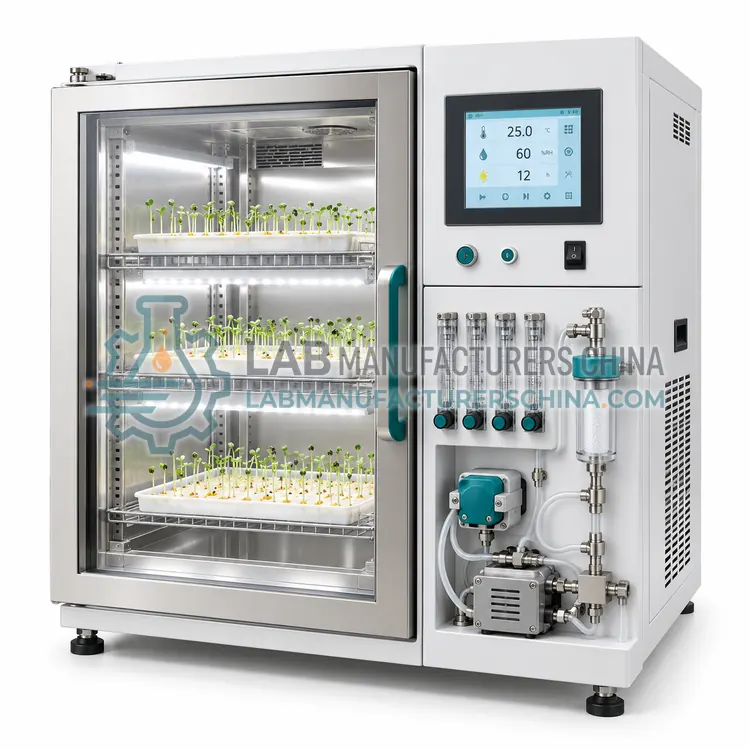
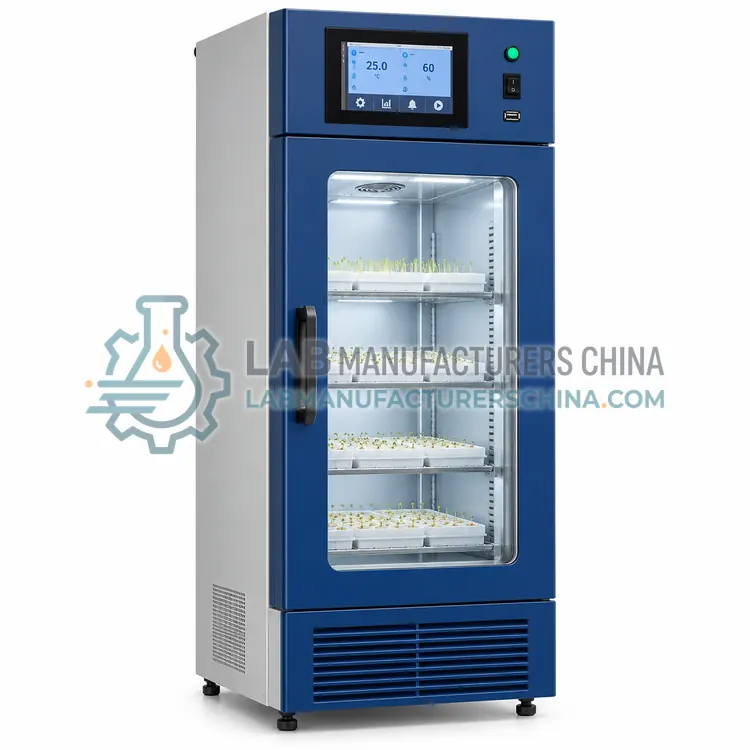
The germination incubator provides precise, uniform temperature in a simple cabinet without a lighting system, and is loaded with germination boxes, petri dishes or rolled paper towels. Because many standard test species germinate in darkness or need light only for specified periods, an incubator can serve a large part of routine testing and costs less than an illuminated chamber of the same volume. Cooling is included so that the chamber can hold temperatures near or below ambient and run alternating programmes for species that need a night-time drop. Forced air circulation keeps all shelves at the same temperature, and a transparent or insulated door limits heat loss during counting. Stackable and multi-door configurations increase capacity in limited floor space. Temperature records and alarms support the documentation required by seed testing rules, and a calibration port allows the sensor to be checked in place.
How does it work?
A germinator maintains a defined microclimate around germination substrates such as paper, sand or soil. A heating and cooling system holds temperature at the value or alternating programme required by the species, with cooling needed for species that need a cold period or a night-time drop. Humidity is controlled by wetting the substrate and by managing air circulation, and excess condensation is drained or ventilated away. Lighting is provided by fluorescent or LED lamps with timers so that a photoperiod, often eight or sixteen hours, can be applied. Air is circulated gently to keep temperature uniform and to supply oxygen while avoiding drying. Samples are placed on trays or in boxes according to the standard method, and counts of normal and abnormal seedlings are made after the prescribed periods. Uniformity, temperature accuracy and light quality are the key performance factors.
What are the key features?
- Precise temperature control without lighting reduces cost.
- Cooling allows near-ambient and alternating temperature programmes.
- Forced air circulation keeps all shelves uniform.
- Stackable or multi-door design raises capacity in small spaces.
- Temperature logging and alarms support quality records.
- Calibration port allows in-place sensor checks.
What are the technical specifications?
A typical seed germination incubator configuration offers temperature range of 0–60 °C, with cooling, temperature accuracy of ±0.3 °C, temperature uniformity of ±0.8 °C, alternating programme of Programmable, up to 10 steps, usable volume of 100–1000 L and shelves of 4–10 tiers. Values are indicative of the product class; the exact figures for each configuration are confirmed on the quotation and the calibration documents supplied with the instrument.
Which applications is it used for?
The Seed Germination Incubator is used in dark-germinating species testing, high-volume routine germination, cold stratification treatments and seed lot quality control. Across the wider Seed Germinators class, laboratories also deploy it for seed germination testing, seedling vigour assessment and breeding line germination screening.
Which standards and certifications apply?
Relevant standards and methods include ISTA Rules Chapter 5 (germination), AOSA Rules for Testing Seeds, GB/T 3543.4 (germination test), ISO 11269-2 and ISO 18763. Certification candidates for this model are CE, RoHS and ISO 9001 manufacturing; each is to be confirmed for the specific configuration before shipment, and certificates are supplied only where they have been issued.
Install the chamber on a level surface with clearance for air circulation and door opening, and away from direct sun and heat sources. Calibrate the temperature sensor against a reference thermometer at several points and intervals, and record uniformity and stability as part of quality control. Use only clean, appropriate germination substrate and hydration, and avoid overfilling so that air can circulate. Do not open the door more than necessary, because each opening disturbs temperature and light and can delay germination. Clean and disinfect trays and interiors between tests to prevent mould and cross-contamination, and replace aging lamps when intensity falls below the specification. Keep records of settings, sample identity and counts for each test, and follow the applicable seed testing rules for evaluation.
How do I select the right Seed Germination Incubator?
Select the incubator when light is not required for the species or method and when capacity and cost matter more than illumination. Where light-sensitive species dominate, an illuminated chamber is needed. In an RFQ, specify temperature range and programme, usable volume and whether stacking or multi-door access is required.
How does it compare with other Seed Germinators variants?
Begin with the species and the standard method, because these define the temperature programme, light requirement and duration. Species needing alternating temperatures require a chamber with both heating and cooling, while many tropical species need only a constant warm temperature. Choose between a benchtop chamber for small sample numbers and a walk-in room for large routine testing, and check the usable volume after trays and boxes are loaded, not just the external size. Confirm temperature uniformity across the chamber, as corners and door areas are often cooler, and verify that the control system can log and alarm. Humidity control and condensation management matter for paper methods, where drying biases results. Lighting must meet the required intensity and spectral quality, and lamp ageing should be monitored. Consider data logging, calibration access and cleaning between tests to prevent contamination.
Full specifications
| Temperature range | 0–60 °C, with cooling |
|---|---|
| Temperature accuracy | ±0.3 °C |
| Temperature uniformity | ±0.8 °C |
| Alternating programme | Programmable, up to 10 steps |
| Usable volume | 100–1000 L |
| Shelves | 4–10 tiers |
| Air circulation | Forced, low draught |
| Data logging | Continuous temperature record |
| Alarm | High and low deviation |
| Power supply | 220 VAC, 50 Hz |
| Configuration | Single, double door or stackable |
Indicative values for this product class. Final specifications are confirmed on the quotation and in the calibration documents supplied with the instrument.
Applications
- Dark-germinating species testing
- High-volume routine germination
- Cold stratification treatments
- Seed lot quality control
Key features
- Precise temperature control without lighting reduces cost.
- Cooling allows near-ambient and alternating temperature programmes.
- Forced air circulation keeps all shelves uniform.
- Stackable or multi-door design raises capacity in small spaces.
- Temperature logging and alarms support quality records.
- Calibration port allows in-place sensor checks.
Frequently asked questions about Seed Germination Incubator
Not for tests that specify a photoperiod, because there is no light source. Some dark-germinating species and pre-treatments are suitable, but light-sensitive species must be placed in an illuminated chamber or fitted with a lighting accessory.
Cooling lets the chamber run below room temperature and hold alternating programmes with a cool night step, which many temperate and perennial species require. It also keeps conditions stable in a warm laboratory.
A calibrated reference thermometer or data logger is inserted through the calibration port or placed on a shelf and compared over a full temperature cycle. Uniformity checks at several shelf positions are repeated periodically and after service.
Many temperate species use a day and night temperature difference as a signal that they are near the surface and that conditions favour establishment, so germination is promoted by a thermoperiod such as 20 and 30 degrees. Constant temperature can leave such seeds dormant.
Place calibrated sensors or a reference thermometer at several points, including corners and near the door, and log readings over a full cycle. Uniformity within about one degree is usually required by seed testing rules for germination work.
Seed testing rules specify a light intensity and photoperiod for species whose germination is light-sensitive, so chambers need controllable fluorescent or LED lighting with timers. Light quality also affects seedling development and normal seedling classification.
Related models