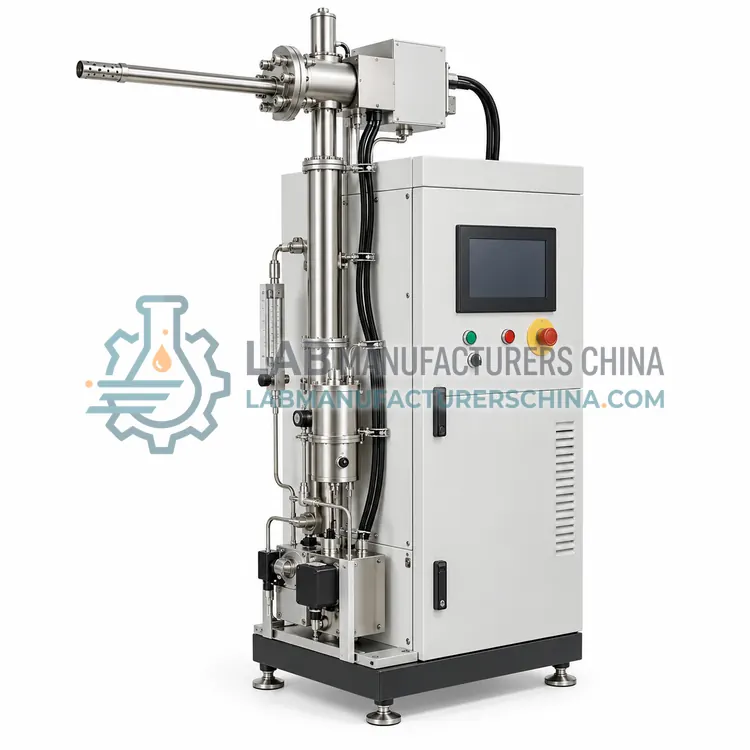
How do Stack Gas Analyzers work?
Stack gas analyzers combine gas extraction or in-situ probes with one or more detection techniques. Electrochemical cells and zirconia sensors measure oxygen and select gases in portable instruments, while non-dispersive infrared detectors quantify carbon monoxide, carbon dioxide and sulfur dioxide by absorption at characteristic wavelengths. Chemiluminescence or ultraviolet absorption is used for nitrogen oxides. Fourier transform infrared analyzers resolve many gases at once from a single spectrum, including hydrogen chloride, ammonia and moisture. Tunable diode laser analyzers scan a narrow absorption line in situ and give fast, interference-resistant readings of species such as ammonia or hydrogen chloride. A heated sample line and conditioning system remove water and dust so the composition reaching the detector represents the stack. Flow monitors, temperature probes and data acquisition complete a continuous emission monitoring system.
Which Stack Gas Analyzers variants are available?
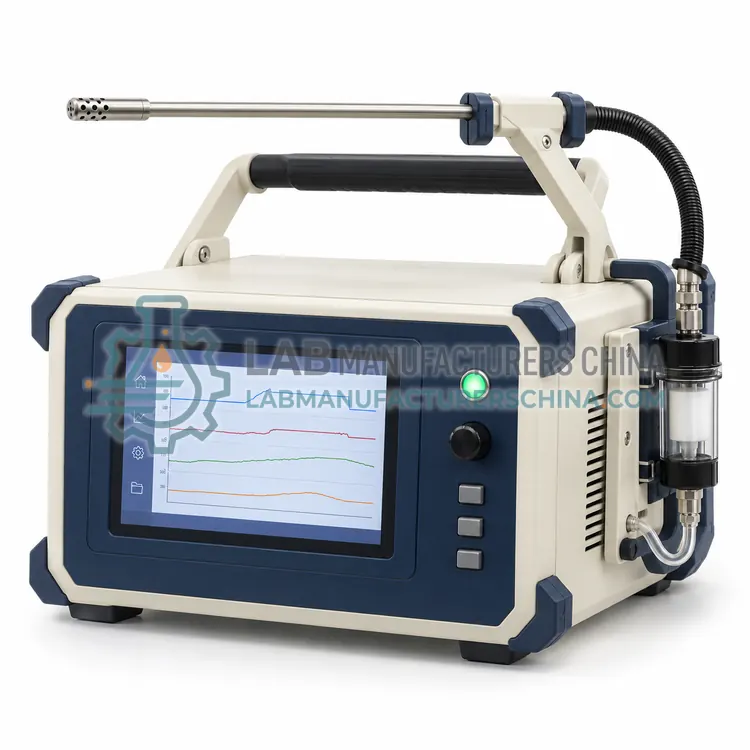
- Portable Flue Gas Analyzer — A handheld battery analyzer with electrochemical and infrared sensors for combustion tuning and periodic emissions checks.
- NDIR CEMS Multi-Gas Analyzer — A fixed extraction analyzer that quantifies several flue gas components by non-dispersive infrared and electrochemical detection.
- FTIR Stack Gas Analyzer — A fixed or portable spectrometer that resolves many flue gas components at once from a single infrared spectrum.
- Zirconia Oxygen Analyzer — A compact probe or extractive analyzer that measures oxygen in hot flue gas using a zirconia cell.
- TDLAS In-Situ Gas Analyzer — A laser spectrometer that measures specific gases across the stack without extracting a sample.
How do I choose the right variant?
Choose by purpose: portable analyzers for combustion tuning and periodic checks, fixed systems for continuous emission compliance. Define the gas list and the ranges: oxygen typically 0 to 25 percent, carbon monoxide 0 to 1000 ppm, sulfur dioxide 0 to 500 ppm and nitrogen oxides 0 to 500 ppm for many combustion sources, with wider ranges for waste incineration and cement kilns. Select the extraction or in-situ format according to the need for fast response, the corrosiveness of the gas and the number of components. For multi-component compliance, NDIR plus chemiluminescence or FTIR systems are standard; for specific acidic or reactive species, TDLAS offers low interference. Confirm heated sampling, dust and moisture removal, calibration gas arrangements and conformity with the applicable method.
Where are Stack Gas Analyzers used?
Stack Gas Analyzers are specified in power plant continuous emission monitoring, cement and steel plant flue gas analysis, waste incineration emission control and industrial boiler combustion tuning.
Which standards and certifications apply?
Work with Stack Gas Analyzers is commonly governed by EN 14181, ISO 16911-1, ISO 12039, US EPA 40 CFR Part 60 Appendix B, HJ 75 and GB 13223. Instrument certifications such as CE marking are confirmed per configuration and never assumed.
What are the key considerations before purchase?
Locate the sampling point where the gas is well mixed and within the acceptable temperature range, and keep the heated line above the acid dew point to prevent sulfur trioxide and water condensation. Calibrate with certified standards and check linearity, and run zero and span checks on the schedule required by the quality assurance standard. For continuous systems, annual surveillance audits and periodic reference method comparisons are commonly required. Replace filters, dryer components and pump parts regularly, and verify flow and temperature sensors. Protect optics and sensors from dust and corrosion, and record all calibration and maintenance events. Document the measurement uncertainty and apply the applicable quality assurance levels for reporting.