How do VOC Analyzers work?
VOC analyzers rely on different detection principles. A photoionization detector uses a sealed ultraviolet lamp, usually at 10.6 eV, to ionize molecules with an ionization potential below the lamp energy, and measures the resulting current; it reports total VOC without speciation. Flame ionization detectors burn organics in a hydrogen flame and measure the ions produced, giving total hydrocarbon response calibrated as methane or propane. Gas chromatography with FID first separates compounds on a column, producing speciated results. Proton transfer reaction mass spectrometry ionizes VOCs with hydronium ions and identifies them by mass, giving fast speciated data. Sorbent tube sampling collects VOCs on Tenax or charcoal and delivers them to the laboratory for thermal desorption and GC analysis.
Which VOC Analyzers variants are available?
- Portable Photoionization Detector VOC Analyzer — A handheld analyzer that ionizes VOCs with an ultraviolet lamp and reads total concentration in seconds.
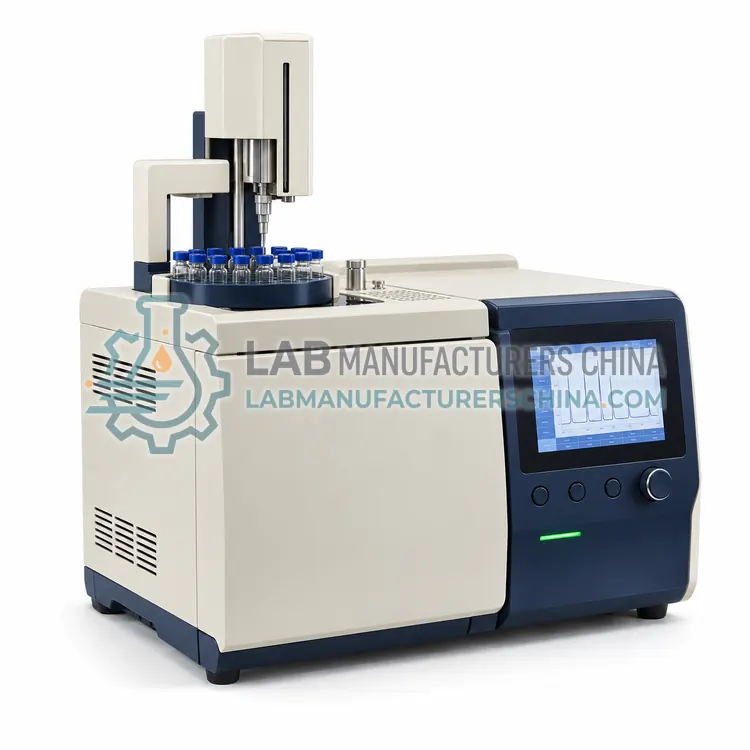
- Online GC-FID VOC Analyzer — An automated gas chromatograph with flame ionization detection that separates and quantifies individual VOCs continuously.
- Total Hydrocarbon Analyzer — A continuous flame ionization analyzer that reports total hydrocarbons as a methane-equivalent concentration.
- Proton Transfer Reaction Mass Spectrometer VOC Analyzer — A real-time mass spectrometer that ionizes VOCs with hydronium ions and identifies them by mass.
- Sorbent Tube VOC Air Sampler — A pump and sorbent tube set that collects VOCs from air for laboratory thermal desorption analysis.
How do I choose the right variant?
Match the analyzer to the purpose. For leak detection, screening and rapid field checks, a portable photoionization detector is fast and easy, but it reports only total VOC and has compound-dependent response factors. For regulatory or speciated data, gas chromatography with FID or mass spectrometry is required, either online or in the laboratory after sorbent tube sampling. Total hydrocarbon analyzers suit continuous monitoring of hydrocarbon emissions against a single methane-equivalent limit. PTR-MS gives real-time speciated data for research on emission sources and reaction products. Consider the required detection limit, the target compound list, whether real-time or time-integrated data is needed, and the calibration gases and lamp or column consumables.
Where are VOC Analyzers used?
VOC Analyzers are specified in industrial fence-line and leak monitoring, indoor air quality and building surveys, workplace exposure assessment and ambient photochemical smog studies.
Which standards and certifications apply?
Work with VOC Analyzers is commonly governed by US EPA Method TO-15, US EPA Method TO-17, ISO 16000-6, ISO 16017-1, EN 14662-3 and HJ 644. Instrument certifications such as CE marking are confirmed per configuration and never assumed.
What are the key considerations before purchase?
Calibrate photoionization detectors with the target gas where possible, because response factors differ widely between compounds, and check the lamp window for fouling. For GC systems, verify column performance with a standard mixture, check carrier gas purity and replace the FID jet or the mass spectrometer filament as needed. Sorbent tubes must be conditioned, capped, stored cool and analysed within the method holding time, with field and tube blanks included. For continuous fence-line monitoring, shelter the analyzer, condition the sample line to avoid condensation and provide suitable calibration gas delivery. Record detection limits, calibration dates and validity flags, and follow the applicable national method for reporting.