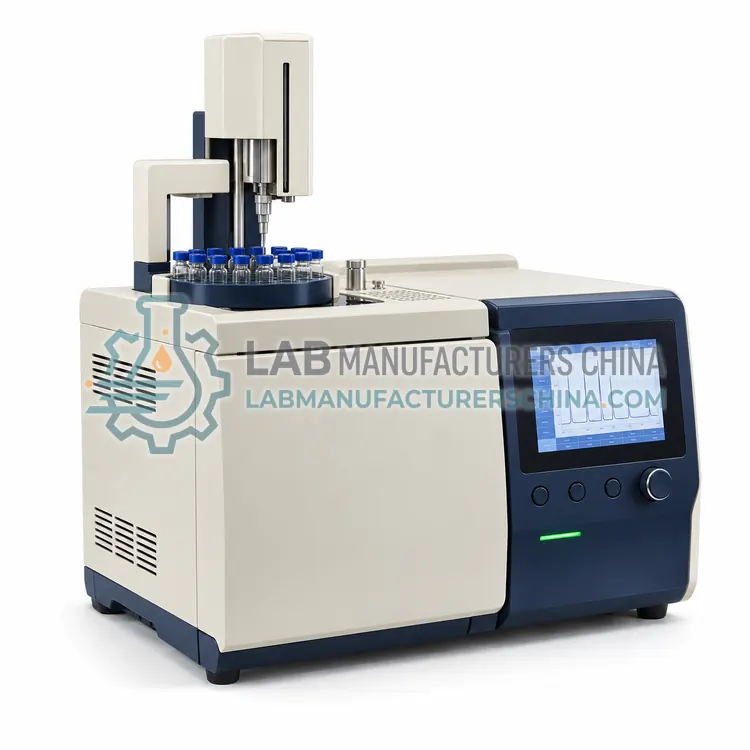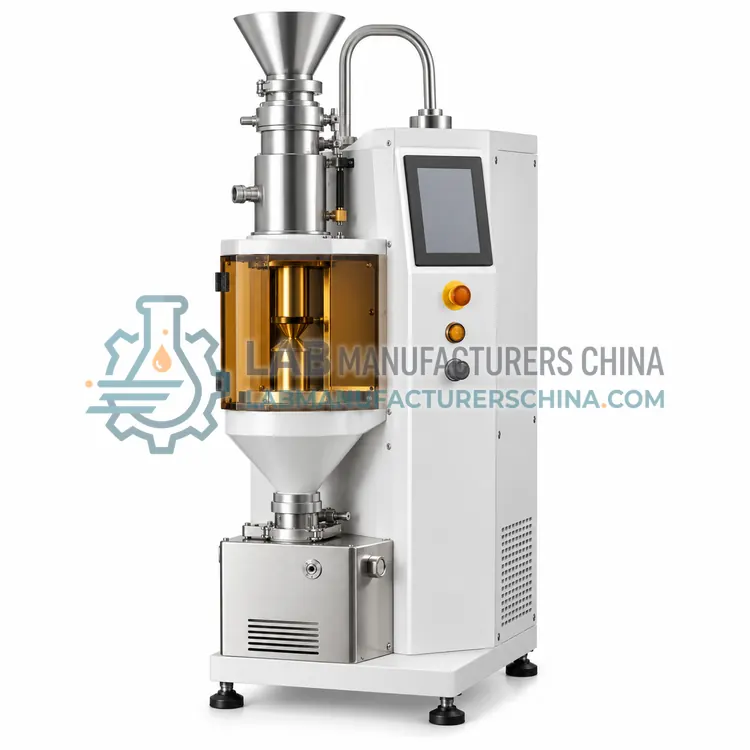
Proton Transfer Reaction Mass Spectrometer VOC Analyzer
质子转移反应质谱 VOC 分析仪
- SKU VOA-0004
- VOC Analyzers
- CE (to be confirmed)
- ISO 9001 manufacturing (to be confirmed)
Price on request — FOB / CIF quoted per order
Prices depend on configuration, quantity and destination port.
Key specifications
| Ionization principle | Proton transfer from hydronium ions |
|---|---|
| Mass analyzer | Quadrupole, time-of-flight or ion trap |
| Mass range | m/z 20–500 |
| Lower detection limit | 10–100 ppt (compound dependent) |
| Response time | 0.1–1 s |
| Drift tube pressure | 2–3 mbar, humidity controlled |
Request a quote Download brochure · to be provided
By Lab Manufacturers China Technical TeamLast reviewed Standards: US EPA Method TO-15, US EPA Method TO-17, ISO 16000-6
What is the Proton Transfer Reaction Mass Spectrometer VOC Analyzer?
A real-time mass spectrometer that ionizes VOCs with hydronium ions and identifies them by mass. It is the right choice for research and monitoring that needs fast, speciated data on emission sources and reaction products.
What is the Proton Transfer Reaction Mass Spectrometer VOC Analyzer?
A real-time mass spectrometer that ionizes VOCs with hydronium ions and identifies them by mass. It is the right choice for research and monitoring that needs fast, speciated data on emission sources and reaction products.
Overview
The PTR-MS instrument generates hydronium ions in a hollow cathode source and mixes them with sample air in a drift tube held at a controlled electric field. VOCs with a proton affinity above that of water accept a proton, and the resulting ions are separated by a quadrupole, time-of-flight or ion trap mass analyzer. Because the reaction is soft, fragmentation is limited, so the mass spectrum can usually be interpreted as protonated molecular ions. Response is nearly instantaneous, enabling flux measurements, vehicle chase studies and monitoring of fast source changes. Concentrations from tens of parts per trillion to parts per million can be measured, and a gas chromatographic front end can be added for isomer separation. Calibration uses permeation tubes or gas standards, and humidity in the drift tube must be controlled because it affects reaction rates. The instrument requires expert operation and regular source and detector maintenance.
How does it work?
VOC analyzers rely on different detection principles. A photoionization detector uses a sealed ultraviolet lamp, usually at 10.6 eV, to ionize molecules with an ionization potential below the lamp energy, and measures the resulting current; it reports total VOC without speciation. Flame ionization detectors burn organics in a hydrogen flame and measure the ions produced, giving total hydrocarbon response calibrated as methane or propane. Gas chromatography with FID first separates compounds on a column, producing speciated results. Proton transfer reaction mass spectrometry ionizes VOCs with hydronium ions and identifies them by mass, giving fast speciated data. Sorbent tube sampling collects VOCs on Tenax or charcoal and delivers them to the laboratory for thermal desorption and GC analysis.
What are the key features?
- Hydronium ionization gives soft, low-fragmentation spectra for easy interpretation.
- Real-time response resolves fast source changes and enables flux measurement.
- Detects concentrations from tens of ppt to ppm.
- Optional GC front end separates isomers of the same nominal mass.
- Time-of-flight option adds high mass resolution for complex mixtures.
- Suitable for vehicle chase and eddy covariance field campaigns.
What are the technical specifications?
A typical proton transfer reaction mass spectrometer voc analyzer configuration offers ionization principle of Proton transfer from hydronium ions, mass analyzer of Quadrupole, time-of-flight or ion trap, mass range of m/z 20–500, lower detection limit of 10–100 ppt (compound dependent), response time of 0.1–1 s and drift tube pressure of 2–3 mbar, humidity controlled. Values are indicative of the product class; the exact figures for each configuration are confirmed on the quotation and the calibration documents supplied with the instrument.
Which applications is it used for?
The Proton Transfer Reaction Mass Spectrometer VOC Analyzer is used in vehicle and exhaust emission research, industrial plume and fence-line source apportionment, atmospheric chemistry field campaigns and indoor air reaction product studies. Across the wider VOC Analyzers class, laboratories also deploy it for industrial fence-line and leak monitoring, indoor air quality and building surveys and workplace exposure assessment.
Which standards and certifications apply?
Relevant standards and methods include US EPA Method TO-15, US EPA Method TO-17, ISO 16000-6, ISO 16017-1, EN 14662-3 and HJ 644. Certification candidates for this model are CE and ISO 9001 manufacturing; each is to be confirmed for the specific configuration before shipment, and certificates are supplied only where they have been issued.
Calibrate photoionization detectors with the target gas where possible, because response factors differ widely between compounds, and check the lamp window for fouling. For GC systems, verify column performance with a standard mixture, check carrier gas purity and replace the FID jet or the mass spectrometer filament as needed. Sorbent tubes must be conditioned, capped, stored cool and analysed within the method holding time, with field and tube blanks included. For continuous fence-line monitoring, shelter the analyzer, condition the sample line to avoid condensation and provide suitable calibration gas delivery. Record detection limits, calibration dates and validity flags, and follow the applicable national method for reporting.
How do I select the right Proton Transfer Reaction Mass Spectrometer VOC Analyzer?
Select PTR-MS for research or advanced monitoring that needs real-time speciated VOC data with low detection limits. For routine compliance at a fixed site, an online GC-FID is simpler and cheaper to operate. In an RFQ, specify the target compounds, required detection limit and time resolution, mass analyzer type and calibration standards.
How does it compare with other VOC Analyzers variants?
Match the analyzer to the purpose. For leak detection, screening and rapid field checks, a portable photoionization detector is fast and easy, but it reports only total VOC and has compound-dependent response factors. For regulatory or speciated data, gas chromatography with FID or mass spectrometry is required, either online or in the laboratory after sorbent tube sampling. Total hydrocarbon analyzers suit continuous monitoring of hydrocarbon emissions against a single methane-equivalent limit. PTR-MS gives real-time speciated data for research on emission sources and reaction products. Consider the required detection limit, the target compound list, whether real-time or time-integrated data is needed, and the calibration gases and lamp or column consumables.
Full specifications
| Ionization principle | Proton transfer from hydronium ions |
|---|---|
| Mass analyzer | Quadrupole, time-of-flight or ion trap |
| Mass range | m/z 20–500 |
| Lower detection limit | 10–100 ppt (compound dependent) |
| Response time | 0.1–1 s |
| Drift tube pressure | 2–3 mbar, humidity controlled |
| Sample inlet | Heated line, optional GC front end |
| Calibration | Permeation tubes or gas standards |
| Data output | Ethernet, real-time spectra logging |
| Power supply | 220 VAC, 50 Hz |
| Operating temperature | 15–30 °C (sheltered) |
Indicative values for this product class. Final specifications are confirmed on the quotation and in the calibration documents supplied with the instrument.
Applications
- Vehicle and exhaust emission research
- Industrial plume and fence-line source apportionment
- Atmospheric chemistry field campaigns
- Indoor air reaction product studies
Key features
- Hydronium ionization gives soft, low-fragmentation spectra for easy interpretation.
- Real-time response resolves fast source changes and enables flux measurement.
- Detects concentrations from tens of ppt to ppm.
- Optional GC front end separates isomers of the same nominal mass.
- Time-of-flight option adds high mass resolution for complex mixtures.
- Suitable for vehicle chase and eddy covariance field campaigns.
Frequently asked questions about Proton Transfer Reaction Mass Spectrometer VOC Analyzer
Drift tube humidity changes the hydronium ion chemistry and therefore the reaction rate and sensitivity. Instruments monitor and regulate the water content, and results are normalised to standard conditions so measurements remain comparable between campaigns.
Isomers of the same molecular formula have the same mass and cannot be separated by mass alone, so results are reported as the sum of isomers. Adding a gas chromatographic front end or using a high-resolution time-of-flight analyzer with fragmentation analysis can distinguish selected pairs.
Molecules with a proton affinity lower than water, including most alkanes such as methane and ethane, are not protonated and are invisible to the instrument. They require alternative ionization, such as a NO or O2 reagent ion source.
Total VOC gives one number for all ionizable or combustible organics, which is fast but cannot show which compounds are present. Speciated analysis separates compounds by chromatography and identifies each one, which is needed when individual limits, such as for benzene, must be met.
Each molecule has a different ionization potential and a different number of ions produced per unit concentration, so the detector response factor varies. Instruments are calibrated with isobutylene by default and other gases require a correction factor or direct calibration.
A 10.6 eV lamp ionizes most aromatic and many aliphatic compounds, including benzene, toluene and vinyl chloride, and is the usual choice for environmental and hygiene work. Higher energy lamps ionize more compounds but also more interferences, while lower energy lamps are more selective.
Related models