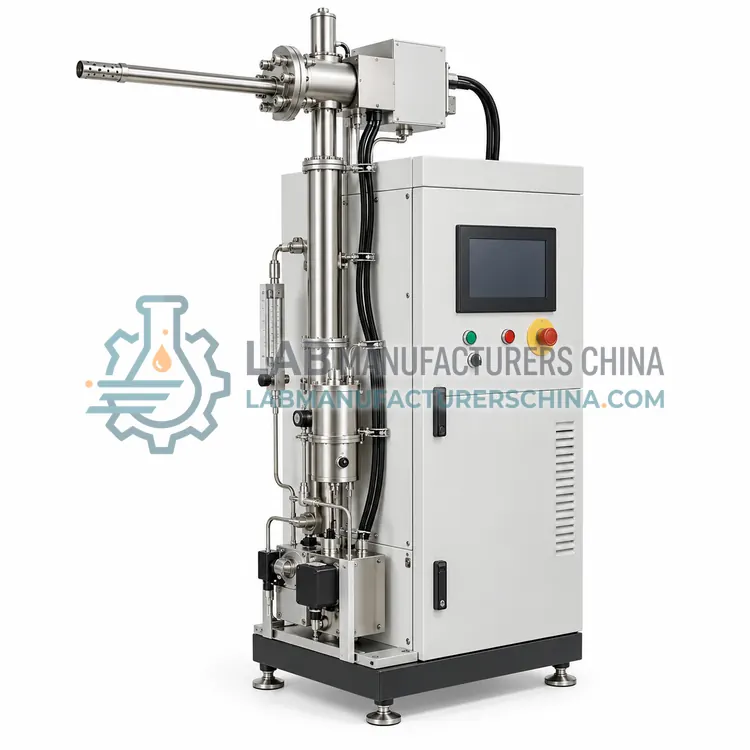
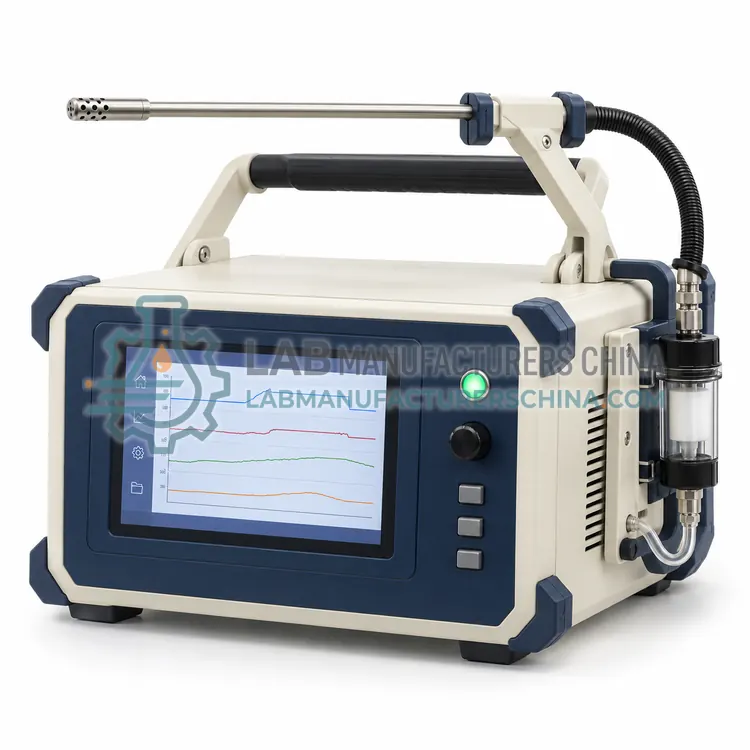
NDIR CEMS Multi-Gas Analyzer
非分散红外烟气多组分连续监测分析仪
- SKU SGA-0002
- Stack Gas Analyzers
- CE (to be confirmed)
- China environmental monitoring instrument certification (to be confirmed)
- ISO 9001 manufacturing (to be confirmed)
Price on request — FOB / CIF quoted per order
Prices depend on configuration, quantity and destination port.
Key specifications
| Measured components | SO2, NOx, CO, CO2, O2 |
|---|---|
| SO2 range | 0–500 / 0–5000 ppm (dual) |
| NOx range | 0–500 / 0–5000 ppm (dual) |
| CO range | 0–1000 / 0–10,000 ppm |
| Oxygen range | 0–25% |
| Lower detection limit | ≤ 1 ppm for SO2 and NOx |
Request a quote Download brochure · to be provided
By Lab Manufacturers China Technical TeamLast reviewed Standards: EN 14181, ISO 16911-1, ISO 12039
What is the NDIR CEMS Multi-Gas Analyzer?
A fixed extraction analyzer that quantifies several flue gas components by non-dispersive infrared and electrochemical detection. It is the right choice for continuous emission monitoring at power plants, cement kilns and large industrial boilers.
What is the NDIR CEMS Multi-Gas Analyzer?
A fixed extraction analyzer that quantifies several flue gas components by non-dispersive infrared and electrochemical detection. It is the right choice for continuous emission monitoring at power plants, cement kilns and large industrial boilers.
Overview
This analyzer forms the measurement core of a continuous emission monitoring system. A heated probe and line deliver flue gas to a conditioning unit that removes dust and water by filtration, cooling or permeation drying, and then to a multi-component bench. Non-dispersive infrared channels measure carbon monoxide, carbon dioxide and sulfur dioxide, an electrochemical or paramagnetic cell measures oxygen, and chemiluminescence or a second infrared channel determines nitrogen oxides. Oxygen data correct the pollutant readings to a reference basis. The system runs automatic zero and span checks with stored calibration gas, logs data with validity flags, computes hourly and daily averages, and transmits results over Modbus or a national protocol. Ranges are set to bracket the emission limits, and a dual range covering low and high concentrations is common. Hot-wet extraction avoids the loss of water-soluble gases when sulfur dioxide or hydrogen chloride is measured.
How does it work?
Stack gas analyzers combine gas extraction or in-situ probes with one or more detection techniques. Electrochemical cells and zirconia sensors measure oxygen and select gases in portable instruments, while non-dispersive infrared detectors quantify carbon monoxide, carbon dioxide and sulfur dioxide by absorption at characteristic wavelengths. Chemiluminescence or ultraviolet absorption is used for nitrogen oxides. Fourier transform infrared analyzers resolve many gases at once from a single spectrum, including hydrogen chloride, ammonia and moisture. Tunable diode laser analyzers scan a narrow absorption line in situ and give fast, interference-resistant readings of species such as ammonia or hydrogen chloride. A heated sample line and conditioning system remove water and dust so the composition reaching the detector represents the stack. Flow monitors, temperature probes and data acquisition complete a continuous emission monitoring system.
What are the key features?
- Multi-component bench measures CO, CO2, SO2, NOx and O2 together.
- Automatic zero and span checks with stored calibration values.
- Oxygen channel corrects pollutant readings to a reference basis.
- Hot-wet or cooled extraction options suit different gas matrices.
- Computes hourly and daily averages with validity flags for reporting.
- Transmits data over Modbus or national emission reporting protocols.
What are the technical specifications?
A typical ndir cems multi-gas analyzer configuration offers measured components of SO2, NOx, CO, CO2, O2, SO2 range of 0–500 / 0–5000 ppm (dual), NOx range of 0–500 / 0–5000 ppm (dual), CO range of 0–1000 / 0–10,000 ppm, oxygen range of 0–25% and lower detection limit of ≤ 1 ppm for SO2 and NOx. Values are indicative of the product class; the exact figures for each configuration are confirmed on the quotation and the calibration documents supplied with the instrument.
Which applications is it used for?
The NDIR CEMS Multi-Gas Analyzer is used in coal-fired and gas power plant CEMS, cement kiln and steel plant monitoring, waste incineration emission control and large industrial boiler compliance. Across the wider Stack Gas Analyzers class, laboratories also deploy it for power plant continuous emission monitoring, cement and steel plant flue gas analysis and waste incineration emission control.
Which standards and certifications apply?
Relevant standards and methods include EN 14181, ISO 16911-1, ISO 12039, US EPA 40 CFR Part 60 Appendix B, HJ 75 and GB 13223. Certification candidates for this model are CE, China environmental monitoring instrument certification and ISO 9001 manufacturing; each is to be confirmed for the specific configuration before shipment, and certificates are supplied only where they have been issued.
Locate the sampling point where the gas is well mixed and within the acceptable temperature range, and keep the heated line above the acid dew point to prevent sulfur trioxide and water condensation. Calibrate with certified standards and check linearity, and run zero and span checks on the schedule required by the quality assurance standard. For continuous systems, annual surveillance audits and periodic reference method comparisons are commonly required. Replace filters, dryer components and pump parts regularly, and verify flow and temperature sensors. Protect optics and sensors from dust and corrosion, and record all calibration and maintenance events. Document the measurement uncertainty and apply the applicable quality assurance levels for reporting.
How do I select the right NDIR CEMS Multi-Gas Analyzer?
Select this system for regulatory continuous monitoring where multiple pollutants must be reported together. For combustion tuning alone, a portable analyzer is sufficient. In an RFQ, specify each gas and range, extraction type, conditioning method, reporting protocol and calibration gas provision.
How does it compare with other Stack Gas Analyzers variants?
Choose by purpose: portable analyzers for combustion tuning and periodic checks, fixed systems for continuous emission compliance. Define the gas list and the ranges: oxygen typically 0 to 25 percent, carbon monoxide 0 to 1000 ppm, sulfur dioxide 0 to 500 ppm and nitrogen oxides 0 to 500 ppm for many combustion sources, with wider ranges for waste incineration and cement kilns. Select the extraction or in-situ format according to the need for fast response, the corrosiveness of the gas and the number of components. For multi-component compliance, NDIR plus chemiluminescence or FTIR systems are standard; for specific acidic or reactive species, TDLAS offers low interference. Confirm heated sampling, dust and moisture removal, calibration gas arrangements and conformity with the applicable method.
Full specifications
| Measured components | SO2, NOx, CO, CO2, O2 |
|---|---|
| SO2 range | 0–500 / 0–5000 ppm (dual) |
| NOx range | 0–500 / 0–5000 ppm (dual) |
| CO range | 0–1000 / 0–10,000 ppm |
| Oxygen range | 0–25% |
| Lower detection limit | ≤ 1 ppm for SO2 and NOx |
| Linearity | ≤ 2% of full scale |
| Zero drift | ≤ 2% of full scale per 24 h |
| Sample conditioning | Heated line, filter, cooler or dryer |
| Outputs | Modbus, Ethernet, 4–20 mA |
| Power supply | 220 VAC, 50 Hz |
Indicative values for this product class. Final specifications are confirmed on the quotation and in the calibration documents supplied with the instrument.
Applications
- Coal-fired and gas power plant CEMS
- Cement kiln and steel plant monitoring
- Waste incineration emission control
- Large industrial boiler compliance
Key features
- Multi-component bench measures CO, CO2, SO2, NOx and O2 together.
- Automatic zero and span checks with stored calibration values.
- Oxygen channel corrects pollutant readings to a reference basis.
- Hot-wet or cooled extraction options suit different gas matrices.
- Computes hourly and daily averages with validity flags for reporting.
- Transmits data over Modbus or national emission reporting protocols.
Frequently asked questions about NDIR CEMS Multi-Gas Analyzer
Sulfur dioxide dissolves readily in condensed water and is lost in a cooler, causing low readings. Hot-wet extraction keeps the sample above the dew point so no condensate forms, and the analyzer corrects for the water vapour present.
Certified gas standards are introduced at the probe so the entire sampling and measurement path is tested at several levels, often zero, low, mid and high. Results are compared with the calibration curve to verify linearity and are recorded for the quality assurance audit.
Out-of-service periods must be logged and reported, and substitute data or an alternative method may be required by the regulation. Maintenance is scheduled to limit downtime, and validity flags mark periods when data do not meet quality criteria.
Common targets are oxygen, carbon monoxide, carbon dioxide, sulfur dioxide, nitrogen oxides and total hydrocarbons, with hydrogen chloride, ammonia, mercury and moisture added for waste incineration and specific processes. The list follows the emission standard that applies to the plant.
Water vapour and sulfur trioxide in flue gas can condense in cool tubing, dissolving water-soluble gases such as sulfur dioxide and hydrogen chloride and causing low readings. Heating the line above the acid dew point, typically 120 to 180 °C, keeps the sample in the vapour phase.
Extraction systems pull gas through a heated line to a conditioning unit and analyzer, allowing the removal of dust and moisture and the measurement of many components. In-situ analyzers measure across the stack directly, giving fast response with less conditioning but more sensitivity to dust loading and alignment.
Related models