How do ESR Analyzers work?
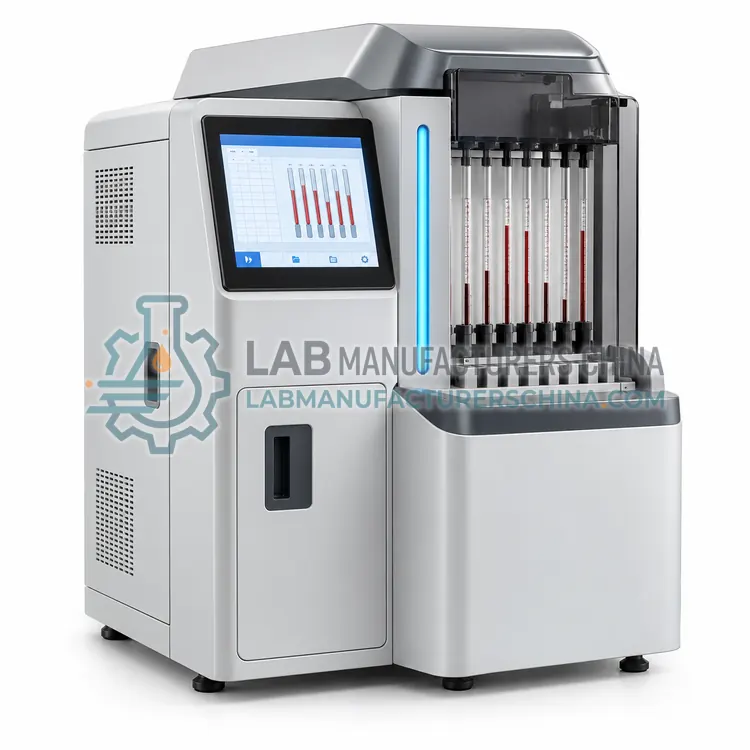
When anticoagulated blood stands in a vertical tube, red cells aggregate and settle, leaving a column of clear plasma above them. The height of that plasma column after one hour, expressed in millimeters, is the Westergren sedimentation rate. Aggregation is promoted by fibrinogen and globulins, so an elevated rate indicates an acute phase response even though the test is not specific for any diagnosis. Automated instruments reproduce this process with capillary tubes held vertically at a controlled temperature, usually 18 to 25 degrees Celsius, and track the falling interface with an array of photodiodes or an infrared sensor. Because the settling curve is nonlinear, algorithms extrapolate a one-hour value from a shorter measurement period, and the algorithms are validated against the Westergren reference method. Some instruments read standard Westergren tubes with a barcode instead of using capillary tubes.
Which ESR Analyzers variants are available?
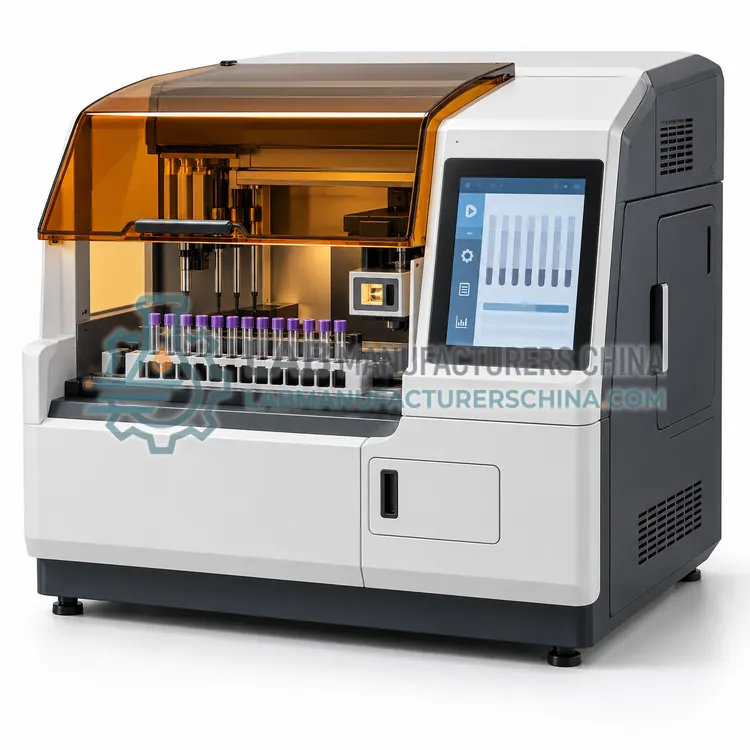
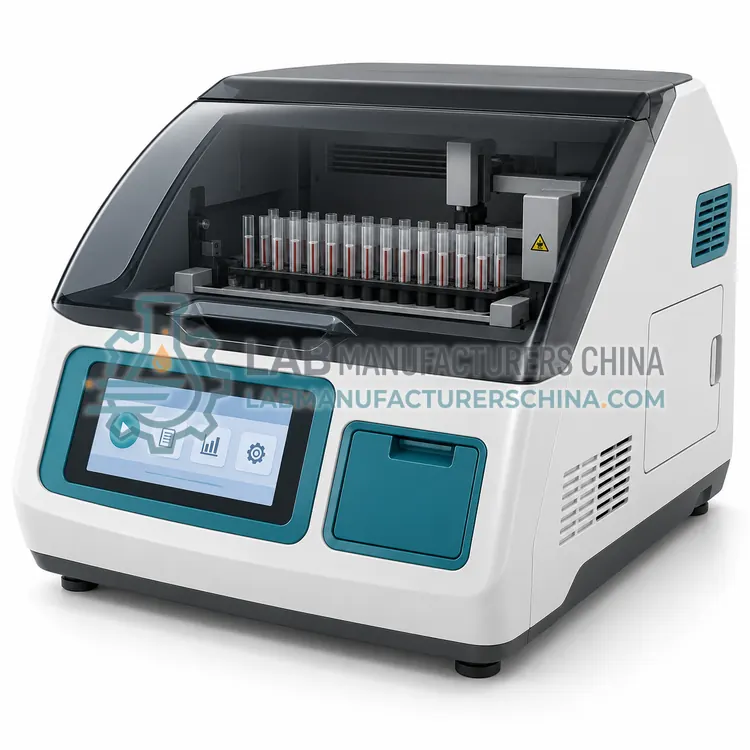
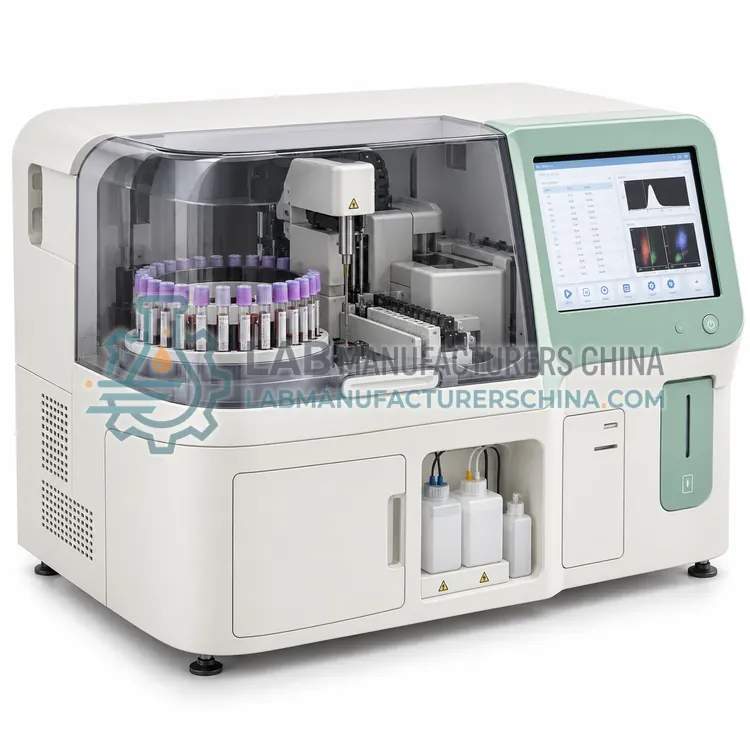
- Automated Capillary Photometry ESR Analyzer — An automated capillary photometry ESR analyzer loads a carousel of capillary tubes, holds them vertically at controlled temperature and reads the falling plasma interface with photodiode arrays.
- Microvolume ESR Analyzer for Capillary Microtubes — A microvolume ESR analyzer measures the sedimentation rate in capillary tubes holding 20 to 50 microliters of blood, which makes it suitable for pediatric patients and for laboratories that need an ESR result from the same finger-stick sample as a blood count.
- Semi-Automated Westergren ESR System — A semi-automated Westergren system uses the reference Westergren tubes and the classical one-hour settling principle, with optical reading of the plasma column and software calculation of the result.
- Dynamic ESR Analyzer with Continuous Optical Tracking — A dynamic ESR analyzer records the whole sedimentation curve rather than only the one-hour value, tracking the interface continuously and reporting kinetic parameters alongside the extrapolated result.
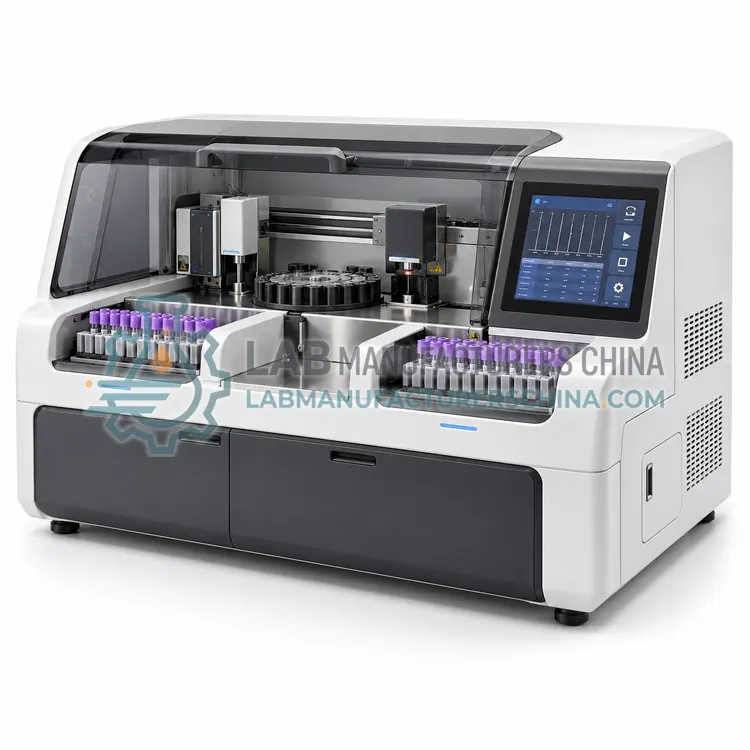
- ESR Analyzer Integrated with a Hematology Analyzer — This configuration pairs an ESR module with a hematology analyzer so that one EDTA tube yields a blood count and a sedimentation rate in a single run.
How do I choose the right variant?
Choose an ESR analyzer when the test is requested often enough that manual Westergren tubes consume unacceptable technician time, generally more than ten to twenty tests per day. Compare instruments by throughput, sample volume, tube type and the temperature control of the measuring position. Capillary photometry models accept small volumes and suit pediatric work, while instruments reading standard Westergren tubes may be preferred where the reference method must be preserved for accreditation. Check whether the analyzer needs a dedicated blood collection tube or can use an EDTA or citrate tube already collected, and whether mixing is automatic. Confirm quality control material availability, calibration or verification procedure, and biosafety features such as closed tube handling.
Where are ESR Analyzers used?
ESR Analyzers are specified in screening for inflammatory and infectious disease, follow-up of rheumatoid arthritis and vasculitis, monitoring of polymyalgia rheumatica and giant cell arteritis and support in the diagnosis of osteomyelitis and tuberculosis.
Which standards and certifications apply?
Work with ESR Analyzers is commonly governed by ISO 15189, ICSH ESR reference method, CLSI H02, CLSI EP05, IEC 61010-1 and IEC 61010-2-101. Instrument certifications such as CE marking are confirmed per configuration and never assumed.
What are the key considerations before purchase?
Place the analyzer on a stable surface free of vibration, because any movement disturbs the settling interface, and keep it away from direct sunlight and heat sources so that the measuring position stays within the specified temperature range. Verify performance at installation against the Westergren reference method on at least forty samples spanning normal and elevated values, and repeat the comparison after major service. Run control material at the recommended frequency, usually daily when samples are reported, and keep the optical windows, tubes and holders clean. Use only the specified capillary or Westergren tubes, since tube bore and cleanliness affect the result, and treat all blood samples and used tubes as infectious waste.