How do XRF work?
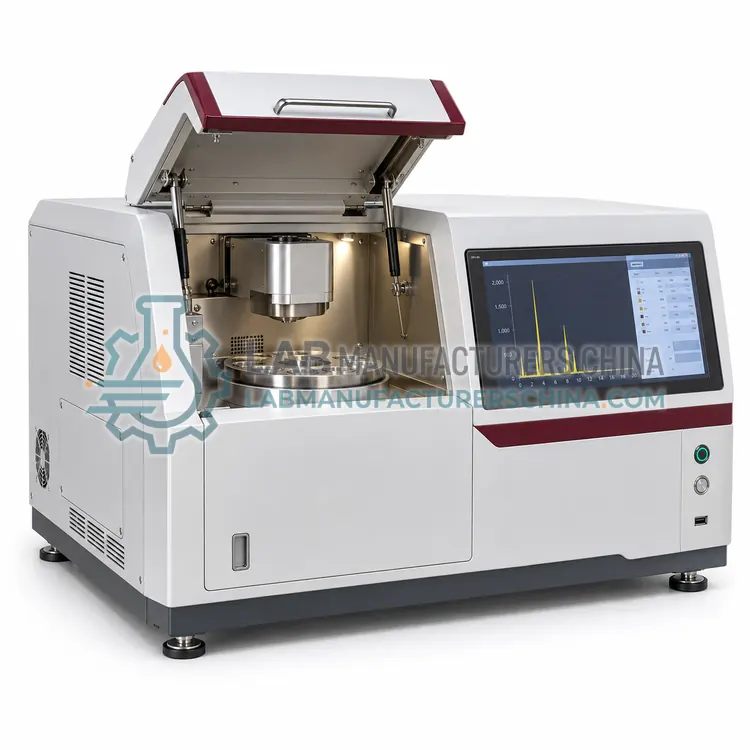
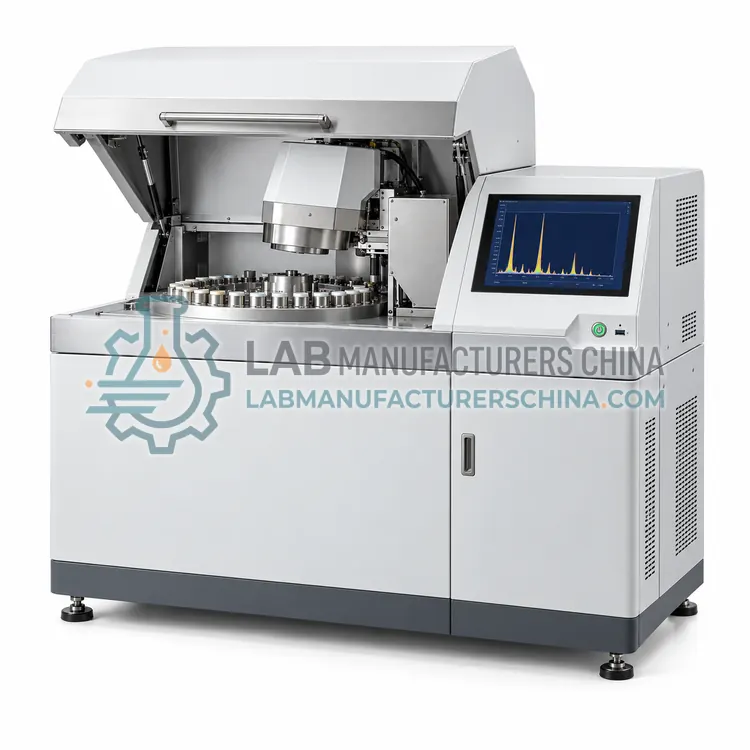
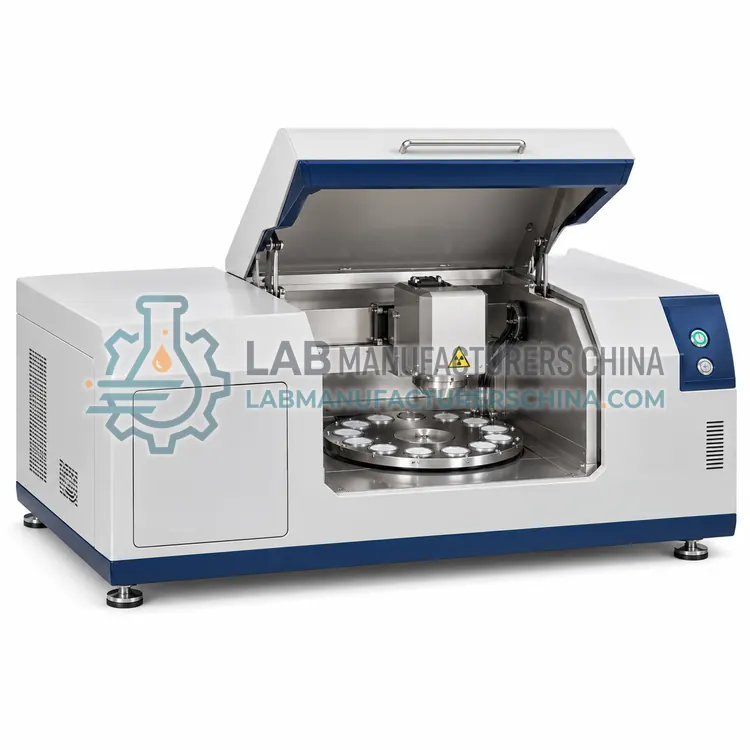
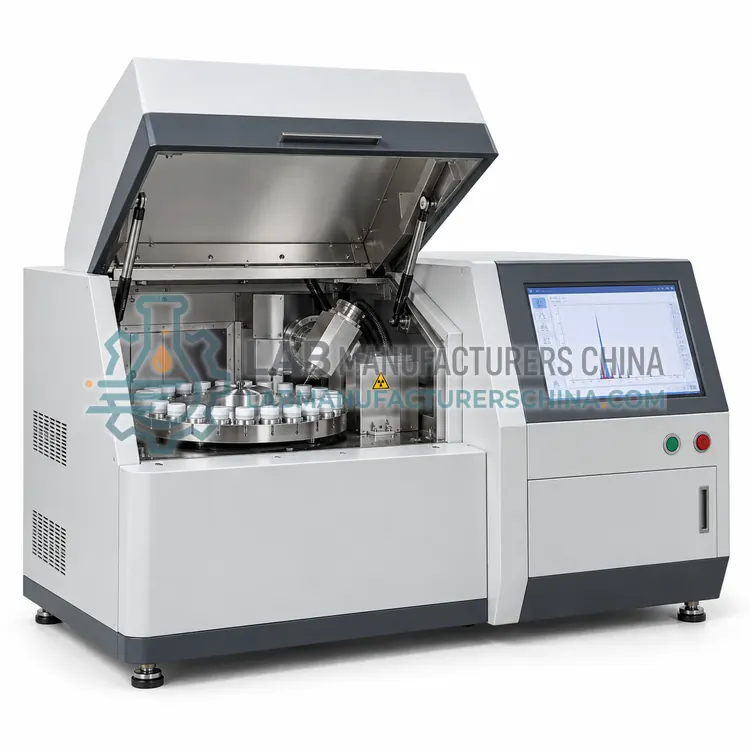
A primary X-ray beam from a tube or radioisotope source ejects inner-shell electrons from sample atoms. Electrons from higher shells fall into the vacancies and emit X-ray photons whose energies equal the difference between the two levels, which is unique to each element. The intensity of each characteristic line is proportional to the amount of that element, so calibration with reference materials gives concentration. Energy-dispersive instruments use a semiconductor detector such as silicon drift to measure photon energies directly and record the whole spectrum at once. Wavelength-dispersive instruments use analyzing crystals to diffract specific wavelengths to a detector, giving better resolution and lower detection limits, especially for light elements. Matrix effects from absorption and secondary excitation are corrected by fundamental parameters or empirical influence coefficients, and sample form is matched to calibration standards.
Which XRF variants are available?
- Energy-Dispersive X-Ray Fluorescence Spectrometer — An energy-dispersive XRF spectrometer measures photon energies directly with a semiconductor detector and records the entire spectrum at once.
- Wavelength-Dispersive X-Ray Fluorescence Spectrometer — A wavelength-dispersive XRF spectrometer uses analyzing crystals to diffract selected wavelengths for very high resolution.
- Total Reflection X-Ray Fluorescence Spectrometer — A total reflection XRF spectrometer measures tiny sample residues on a flat carrier at grazing incidence.
- Micro X-Ray Fluorescence Spectrometer — A micro-XRF spectrometer focuses the X-ray beam to a small spot for spatially resolved elemental analysis.
- Polarized Energy-Dispersive X-Ray Fluorescence Spectrometer — A polarized energy-dispersive XRF spectrometer uses polarized excitation to strongly suppress scatter background.
How do I choose the right variant?
Select an XRF configuration by element range, detection limit and sample type. Energy-dispersive instruments are compact, fast and well suited to routine screening and multi-element analysis, with moderate resolution. Wavelength-dispersive instruments cost more and are slower but excel for light elements, precise major-oxide analysis and low detection limits. Total reflection instruments reach ultratrace levels on small sample spots and serve semiconductor, water and biological analysis. Polarized energy-dispersive instruments lower background for trace work without the cost of wavelength dispersive optics. Micro-XRF adds spatial resolution for inclusions, coatings and forensic samples. Consider sample size, whether vacuum or helium purge is needed for light elements, automation level and the regulatory method your laboratory must follow before deciding.
Where are XRF used?
XRF are specified in elemental analysis of alloys, ceramics and glass, roHS and restricted substance screening, coating thickness and thin-film composition and cement, mining and geological sample analysis.
Which standards and certifications apply?
Work with XRF is commonly governed by ASTM E1621 Wavelength dispersive X-ray fluorescence, ASTM D4294 Sulfur in petroleum products by EDXRF, ISO 3497 Metallic coatings — X-ray spectrometric thickness, IEC 62321 Determination of restricted substances in electrotechnical products, US EPA Method 6200 Field portable XRF for soil, ISO 13196 Soil quality — Screening of selected elements by EDXRF, IEC 61010-2-091 and ISO/IEC 17025. Instrument certifications such as CE marking are confirmed per configuration and never assumed.
What are the key considerations before purchase?
XRF instruments are regulated radiation devices, so installation requires shielding, interlocks, radiation surveys and trained operators, with portable units also needing safe work procedures. Sample preparation strongly affects accuracy: surface contamination, insufficient thickness and particle size effects bias results, and powders are best pressed or fused. Calibration must match the sample matrix, and drift is monitored with check standards. Vacuum or helium systems need clean seals and gas supplies for light elements. Detector windows and X-ray tubes are wear parts with finite life. Keep records of tube hours, calibration and checks, and dispose of X-ray components according to radiation regulations.