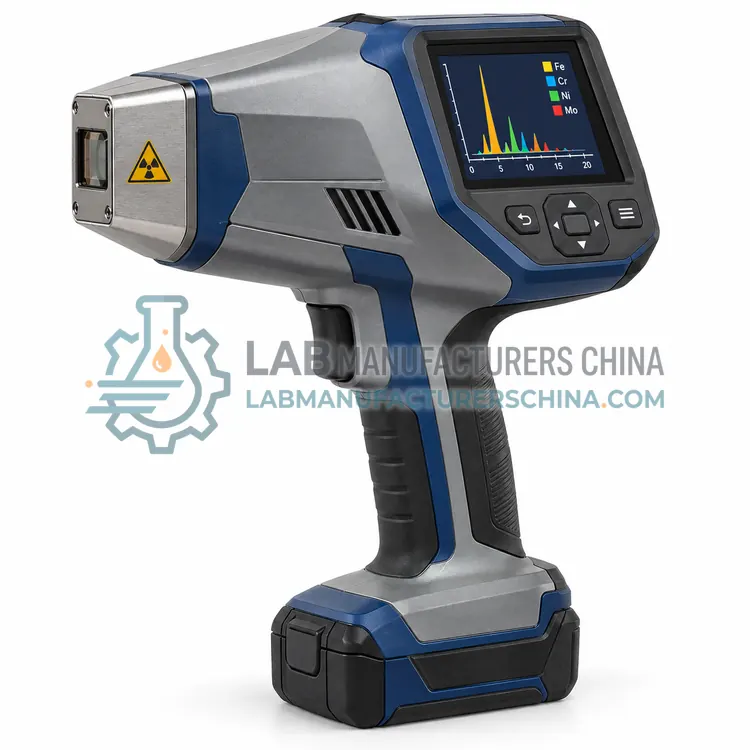
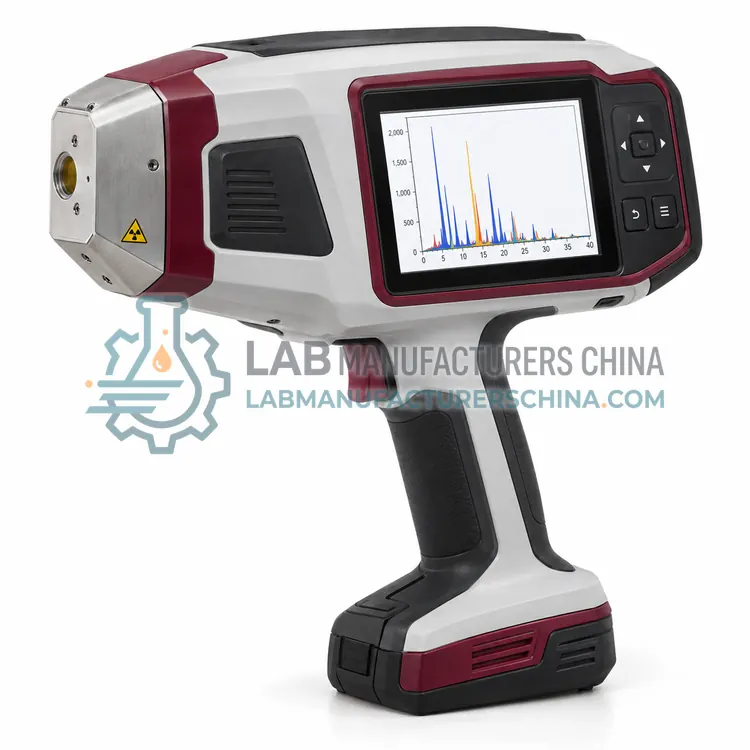
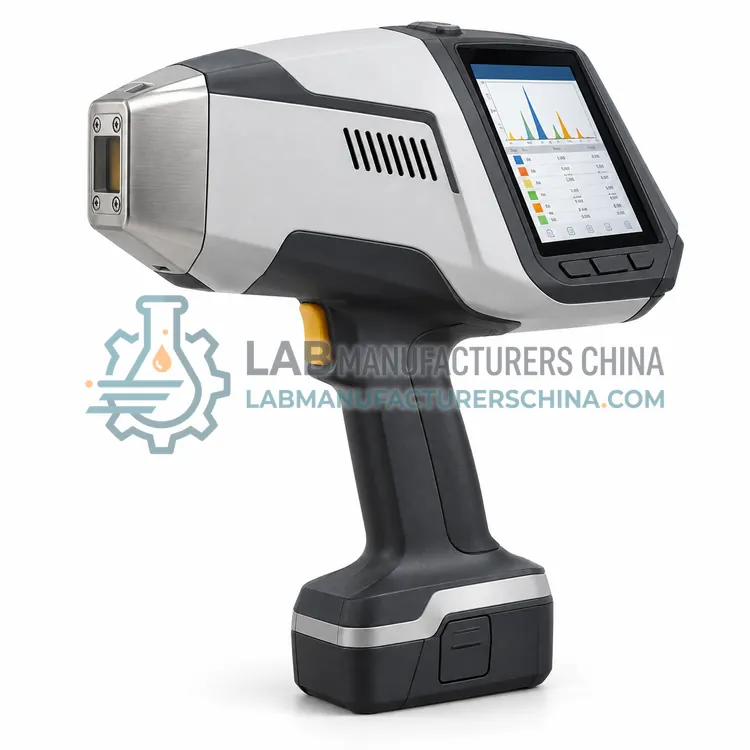
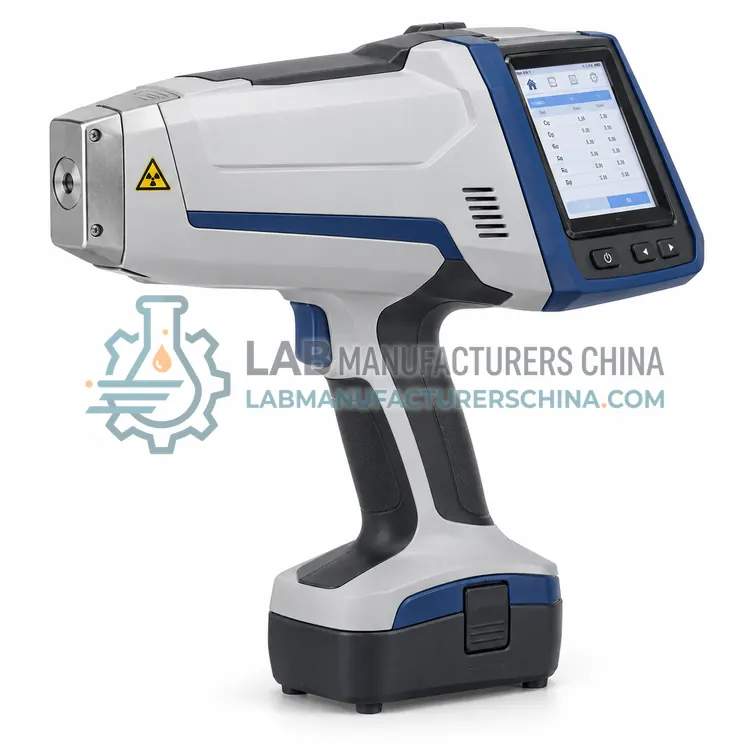
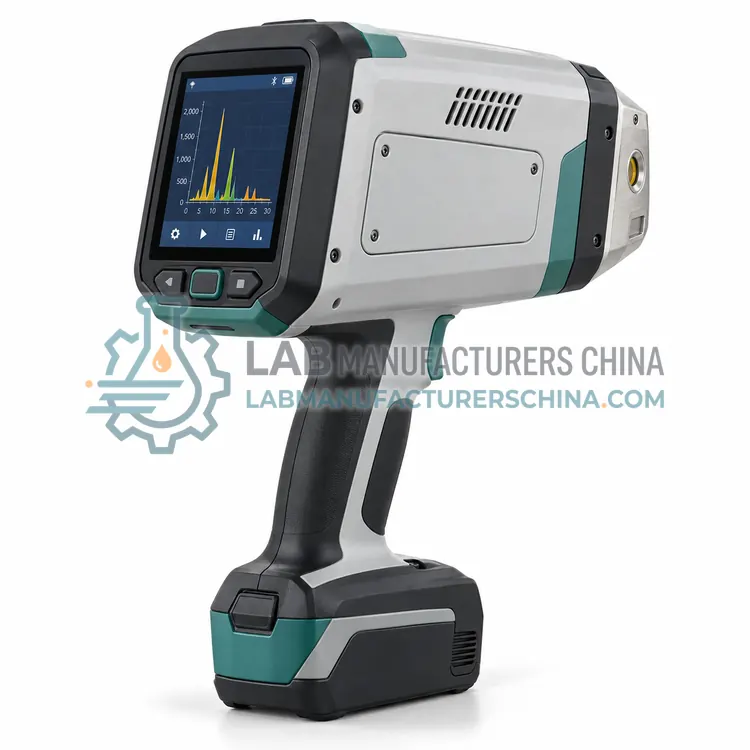
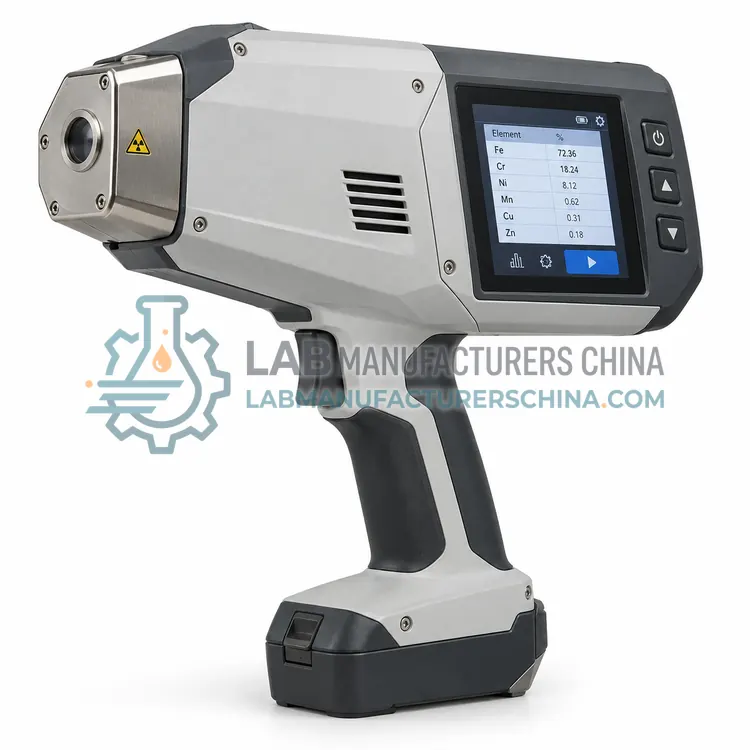
How do Portable XRF work?
A small X-ray tube in the analyzer irradiates the sample, and a silicon drift detector measures the energies of the resulting characteristic X-rays. Electronics build a spectrum and calibrated software reports element concentrations. Because the instrument is small and battery powered, power is limited and measurement times are longer than on benchtop systems, and light elements below magnesium or aluminum cannot be measured in air. Fundamental parameter or empirical calibrations are stored onboard, and an internal shutter or reference standard verifies performance. The analyzer is pressed against the sample or mounted on a stand for extended measurements. Results depend strongly on surface condition, so cleaning, flatness and representative sampling are important in the field.
Which Portable XRF variants are available?
- Handheld XRF Alloy Analyzer — A handheld XRF alloy analyzer identifies metal grades and verifies material certificates on site.
- Handheld XRF Analyzer for Soil and Environmental Screening — This handheld XRF analyzer is configured for soil, sediment and environmental screening.
- Handheld XRF Analyzer for Mining and Exploration — This handheld XRF analyzer is optimized for ore, drill core and exploration samples.
- Handheld XRF Analyzer for RoHS and Consumer Goods — This handheld XRF analyzer targets regulated restricted substances in electronics, plastics and consumer products.
- Handheld XRF Analyzer for Lead Paint Inspection — This handheld XRF analyzer is dedicated to measuring lead in paint and surface coatings.
- Portable XRF Spectrometer for Scrap Sorting — This portable XRF spectrometer is configured for rapid sorting of mixed scrap metal and recycled material.
How do I choose the right variant?
Select a portable XRF analyzer by the application because calibration, spot size and features differ. Alloy analyzers use a large spot and comprehensive alloy libraries with grade identification. Soil and environmental analyzers use calibrated methods for regulatory elements and may include a stand and GPS. Mining analyzers optimize for light and heavy elements in ores and add pathfinder calibrations. RoHS analyzers target restricted elements in plastics and electronics with polymer-specific calibrations. Lead paint analyzers use a small spot and short measurement for compliance testing. Scrap sorting analyzers emphasize speed and grade identification. Confirm element range, spot size, calibration availability, battery life and whether a stand, printer and radiation safety features are included.
Where are Portable XRF used?
Portable XRF are specified in alloy grade identification and positive material verification, soil, sediment and environmental field screening, mining exploration and ore grade estimation and roHS, lead paint and consumer product screening.
Which standards and certifications apply?
Work with Portable XRF is commonly governed by US EPA Method 6200 Field portable XRF for soil, ISO 13196 Soil quality — Screening of selected elements by EDXRF, IEC 62321 Determination of restricted substances in electrotechnical products, ASTM F2617 Identification of alloy grades by handheld XRF, ISO 3497 Metallic coatings — X-ray spectrometric thickness and IEC 61010-2-091. Instrument certifications such as CE marking are confirmed per configuration and never assumed.
What are the key considerations before purchase?
Portable XRF units are X-ray devices and require operator training, safe work procedures and, in many jurisdictions, registration or a licence. Never point the device at people, and use the shield or stand where possible. Radiation dose to the operator is very low during normal use but must be monitored and recorded. Surface contamination, paint, rust and coatings bias results, so samples are cleaned or measured through calibrated modes. Repeatability depends on sample positioning and measurement time. Battery management, detector temperature stabilization and periodic verification with a reference standard are part of routine use, and results are traceable only when calibration and operator competence are documented.