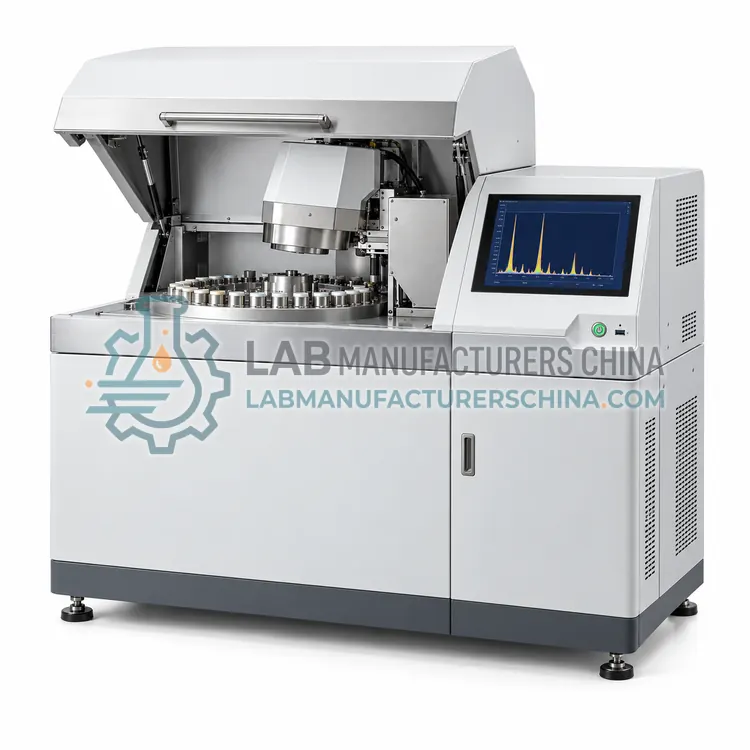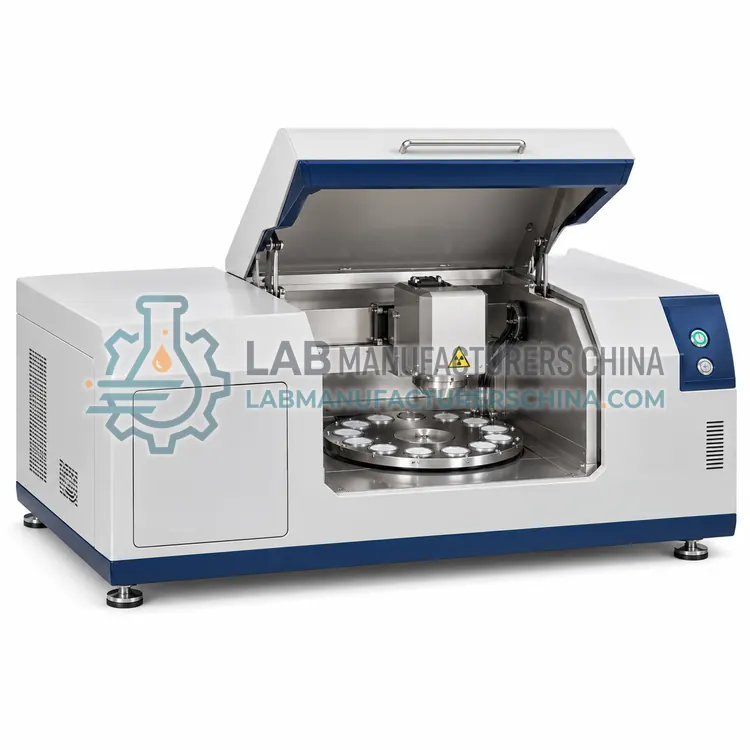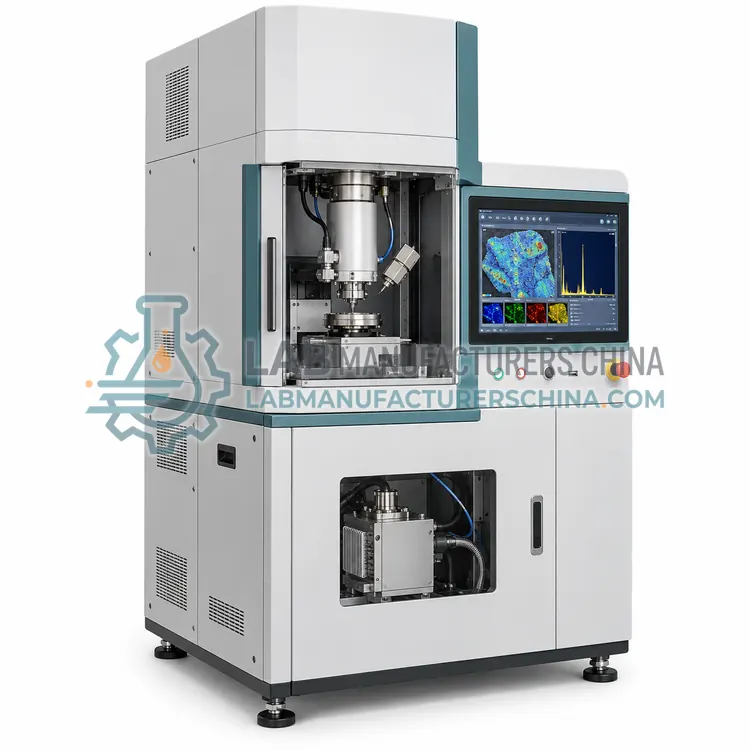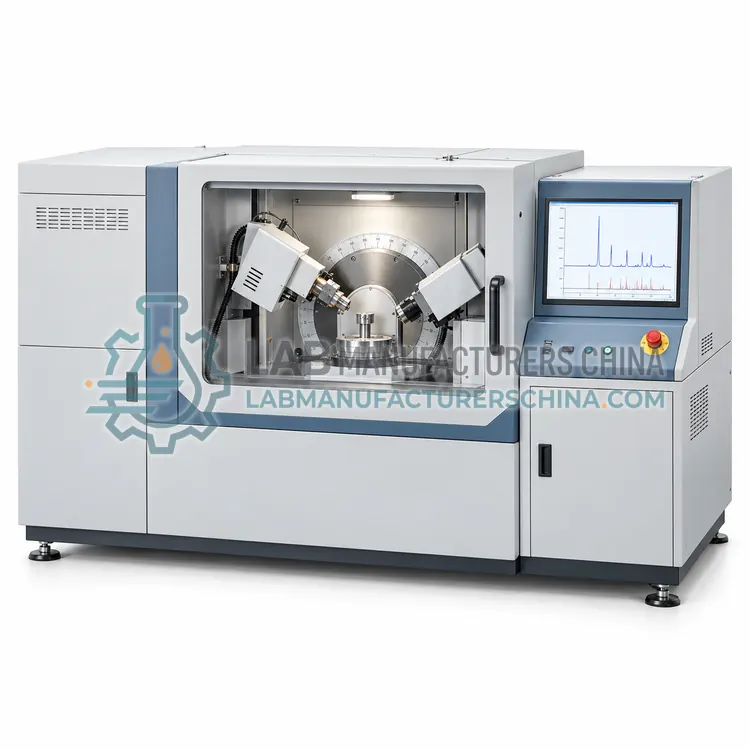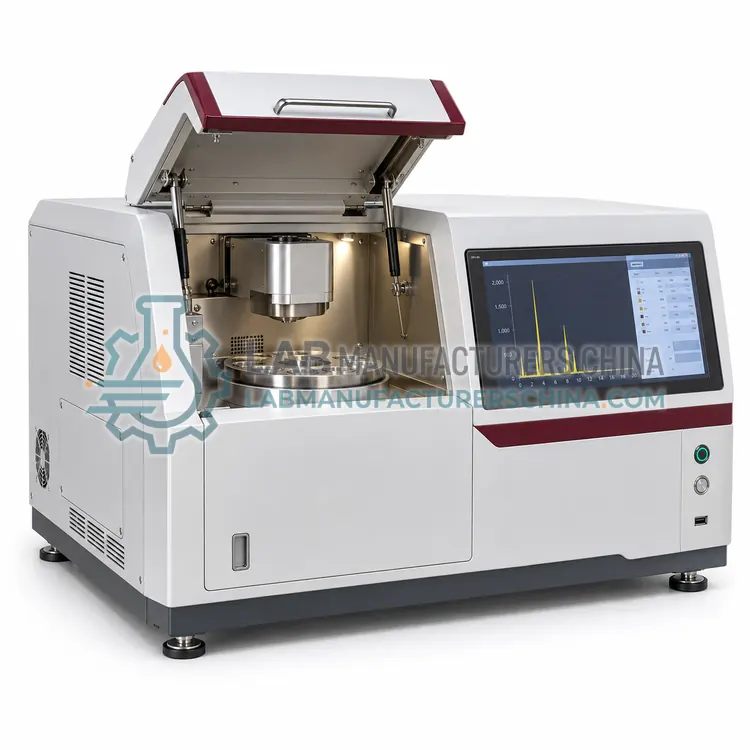
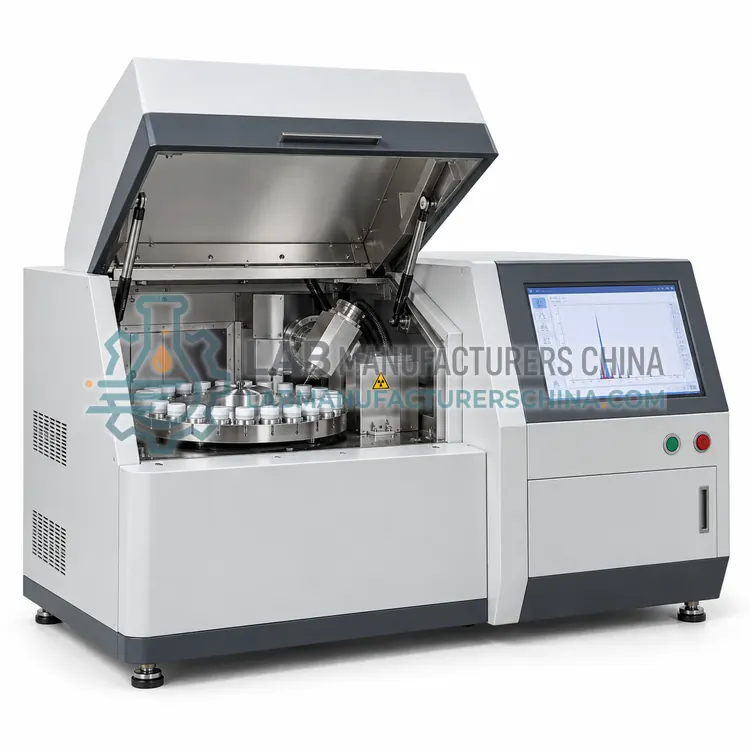
Polarized Energy-Dispersive X-Ray Fluorescence Spectrometer
偏振能量色散 X 射线荧光光谱仪
- SKU XRF-0005
- XRF
- CE (to be confirmed)
- Radiation safety enclosure (to be confirmed)
- ISO 9001 manufacturing (to be confirmed)
Price on request — FOB / CIF quoted per order
Prices depend on configuration, quantity and destination port.
Key specifications
| Element range | Na to U |
|---|---|
| Detection limit | 0.1–10 mg/kg typical |
| Excitation | polarized, secondary target |
| X-ray tube power | 100–400 W |
| Detector | silicon drift or Si(Li) |
| Measurement time | 300–1800 s |
Request a quote Download brochure · to be provided
By Lab Manufacturers China Technical TeamLast reviewed Standards: ASTM E1621 Wavelength dispersive X-ray fluorescence, ASTM D4294 Sulfur in petroleum products by EDXRF, ISO 3497 Metallic coatings — X-ray spectrometric thickness
What is the Polarized Energy-Dispersive X-Ray Fluorescence Spectrometer?
A polarized energy-dispersive XRF spectrometer uses polarized excitation to strongly suppress scatter background. It is chosen for routine trace-element analysis of a wide range of environmental, geological and biological samples using a low-cost energy-dispersive system.
What is the Polarized Energy-Dispersive X-Ray Fluorescence Spectrometer?
A polarized energy-dispersive XRF spectrometer uses polarized excitation to strongly suppress scatter background. It is chosen for routine trace-element analysis of a wide range of environmental, geological and biological samples using a low-cost energy-dispersive system.
Overview
The instrument places a polarizing target or Barkla scatterer in the beam path so that the fluorescence reaching the sample is partially polarized. Because polarized radiation is scattered much less than unpolarized radiation, the background under analyte peaks, especially in the region of coherent and incoherent scatter from light matrices, is strongly reduced. This improves detection limits for trace elements by an order of magnitude or more compared with conventional energy-dispersive XRF, without the cost and complexity of wavelength-dispersive optics. The sample is usually presented as a pressed pellet or thin film and measured in air or vacuum. Polarized systems are used for environmental soils and sediments, geological samples, biological tissues, plastics and waste, where many trace elements must be measured quickly.
How does it work?
A primary X-ray beam from a tube or radioisotope source ejects inner-shell electrons from sample atoms. Electrons from higher shells fall into the vacancies and emit X-ray photons whose energies equal the difference between the two levels, which is unique to each element. The intensity of each characteristic line is proportional to the amount of that element, so calibration with reference materials gives concentration. Energy-dispersive instruments use a semiconductor detector such as silicon drift to measure photon energies directly and record the whole spectrum at once. Wavelength-dispersive instruments use analyzing crystals to diffract specific wavelengths to a detector, giving better resolution and lower detection limits, especially for light elements. Matrix effects from absorption and secondary excitation are corrected by fundamental parameters or empirical influence coefficients, and sample form is matched to calibration standards.
What are the key features?
- Polarizing target or Barkla scatterer in the beam path
- Strongly reduced scatter background
- Detection limits improved by an order of magnitude
- Full spectrum acquired simultaneously
- Pressed pellet or thin film sample presentation
- Lower cost than wavelength-dispersive optics
What are the technical specifications?
A typical polarized energy-dispersive x-ray fluorescence spectrometer configuration offers element range of Na to U, detection limit of 0.1–10 mg/kg typical, excitation of polarized, secondary target, X-ray tube power of 100–400 W, detector of silicon drift or Si(Li) and measurement time of 300–1800 s. Values are indicative of the product class; the exact figures for each configuration are confirmed on the quotation and the calibration documents supplied with the instrument.
Which applications is it used for?
The Polarized Energy-Dispersive X-Ray Fluorescence Spectrometer is used in trace elements in soils and sediments, geological and mining samples, biological tissue and plant material and plastics, waste and recycled materials. Across the wider XRF class, laboratories also deploy it for elemental analysis of alloys, ceramics and glass, roHS and restricted substance screening and coating thickness and thin-film composition.
Which standards and certifications apply?
Relevant standards and methods include ASTM E1621 Wavelength dispersive X-ray fluorescence, ASTM D4294 Sulfur in petroleum products by EDXRF, ISO 3497 Metallic coatings — X-ray spectrometric thickness, IEC 62321 Determination of restricted substances in electrotechnical products, US EPA Method 6200 Field portable XRF for soil, ISO 13196 Soil quality — Screening of selected elements by EDXRF, IEC 61010-2-091 and ISO/IEC 17025. Certification candidates for this model are CE, Radiation safety enclosure and ISO 9001 manufacturing; each is to be confirmed for the specific configuration before shipment, and certificates are supplied only where they have been issued.
XRF instruments are regulated radiation devices, so installation requires shielding, interlocks, radiation surveys and trained operators, with portable units also needing safe work procedures. Sample preparation strongly affects accuracy: surface contamination, insufficient thickness and particle size effects bias results, and powders are best pressed or fused. Calibration must match the sample matrix, and drift is monitored with check standards. Vacuum or helium systems need clean seals and gas supplies for light elements. Detector windows and X-ray tubes are wear parts with finite life. Keep records of tube hours, calibration and checks, and dispose of X-ray components according to radiation regulations.
How do I select the right Polarized Energy-Dispersive X-Ray Fluorescence Spectrometer?
Select polarized energy-dispersive XRF when trace-element detection limits are needed but wavelength-dispersive cost or sample throughput is a constraint, as in environmental and geological screening. Specify the elements, detection limits and sample form. Confirm that pressed pellet or thin film preparation is acceptable for your samples.
How does it compare with other XRF variants?
Select an XRF configuration by element range, detection limit and sample type. Energy-dispersive instruments are compact, fast and well suited to routine screening and multi-element analysis, with moderate resolution. Wavelength-dispersive instruments cost more and are slower but excel for light elements, precise major-oxide analysis and low detection limits. Total reflection instruments reach ultratrace levels on small sample spots and serve semiconductor, water and biological analysis. Polarized energy-dispersive instruments lower background for trace work without the cost of wavelength dispersive optics. Micro-XRF adds spatial resolution for inclusions, coatings and forensic samples. Consider sample size, whether vacuum or helium purge is needed for light elements, automation level and the regulatory method your laboratory must follow before deciding.
Full specifications
| Element range | Na to U |
|---|---|
| Detection limit | 0.1–10 mg/kg typical |
| Excitation | polarized, secondary target |
| X-ray tube power | 100–400 W |
| Detector | silicon drift or Si(Li) |
| Measurement time | 300–1800 s |
| Sample form | pressed pellets, thin films |
| Atmosphere | air or vacuum |
| Sample changer | optional 10 to 20 positions |
| Interface | Ethernet |
Indicative values for this product class. Final specifications are confirmed on the quotation and in the calibration documents supplied with the instrument.
Applications
- Trace elements in soils and sediments
- Geological and mining samples
- Biological tissue and plant material
- Plastics, waste and recycled materials
Key features
- Polarizing target or Barkla scatterer in the beam path
- Strongly reduced scatter background
- Detection limits improved by an order of magnitude
- Full spectrum acquired simultaneously
- Pressed pellet or thin film sample presentation
- Lower cost than wavelength-dispersive optics
Frequently asked questions about Polarized Energy-Dispersive X-Ray Fluorescence Spectrometer
Scattered radiation from the sample is largely unpolarized, while the excitation is polarized, so the polarization state provides a way to discriminate against scatter reaching the detector. Background under the analyte peaks falls sharply, improving the signal-to-noise ratio and lowering detection limits for trace elements.
Pressed pellets with a binder or thin films on a support give the most reproducible results, because they present a uniform thickness and density to the beam. Loose powders are less reproducible. Particle size should be reduced by grinding to avoid mineralogical effects.
Vacuum or helium purge is needed for elements below about sodium or magnesium, because air absorbs their low-energy fluorescence. Heavier trace elements can be measured in air. The choice of atmosphere depends on the element list and whether loose or liquid samples must be measured.
EDXRF measures photon energies directly with a semiconductor detector and records the whole spectrum simultaneously, giving speed and a compact design. WDXRF uses analyzing crystals to diffract selected wavelengths and offers higher resolution, better light-element performance and lower detection limits at higher cost and longer measurement times.
The sample must be thick enough that the full primary beam is absorbed within it and fluorescence from deeper layers does not change the result, a condition called infinite thickness. This thickness depends on the element and matrix, ranging from micrometres for heavy elements in light matrices to millimetres for light elements, and it is verified during method development.
The intensity of an element line depends not only on its concentration but also on how other elements absorb the primary and fluorescent X-rays and on secondary excitation. These matrix effects can change intensities by large factors, so accurate analysis requires matrix-matched standards or correction models based on fundamental parameters or influence coefficients.